
Table of Contents
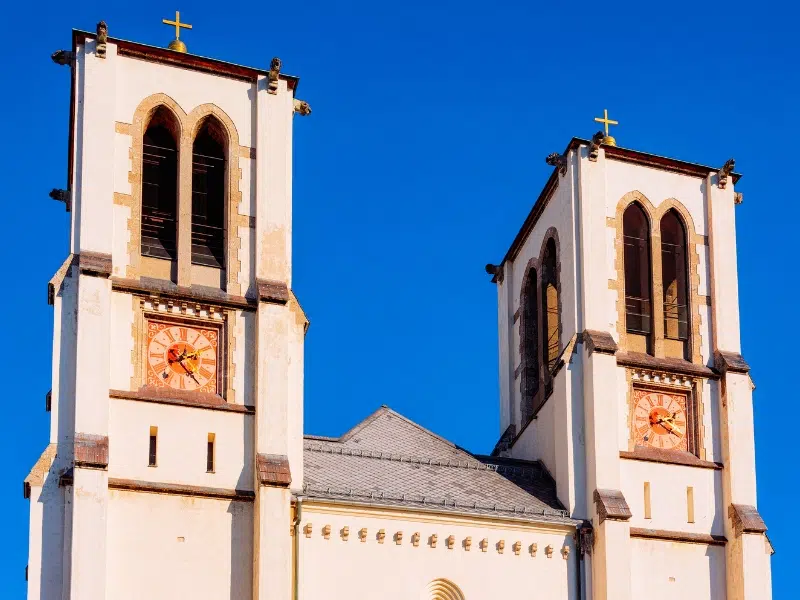
The Andräkirche, or St. Andrew’s Church, stands as a testament to Salzburg’s enduring spirit. Located on Mirabellplatz, its elegant silhouette punctuates the city’s skyline, a beacon of faith and architectural grace. However, the story of the Andräkirche is one of resilience, marked by destruction and rebirth.
A Neo-Gothic Revival
The original St. Andrew’s Church, a Gothic structure, once stood on the Platzl, a bustling square in the heart of Salzburg. Over the centuries, it underwent numerous transformations, culminating in a Baroque renovation under Archbishop Dietrichstein in 1750. However, as the city expanded and infrastructure needs grew, the church was ultimately demolished in 1861 to accommodate a wider thoroughfare. This decision was met with significant public outcry, as many citizens were deeply attached to their historic place of worship.
In response to widespread calls for a replacement, construction of the present-day Andräkirche commenced in 1892. Designed by renowned architect Jakob Ceconi, the new church was built in the Neo-Gothic architectural style, which was highly popular at the time. Its soaring towers, delicate tracery, and pointed arches exemplify the grandeur and spiritual aspirations of the era. By 1898, the Andräkirche was completed and consecrated, establishing itself as one of Salzburg’s most striking landmarks.
A Modern Sanctuary
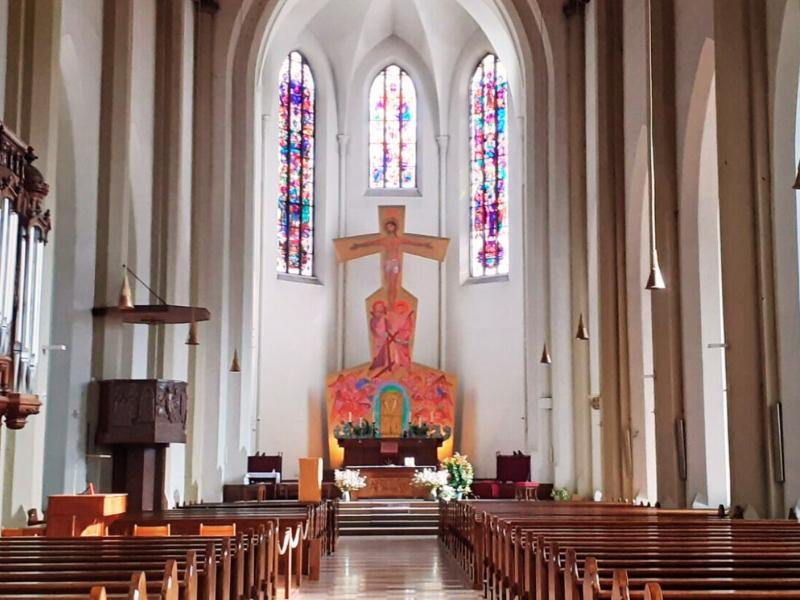
Today, the Andräkirche serves as a vibrant hub of religious and cultural activity. While its Neo-Gothic exterior remains a testament to its historical roots, the interior reflects a more modern and minimalist aesthetic. The high altar, adorned with intricate carvings, remains a focal point of the church, while the striking stained-glass windows depicting the Stations of the Cross create a serene and contemplative atmosphere. The interplay of light filtering through these windows casts a mesmerizing glow, enhancing the sacred ambiance of the space.
A significant highlight of the church’s rich musical heritage is its remarkable French organ, dating back to 1890. This instrument, crafted with exquisite precision, produces deep, resonant tones that elevate the liturgical experience. Regular organ concerts and musical performances are hosted throughout the year, enhancing Salzburg’s cultural landscape and drawing music enthusiasts from near and far. The acoustics of the church make it a favored venue for classical and sacred music events, further solidifying its place in the artistic heart of the city.
A Symbol of Salzburg’s Resilience
Beyond its religious significance, the Andräkirche stands as a powerful symbol of Salzburg’s resilience and unwavering spirit. It has witnessed the city’s evolution over centuries, endured destruction, and emerged stronger each time. Through wars, reconstructions, and cultural shifts, it remains a steadfast presence, embodying the perseverance and faith of the Salzburg community.
For visitors exploring Salzburg, the Andräkirche is a must-see destination, offering a profound connection to the city’s architectural heritage, cultural richness, and enduring history. Whether admired for its striking Neo-Gothic architecture, appreciated for its rich musical traditions, or cherished as a sacred space, the church continues to inspire awe and reverence in all who pass through its storied doors.
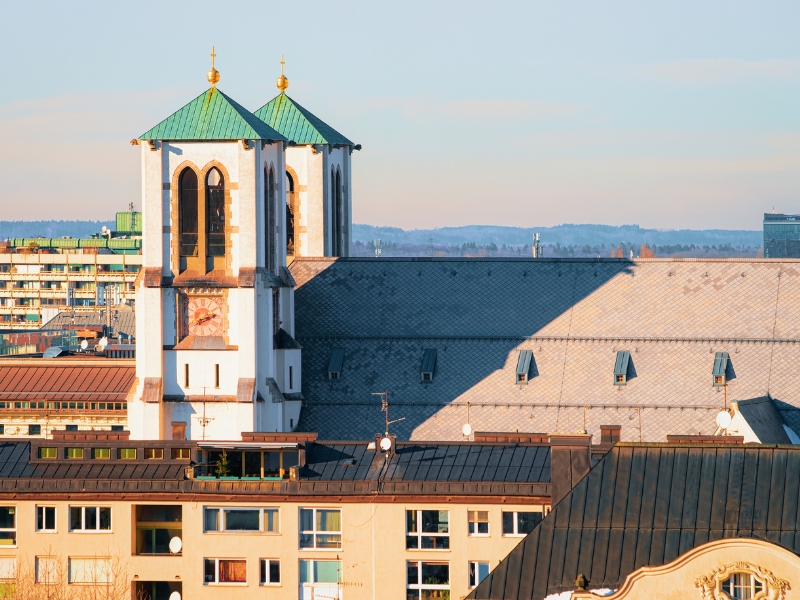
Andräkirche is part of Salzburg scavenger hunt and walking tour!
Embark on an unforgettable journey through the enchanting city of Salzburg with World City Trail. Our interactive walking tour combines the thrill of exploration with the rich history and culture of this beautiful city.
Key Features:
Interactive gameplay: Solve engaging puzzles and challenges as you explore the city.
Hidden gems: Uncover lesser-known spots.
Cultural insights: Learn about the city’s fascinating history.
Flexibility: Explore at your own pace and create your own itinerary.
Family friendly activity and a great way to explore the city!
Further reading on Wikipedia: Salzburg