
Table of Contents
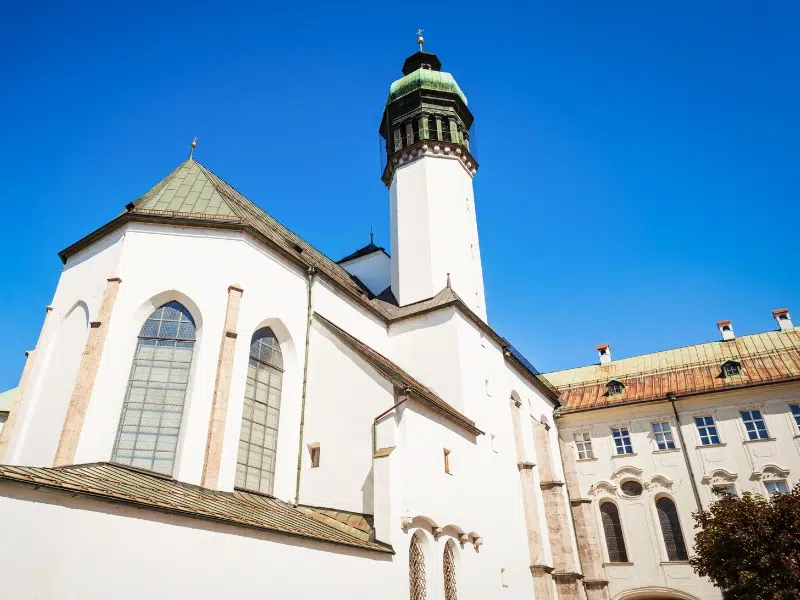
Tucked into the historic heart of Innsbruck, the Court Church Innsbruck—known locally as the Hofkirche—stands as one of Austria’s most significant cultural and architectural treasures. This solemn yet striking Gothic church tells the story of emperors, dynasties, and a nation’s devotion to its past. Built not just as a place of worship, but as a grand mausoleum and tribute to Emperor Maximilian I, the Court Church is a powerful symbol of Tyrol’s role in the history of the Habsburg Empire. Its elaborate interior, monumental tomb, and somber bronze statues draw visitors from around the world who come to marvel at its artistry and reflect on its meaning.
A Monument to Emperor Maximilian I
The origin of the Court Church Innsbruck is deeply tied to Emperor Maximilian I, one of the most influential rulers of the Holy Roman Empire. Although Maximilian passed away in 1519 and was buried in Wiener Neustadt, he envisioned a grand memorial in Innsbruck, the capital of Tyrol and a key Habsburg residence during his reign. Construction of the church began in the mid-16th century under the guidance of his grandson, Emperor Ferdinand I, as a way to honor Maximilian’s legacy and create a lasting dynastic monument.
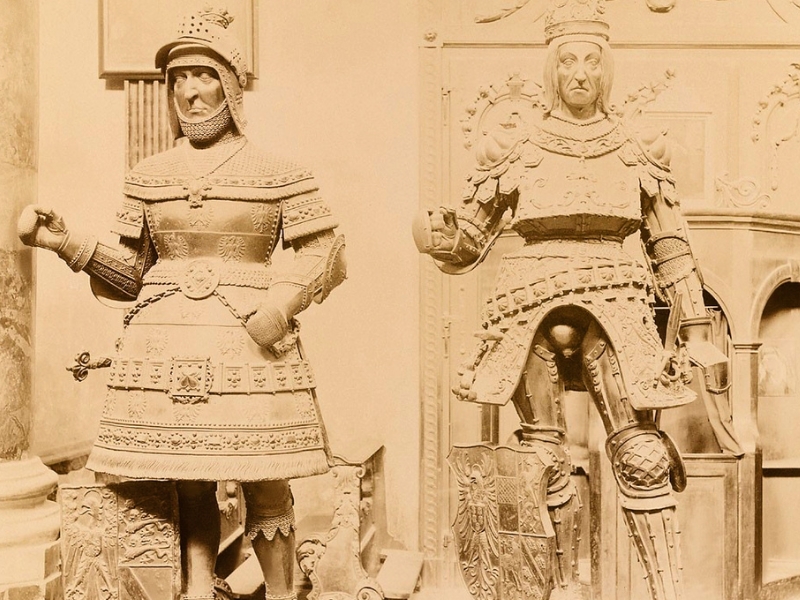
The centerpiece of the church is Maximilian’s monumental cenotaph—an empty black marble tomb surrounded by 28 larger-than-life bronze statues of ancestors, allies, and legendary figures. This “Schwarzmander” collection, as it’s often called, forms one of the most impressive Renaissance sculptural ensembles in Europe. It was never meant to contain the emperor’s remains but instead to serve as a visual testament to his power, lineage, and vision for the empire.
Architectural Harmony and Gothic Elegance
From the outside, the Court Church Innsbruck reflects the restrained elegance of late Gothic design, with its pointed arches, tall windows, and buttressed structure. Yet, stepping inside, one is immediately enveloped in an atmosphere of imperial reverence and masterful craftsmanship. The light filtering through the stained glass casts colorful reflections across the stone floor, enhancing the ethereal feeling within.
The nave is open and spacious, leading the eye directly toward Maximilian’s cenotaph, which dominates the central space. The dark marble of the tomb contrasts with the white limestone surroundings, making it a dramatic focal point. The adjacent silver chapel, added later, contains the remains of Archduke Ferdinand II and his wife Philippine Welser, offering a quieter, more intimate experience within the church’s expansive layout.
The Famous Bronze Figures
What truly sets the Court Church Innsbruck apart are the towering bronze statues encircling the emperor’s tomb. Each of these figures stands over two meters tall and is rendered with remarkable detail, capturing the attire, posture, and character of the person it represents. Among them are notable historical and mythical figures like King Arthur, Godfrey of Bouillon, and Theoderic the Great, alongside Habsburg ancestors.
These statues were crafted by some of the leading sculptors of the time, including Albrecht Dürer, who contributed to the designs. They were meant to serve as eternal witnesses to Maximilian’s greatness and the continuity of imperial power. Their stern expressions and noble stances evoke a sense of watchfulness, as though guarding not only the tomb but the values and history of an empire.
A Spiritual and Cultural Experience
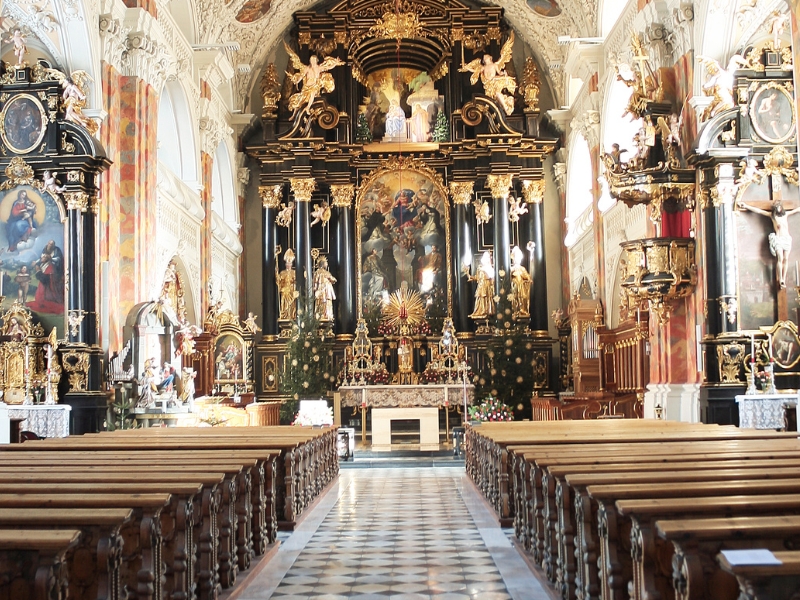
While the Court Church Innsbruck’s historical and artistic value is immense, its spiritual essence should not be overlooked. The Court Church Innsbruck remains an active place of worship, where mass and religious ceremonies are still held. Its peaceful ambiance invites quiet reflection, whether one is contemplating the sweep of European history or simply admiring the masterful architecture.
The adjacent Tyrolean Folk Art Museum, located in the same complex, offers further context to the church’s construction and the cultural richness of Tyrol. It complements the church’s solemn grandeur with exhibits showcasing everyday life, religious traditions, and regional craftsmanship from the centuries past.
Court Church Innsbruck is part of Innsbruck scavenger hunt and walking tour!
Embark on an unforgettable journey through the enchanting city of Innsbruck with World City Trail. Our interactive walking tour combines the thrill of exploration with the rich history and culture of this beautiful city.
Key Features:
Interactive gameplay: Solve engaging puzzles and challenges as you explore the city.
Hidden gems: Uncover lesser-known spots.
Cultural insights: Learn about the city’s fascinating history.
Flexibility: Explore at your own pace and create your own itinerary.
Family friendly activity and a great way to explore the city!
Further reading on Wikipedia: Innsbruck