
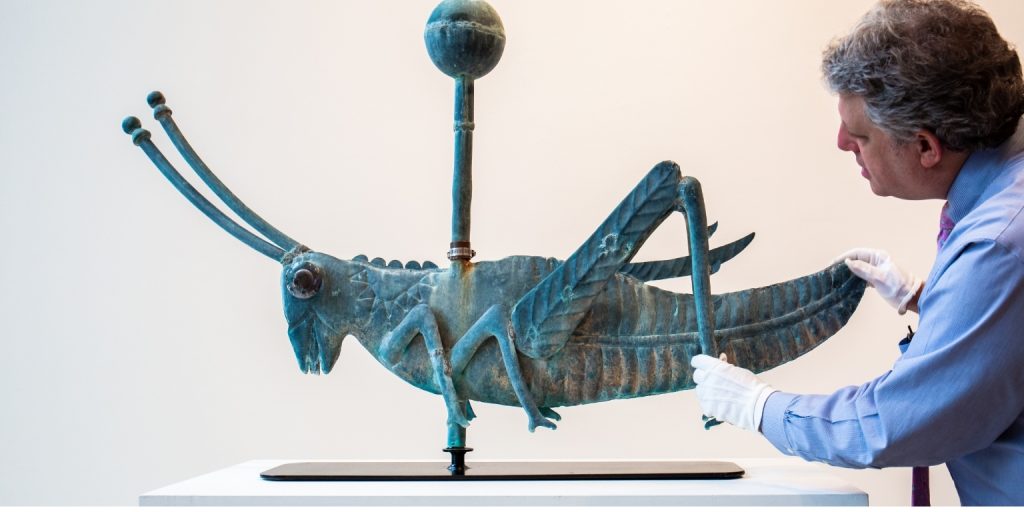
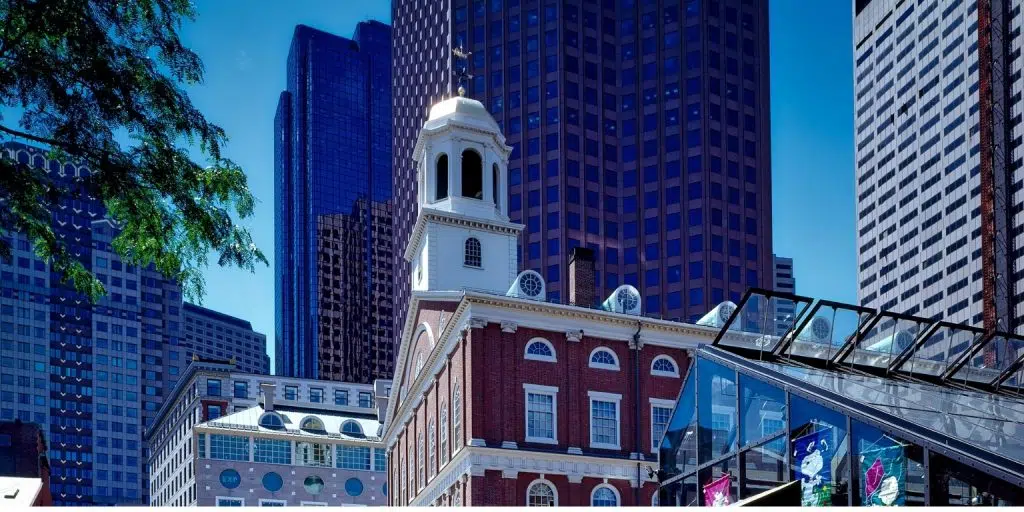
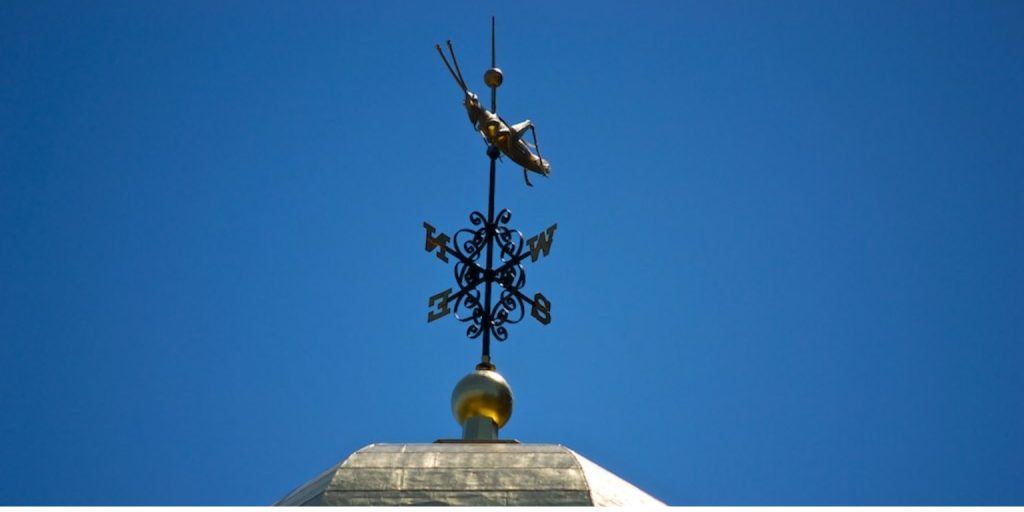
Perched majestically atop the cupola of Boston’s iconic Faneuil Hall, glinting in the sunlight, is the gilded Grasshopper weather vane. The Grasshopper is more than just a functional instrument, this beloved insect has become an enduring symbol of the city’s resilience, a silent sentinel witnessing over two and a half centuries of American history unfold below. From colonial protests to modern-day tourism, the Grasshopper has been a constant presence, linking Boston’s revolutionary past with its vibrant present.
A Legacy Forged in the Mid-18th Century
The story of the Grasshopper at Faneuil Hall begins with the very construction of the hall itself. Faneuil Hall, often dubbed the “Cradle of Liberty,” was built between 1740 and 1742 by Peter Faneuil, a wealthy merchant who donated it to the city. Upon its completion, it was decided that such a significant public building deserved a distinctive weather vane.
The task of crafting this unique adornment fell to Shem Drowne (1683–1774), a highly skilled coppersmith and pioneering American artisan. Drowne was already renowned for creating other notable weather vanes in Boston, including the Native American figure atop the Old State House and the rooster atop the Old North Church. He completed the Faneuil Hall Grasshopper in 1742, the same year the hall officially opened.
Crafted from gilded copper, the Grasshopper measures approximately 3.9 meters (12.8 feet) long and weighs around 24.5 kilograms (54 pounds). Its eyes are made of glass, and inside its stomach, a secret time capsule has been placed over the centuries, containing items like old coins and newspapers, serving as a historical archive for future generations.
Symbolism and Lore: A Fire Watch and a Revolutionary Witness
The choice of a grasshopper as a weather vane is steeped in fascinating lore and practical symbolism. One popular theory suggests that Peter Faneuil chose the grasshopper as a nod to the weather vane atop the Royal Exchange in London, a building where many successful merchants conducted business. The grasshopper was a symbol of reliability and good fortune in mercantile endeavors, representing Peter Faneuil’s own profession.
Beyond this commercial symbolism, the Grasshopper served a vital, life-saving function in a city prone to devastating fires. It was designed to act as a fire alarm. In a major fire, a designated watchman would climb into the cupola and ring a bell while simultaneously hanging a lantern or a cloth from the Grasshopper’s antenna. The direction of the antenna, indicated by the weather vane, would then point towards the location of the fire, helping citizens and fire brigades quickly locate the blaze in the often-confusing maze of colonial Boston’s narrow streets. This ingenious system reportedly saved the city from widespread destruction on several occasions.
During the American Revolution, the Grasshopper remained a silent observer. It notably survived the great fire of 1761 which gutted Faneuil Hall, after which the hall was rebuilt and the Grasshopper restored to its perch. It watched over the heated debates of the Sons of Liberty and the presence of British troops encamped on the Common. A legend tells of a British soldier trying to steal the Grasshopper during the British occupation of Boston, only to be caught, identified by a local, and forced to return it after reciting a pledge of loyalty to the Grasshopper. While likely apocryphal, the story highlights the deep affection Bostonians held for this unique emblem.
An Enduring Icon of Boston
The Grasshopper at Faneuil Hall, installed in 1742 by Shem Drowne, continues to perform its duty as a weather vane today. It has undergone periodic maintenance and re-gilding to preserve its brilliance and structural integrity. Its enduring presence makes it one of Boston’s most recognizable symbols, representing not only the city’s rich past but also its dynamic present.
It remains a key attraction for visitors exploring the Freedom Trail, drawing attention to the historic hall below and inviting contemplation on the many pivotal events it has silently overseen. The Grasshopper at Faneuil Hall in Boston stands as a unique blend of folk art, ingenious engineering, and historical significance, a golden guardian watching over the cradle of American liberty.