
Nestled discreetly amidst the bustling urban fabric of modern Bordeaux, the Palais Gallien stands as a hauntingly beautiful relic of the city’s ancient past. Far from a grand, complete structure, these weathered stone arches and crumbling walls are the last visible remnants of a once-magnificent Roman amphitheater. The Palais Gallien in Bordeaux offers a unique glimpse into the city’s origins as Burdigala, a thriving Roman settlement, providing a tangible link across two millennia of history for curious explorers.

A Grand Amphitheater of Roman Burdigala
The Palais Gallien dates back to the late 1st or early 2nd century AD, when Burdigala (the Roman name for Bordeaux) was a flourishing administrative and commercial center in the Roman province of Aquitaine. Like all major Roman cities, Burdigala boasted impressive public buildings, and the amphitheater was undoubtedly one of its grandest.
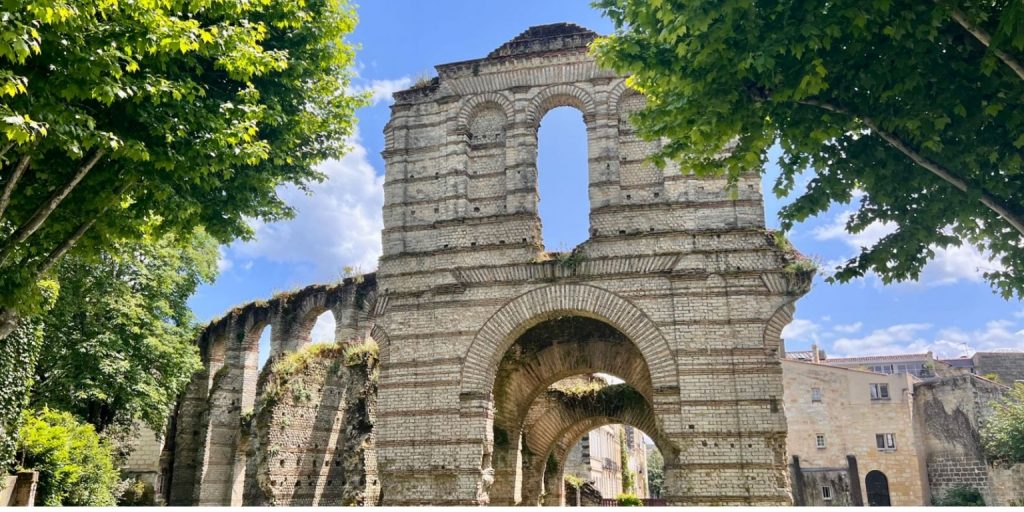
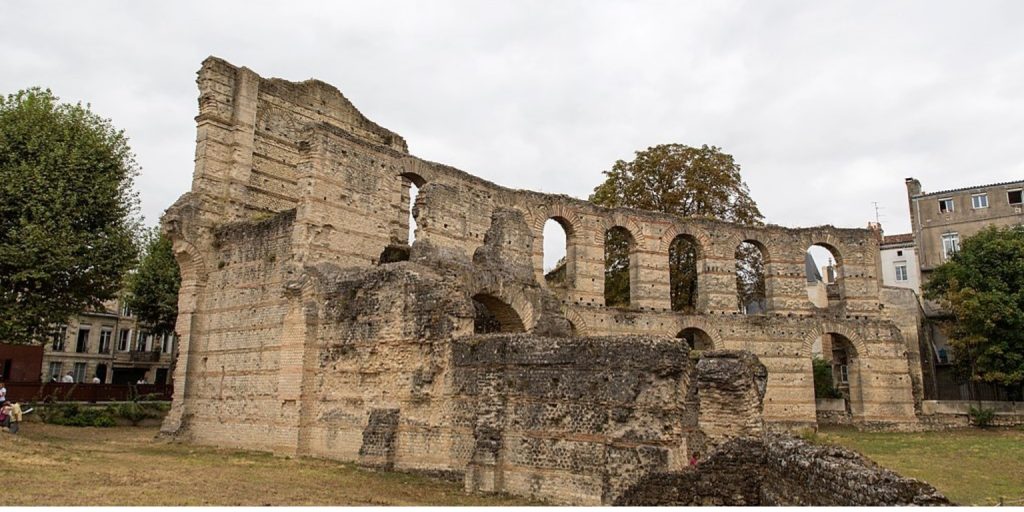
Constructed for public entertainment, primarily gladiatorial contests, wild beast hunts (venationes), and other spectacles, the amphitheater was designed to accommodate a vast audience. Estimates suggest it could hold between 15,000 and 20,000 spectators, making it a significant structure for a city of Burdigala’s size at the time. Its elliptical shape, typical of Roman amphitheaters, would have featured tiered seating arranged around a central arena. The surviving arches and sections of wall attest to its impressive scale and robust construction, likely utilizing local limestone.
Decline, Legend, and Renaming
Following the decline of the Roman Empire and the subsequent invasions (Visigoths, Franks), the amphitheater, like many Roman structures, fell into disuse and disrepair. It suffered further damage over centuries, serving as a quarry for building materials, a refuge for the poor, and even a hideout for criminals in later medieval times. Its original name was lost to history.
The name “Palais Gallien” itself is a product of local legend and later interpretations. It is generally believed to derive from a popular medieval legend linking the ruins to Emperor Gallienus, who ruled in the 3rd century AD. Another, more romantic, legend attributes the name to Queen Gallienne, said to be the wife of Charlemagne’s legendary nephew, Roland. She supposedly held court in these very ruins. While historically inaccurate, these tales underscore the mysterious allure and ancient reverence associated with the site, distinguishing the Palais Gallien in Bordeaux from mere rubble.
By the 16th century, the ruins were already known by this popular moniker, and their dilapidated state continued. They largely escaped demolition during the extensive urban transformations of Bordeaux in the 18th and 19th centuries, primarily due to their perceived historical significance and the efforts of early preservationists.
A Modern Landmark and Archaeological Site
Today, the Palais Gallien represents the only significant Roman ruins visible within Bordeaux’s city limits. It stands as a poignant reminder of the city’s deep historical roots, offering a powerful contrast between its ancient origins and its modern, bustling environment. What remains includes sections of the outer wall, arches, and some internal support structures. The main part of the arena itself is gone, but its elliptical footprint can still be discerned.
The site is now a public garden, providing a peaceful retreat from the city’s traffic. Visitors can wander freely among the ancient stones, touch the weathered limestone, and imagine the roar of the crowds that once filled this space nearly 2,000 years ago. Interpretive signs often provide historical context and diagrams of the amphitheater’s original layout. Archaeological excavations have also occasionally taken place in the surrounding area, unearthing further insights into Roman Burdigala.
The Palais Gallien in Bordeaux, originally a grand Roman amphitheater built in the 1st or 2nd century AD, now stands as a cherished and protected archaeological site. It is a vital link to the city’s Roman past and a place where history silently speaks from crumbling stone, inviting reflection on the rise and fall of empires beneath the contemporary streets of one of France’s most elegant cities.