
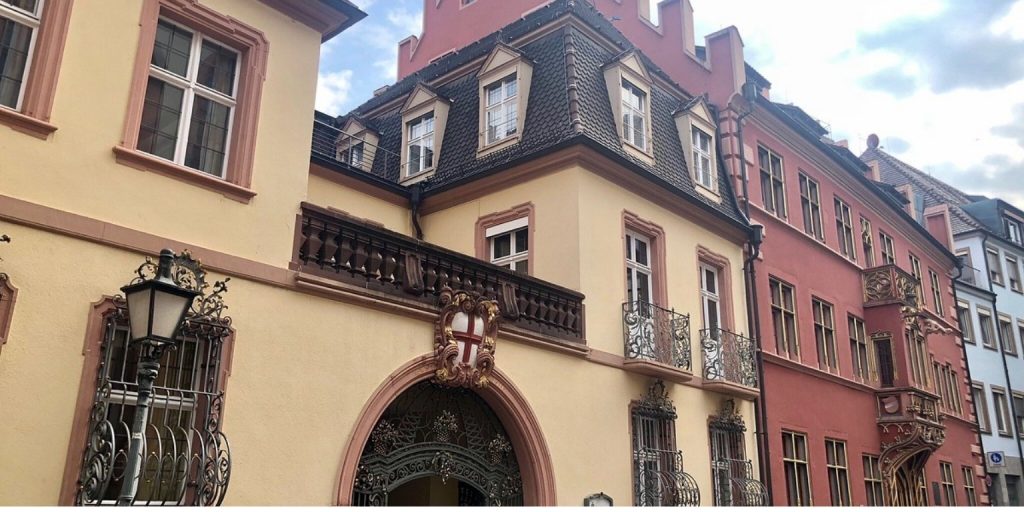
In the heart of Freiburg im Breisgau’s charming Old Town, amidst the medieval alleys and picturesque Bächle, stands a building of exceptional historical and architectural significance: the Haus zum Walfisch (House of the Whale). This striking Renaissance mansion, with its ornate façade and a history intertwined with pivotal European figures, is one of Freiburg’s most captivating landmarks. A visit to the Haus zum Walfisch in Freiburg offers a tangible link to the city’s rich mercantile past and its brief, but notable, connection to intellectual giants of the Renaissance.
A Grand Merchant’s Residence
The Haus zum Walfisch was built between 1514 and 1516 for the wealthy and influential merchant, banker, and mining entrepreneur Jakob Villinger von Schönenberg. Villinger, a key financial advisor to Emperor Maximilian I, spared no expense in constructing a residence that would reflect his considerable wealth and status. He commissioned a building that combined the functional aspects of a merchant’s house with the burgeoning architectural styles of the Renaissance, which were slowly making their way north from Italy.
The name “Haus zum Walfisch” likely derives from a guild or house sign, a common practice in medieval and early modern European cities to identify properties before standardized street numbering. While the exact origin of the “whale” motif is debated, it adds a unique and memorable touch to the building’s identity.
Architectural Splendor of the Early Renaissance
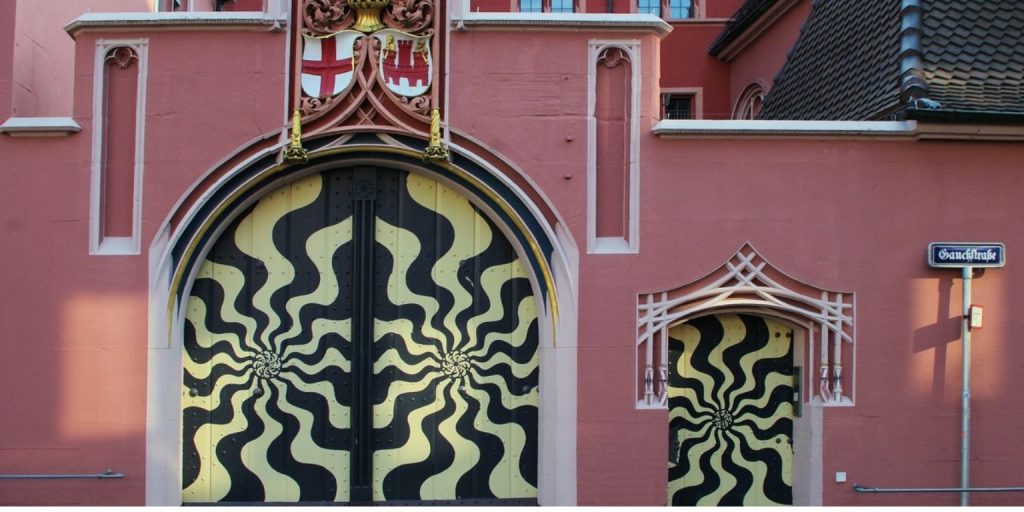
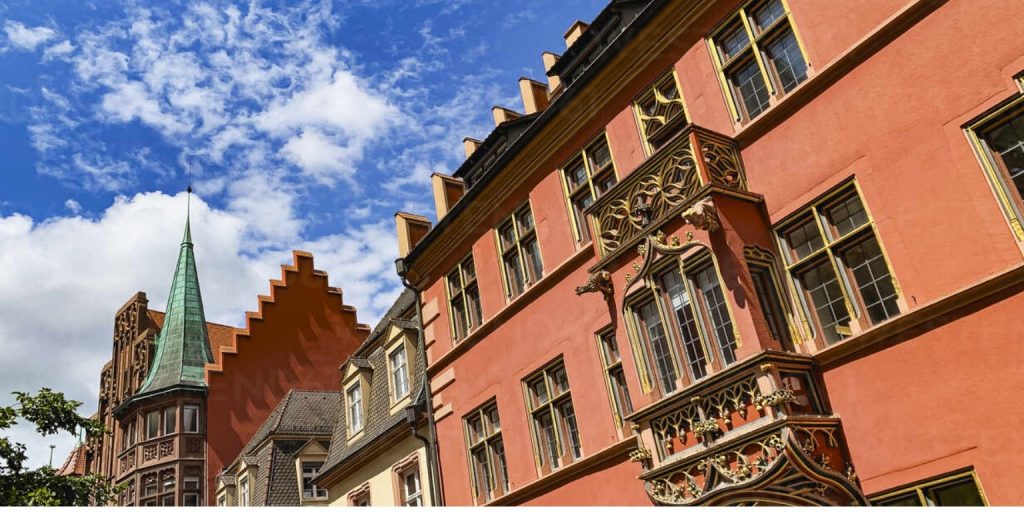
The architecture of the Haus zum Walfisch in Freiburg is a magnificent example of early Renaissance design in Southern Germany, adapted to local traditions. Its most striking feature is its richly decorated sandstone facade, which immediately draws the eye. Although the original façade has been altered and restored over centuries, it retains much of its original grandeur. Key elements include:
- Ornate Windows: Often featuring mullions and intricate carvings.
- Figurative Sculptures: Originally, the façade would have been adorned with a variety of sculptures and reliefs, though many have suffered from weathering or changes over time.
- Gable Design: The stepped gable, a common feature in German Renaissance architecture, contributes to its imposing verticality.
- Large Arched Entrance: Indicating its commercial as well as residential function.
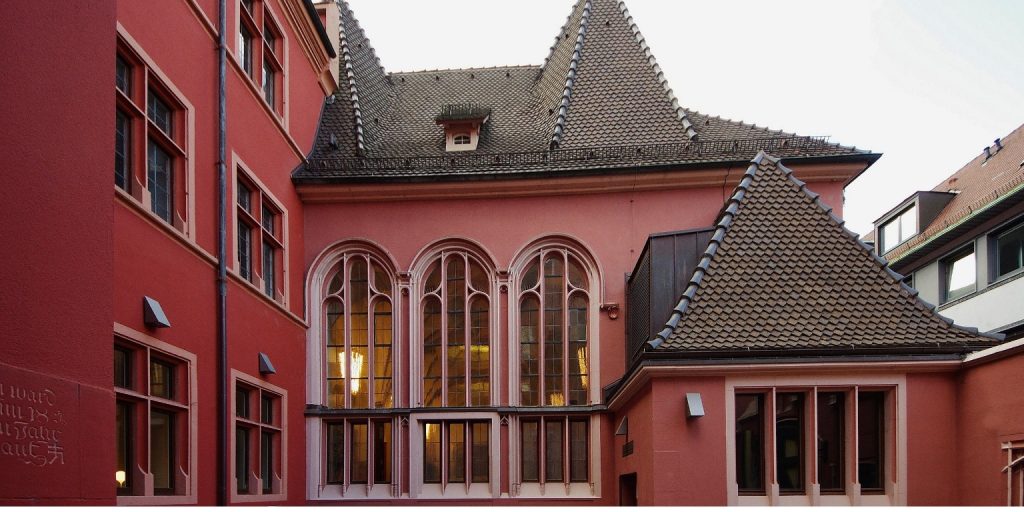
The interior of the house was equally lavish, designed to impress visitors and serve the needs of a wealthy merchant family and their retinue. It would have contained spacious reception rooms, living quarters, and possibly storage areas for goods on the lower floors.
Erasmus of Rotterdam: A Famous Resident
The Haus zum Walfisch gained international fame due to its most celebrated resident: Desiderius Erasmus of Rotterdam (1466-1536). The towering figure of Northern Renaissance humanism and theology, Erasmus sought refuge in Freiburg in 1529, fleeing Basel due to the rising tide of the Reformation’s iconoclasm and religious unrest. He resided in the Haus zum Walfisch for about six years, from 1529 to 1535.
During his stay in Freiburg, Erasmus continued his prolific writing and scholarly work, even though he reportedly found the city a little too quiet compared to the intellectual vibrancy of Basel. His presence in the house solidified its place in European intellectual history, connecting a grand merchant’s residence with one of the most influential thinkers of his era. This brief but significant period undoubtedly added to the mystique and historical weight of the building.
Survival and Modern Use
Like much of Freiburg’s Old Town, the Haus zum Walfisch suffered severe damage during the devastating Allied bombing raid on November 27, 1944. However, thanks to dedicated reconstruction efforts, it was meticulously rebuilt and restored, ensuring its survival as a key piece of Freiburg’s heritage. The painstaking work involved preserving original elements where possible and accurately recreating damaged sections.
Today, the Haus zum Walfisch in Freiburg is not a museum in the traditional sense, but it remains a prominent and revered landmark. It currently houses Sparkasse Freiburg-Nördlicher Breisgau, a local bank, which has sensitively integrated its modern operations within the historic fabric of the building. This contemporary use allows the public to access and admire the ground floor of this historic masterpiece, ensuring that its beauty and significance continue to be appreciated by locals and tourists alike.
The Haus zum Walfisch in Freiburg, built between 1514 and 1516 for Jakob Villinger and famously inhabited by Erasmus of Rotterdam from 1529 to 1535, stands as a magnificent example of Renaissance architecture and a powerful symbol of Freiburg’s rich mercantile and intellectual past. Its enduring presence adds immeasurable charm and historical depth to the city’s already captivating Old Town.

Freiburg Scavenger Hunt and Self-Guided Tour
<div class="wp-block-uagb-tabs uagb-block-a029b1f4 uagb-tabs__wrap uagb-tabs__hstyle1-desktop uag…