
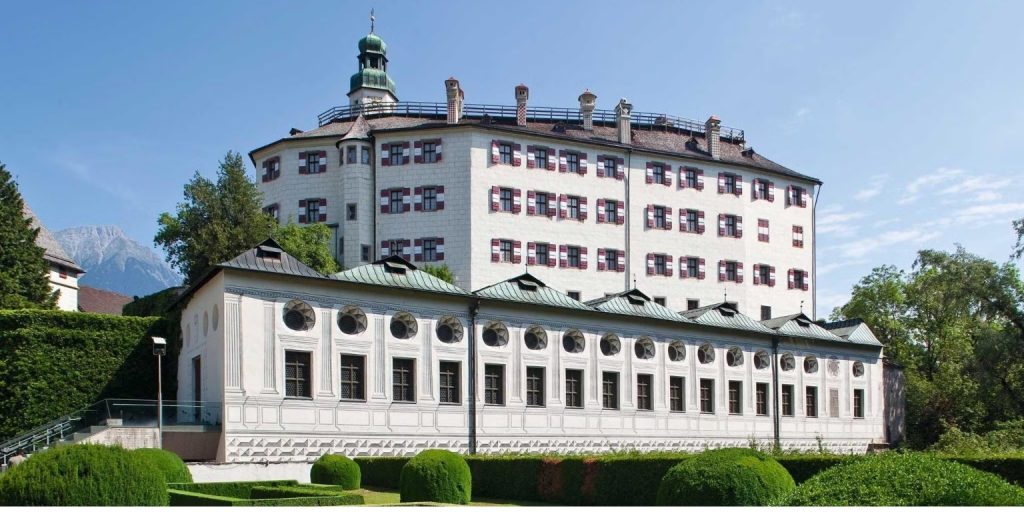
Perched majestically above Innsbruck, overlooking the Inn Valley, Ambras Castle (Schloss Ambras) is a magnificent Renaissance palace renowned for its stunning architecture, meticulously preserved interiors, and extraordinary collections. More than just a stately home, it served as the cultural and intellectual hub of Archduke Ferdinand II and remains one of Austria’s most significant cultural institutions. A visit to Ambras Castle in Innsbruck is a captivating journey back to the 16th century, offering unparalleled insights into princely life, the dawn of the museum era, and the art of collecting.

A Royal Vision: The Castle’s Genesis
The history of Ambras Castle dates back to the 10th century when a fortress belonging to the Counts of Andechs first stood on the site. However, the castle’s true transformation into the Renaissance masterpiece we see today began in the mid-16th century. It was acquired by Archduke Ferdinand II (1529-1595), a son of Emperor Ferdinand I and a highly influential and cultured Habsburg ruler. Ferdinand II served as the governor of Tyrol from 1564 until his death.
A passionate collector and patron of the arts and sciences, Ferdinand II oversaw the extensive reconstruction and expansion of the medieval fortress into a magnificent Renaissance palace between 1564 and 1583. He specifically intended Ambras Castle to house his vast and eclectic collections, creating what is considered the world’s oldest museum in its original location. The design integrated both the residential aspects of a princely court and the dedicated exhibition spaces for his remarkable treasures.
The Collections: A Pioneer of the Museum World
What truly sets Ambras Castle in Innsbruck apart are its unique collections, reflecting Ferdinand II’s insatiable curiosity and the Renaissance fascination with both art and natural wonders. He was a pioneer in establishing a “Kunst- und Wunderkammer” (Cabinet of Art and Curiosities), a precursor to modern museums. The collections are divided into several fascinating areas:
- Armouries: Ferdinand II was a keen military enthusiast and an avid collector of historical armor. The castle boasts an extraordinary collection of suits of armor belonging to famous commanders, tournament armor, and the Archduke’s own private armory. It’s considered one of the most important collections of its kind worldwide, showcasing the evolution of medieval and Renaissance weaponry and defensive attire.
- Chamber of Art and Curiosities (Kunst- und Wunderkammer): This is the heart of Ferdinand’s original museum concept. It houses an astonishing array of rare, exotic, and unusual objects that captivated 16th-century minds. These include naturalia (coral, shells, unusual minerals, monstrous births), artificialia (automata, scientific instruments, exquisite craftsmanship), and exotica (objects from newly discovered lands). It offers a fascinating glimpse into the intellectual world of the Renaissance, where art, science, and the bizarre converged.
- Habsburg Portrait Gallery: Housed in the Upper Castle, this gallery features over 200 portraits of Habsburg rulers, from Rudolf I to Emperor Francis II. It provides a visual lineage of one of Europe’s most powerful dynasties, showcasing various artistic styles from the 15th to the 19th centuries.
- Glass Collection: The castle also houses a significant collection of Venetian glass, reflecting the artistic and technical prowess of the time.
Architectural Grandeur and Garden Beauty
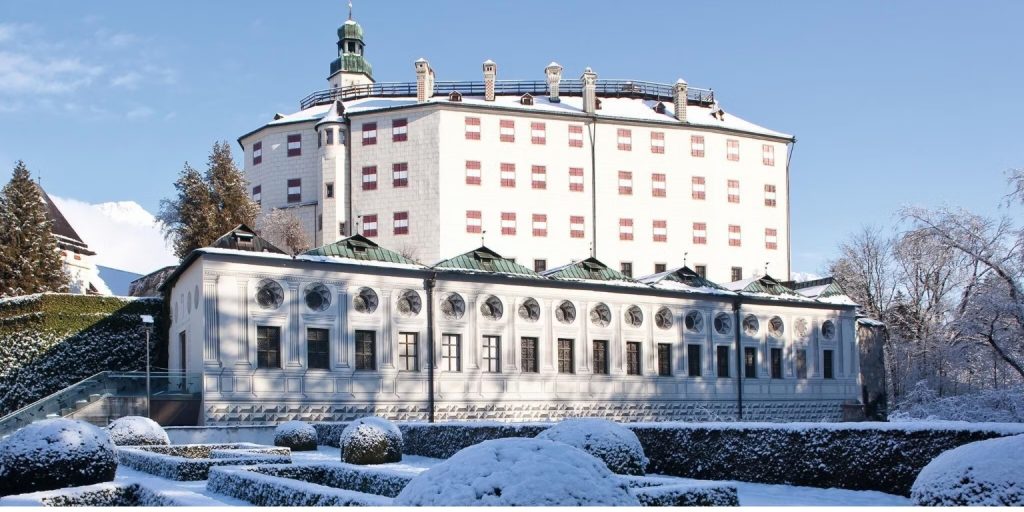
Ambras Castle is composed of two main parts:
- The Upper Castle (Hochschloss): This is the older, residential part, which also houses the Habsburg Portrait Gallery. Its notable features include the St. Nicholas Chapel and Philippine Welser’s Bath.
- The Lower Castle (Unterschloss): Built specifically for Ferdinand’s collections, it houses the Armouries and the Cabinet of Art and Curiosities.
The Spanish Hall (Spanischer Saal), located in the Upper Castle, is a breathtaking masterpiece of late Renaissance architecture and one of the most beautiful freestanding halls of its kind north of the Alps. Built between 1569 and 1572, its walls are adorned with 27 full-length portraits of Tyrolean noble rulers. The elaborately inlaid wooden ceiling, combined with the intricate frescoes, creates an overwhelming sense of grandeur and historical authenticity. Today, it is still used for concerts and events, particularly during the Innsbruck Festival of Early Music.
The castle is surrounded by an extensive English landscape garden (Schlosspark Ambras), largely redesigned in the 19th century, offering serene walking paths, beautiful views, and an artificial lake. The park also features a charming Bacchus Grotto and other historical elements.
Located at Schlossstraße 20, 6020 Innsbruck, Ambras Castle in Innsbruck is a vital part of Austria’s cultural heritage. Constructed from 1564 to 1583 by Archduke Ferdinand II to house his pioneering collections, it stands as a unique Renaissance palace. Its well-preserved Armouries, unparalleled Cabinet of Art and Curiosities, and the magnificent Spanish Hall make it a must-visit destination, offering an immersive journey into the world of a discerning Habsburg prince.