
In a city renowned for its medieval squares and ancient cobblestone streets, Plein 1992 stands out as a bold and compelling modern landmark. Located in the contemporary Céramique district on the eastern bank of the Meuse River, this square is far more than just an urban space; it is a powerful symbol of Maastricht’s pivotal role in European history. Named in honor of the year the Maastricht Treaty was signed, the Plein 1992 square in Maastricht is a testament to the city’s forward-looking spirit, seamlessly blending its industrial past with its modern European identity.
The Treaty that Changed Europe
The name of the square is its most significant feature. On February 7, 1992, in the nearby Government building, leaders from 12 European nations signed the Maastricht Treaty. This historic document laid the legal foundation for the European Union and charted the course for economic and monetary union, eventually leading to the introduction of the single currency, the euro. The treaty forever cemented Maastricht’s place in the history of European integration.
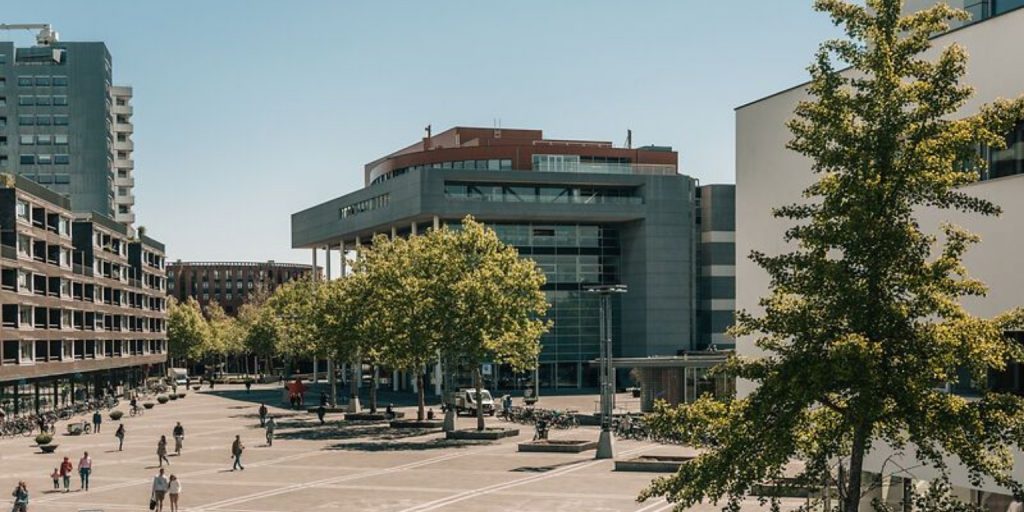
Plein 1992 was developed in the wake of this momentous event, serving as a permanent memorial. The square’s design directly reflects its namesake: its paving is a unique mosaic of tiles bearing the euro symbol (€) and the year 1992. This subtle yet impactful design element ensures that every step taken across the square is a reminder of the city’s profound legacy as the birthplace of the modern European project.
A Masterpiece of Modern Urban Design
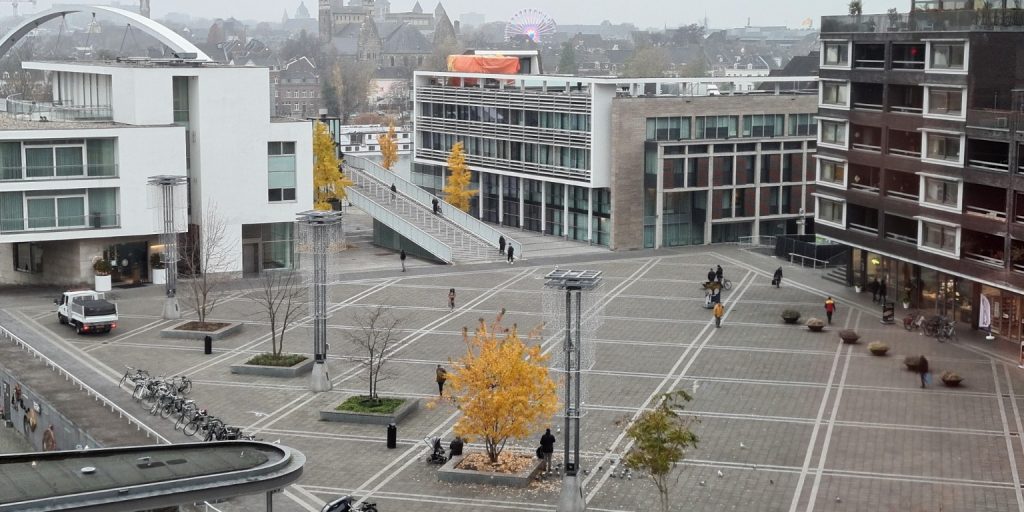
The design of Plein 1992 and the surrounding Céramique district was spearheaded by renowned Dutch architect Jo Coenen in the late 1990s. The entire area was once the site of the city’s ancient Céramique pottery factory, an industrial giant that shaped Maastricht’s economy for centuries. After the factory closed, the site was redeveloped into a showcase of cutting-edge architecture, creating a vibrant new neighborhood.
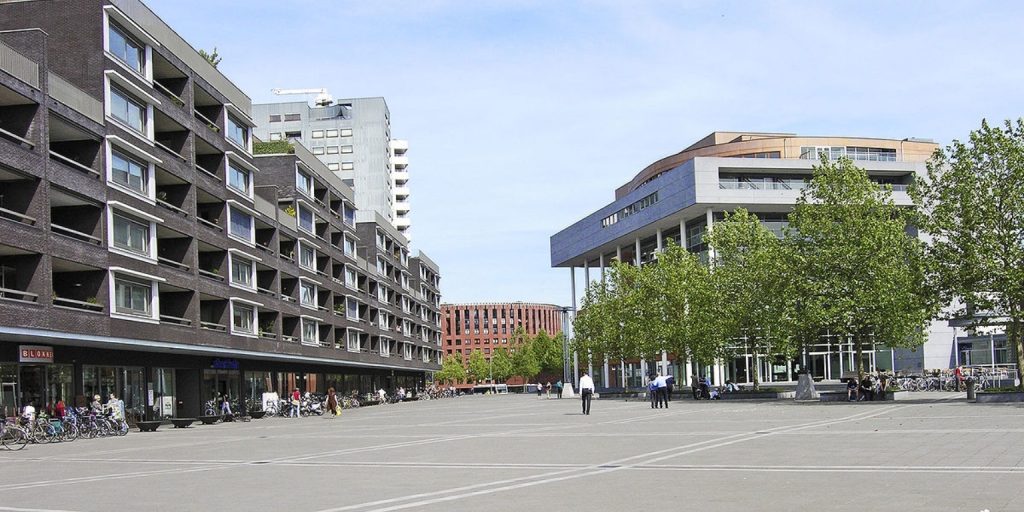
The square itself is a spacious, pedestrian-friendly zone that serves as the main artery for the district. It is flanked by striking buildings designed by a host of celebrated international architects. Key structures include:
- Centre Céramique: The square is dominated by the city’s main library and cultural center, also designed by Jo Coenen. This impressive building acts as a hub for knowledge, art, and community, housing not only a vast collection of books but also Maastricht’s museum and exhibition spaces.
- La Résidence: A residential complex designed by Swiss architect Aurelio Galfetti and French architect Yann Keromnes, which adds a distinctively modern residential character to the square.
- Siza’s Tower: A landmark residential high-rise by Portuguese architect Álvaro Siza Vieira, which provides a dramatic vertical element to the district’s skyline.
These buildings collectively form a stunning example of how modern architecture can create a sense of place and identity, contrasting beautifully with the ancient stone and brick of Maastricht’s historic center just across the river.
The Heart of a Revitalized Community
Today, Plein 1992 is a bustling hub for both residents and visitors. It is connected to the historic Wyck district and the central station by the elegant Hoge Brug (High Bridge), a pedestrian and cyclist bridge that offers spectacular views of the Meuse and the Maastricht skyline. This easy accessibility makes the square a natural destination for a stroll, a cup of coffee, or a meal at one of the many restaurants that line its perimeter, including some with Michelin-star recognition.
The square’s open space and strategic location make it a venue for cultural events, markets, and gatherings, drawing people from all over the city. It represents a living, breathing testament to Maastricht’s successful urban renewal and its enduring commitment to culture and community.
In summary, the Plein 1992 square in Maastricht is a unique urban space that encapsulates the city’s modern identity. Named after a seminal moment in European history, this beautifully designed square, surrounded by remarkable contemporary architecture and lively cultural institutions, is a must-visit for anyone interested in the history of the European Union, modern urban design, or simply a vibrant, forward-looking side of a famously historic city.