What is the Maastricht self-guided walking tour?
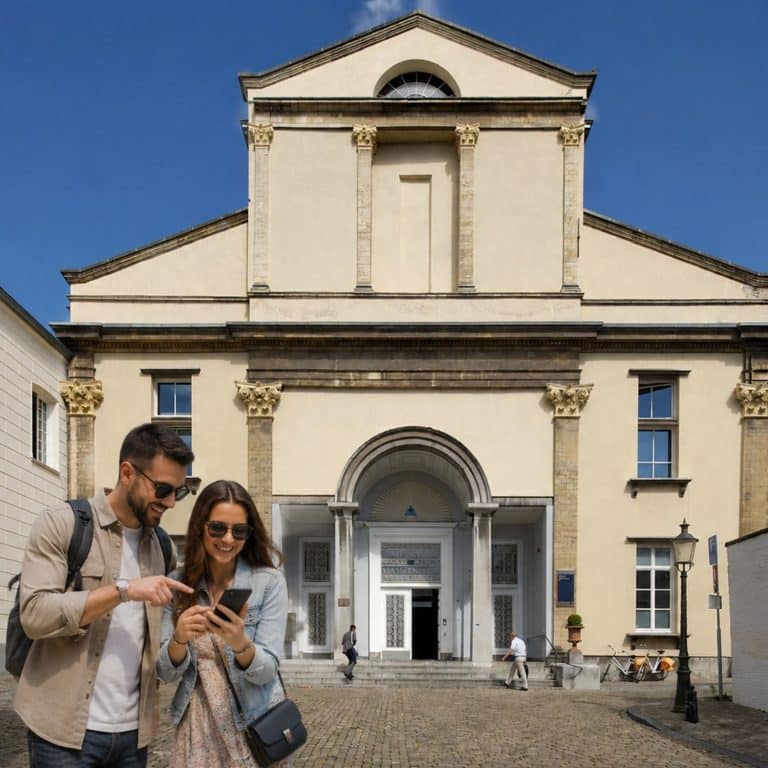
The Maastricht self-guided walking tour puts a narrator in your pocket instead of a group around you: the World City Trail app shows the way on a map, and at every landmark a recorded account starts, full of history, legends and odd facts. Count on roughly 2 hours for 10 stops and 2.6 km, of which only 36 minutes are spent actually walking. The centre is flat and compact, which leaves you free to give the stories your full attention.
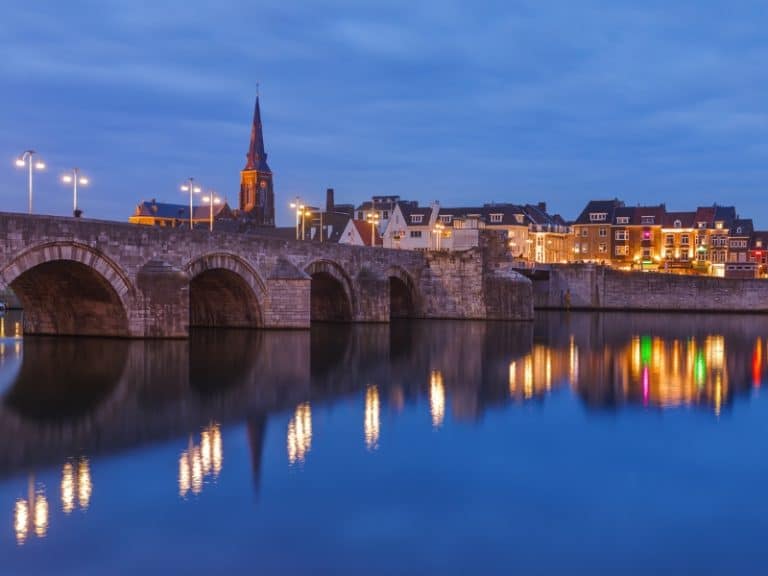
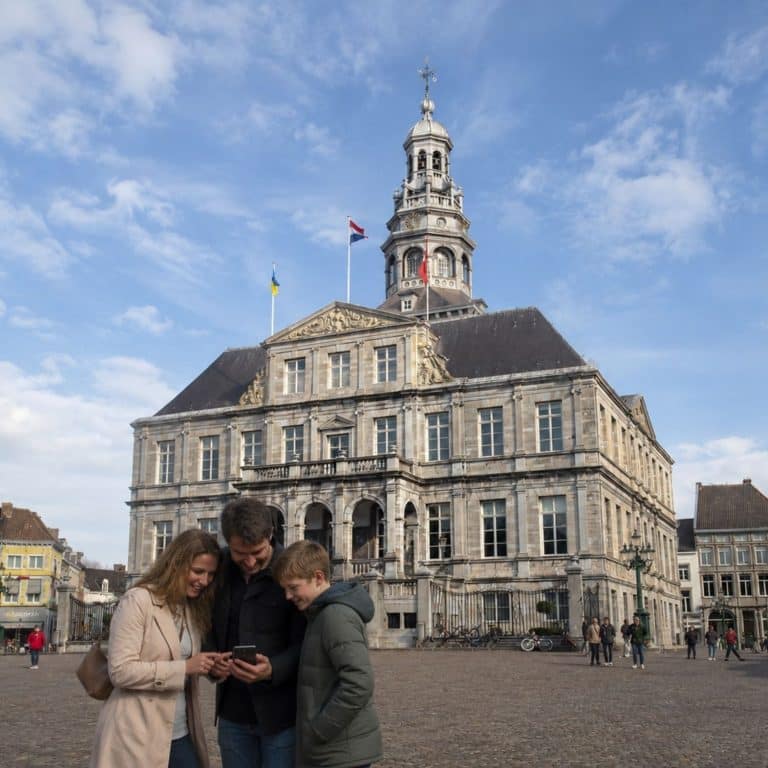
On the Sint Servaasbrug you hear how stone took over from wood here from about 1280. On the Markt the narration explains the City Hall's double staircase, said to recall the time when Maastricht had two rulers at once, and introduces Jan Pieter Minckelers and his early experiments with lighting gas. At the Dominican church, where a bookshop now fills the nave, comes the story of how the friars lost it in the French period. At the Basilica of Saint Servatius you learn of the bishop who, by tradition, died here in 384, and at the Basilica of Our Lady of the Star of the Sea, the medieval Mary that pilgrims have visited for centuries.
- Durationabout 2 hours
- Walkingabout 36 min · 2.6 km
- Stops10
- LanguagesEnglish, German, French, Italian, Spanish, Dutch
How the walk works in practice
Stand, look, listen
At each stop the narration explains what stands before you: how it began, who shaped it, the legend attached to it and the detail most passers-by miss. If you would rather read than listen, each chapter appears in full on screen.
Leg by leg with Google Maps
Google Maps leads you from one stop to the next, 36 minutes of walking over 2.6 km altogether, at whatever speed you choose.
Break off whenever you like
Coffee, a museum, an early lunch: leave the walk when something tempts you and pick it up again at the same stop, later that day or on another.
Shape your route
The app adds suggestions for local food and shops, and you are free to start at another stop or rearrange the order.
See the route and attractions →
How it works
- Book online Choose the number of people. Your booking reference arrives by email straight away.
- Get the app Download the World City Trail app from the App Store or Google Play and enter your booking reference.
- Walk when you like Start whenever you are ready, walk at your own pace and pause any time. No guide, no fixed schedule.
A good fit for
History lovers
Dates, names and the reasons behind them: the narration fills in what the plaques leave out.
Two of you, or a few friends
Each of you listens on your own phone, side by side, and there is plenty to talk about between stops.
Visitors short on time
In about 2 hours you see the centre properly, with the rest of the day still free.
Good to know
- Bring a charged smartphone with mobile data; a power bank helps.
- No entry tickets needed: everything happens outside the buildings. Going inside is optional and paid separately.
- Family friendly; children must be accompanied by an adult.
- Not suitable for wheelchair users and difficult with strollers.
- Groups of up to 5 work best; larger groups split up, one ticket per person.
- Every purchase helps support stray cats and dogs in Greece.
From the Maas bridge to the old ramparts
10 stops · about 36 min walking · start: Sint Servaasbrug · finish: Stadspark
The walk begins on the Sint Servaasbrug over the Maas and crosses into the old town for the Markt and the Dominican church. The Vrijthof comes next, with the Basilica of Saint Servatius on its west side, and from there the route passes Maastricht University and the sculpture De Huivende Kinder on its way to the Basilica of Our Lady. The Helpoort leads into the Stadspark, where the tour ends beside the old fortifications. The app lets you start at any stop, and nothing on the route charges admission.
Open the route map ↗
1Sint ServaasbrugStart
The St Servatius Bridge over the Maas was built in stone from about 1280, replacing an earlier wooden bridge, and is one of the oldest bridges in the Netherlands. Its arches link the old town with the Wyck district on the east bank, and from the middle you get a wide view of the river and the church towers.
2Markt
Maastricht's market square is dominated by the City Hall, built from 1659 to a design by Pieter Post. Its double front staircase is said to recall the time when the city had two rulers at once. Nearby stands a statue of Jan Pieter Minckelers, a Maastricht scientist known for his early experiments with lighting gas.
3Dominican Church (Dominicanen)
This Gothic church was built by Dominican friars in the 13th century and lost its religious role in the French period around 1800. Today a bookshop fills the nave under the old vaults, and medieval paintings can still be seen on the ceiling.
4Vrijthof
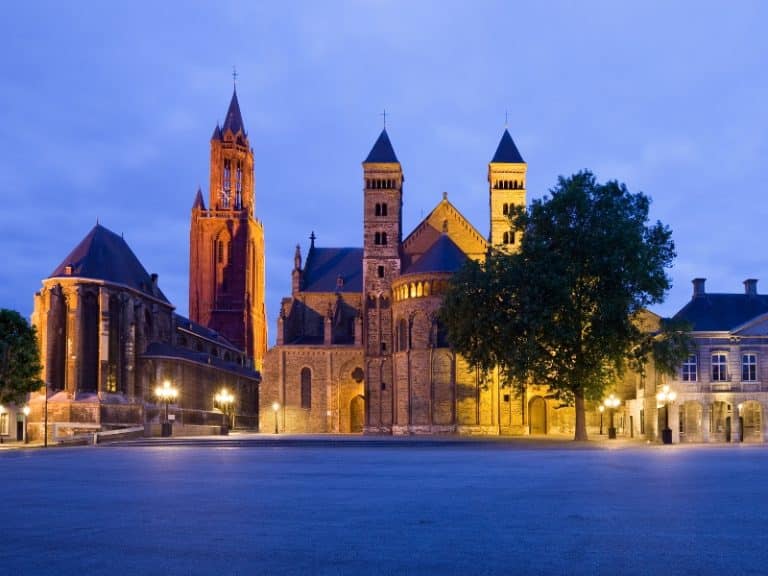
The Vrijthof is the largest square in Maastricht, lined with cafés and framed on its west side by the Basilica of Saint Servatius and the red tower of St John's Church. On the south side stands the Spanish Government building, a reminder of the centuries of Habsburg rule.
5Basilica of Saint Servatius
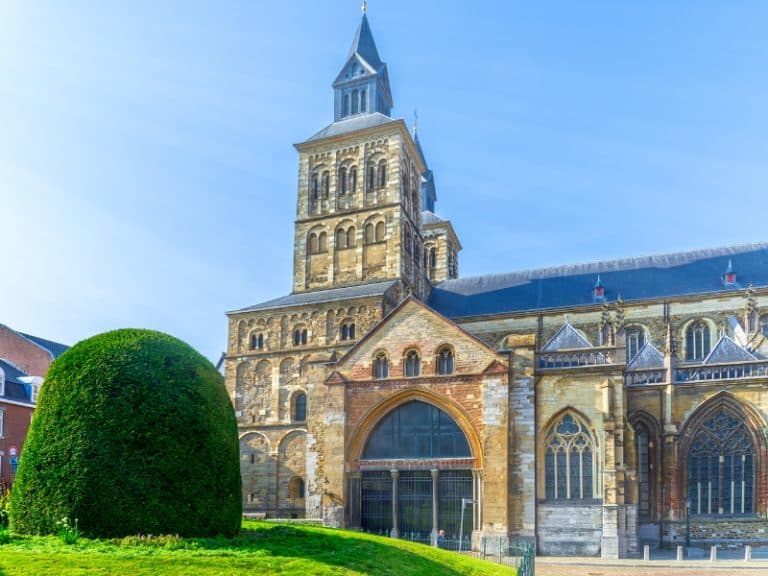
This Romanesque basilica stands over the grave of Saint Servatius, the bishop who according to tradition died in Maastricht in 384. Much of the present church dates from the 11th and 12th centuries. Look for the Gothic Bergportaal on the south side, decorated with sculpted scenes from the life of the Virgin Mary.
6Maastricht University
Maastricht University was founded in 1976 and is known for problem-based learning, in which students work through real cases in small groups. Instead of one campus, its faculties in the old town use historic buildings spread through the inner city, which brings thousands of students into these streets.
7De Huivende Kinder
This sculpture of a group of children is one of the many statues that stand in Maastricht's streets and squares. Look closely at the figures, their poses and the small details, which give the group its character.
8Basilica of Our Lady
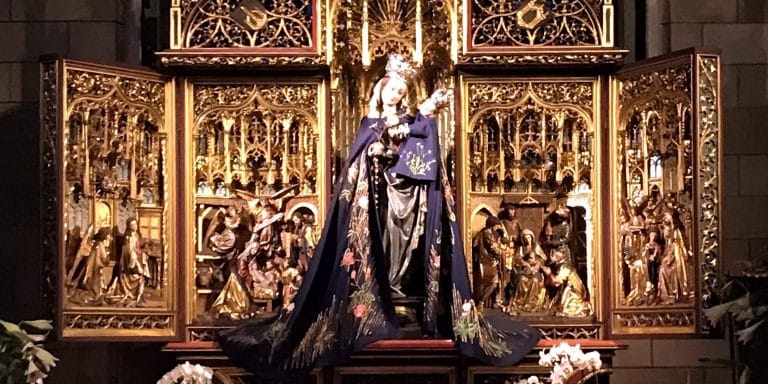
The Basilica of Our Lady is one of the oldest churches in Maastricht, and its massive Romanesque westwork, with very few windows, looks almost like a fortress. By the entrance is the chapel of the Star of the Sea, a medieval statue of Mary that has drawn pilgrims for centuries.
Read the full story →
9Helpoort
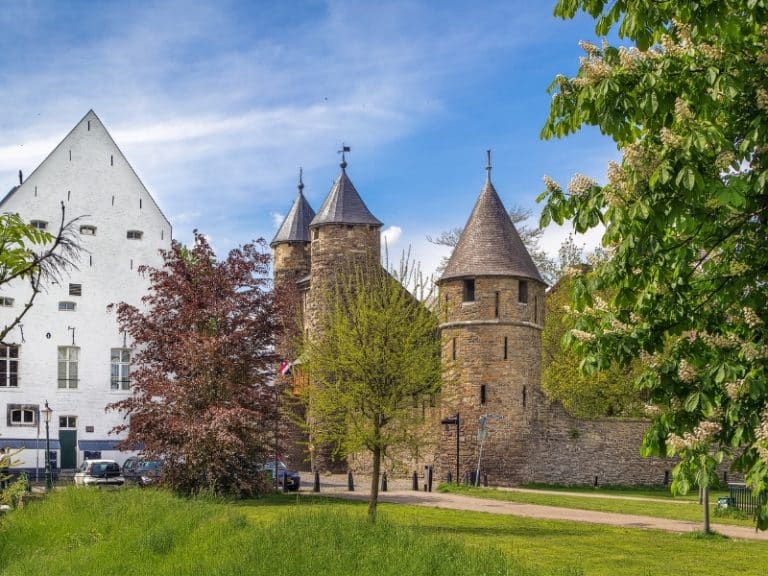
Built around 1230, the Helpoort is the oldest surviving city gate in the Netherlands and was part of Maastricht's first medieval city wall. Its two round towers frame a narrow passage, and right next to it you can follow remains of the old ramparts.
Read the full story →
10StadsparkFinish
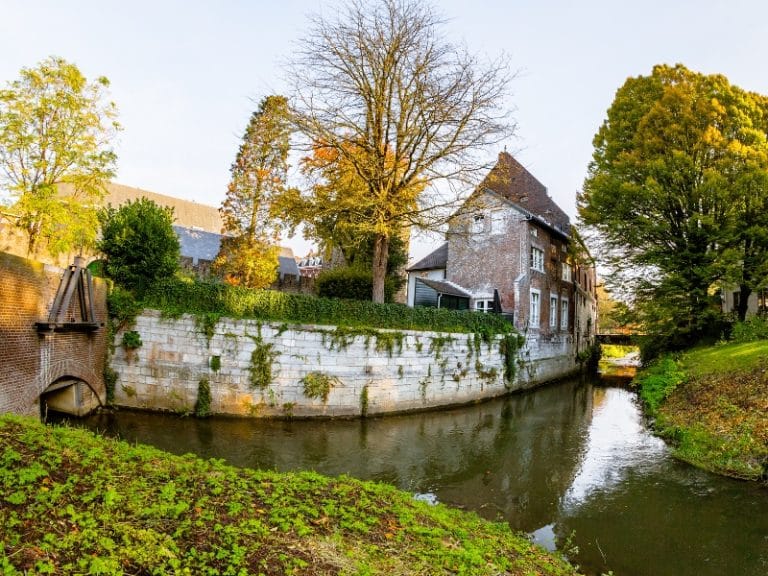
Maastricht's city park was laid out along the southern remains of the old fortifications after the city lost its role as a fortress in the 19th century. Paths lead past medieval walls, bastions and the Jeker stream, so the green space is also a walk through the town's defensive history.
Only logged in customers who have purchased this product may leave a review.








Reviews
There are no reviews yet.