
In the heart of Nuremberg’s historic old town, nestled on the bustling Lorenzer Platz, stands a monument that is as much a work of art as it is a source of water. The Fountain of Virtue, or Tugendbrunnen in German, is a stunning late Renaissance masterpiece that serves as a powerful symbol of civic ideals and artistic excellence. For anyone exploring the city, a visit to the Fountain-of-Virtue-in-Nuremberg offers a moment of quiet contemplation, allowing you to appreciate the intricate details of a sculpture that has stood witness to centuries of the city’s history.
A Testament to Renaissance Art and Bronze Casting
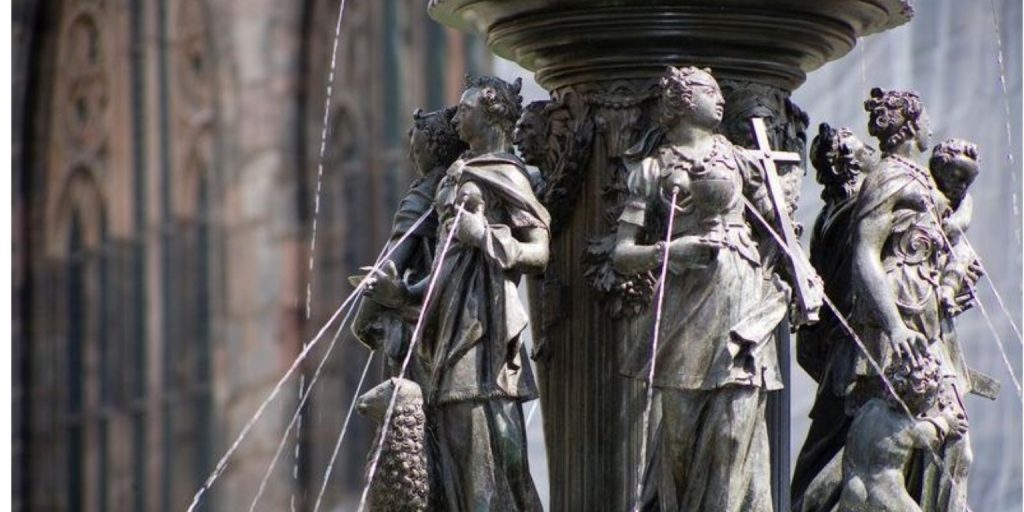
The history of the Fountain of Virtue a story of artistic ambition and a city’s prosperity. Created between 1584 and 1589, the fountain was the work of the renowned sculptor and bronze caster Benedikt Wurzelbauer. At the time, Nuremberg was a free imperial city, a powerful hub of trade and craftsmanship, particularly famed for its bronze casting tradition. The city council commissioned the fountain not only as a functional source of water for the citizens of the Lorenzer side of the city but also as a magnificent public statement of its wealth, power, and high moral standards.
Wurzelbauer’s work is an outstanding example of the German Renaissance, blending classical ideals with a distinctly Northern European artistic sensibility. The fountain’s ornate, multi-tiered structure is a testament to the skill and artistry of the era. The detailed bronze figures, a product of Nuremberg’s thriving foundry workshops, are masterfully cast and bring the abstract virtues to life with elegant and expressive forms.
Like many of Nuremberg’s historic treasures, the fountain faced its greatest challenge during World War II. While the buildings around it, including the magnificent St. Lorenz Church, were reduced to rubble by bombings, the Tugendbrunnen survived. In a testament to the city’s dedication to preserving its heritage, the fountain was carefully dismantled before the war and completely encased in concrete for protection. It was a remarkable act of foresight that ensured this masterpiece would be enjoyed by future generations.
The Symbolism of the Seven Virtues
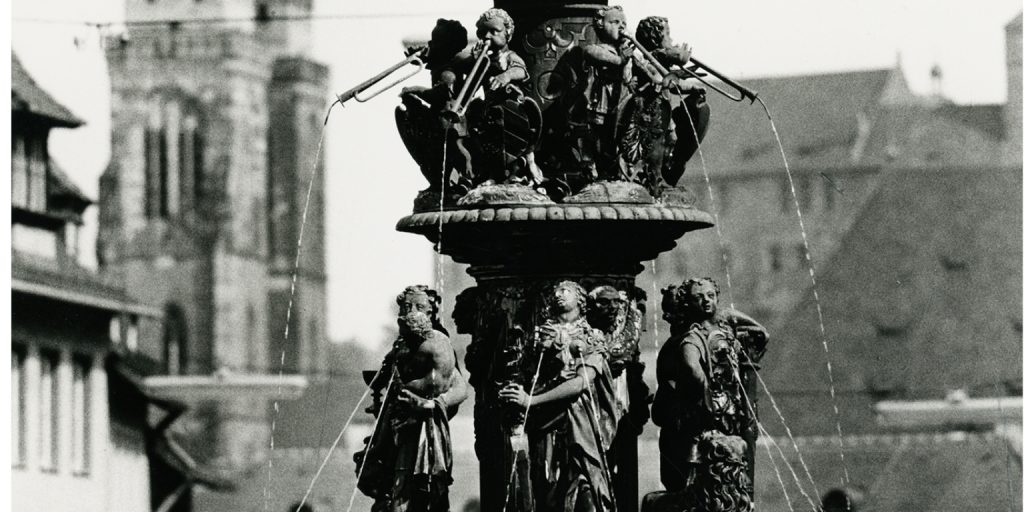
The true soul of the Fountain of Virtue in Nuremberg lies in its profound and intricate symbolism. The entire work is an allegorical representation of the seven virtues, which were a cornerstone of medieval and Renaissance philosophy. At the very top, in a position of ultimate importance, stands a powerful statue of Justice. She is depicted blindfolded, holding a sword and a set of scales, and a crane—a symbol of vigilance—rests at her feet. This placement emphasizes the belief that justice is the highest virtue, overseeing all others.
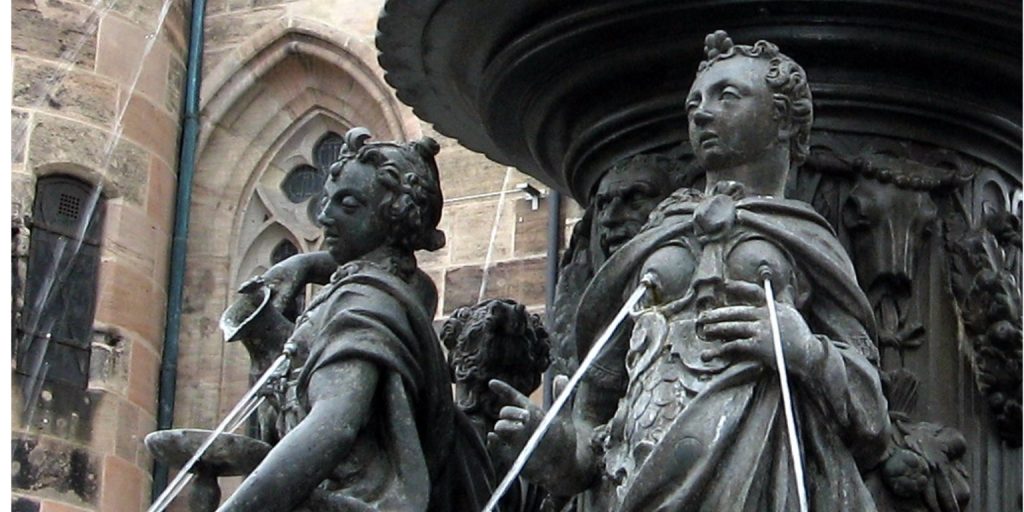
On the lower tier, six graceful female figures represent the other virtues:
- Faith is shown with a cross and a chalice, symbolizing devotion.
- Love (Caritas) is represented as a nurturing mother with two children, embodying charity and selflessness.
- Hope holds an anchor, a classic symbol of steadfastness and future promise.
- Courage is a formidable figure, often accompanied by a lion.
- Temperance is a peaceful figure, pouring water from one pitcher to another.
- Patience is shown with a gentle lamb, symbolizing endurance and humility.
The fountain is not just a static sculpture; it is a dynamic work where water gushes from the various figures’ vessels and even the beaks of cranes and trumpets of putti, creating a shimmering curtain that seems to bring the entire scene to life.
A Meeting Point for Past and Present
Today, the Tugendbrunnen is a beloved focal point on Lorenzer Platz. It is a popular meeting point for locals and a highlight of every tourist’s journey through the old town. The fountain’s detailed artistry and profound moral message continue to inspire and resonate, connecting the bustling modern city with its rich historical and philosophical roots. As you stand before the Fountain of Virtue, you are not just admiring a piece of metal; you are contemplating a timeless work that celebrates the very ideals that have guided Nuremberg for centuries.