
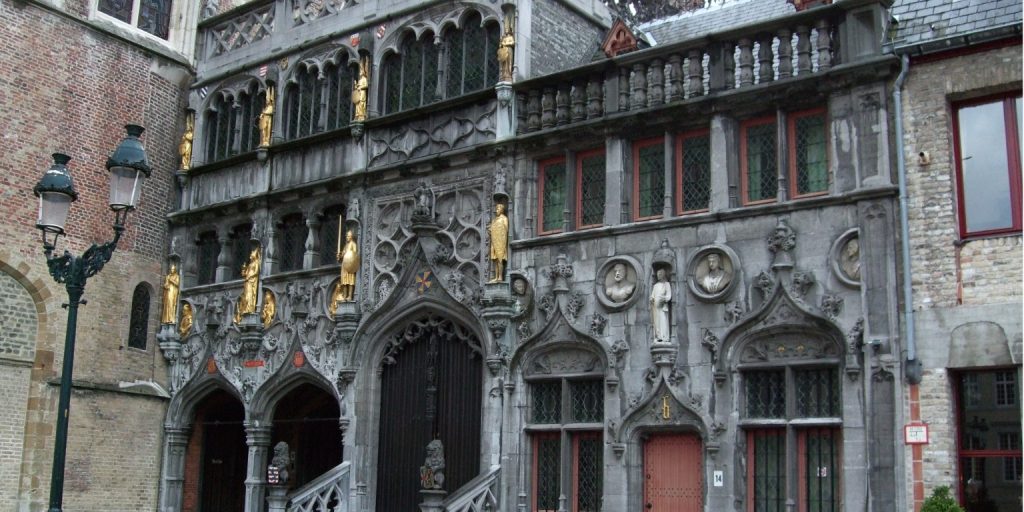
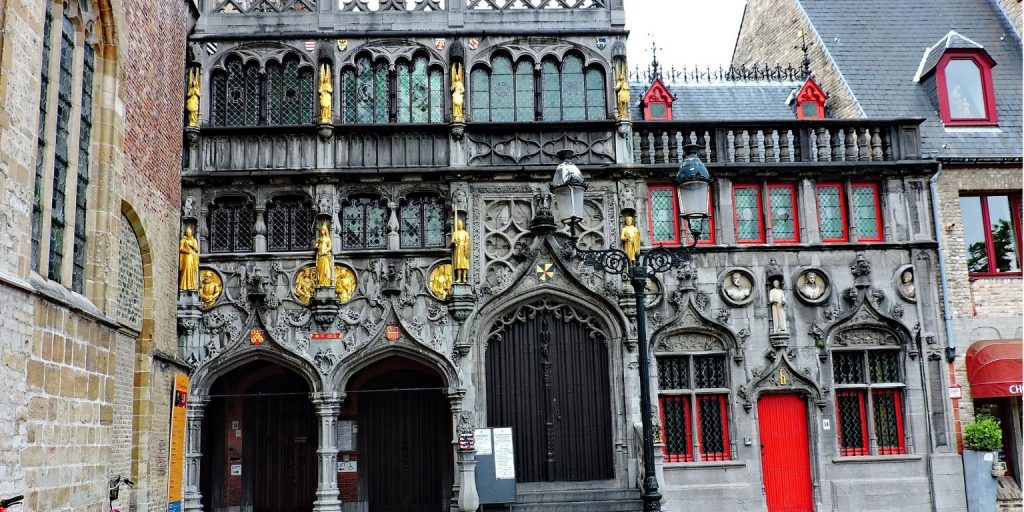
The Basilica of the Holy Blood is a two-story church, each chapel representing a different architectural era and purpose. The lower chapel, dedicated to St. Basil the Great, is a striking example of 12th-century Romanesque architecture. Its dark, sober interior with its heavy arches and simple stone columns creates a serene and contemplative atmosphere. This chapel, which has remained largely unchanged since its construction between 1134 and 1157, offers a tangible link to the earliest days of the building. It was originally the chapel of the Counts of Flanders and also housed a relic of St. Basil, a 4th-century saint.
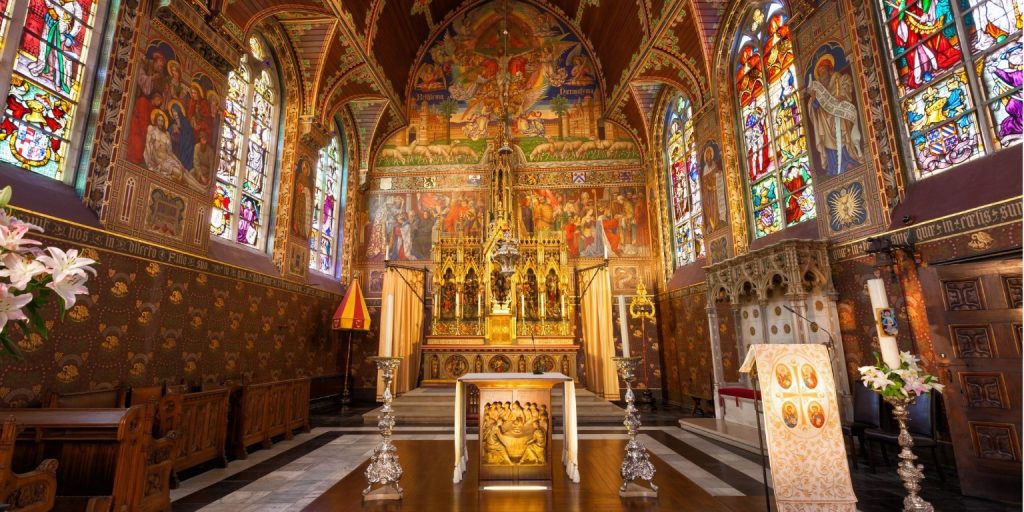
In stark contrast, the upper chapel, known as the Chapel of the Holy Blood, is a vibrant and ornate space, rebuilt in the Gothic style in the late 15th century. This chapel is a testament to the wealth and artistic skill of Bruges. Its interior is a symphony of colors, with intricate murals, a lavishly decorated altar, and stunning stained-glass windows that depict the sovereigns who reigned over the County of Flanders. The upper chapel serves as the primary sanctuary and is where the famous relic of the Holy Blood is displayed.
The Sacred Relic and Its Legend
The central focus of the basilica is the venerated phial containing a cloth believed to be soaked with the blood of Jesus Christ. According to tradition, the relic was brought to Bruges by Thierry of Alsace, Count of Flanders, upon his return from the Second Crusade in 1150. Legend holds that he was given the phial by his brother-in-law, Baldwin III, King of Jerusalem, as a reward for his valor. While this story has been a cornerstone of local folklore for centuries, historical research suggests an alternative origin.
It is more likely that the relic arrived in Bruges after the Fourth Crusade and the sack of Constantinople in 1204, when Count Baldwin IX of Flanders, who was elected Latin Emperor of Constantinople, sent looted relics back to Flanders. Regardless of its exact provenance, the relic has been an object of intense veneration in Bruges since the 13th century.
The rock-crystal phial, which itself is a Byzantine perfume bottle from the 11th or 12th century, is encased in a magnificent golden reliquary. For pilgrims and tourists alike, the highlight of a visit is the opportunity to view the relic, which is displayed daily for veneration.
The Procession of the Holy Blood
The relic is the centerpiece of one of Belgium’s most important religious and cultural events: the annual Procession of the Holy Blood (Heilig Bloedprocessie). Held every Ascension Day, the procession dates back to the Middle Ages and attracts tens of thousands of spectators. It is a vibrant and elaborate pageant that reenacts biblical stories and key moments from the history of Bruges. More than 1,700 local residents participate, walking through the city streets in historical costumes alongside horse-drawn floats and live animals.
The procession culminates with the solemn and reverent carrying of the relic itself, which is paraded through the city, often led by the Bishop and members of the Brotherhood of the Holy Blood. In 2009, this unique event was recognized by UNESCO as a Masterpiece of the Oral and Intangible Heritage of Humanity.
Visit Basilica of the Holy Blood through World City Trail!
The Basilica of the Holy Blood is a powerful symbol of faith and tradition in Bruges. It is not just a destination for pilgrims seeking a spiritual experience but also for art historians and travelers drawn to its architectural beauty and the captivating history it embodies. Its location in the heart of Bruges makes it an essential stop, offering a window into the city’s soul and the sacred narrative that has shaped its identity for nearly a millennium.
Bruges Scavenger Hunt and Self Guided Tour
<div class="wp-block-uagb-tabs uagb-block-a029b1f4 uagb-tabs__wrap uagb-tabs__hstyle1-desktop uagb-tabs__vstyle…