
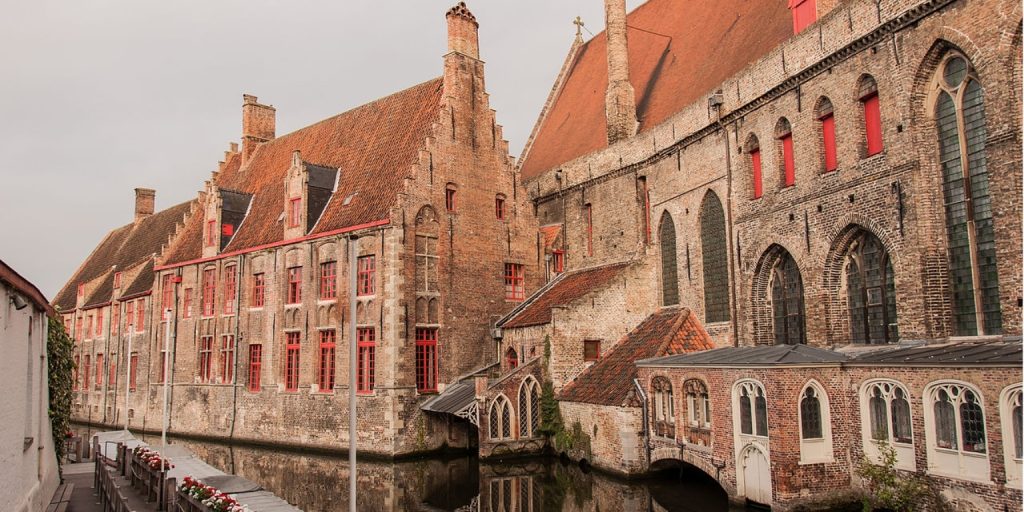
Founded around 1150, Sint-Janshospitaal was established by the Augustinian monastic order to provide hospitality and care for the city’s poor, sick, and a growing number of pilgrims and travelers passing through Bruges, a bustling medieval trade hub. The hospital’s mission was deeply rooted in Christian charity, with a focus on both physical and spiritual well-being. The large, communal wards, with their high-vaulted ceilings and rows of beds, were designed to be both functional and a place of quiet reflection. A key feature of the medieval infirmary was its connection to a chapel, allowing patients to participate in religious services from their beds, ensuring that spiritual comfort was as central to their care as medical treatment.
Over the centuries, the hospital complex expanded, adding a convent, monastery, and a pharmacy. These additions reflect the evolving nature of healthcare and the hospital’s growth as a central institution in Bruges. By the 19th century, the hospital was a sprawling facility with modern (for its time) wings and a central circular corridor, all of which are now part of the historical site. It continued to function as a hospital until 1977, when its operations were moved to a new, more modern facility.
The Art of Hans Memling
The true highlight of a visit to theSint-Janshospitaal is the Hans Memling Museum, which is inextricably linked to the site’s history. Hans Memling, a German-born painter who settled in Bruges, was one of the most celebrated artists of the Early Netherlandish school. He received numerous commissions from the hospital’s religious community, and his works are still displayed in their original context, a rarity in the art world.
The crown jewel of the collection is the Shrine of St. Ursula, a magnificent gilded and painted oak reliquary created by Memling in the late 15th century. Shaped like a miniature Gothic church, the shrine features six stunning panels that depict the legend of St. Ursula and her pilgrimage. Its intricate detail and luminous colors make it one of the most exquisite examples of Early Netherlandish art.
Another masterpiece is the St. John Altarpiece, a large triptych completed in 1479. Commissioned for the high altar of the hospital’s church, this monumental work depicts the enthroned Virgin and Child flanked by two saints, with panels showing key moments in the lives of St. John the Baptist and St. John the Evangelist. The altarpiece is a testament to Memling’s skill and the profound spiritual role art played in the hospital’s life. The museum also houses other significant works by Memling, including the Diptych of Maarten van Nieuwenhove, a poignant portrait that showcases Memling’s mastery of light and detail.

A Living Museum and Cultural Hub
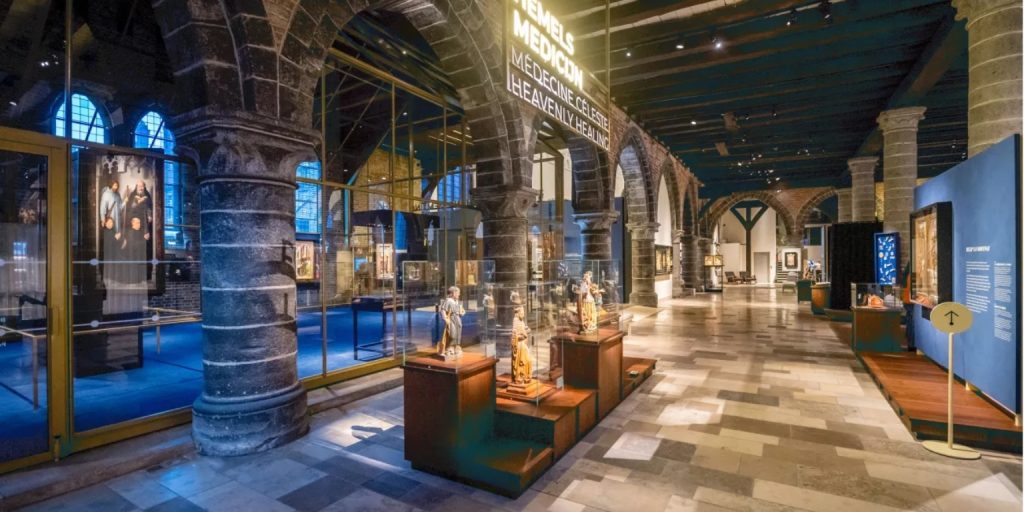
Today, the Sint-Janshospitaal has been meticulously preserved and transformed into a museum that tells the story of its past. Visitors can explore the preserved wards, view the historical medical instruments, and see the pharmacy with its original equipment. The museum’s collections, which include paintings, sculptures, and religious artifacts, provide a comprehensive look at the hospital’s legacy.
Visit Sint-Janshospitaal through World City Trail
Beyond its role as a museum, the Oud Sint-Janshospitaal site has become a dynamic cultural hub. Its historic wards and buildings are now used as a congress and exhibition center, hosting a variety of events. This dual function ensures that the site continues to serve the community, blending its deep historical roots with a modern purpose. A visit to the Old Saint John’s Hospital is an immersive experience that goes beyond a typical museum visit, offering a window into the compassionate and artistic soul of Bruges.