
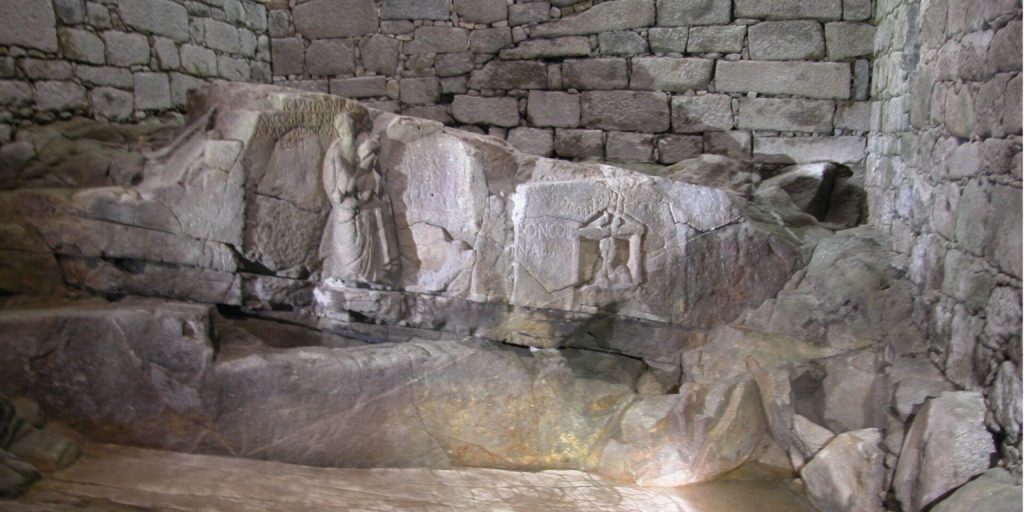
The Idol Fountain is not a freestanding structure but a large granite rock face, meticulously carved with reliefs and inscriptions. Its origins are a subject of archaeological debate, but it is widely believed to have been a sacred spring or a place of worship associated with a pre-Roman water cult. The main inscription identifies the site as a sanctuary dedicated to two Gallaecian and Lusitanian deities: Tongoenabiagus and Nabia.
Tongoenabiagus, a local god, is thought to be a male consort to the goddess Nabia, who was traditionally associated with water, rivers, and fertility. The fountain’s location near a natural spring reinforces its role in a water-based religious practice. A deeper exploration into the historical and cultural significance of water in ancient civilizations reveals that many societies revered springs and rivers as sacred entities. Water was not just a source of life; it was often believed to be a conduit to the divine.
Archaeological findings across various cultures, including Celtic and Roman, indicate that water cults frequently emerged around natural springs. This connection to the sacred is evident in the meticulous carvings at the Idol Fountain, which may have served as a focal point for rituals aimed at honoring these deities and ensuring the fertility of the land and its people.
What makes it unique?
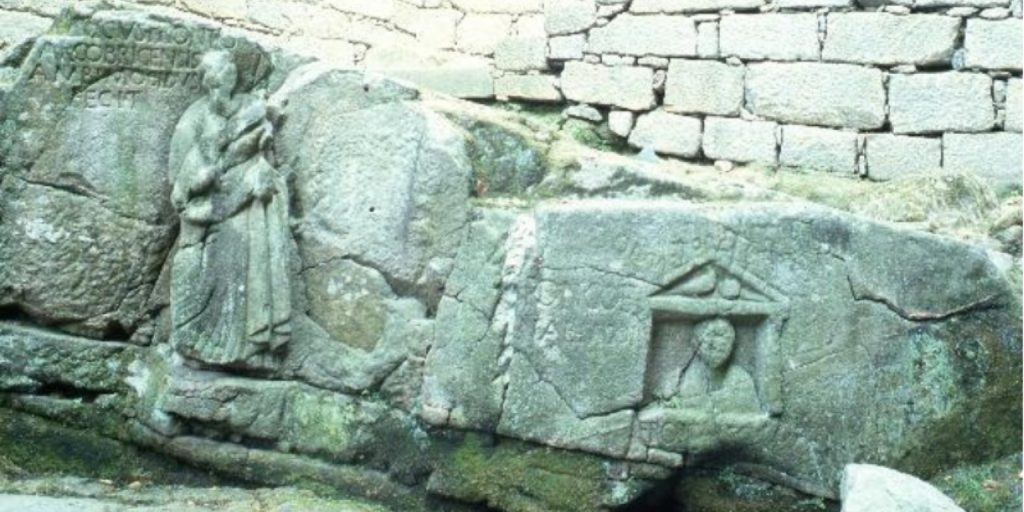
The most striking features of the site are the two carved figures on the rock face. One figure is a standing male figure, possibly a deity or a devotee, wrapped in a toga and holding an unidentified object. The other is a smaller, more stylized figure, possibly a bust, contained within a niche. These enigmatic carvings, along with the detailed Latin inscriptions, provide invaluable insights into the religious syncretism that occurred in the Roman province of Lusitania, where local Celtic beliefs were integrated with the Roman pantheon.
This fusion of cultural elements illustrates the complexities of identity in ancient societies, as the locals adapted to Roman rule while still holding on to their traditional beliefs. The Idol Fountain thus stands as a testament to the rich tapestry of cultural interactions that defined this historical period.
From Discovery to Preservation
For centuries, the Idol Fountain was a neglected and little-understood landmark, often referred to simply as the “Idol’s Spring.” It was identified on maps as early as the late 16th century, but its true historical significance was not fully appreciated until much later.
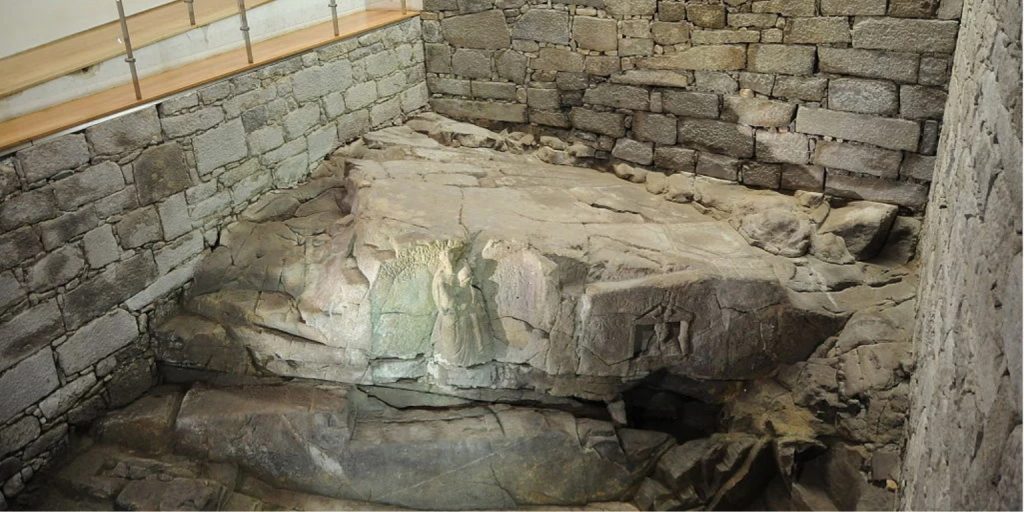
The monument’s unique nature and historical value led to its classification as a National Monument in 1910. However, it was not until a major archaeological and museological project between 2001 and 2004 that the site was given the protection and interpretation it deserved. Today, the Idol Fountain is housed within a modern, climate-controlled structure that serves as an interpretive center. This sensitive architectural solution protects the delicate carvings from the elements while allowing visitors to view the monument in excellent conditions.
The center provides context through informative displays, helping visitors understand the archaeological and cultural significance of the site. Educational programs and guided tours enhance the visitor experience, enabling deeper connections with the history and the cultural practices of ancient civilizations that worshipped at this site.
A Journey into Roman Braga
Visiting the Idol Fountain is a step back in time. Located on Rua do Raio, in close proximity to other key historical sites like the Palácio do Raio, it is easily accessible and an essential stop for anyone interested in the history of Braga. The visit offers a deeper understanding of the city’s Roman foundations, going beyond the more visible Roman ruins to explore the spiritual beliefs and daily life of its ancient inhabitants.
The fusion of Roman urban planning and indigenous religious traditions is a key theme of Braga’s history, and the Idol Fountain is perhaps the most eloquent expression of this blend. It serves as a reminder that the city of Braga, known today for its Christian heritage and magnificent Baroque architecture, has a much older, deeper history rooted in ancient pagan cults. The Idol Fountain is not just a landmark; it is a vital piece of the puzzle that makes Braga one of Europe’s most historically compelling cities.