
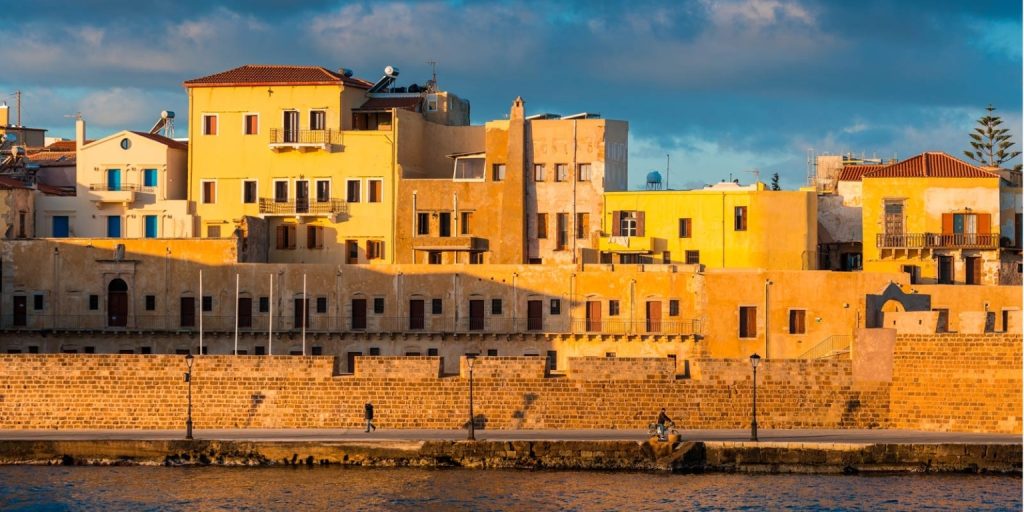
The fortress was built by the Venetians, who ruled Crete from the 13th to the 17th century. Its official name was “Revellino del Porto,” or “Ravellin of the Port,” and its construction began in the late 16th century and was completed in 1620. As part of a larger system of fortifications designed to protect the city from pirate raids and the growing threat of the Ottoman Empire, Firka Fortress was positioned at a crucial point. It was designed to guard the entrance of the harbor, and in times of siege, a massive chain could be stretched from the fortress to the Chania Lighthouse on the opposite side to block enemy ships from entering the port.
The fortress itself was a marvel of military engineering. Its interior was meticulously organized to serve as barracks for soldiers, with ammunition storage areas and a large, domed water tank to collect rainwater, ensuring the garrison had a reliable water supply. On its northern side, six arched openings housed large cannons, strategically aimed to provide maximum coverage of the harbor entrance. This formidable design, however, was not enough to prevent the Ottoman conquest. In 1645, after a long siege, the city fell to the Turks, and the fortress was seized.
From Barracks to a Symbol of Freedom
After the Ottoman conquest, the fortress was repurposed and given a new name. The Turkish occupiers used it as a barracks for their troops, and the Turkish word for barracks, “Firka,” became its enduring name. The arched cannon openings were converted into prison cells, which were used as a place of detention for centuries, including during the Greek Civil War.
Despite its association with a period of foreign rule and oppression, Firka Fortress is also the site of one of the most significant and celebrated moments in modern Greek history. On December 1, 1913, in a deeply symbolic and emotional ceremony, the Greek flag was officially raised on the fortress’s corner watchtower. This event marked the final and official union of Crete with the rest of Greece, an ambition that had been at the heart of the Cretan people’s struggles for decades.
The ceremony was attended by the then King of Greece, Constantine I, and the Cretan-born Prime Minister of Greece, Eleftherios Venizelos, a visionary statesman who had been a key leader in the unification movement. This historic event is commemorated annually with a celebratory reenactment at the fortress, a testament to its powerful role in the nation’s memory.
The Maritime Museum of Crete
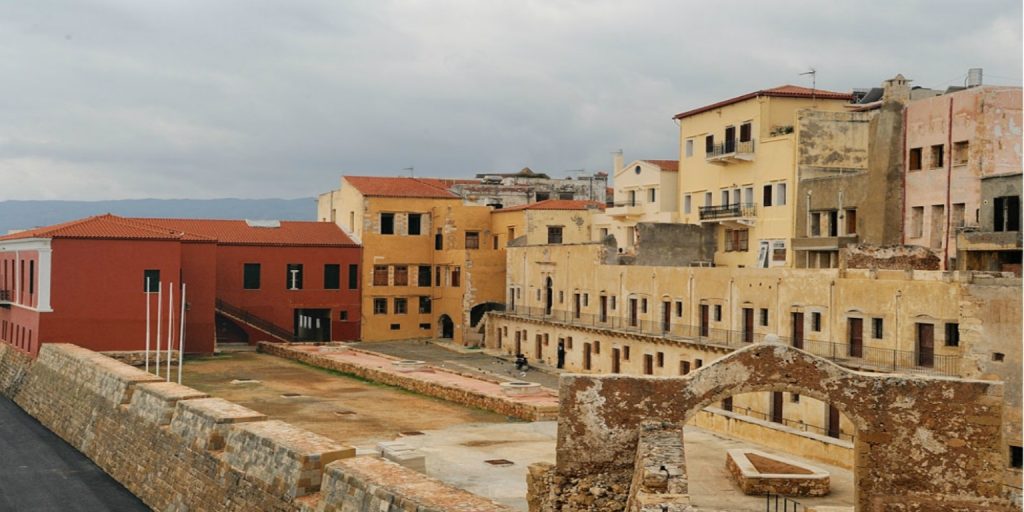
Today, the Fortress of Firka is not just a place of historical reflection; it is a vibrant cultural hub. A significant portion of the fortress houses the Maritime Museum of Crete, one of the most important naval museums in Greece. The museum’s comprehensive collection chronicles Crete’s rich maritime history, from antiquity to the present day. Its exhibits include model ships, historical photographs, nautical instruments, and artifacts from battles and naval traditions. A visit to the museum offers a deeper understanding of the island’s strategic importance and its seafaring heritage.
Firka Fortress also provides some of the most spectacular views of the Venetian Harbor. Visitors can walk along its ramparts, take in the breathtaking panorama of the colorful harbor, the lighthouse, and the charming old town of Chania. Its blend of a dark, military past with a triumphant, nationalistic present makes Firka Fortress a compelling and essential stop for anyone exploring the city. It stands as a silent witness to Chania’s layered history, inviting visitors to reflect on the events and struggles that have shaped this beautiful and resilient island.