
The history of the Fischmarkt is deeply rooted in Cologne’s past as a major medieval trading center. The square served as the primary fish market for the city for centuries. Fishermen would unload their fresh catches from boats on the Rhine and sell them directly to local merchants and residents in the square. This was a place of constant activity, a vital part of the city’s economy and social fabric.
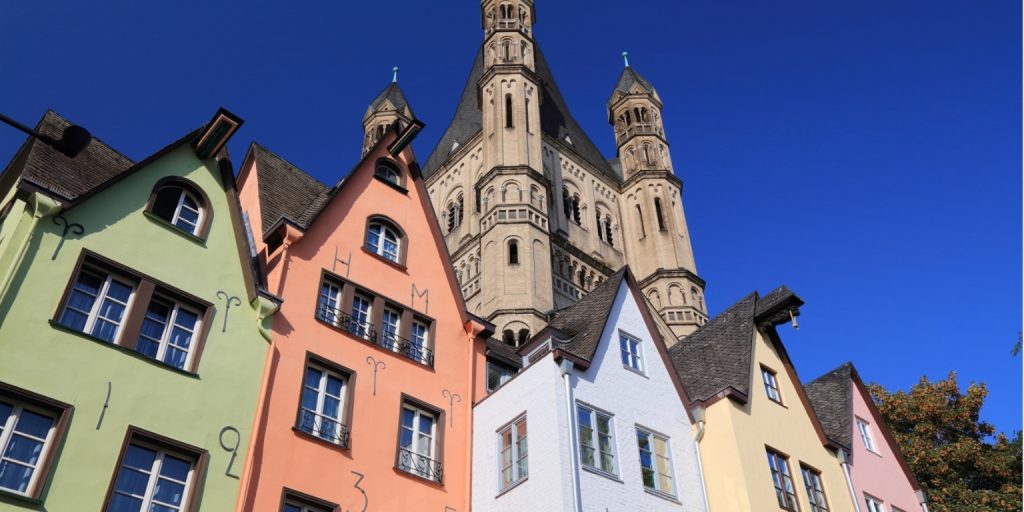
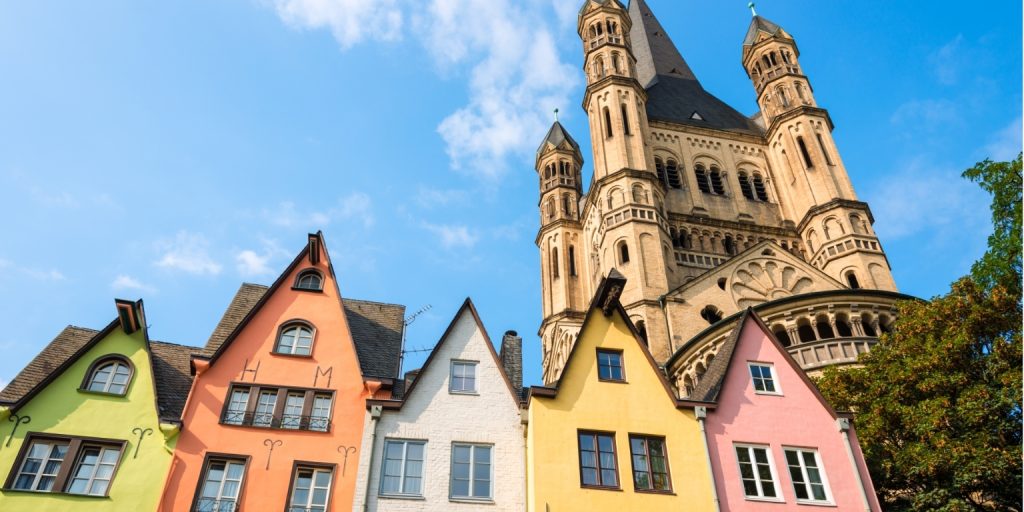
The square’s most distinctive feature is its architecture. The row of narrow, gabled houses that line the eastern side of the square are a faithful reconstruction of the original medieval buildings. Like much of Cologne’s Old Town, the Fischmarkt was almost completely destroyed during World War II. However, after the war, the city undertook a painstaking effort to rebuild the area according to historical plans and photographs. This commitment to preserving its architectural heritage is what gives the Fischmarkt its authentic, old-world charm. The houses, with their crooked timber frames and brightly painted facades, are an iconic image of the city and a reminder of its resilience.
The Great St. Martin Church: An Architectural Icon
Dominating the skyline of the Fischmarkt is the majestic Great St. Martin Church (Groß St. Martin). This Romanesque church, with its distinctive trefoil choir and massive square tower, is one of Cologne’s twelve great Romanesque churches and a symbol of the city. The church’s origins date back to the 10th century, and it was built on the remains of a Roman warehouse. Its imposing presence behind the colorful houses creates a powerful visual harmony and is one of the most photographed scenes in all of Cologne.
The church’s history, like the square’s, is one of devastation and rebirth. It was heavily damaged during the war, and its reconstruction took several decades, a testament to the city’s dedication to restoring its most cherished landmarks. Today, the church stands proudly, its silhouette a familiar and comforting sight for locals and a source of wonder for visitors.
A Hub of Gastronomy and Social Life
While the Fischmarkt no longer functions as a fish market, it remains a bustling center of activity, albeit a different kind. The ground floors of the historic houses are now home to a variety of traditional German breweries (Brauhäuser), pubs, and restaurants. These establishments, with their outdoor seating and lively atmosphere, are the perfect place to experience Cologne’s famous hospitality. Visitors can sit and enjoy a glass of local Kölsch beer, a plate of traditional Rhineland fare, and watch the world go by.
The square is particularly vibrant on weekends and in the evenings, when locals and tourists gather to socialize. Its proximity to the Rhine promenade also makes it a popular starting point for a walk along the river, which offers stunning views of the Hohenzollern Bridge and the Cologne Cathedral. The Fischmarkt is also a hub for boat tours, which depart from nearby piers, providing a unique perspective of the city from the water.
In many ways, the Cologne Fish Market is the soul of the city’s Old Town. It embodies the blend of history and modernity, of ancient traditions and contemporary life, that makes Cologne so unique. It is a place that invites you to linger, to soak in the atmosphere, and to appreciate the city’s rich past. Whether you are looking for a historical site, a great meal, or simply a charming place to relax, the Fischmarkt is a must-see destination that captures the heart of Cologne.
World City Trail offers you the best way to explore Cologne!

Cologne Scavenger Hunt and Self-Guided Tour
<div class="wp-block-uagb-tabs uagb-block-a029b1f4 uagb-tabs__wrap uagb-tabs__hstyle1-desktop uagb-tabs__vstyle…