
The Zero Kilometre Stone serves as a historical reminder of the city’s past. For centuries, Copenhagen, like many European cities, was enclosed by a ring of defensive walls and moats. Access to the city was controlled through a series of gates, which were opened in the morning and closed at night. These gates—Vesterport (Western Gate), Nørreport (Northern Gate), Østerport (Eastern Gate), and Amagerport—were not only entry points but also the official starting points for roads leading out of the city.
The Zero Kilometre Stone in Copenhagen is not one single monument but rather a set of granite stones placed at the sites of these former city gates. Each stone, designed by the Danish architect Peder Vilhelm Jensen-Klint in the early 20th century, commemorates the spot where a gate once stood and serves as a symbolic marker for the roads that once radiated from it. The stones were part of a broader shift in the early 20th century when Denmark adopted the metric system, replacing old measurements like miles and feet with kilometers.
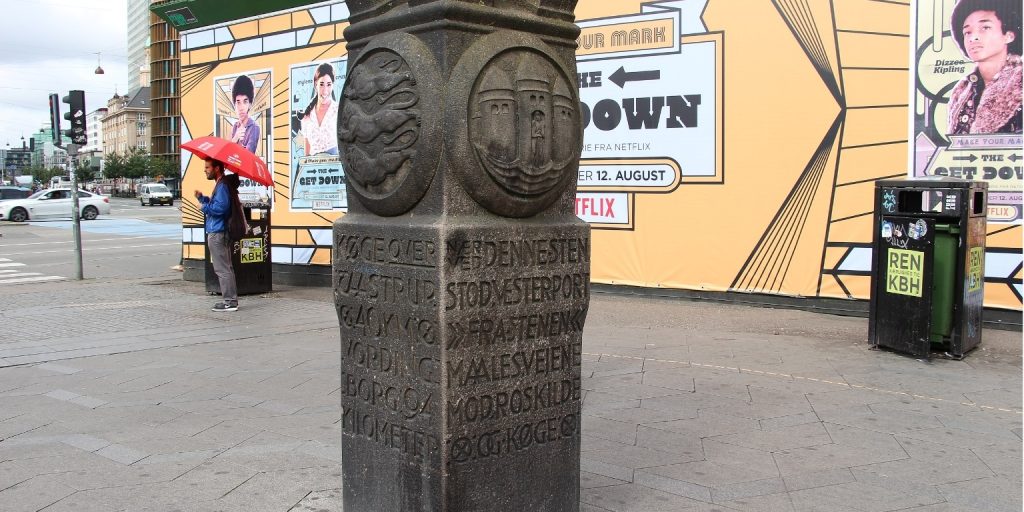
The Zero Kilometre Stone and Their Locations
The most well-known of these markers is located at Rådhuspladsen, or City Hall Square. This stone, situated beside the Dragon Fountain, marks the spot of the former Vesterport (Western Gate). For centuries, Vesterport was the main gateway for traffic and trade coming from the west and south of Denmark, including major routes from Korsør and Rødby. This stone, erected in 1925, is often considered the most central “zero point” in the modern city, as Rådhuspladsen is a major public space and transport hub.
However, the other markers are equally significant. A stone at Nørreport commemorates the Northern Gate, the starting point for roads leading to towns like Frederikssund. Another stone at Østerport, near the present-day train station, marks the Eastern Gate, which was the gateway to the north, including the road to Helsingør. Finally, a marker at Amagerport signifies the gate that connected the city to the island of Amager, an important agricultural area and later a key part of the city’s expansion.
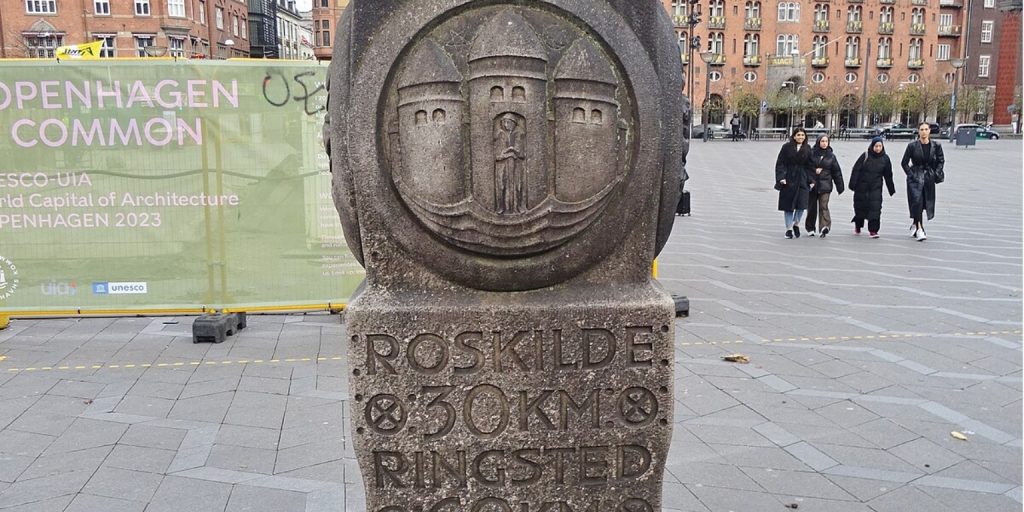
More Than Just a Measurement
The Zero Kilometre Stone in Copenhagen are more than just historical marker for road distances. It is a physical representation of the city’s growth and modernization. The stones were installed after the old fortifications were torn down in the mid-19th century to make way for new urban development and a healthier, more open city. The removal of the gates was a symbol of Copenhagen’s transformation from a confined, medieval city to a modern, expansive metropolis.
Today, this inconspicuous granite columns provide a fascinating historical context for the city’s layout. They stand as a testament to a time when Copenhagen was a fortified capital and remind visitors and locals of the city’s physical and historical boundaries. While many people might walk past them without a second thought, for those who know their story, the stones serve as a powerful link to the past.
A visit to the various Zero Kilometre Stone is an excellent way to explore Copenhagen’s history on foot. Starting at the central Rådhuspladsen, one can follow the paths that once led out of the city, imagining the bustling traffic and the daily rituals of the old city gates. These small, powerful monuments encourage a deeper appreciation for the city’s rich history and the enduring legacy of its past.
Further reading on Wikipedia: Kilometre zero