
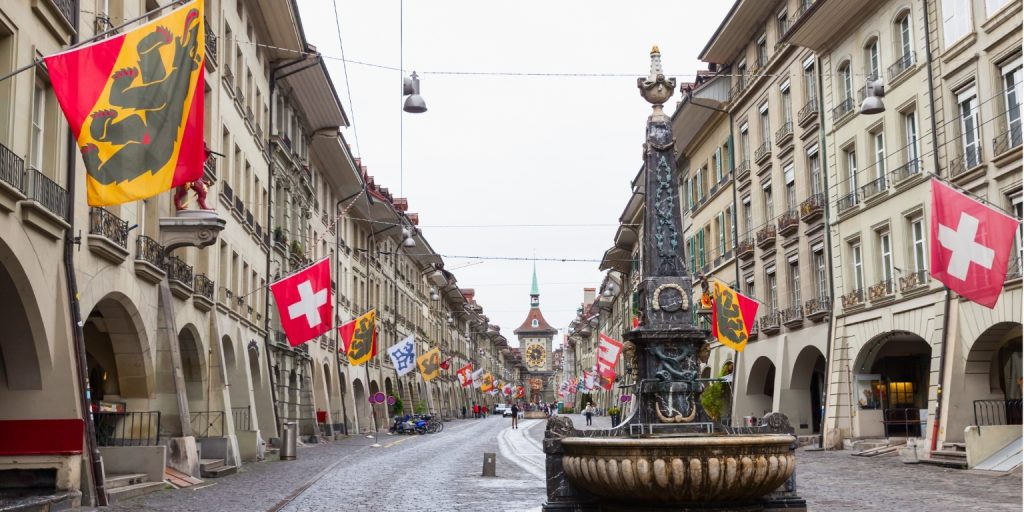
The name “Kramgasse” translates to “Grocers’ Alley,” a testament to its origins as a bustling marketplace during the Middle Ages. This central axis of the city, which stretches from the Zytglogge (Clock Tower) to the Kreuzgasse, was the commercial and social center of Bern until the 19th century. After a devastating fire in 1405, much of Bern was rebuilt in stone, giving rise to the uniform, beautifully preserved Baroque facades that line Kramgasse today. The street’s gentle curve and long rows of buildings create a stunning perspective, making it one of the most picturesque streets in all of Switzerland.
One of Kramgasse’s defining features is its network of “Lauben,” or covered arcades. These continuous arches run along both sides of the street, offering a sheltered passage for pedestrians. Originally built to protect market stalls from the elements, they now provide a unique and inviting atmosphere for shoppers and sightseers, regardless of the weather. Beneath the street level, many of the buildings have vaulted cellars, some dating back to the medieval era, which have been transformed into a variety of shops, cafes, and restaurants.
Fountains and Landmarks on Kramgasse
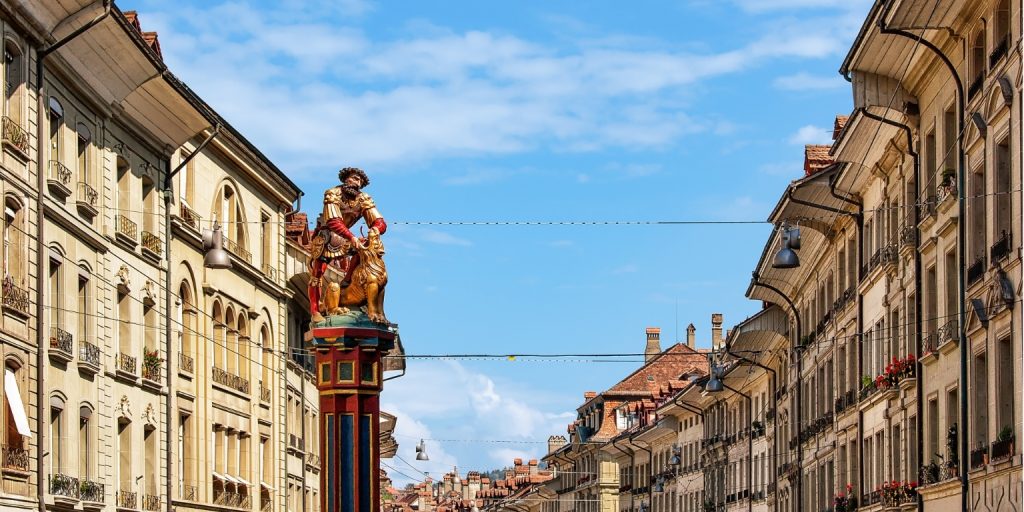
The street is punctuated by several of Bern’s renowned 16th-century public fountains, each a work of art and a historical marker. The Zähringerbrunnen (Zähringen Fountain) stands at the western end of Kramgasse, celebrating the city’s founder, Duke Berchtold V of Zähringen. Its bear figure, a symbol of Bern, reminds passersby of the city’s founding legend.
Further down the street is the Simsonbrunnen (Samson Fountain), which depicts the biblical hero Samson triumphing over a lion. Created by Hans Gieng, the same sculptor responsible for many of Bern’s other famous fountains, this fountain adds a touch of allegorical drama to the streetscape. These fountains were not just decorative; they were vital social hubs where people gathered for water, news, and conversation.
A visit to Kramgasse is incomplete without stopping at number 49, the Einsteinhaus. This is the former residence of Albert Einstein, who lived in an apartment here from 1903 to 1905 while working at the Swiss Patent Office. It was during this period that he developed his groundbreaking theories that would change the course of physics. Today, the apartment has been turned into a small museum, offering a fascinating glimpse into the life of one of the world’s greatest minds.
A Modern Hub with Medieval Roots
While steeped in history, Kramgasse remains a lively and dynamic part of modern Bern. It serves as a prime shopping destination, featuring an eclectic mix of boutiques, jewelers, bookshops, and artisanal stores. The street buzzes with activity, from locals running errands to tourists marveling at the architecture. The blend of historic buildings, vibrant commerce, and unique underground establishments—from cellar theaters to cozy bars—makes Kramgasse an unforgettable experience.
Whether you are exploring the city’s medieval heritage, seeking out unique shopping finds, or simply enjoying the atmosphere of one of Europe’s most charming streets, Kramgasse truly is the heart and soul of Bern. Its enduring beauty and rich history make it a destination that perfectly embodies the spirit of the Swiss capital.