
Created in 1955, the Flower Clock was a joint initiative to celebrate the city’s watchmaking tradition and its dedication to urban green spaces. Geneva has been a global center for watchmaking since the 16th century, and the Flower Clock serves as a direct, and very public, tribute to that legacy. It is a working timepiece that is not just aesthetically beautiful but also mechanically precise. The time is set electronically via a satellite link, ensuring its accuracy to the second. This commitment to precision, even in a non-traditional timepiece, embodies the very essence of Swiss horology.

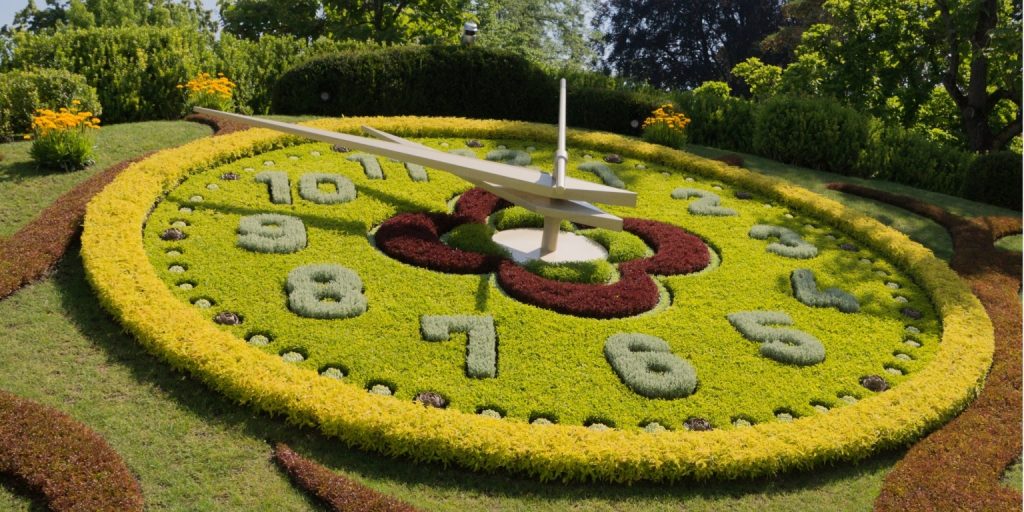
The clock is a feat of both engineering and horticulture. Its mechanism is concealed beneath the floral face, driving a set of hands that are perfectly in sync. The second hand, at 2.5 meters long, is famously the longest in the world for a flower clock, adding to its grand scale and visual impact. While it was once the world’s largest flower clock by diameter, that title has since passed to a larger clock in Tehran. Nonetheless, the Geneva Flower Clock remains a celebrated landmark for its elegance and symbolic importance.
A Living Work of Art
What makes the Flower Clock so enchanting is its dynamic nature. The clock face is not static; it is a living canvas that changes with the seasons. Approximately 12,000 flowering plants and shrubs are used to create the intricate floral designs and numbers. The horticultural teams from the City of Geneva’s Green Spaces Department meticulously replant the clock face four times a year. This seasonal renewal ensures that the clock is always in bloom, presenting a new color palette and design with each visit.
In spring, the clock might be adorned with vibrant primroses and pansies, while summer brings a burst of color with begonias and other annuals. In the autumn, the flowers are changed again to a cooler, more subdued palette. This continuous process of renewal not only highlights the city’s dedication to public green spaces but also provides a visual representation of the passage of time, with the blooms marking the seasons just as the hands mark the minutes. The maintenance of the clock is an ongoing, year-round effort, with gardeners working at least twice a week to ensure the health and vibrancy of the plants.

An Urban Oasis and Tourist Landmark
The Flower Clock is strategically located in the Jardin Anglais (English Garden), one of Geneva’s oldest and most beautiful parks. The garden itself is a popular destination, offering serene walkways, beautiful fountains, and a tranquil atmosphere along the shore of Lake Geneva. The clock is situated in a prominent position, visible from the main promenade, making it a natural gathering point for both locals and tourists.
For visitors, the Flower Clock is a key photo opportunity and a must-see stop on any tour of Geneva. It perfectly captures the city’s sophisticated character, a place where natural beauty, meticulous design, and timeless precision coexist. The clock’s enduring appeal lies in its simple yet powerful message: that beauty can be found in the combination of human ingenuity and the natural world. It is a landmark that represents Geneva’s commitment to both its historical traditions and its future as a vibrant, green city.