
The Stadshal’s journey from a conceptual design to a completed landmark was marked by significant controversy. Prior to its construction, the area, a square known as Emile Braunplein, was an uninspired open car park. The city of Ghent decided to redevelop this central space with a design competition. The winning proposal, submitted by the architectural firms Robbrecht & Daem and Marie-José Van Hee, was a radical departure from the traditional styles of the city. Their design, a large, open pavilion, was unlike anything else in Ghent’s historic center.
Many residents and conservationists initially opposed the design, arguing that the modern structure was too jarring and out of place among the city’s cherished Gothic and Renaissance architecture. They nicknamed it a “sheep shed” and a “garage” due to its unembellished, functional appearance. However, the architects defended their vision, arguing that the pavilion was a respectful nod to the past, with its roofline and structure subtly echoing the profiles of the medieval guildhalls and churches nearby. It was not meant to mimic the old but to stand in dialogue with it, creating a new focal point for a new era.
After years of debate, the project was finally approved, and the Stadshal was officially opened in 2012. It quickly proved its critics wrong. What was once a drab car park became a dynamic public square, a bustling meeting place, and a space for a wide variety of events.
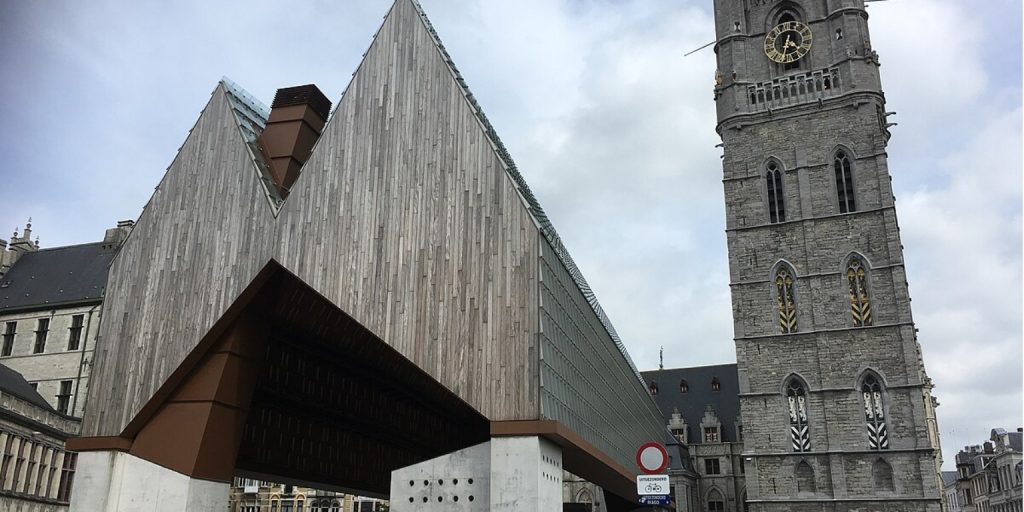
Architectural Harmony and Functionality
The design of the Stadshal is deceptively simple. It is a large, open-air structure, defined by a magnificent, sloped roof made of wood, glass, and steel. The roof’s most distinctive feature is its numerous small openings and windows, which allow natural light to filter through in a dappled effect during the day. At night, the pavilion is lit from within, creating a warm, lantern-like glow that illuminates the square below.
The wood used in the construction is a warm, light-colored material that provides a welcoming contrast to the ancient gray stone of the surrounding buildings. The pavilion’s design is highly functional. It serves as a large, covered public space that is open on all sides, protecting people from rain while still allowing for a clear view of the surrounding monuments. A ground-level public area includes a small café and public restrooms, while a sunken, grassed amphitheater provides a space for performances and relaxation.
Below the pavilion, an underground parking garage was built, finally removing the cars from the square and allowing it to be reclaimed by pedestrians. This was a crucial part of the project’s success, transforming the area into a pedestrian-friendly urban space.
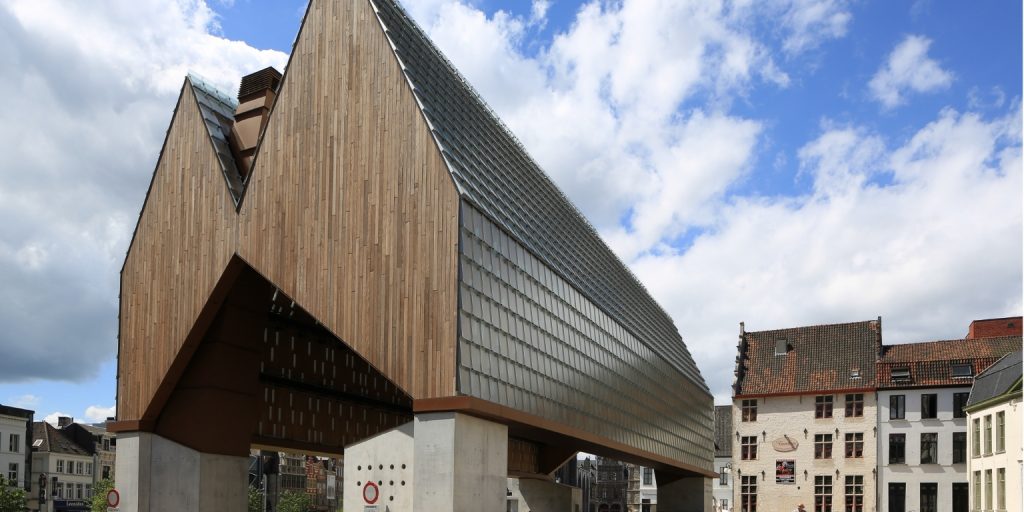
The Heart of Ghent’s New Public Life
The Stadshal has become an unqualified success as a public space. It has transformed the area into a true social hub, a place where people gather for lunch, meet friends, and simply enjoy the atmosphere of the city. The pavilion’s design, with its open plan and flexible layout, allows it to be used for a wide range of activities. It hosts regular markets, festivals, and cultural events, from food fairs to public concerts and art installations. In winter, it is often a key part of the city’s Christmas market festivities.
By creating a clear, central gathering point, the Stadshal has helped to stitch together the different parts of the city center. It has become the centerpiece of the modern Ghent experience, a place where history and modernity are in conversation, and where a contemporary design has breathed new life into an old urban core. The Stadshal is a testament to the power of bold architecture to shape public behavior and create a sense of place, proving that even a controversial design can become a cherished landmark.