
Dortmund è una città di birra, carbone, acciaio e calcio, e porta questa storia apertamente. Dietro le vie dello shopping del dopoguerra c’è una città anseatica medievale con chiese romaniche, e tutt’intorno vecchi birrifici e miniere sono diventati musei, laghi e spazi d’arte. Ecco i fatti e le storie che rendono speciale la città.
10 curiosità su Dortmund
- Oltre 1.100 anni di documenti: Dortmund è menzionata per la prima volta intorno all’882, come Throtmanni, nei registri dell’abbazia di Werden.
- Una città libera della Lega anseatica: nel Medioevo Dortmund era un importante centro commerciale anseatico e una città libera imperiale, soggetta solo all’imperatore, fino al 1803.
- One of Europe's first brewing rights: Dortmund received an official right to brew in 1293. Centuries later it gave its name to a beer style, Dortmunder Export, a strong pale lager made for the thirsty miners and steelworkers.
- Germany's largest stadium: Signal Iduna Park, opened in 1974 as the Westfalenstadion, holds 81,365 fans for league matches. Its south stand, the Yellow Wall, has room for about 25,000 standing fans and is the largest terrace of its kind in Europe.
- Un club nato in Borsigplatz: il Borussia Dortmund fu fondato nel dicembre 1909 vicino a Borsigplatz, a nord del centro. Nel 1997 vinse la Champions League.
- Un albero di Natale fatto di alberi: al mercatino di Natale ogni anno si costruisce un albero gigante alto più di 45 metri con 1.700 abeti rossi del Sauerland. Il mercatino risale al 1878.
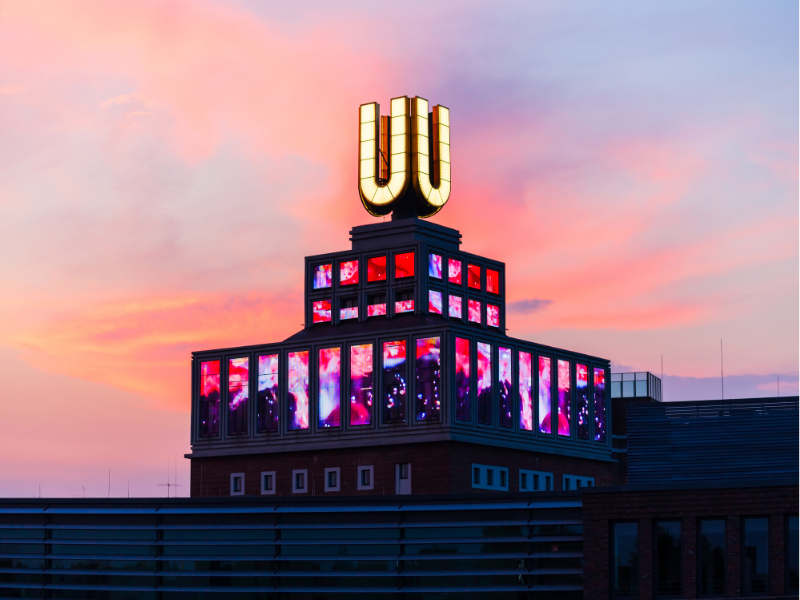
- Una U dorata nel cielo: la torre dell’ex birrificio Union porta sul tetto dal 1968 una grande U illuminata. Dal 2010 l’edificio, il Dortmunder U, è un centro per l’arte e la creatività.
- La fine del carbone: l’ultima miniera di Dortmund, Minister Stein, chiuse nel 1987, ponendo fine a oltre 150 anni di estrazione in città.
- Un lago al posto di un’acciaieria: il Phoenix See è stato scavato sul terreno dell’ex acciaieria Phoenix-Ost e riempito d’acqua nel 2010 e 2011. Oggi le sue rive sono costeggiate da case, caffè e percorsi.
- Europe's largest canal port: Dortmund lies at the end of the Dortmund-Ems Canal, opened in 1899, and its port is the largest canal port in Europe.
St Reinold, the city's patron
Dortmund's main church is dedicated to Reinold, a knight of medieval legend. The story goes that he gave up fighting, became a stonemason in Cologne and was murdered by jealous fellow workers. When his body was placed on a cart, the cart is said to have rolled all the way to Dortmund by itself, and the city took him as its patron. St Reinold's Church was built between 1250 and 1270. Its tower, finished in 1454 at about 112 metres, was so tall it was called the Wonder of Westphalia. Weakened by earthquakes, it collapsed in 1661 and was rebuilt by 1701. Badly damaged in the Second World War, the church was restored, and its tower stands at 104 metres today.
I tribunali della Vehme, in breve
In the late Middle Ages Dortmund was an important seat of the Vehmic courts, the Femegerichte of Westphalia. These tribunals of sworn free judges met in the open air and could try serious crimes from far beyond the city at a time when ordinary courts often failed. In Dortmund they sat on a square between two lime trees, one of them known as the Femlinde. Their members swore to keep the court's business secret, which gave the Vehme a fearsome reputation that later writers and legends happily exaggerated.
Cosa mangiare a Dortmund
- Pfefferpotthast: Dortmund's own dish, a beef stew with plenty of onions and black pepper, served with boiled potatoes and pickles.
- Dortmunder Export: la lager chiara locale, da ordinare per nome in una birreria tradizionale.
- Currywurst and fries: the Ruhr's favourite snack, found at stands all over the city centre.
- Pumpernickel: il pane di segale della Vestfalia, scuro e compatto, cotto lentamente per molte ore.
- Prosciutto di Vestfalia: stagionato e affumicato, spesso servito a fette sottili sul pane di segale.
Da sapere prima di partire
- Il Museo tedesco del calcio, aperto nel 2015, si trova proprio di fronte alla stazione centrale.
- Nei giorni delle partite in casa del Borussia, treni e tram intorno allo stadio sono pieni. Controlla il calendario se preferisci evitare la folla.
- Il mercatino di Natale va da fine novembre a poco prima di Capodanno, con l’albero gigante in Hansaplatz.
- Per il patrimonio industriale, l’ex miniera Zollern, nella parte ovest della città, oggi è un museo con una splendida sala macchine in stile Liberty.
Scopri Dortmund con World City Trail
Our Dortmund scavenger hunt turns these sights into a game you play on your phone. The route links 10 stops and takes around two hours, with about 42 minutes of walking, past landmarks including St Reinold's Church and the square of the Old Town Hall.
A ogni tappa risolvi un enigma e ascolti una breve storia, al tuo ritmo. Puoi iniziare quando vuoi.
Gioca alla caccia al tesoro di Dortmund →
Fatti verificati a ottobre 2026.