
Dortmund é uma cidade de cerveja, carvão, aço e futebol, e mostra essa história abertamente. Por trás das ruas comerciais do pós-guerra esconde-se uma cidade hanseática medieval com igrejas românicas, e à sua volta antigas cervejeiras e minas tornaram-se museus, lagos e espaços de arte. Eis os factos e as histórias que tornam a cidade especial.
10 curiosidades sobre Dortmund
- Mais de 1100 anos de registos: Dortmund é mencionada pela primeira vez por volta de 882, como Throtmanni, nos registos da abadia de Werden.
- Uma cidade livre da Hansa: na Idade Média, Dortmund foi uma importante cidade comercial hanseática e uma cidade imperial livre, sujeita apenas ao imperador, até 1803.
- One of Europe's first brewing rights: Dortmund received an official right to brew in 1293. Centuries later it gave its name to a beer style, Dortmunder Export, a strong pale lager made for the thirsty miners and steelworkers.
- Germany's largest stadium: Signal Iduna Park, opened in 1974 as the Westfalenstadion, holds 81,365 fans for league matches. Its south stand, the Yellow Wall, has room for about 25,000 standing fans and is the largest terrace of its kind in Europe.
- Um clube nascido na Borsigplatz: o Borussia Dortmund foi fundado em dezembro de 1909 perto da Borsigplatz, a norte do centro. Em 1997 venceu a Liga dos Campeões.
- Uma árvore de Natal feita de árvores: no mercado de Natal, todos os anos se constrói uma árvore gigante com mais de 45 metros a partir de 1700 abetos do Sauerland. O mercado remonta a 1878.
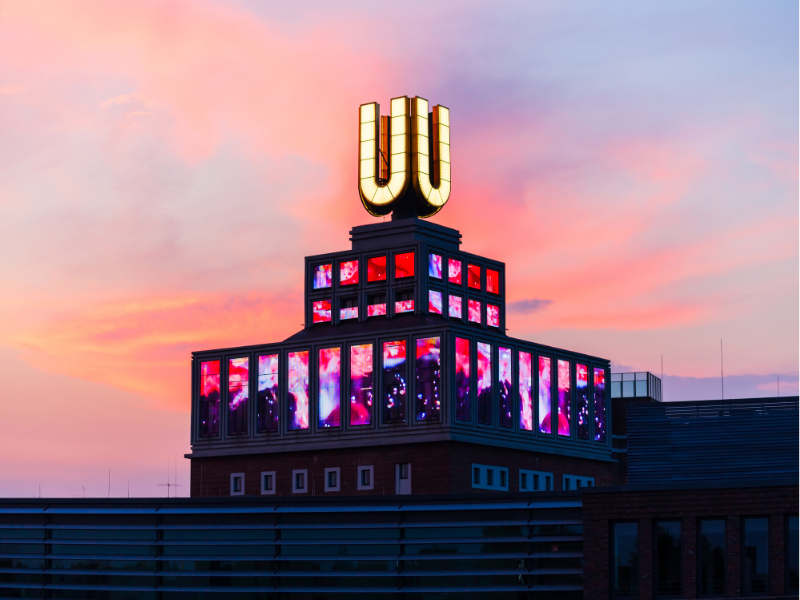
- Um U dourado no horizonte: a torre da antiga cervejeira Union tem desde 1968 um enorme U iluminado no telhado. Desde 2010 o edifício, o Dortmunder U, é um centro de arte e criatividade.
- O fim do carvão: a última mina de Dortmund, Minister Stein, fechou em 1987, pondo fim a mais de 150 anos de mineração na cidade.
- Um lago onde havia uma siderurgia: o Phoenix See foi escavado no terreno da antiga siderurgia Phoenix-Ost e enchido de água em 2010 e 2011. Hoje as margens têm casas, cafés e caminhos.
- Europe's largest canal port: Dortmund lies at the end of the Dortmund-Ems Canal, opened in 1899, and its port is the largest canal port in Europe.
St Reinold, the city's patron
Dortmund's main church is dedicated to Reinold, a knight of medieval legend. The story goes that he gave up fighting, became a stonemason in Cologne and was murdered by jealous fellow workers. When his body was placed on a cart, the cart is said to have rolled all the way to Dortmund by itself, and the city took him as its patron. St Reinold's Church was built between 1250 and 1270. Its tower, finished in 1454 at about 112 metres, was so tall it was called the Wonder of Westphalia. Weakened by earthquakes, it collapsed in 1661 and was rebuilt by 1701. Badly damaged in the Second World War, the church was restored, and its tower stands at 104 metres today.
Os tribunais da Vehme, explicados
In the late Middle Ages Dortmund was an important seat of the Vehmic courts, the Femegerichte of Westphalia. These tribunals of sworn free judges met in the open air and could try serious crimes from far beyond the city at a time when ordinary courts often failed. In Dortmund they sat on a square between two lime trees, one of them known as the Femlinde. Their members swore to keep the court's business secret, which gave the Vehme a fearsome reputation that later writers and legends happily exaggerated.
O que comer em Dortmund
- Pfefferpotthast: Dortmund's own dish, a beef stew with plenty of onions and black pepper, served with boiled potatoes and pickles.
- Dortmunder Export: a lager loura local, melhor pedida pelo nome numa cervejaria tradicional.
- Currywurst and fries: the Ruhr's favourite snack, found at stands all over the city centre.
- Pumpernickel: o pão de centeio da Vestefália, escuro e denso, cozido lentamente durante muitas horas.
- Presunto da Vestefália: curado e fumado, muitas vezes servido em fatias finas sobre pão de centeio.
Antes de ires
- O Museu Alemão do Futebol, inaugurado em 2015, fica mesmo em frente à estação central.
- Nos dias de jogo do Borussia em casa, comboios e elétricos à volta do estádio vão cheios. Consulta o calendário se preferires evitar multidões.
- O mercado de Natal funciona do fim de novembro até pouco antes da passagem de ano, com a árvore gigante na Hansaplatz.
- Para património industrial, a antiga mina Zollern, no oeste da cidade, é hoje um museu com uma impressionante sala de máquinas Arte Nova.
Descobre Dortmund com a World City Trail
Our Dortmund scavenger hunt turns these sights into a game you play on your phone. The route links 10 stops and takes around two hours, with about 42 minutes of walking, past landmarks including St Reinold's Church and the square of the Old Town Hall.
Em cada paragem resolves um enigma e ouves uma pequena história, ao teu ritmo. Podes começar quando quiseres.
Jogar a caça ao tesouro de Dortmund →
Factos verificados em outubro de 2026.