What is the Brussels self-guided walking tour?
The Brussels self-guided walking tour is a walk you take at the speed that suits you, with audio narration on your phone instead of a guide at the front. Count on about 3 hours: 64 minutes of that goes on walking, the route measures 4.2 km, and at 10 stops you stand still and listen. Nothing is scheduled, and nobody is waiting for you to catch up.
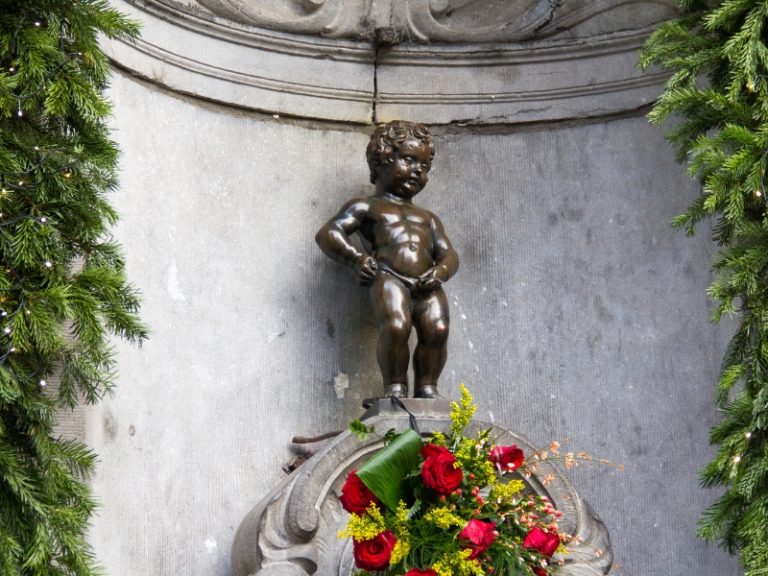
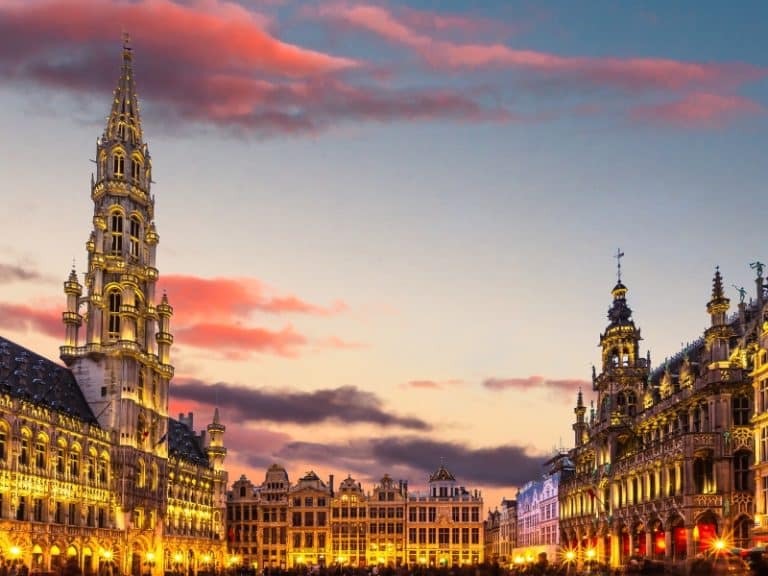
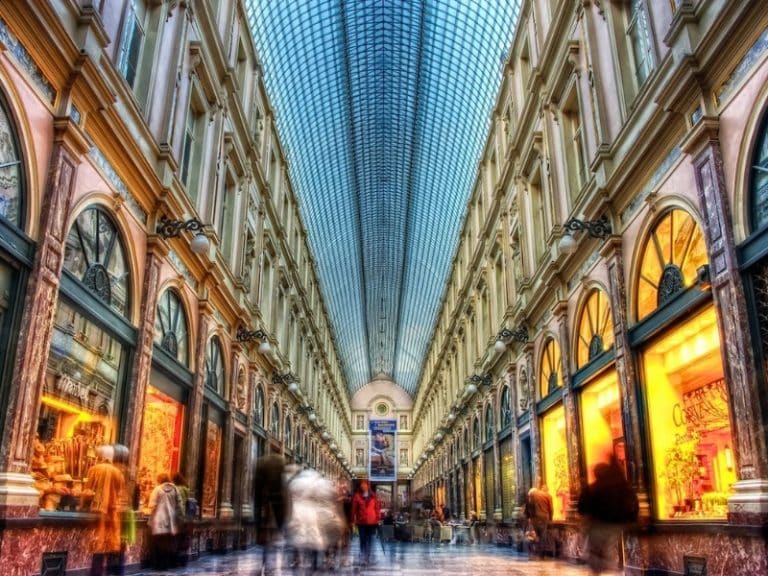
At the carillon of the Mont des Arts the narration counts off the twelve painted figures that mark the hours, from a Gaul to Charles V and Rubens, with a bronze gentleman in a top hat striking the bell. On the corner of the Rue de l'Étuve you learn that the bronze boy is barely 55 cm tall, that the one on view is a replica, and that his wardrobe runs to around a thousand costumes. On the Grand-Place the subject becomes the French bombardment of 1695 and the guild houses the city put back up afterwards, and under the glass of the Royal Galleries of Saint Hubert, arcades of 1847 and the shops and theatre beneath their roof.
- Durationabout 3 hours
- Walkingabout 64 min · 4.2 km
- Stops10
- LanguagesEnglish, German, French, Italian, Spanish, Dutch
What the walk consists of
Listen
Each stop brings the history of the place, the legends around it and the carved detail most people walk past. The same text waits on the screen if you would rather read.
Walk downhill
Google Maps carries you from stop to stop: 64 minutes on foot and 4.2 km in all, at a pace you choose.
Break off
Stop for chips or a beer, give an hour to a museum, and take the walk up again later or on another day.
Eat and browse
Tips for food and shops near the route arrive with the stops. The first stop and the order of the rest are yours to change in the app.
See the route and attractions →
How it works
- Book online Choose the number of people. Your booking reference arrives by email straight away.
- Get the app Download the World City Trail app from the App Store or Google Play and enter your booking reference.
- Walk when you like Start whenever you are ready, walk at your own pace and pause any time. No guide, no fixed schedule.
Who the walk is for
A first visit to Brussels
One walk lines up the European quarter, the royal hill and the old lower town and explains what you are looking at.
Anyone who avoids groups
Nobody to follow and no roll call: you stay as long as something holds you and move on when you decide to.
Half a day on foot
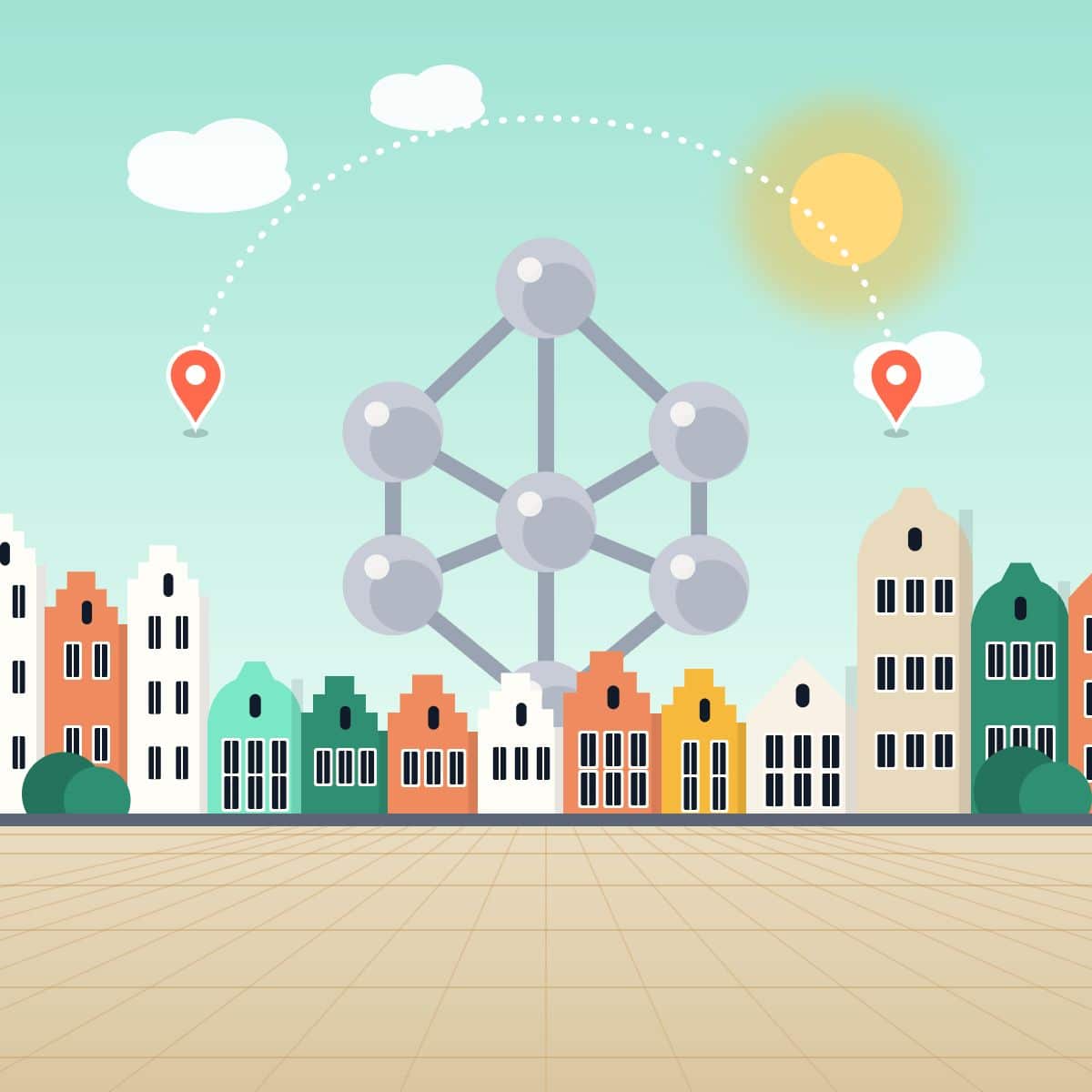
3 hours covers the centre, so a museum, a chocolate shop or the Atomium still fits into the rest of the day.
Good to know
- Bring a charged smartphone with mobile data; a power bank helps.
- No entry tickets needed: everything happens outside the buildings. Going inside is optional and paid separately.
- Family friendly; children must be accompanied by an adult.
- Not suitable for wheelchair users and difficult with strollers.
- Groups of up to 5 work best; larger groups split up, one ticket per person.
- Every purchase helps support stray cats and dogs in Greece.
The walk stop by stop: Parlamentarium, Royal Palace, Grand-Place, cathedral
10 stops · about 64 min walking · start: Parlamentarium · finish: Cathedral of Saint Michael and Saint Gudula
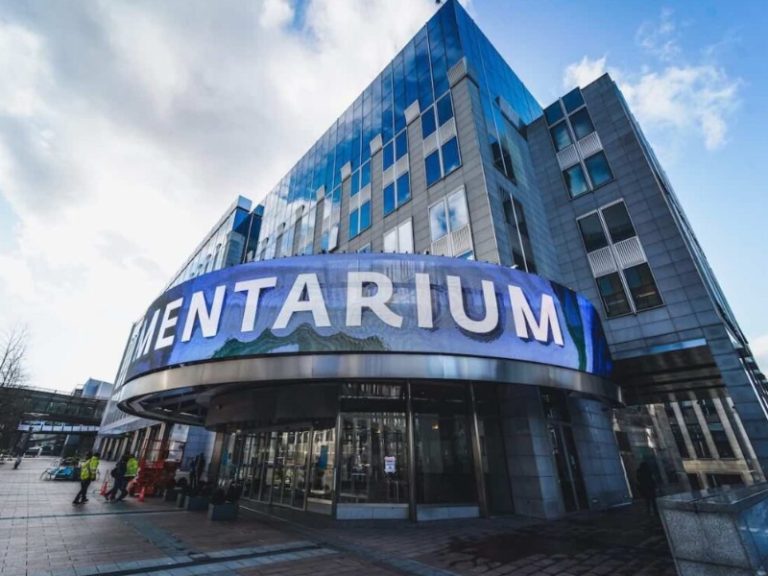
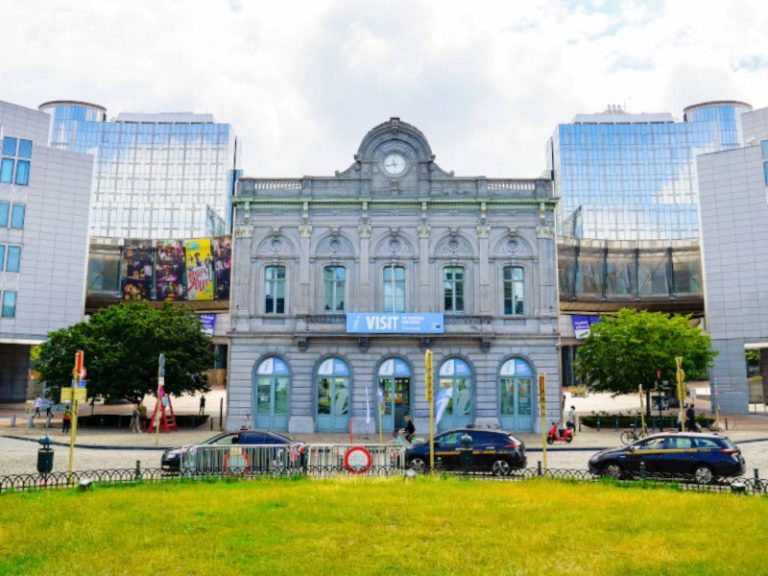
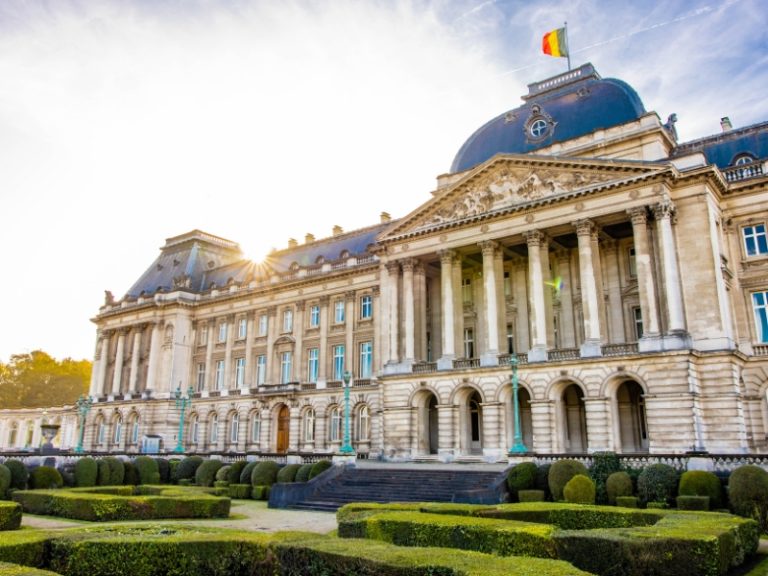
The Parlamentarium, at the foot of the European Parliament, is the opening stop, and a minute later the route is on Place du Luxembourg, under its neoclassical fronts. West, at the top of the rise, stand the Royal Palace of Brussels and the Royal Museums of Fine Arts of Belgium, and at the carillon of the Mont des Arts the ground begins to fall away again. In the lower town follow Manneken Pis, the Grand-Place and Jeanneke Pis, then the Royal Galleries of Saint Hubert, and the Cathedral of Saint Michael and Saint Gudula puts an end to the walk. Another opening stop or another order can be set in the app, and no stop asks for an entry ticket.
Open the route map ↗
1ParlamentariumStart
The European Parliament's visitor centre in the Espace Léopold opened in 2011 and is described as the largest parliamentary visitor centre in Europe. Its multimedia exhibition explains how the Parliament and the other EU institutions work, in all 24 official languages of the EU.
2Luxembourg Square (Place du Luxembourg)
Place du Luxembourg is a 19th-century square in the Leopold Quarter, lined with neoclassical houses and closed off by the old Brussels-Luxembourg station building, with the European Parliament rising behind it. In the middle stands a statue of John Cockerill, the English-born industrialist who helped build Belgian industry.
3Royal Palace of Brussels
The Royal Palace is where the King of the Belgians works and receives official guests, although the royal family lives at Laeken. Its present front was built after 1904 on the initiative of Leopold II, on ground once occupied by the medieval Coudenberg Palace, and the flag flies on the roof when the king is in the country.
4Royal Museums of Fine Arts of Belgium
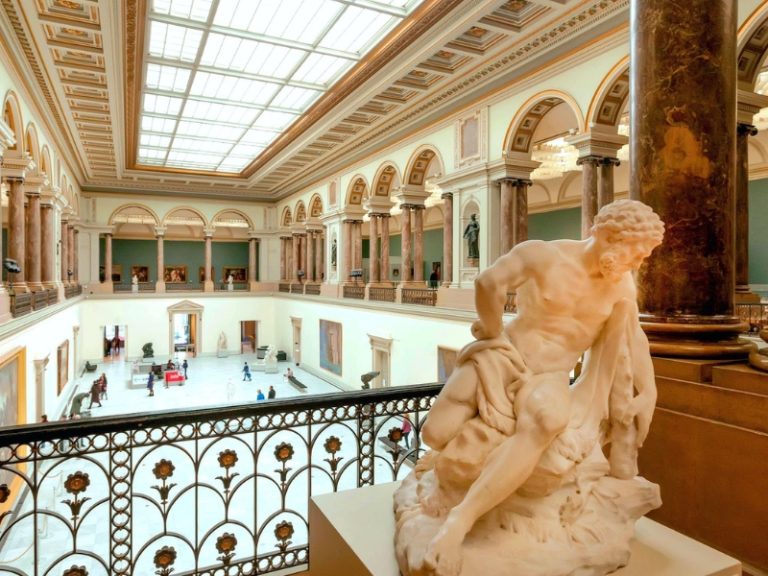
The main museum building, designed by Alphonse Balat, opened in 1880. The Royal Museums group several museums, among them the Old Masters Museum, with the Landscape with the Fall of Icarus long attributed to Bruegel, and the Magritte Museum, opened in 2009.
5Carillon of the Mont des Arts
The clock and carillon at the Mont des Arts were built in 1964 by the architect Jules Ghobert and have 24 bells. Twelve painted figures around the clock, one for each hour, run from a Gaul to Charles V, Rubens and a First World War soldier, and a bronze Brussels gentleman in a top hat strikes the bell.
6Manneken Pis
The bronze figure of a little boy, only about 55 cm tall, was made by Jérôme Duquesnoy the Elder around 1619–1620. The statue on the corner today is a replica from 1965, while the original is kept in the Brussels City Museum, and the boy owns around a thousand costumes.
7Grand-Place
The Grand-Place is the main square of Brussels and has been a UNESCO World Heritage Site since 1998. The Gothic Town Hall was built between 1401 and 1455, its 96-metre tower is topped by a gilded Saint Michael, and most guild houses around the square were rebuilt after the French bombardment of 1695.
8Jeanneke Pis
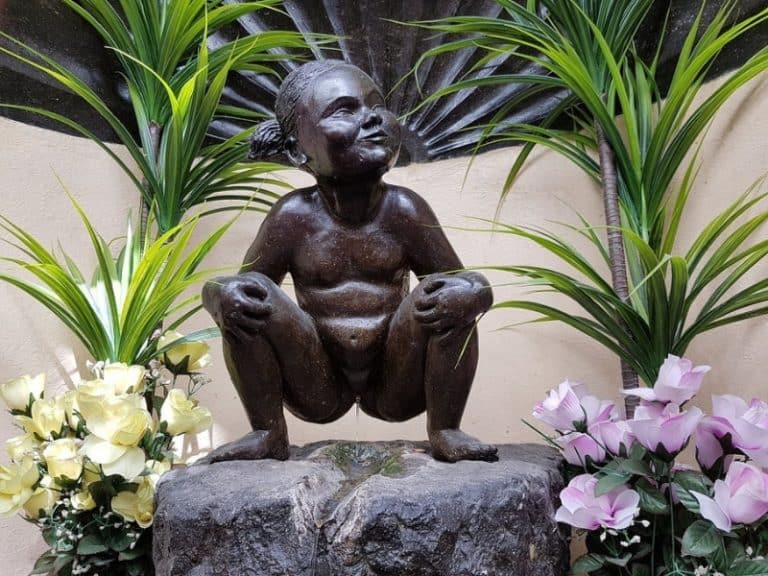
Jeanneke Pis is a small fountain statue of a squatting girl, made by Denis-Adrien Debouvrie in 1985 and unveiled in 1987 as a female counterpart to Manneken Pis. It stands behind iron bars at the end of the Impasse de la Fidélité, a narrow alley off the Rue des Bouchers.
Read the full story →
9Royal Galleries of Saint Hubert
The Royal Galleries of Saint Hubert, designed by Jean-Pierre Cluysenaar and opened in 1847, are among the first covered shopping arcades in Europe. Under their long glass roof run three sections, the King's Gallery, the Queen's Gallery and the Princes' Gallery, lined with shops, cafés and a theatre.
Read the full story →
10Cathedral of Saint Michael and Saint GudulaFinish
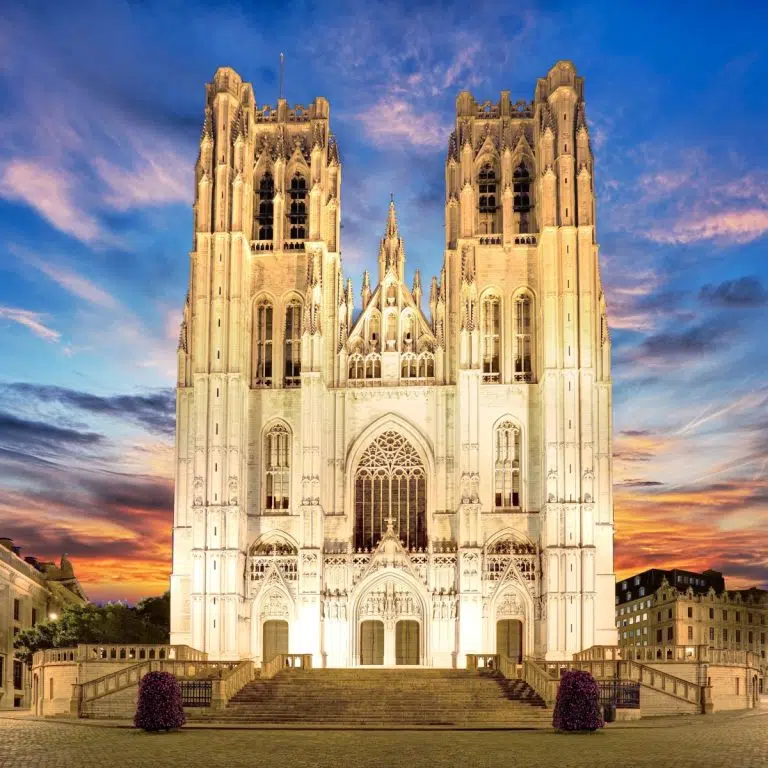
This Brabantine Gothic church grew over three centuries, from the choir begun in 1226 to the west front with its two unfinished 64-metre towers, built in 1470–1485. It became a cathedral in 1962, and in 1999 it hosted the wedding of Prince Philippe and Mathilde.
Only logged in customers who have purchased this product may leave a review.




Mexico –
Collected on GetYourGuide
Netherlands –
Collected on GetYourGuide
De wandeling is een goede kennismaking met de stad. App gaf leuke informatie (??n kanttekening af en toe leek het verhaaltje niet compleet of miste wij het doel van de informatie). Goed te volgen route via Google Maps. Het was heerlijk om je eigen tijdsindeling te kunnen maken en af en toe even aftewijken van de route.