From the Hunley replica to the Pineapple Fountain, clue by clue
The Charleston scavenger hunt is a self-guided city game you play on your phone: you walk between the historic landmarks of downtown Charleston, solve a riddle at each one by looking closely around you, and unlock the stories and local legends behind it. Give it about 3 hours: the 10 stops are spread over 3 km of flat peninsula streets, which add up to only 43 minutes on foot, so most of the afternoon goes on puzzling, reading and looking up at old façades.
Highlights include the Charleston City Market, Washington Square beside City Hall, the Old Slave Mart Museum, the Heyward-Washington House, the pastel houses of Rainbow Row and the Old Exchange, where South Carolina ratified the United States Constitution. The old peninsula is flat and compact, so its streets of 18th-century houses, churches and markets are easy to explore on foot.
- Durationabout 3 hours
- Walkingabout 43 min · 3 km
- Stops10
- LanguagesEnglish, German, French, Spanish, Portuguese
Playing your way down the Charleston peninsula
Doric columns, pastel paint and a dungeon door
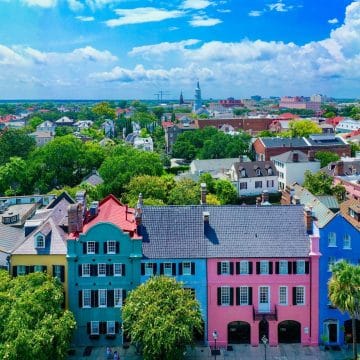
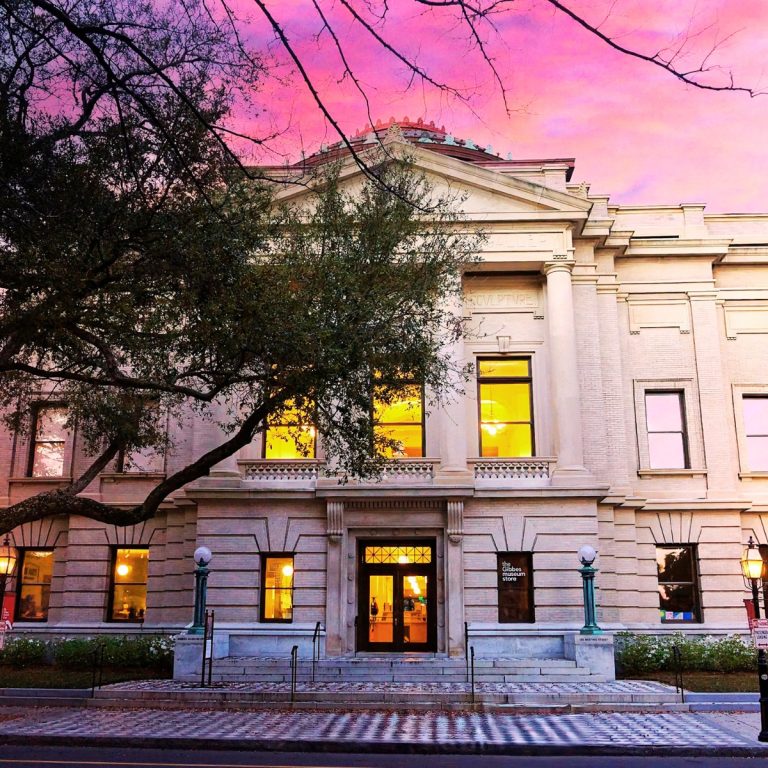
Charleston's riddles are written on its buildings: the Doric columns of the Gibbes, the thirteen pastel fronts of Rainbow Row, the balcony of the Old Exchange where Washington greeted the crowds in 1791. What you need is already in front of you, so the game rewards patience rather than prior reading.
Swamp Fox, signers and a hard history
Solving a stop unlocks its story: why Marion Square carries the name of the Revolutionary general called the Swamp Fox, which signer of the Declaration of Independence built a house on Church Street, and how the building on Chalmers Street became a museum about the city's role in the slave trade. The audio narration can read each of these stories to you, which helps on a bright Lowcountry afternoon when the screen is hard to see.
3 km south from Meeting Street to the river
About 43 minutes of the game is spent walking, from the Charleston Museum down Meeting Street past Marion Square and the City Market, through the old streets around Church Street and out to East Bay Street and the Cooper River. Charleston's peninsula is flat, and Google Maps keeps you pointed at the next clue.
Sweetgrass, shade and a swing over the water
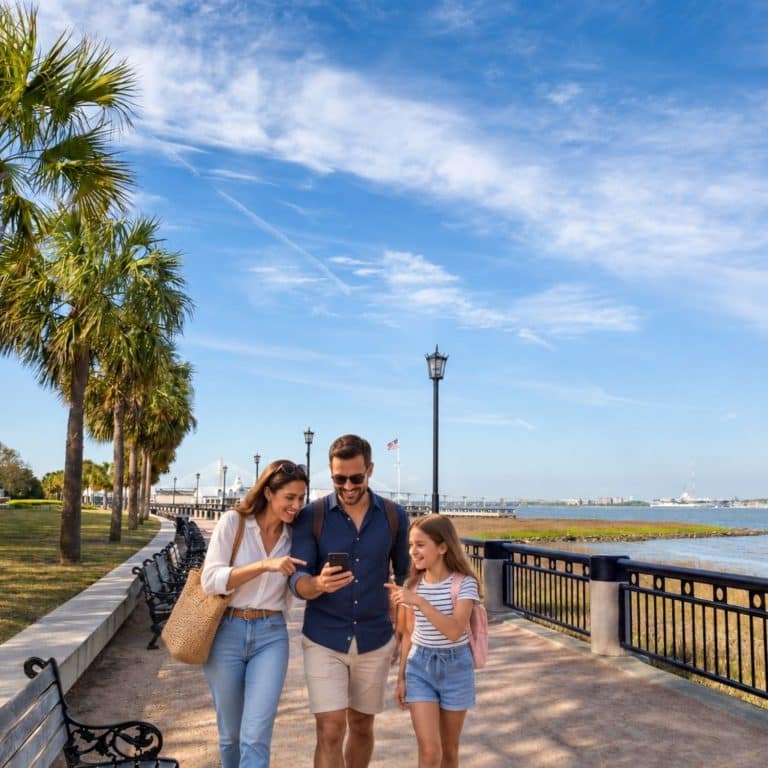
The game waits for you whenever you stop: browse the Gullah sweetgrass baskets in the City Market sheds, find some shade in Washington Square, or finish another day. At the very end, the swings on the Vendue Wharf pier in Waterfront Park make the obvious place to sit down and look back at the route.
See the route and attractions →
How it works
- Book online Choose the number of players. Your booking reference arrives by email straight away.
- Get the app Download the World City Trail app from the App Store or Google Play and enter your booking reference.
- Play when you like Start whenever you are ready, walk at your own pace and pause any time. No guide, no fixed schedule.
Weekenders, families and groups on the Charleston peninsula
A Charleston weekend for two, or for a few friends
In roughly 3 hours you see the City Market, Rainbow Row, the Old Exchange and the waterfront, which leaves the evening free for dinner downtown. The riddles add a little competition to a stroll you would probably take anyway.
Children who like submarines and swings
Kids tend to remember the full-size replica of the Hunley submarine outside the first stop, the colours of Rainbow Row, the old prison cellar under the Exchange and the pier swings at the finish. Each team needs an adult, and the level streets help, although the route does not suit wheelchairs.
Wedding parties, reunions and work groups
Teams of up to 5 can play side by side, every player following on their own phone, and bigger parties can start from the Charleston Museum in waves. Waterfront Park, with its fountain and pier, works well as the place where everybody meets again.
Good to know
- Bring a charged smartphone with mobile data; a power bank helps.
- No entry tickets needed: everything happens outside the buildings. Going inside is optional and paid separately.
- Family friendly; children must be accompanied by an adult.
- Not suitable for wheelchair users and difficult with strollers.
- Teams of up to 5 work best; bigger groups split into several teams, one ticket per player.
- Every purchase helps support stray cats and dogs in Greece.
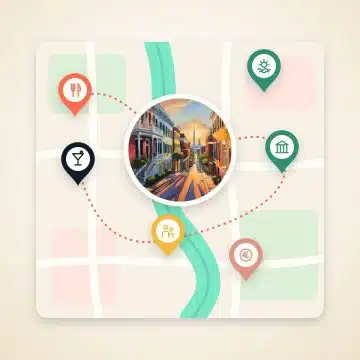
The route: from the Charleston Museum and Marion Square past the City Market and Church Street to Rainbow Row, the Old Exchange and Waterfront Park
10 stops · about 43 min walking · start: The Charleston Museum · finish: Waterfront Park
The hunt starts at the Charleston Museum on Meeting Street and continues to Marion Square, then heads south to the Charleston City Market and the Gibbes Museum of Art. Next come Washington Square, the Old Slave Mart Museum on Chalmers Street and the Heyward-Washington House on Church Street, before you reach Rainbow Row and the Old Exchange on East Bay Street. It finishes at Waterfront Park by the harbour. Since each answer comes from what you can see from the street, the museums on the way never have to be entered, and should you be staying near the Battery or the Market, the app will let you open the game there and run the stops in whatever sequence suits your group.
Open the route map ↗
1The Charleston MuseumStart
Founded in 1773, the Charleston Museum is often called America's first museum, and today it occupies a modern building on Meeting Street. Its collections cover the natural and cultural history of the Lowcountry. Outside stands a full-size replica of the Hunley, the Confederate submarine that sank a Union warship off Charleston in 1864.
2Marion Square (329 Meeting Street)
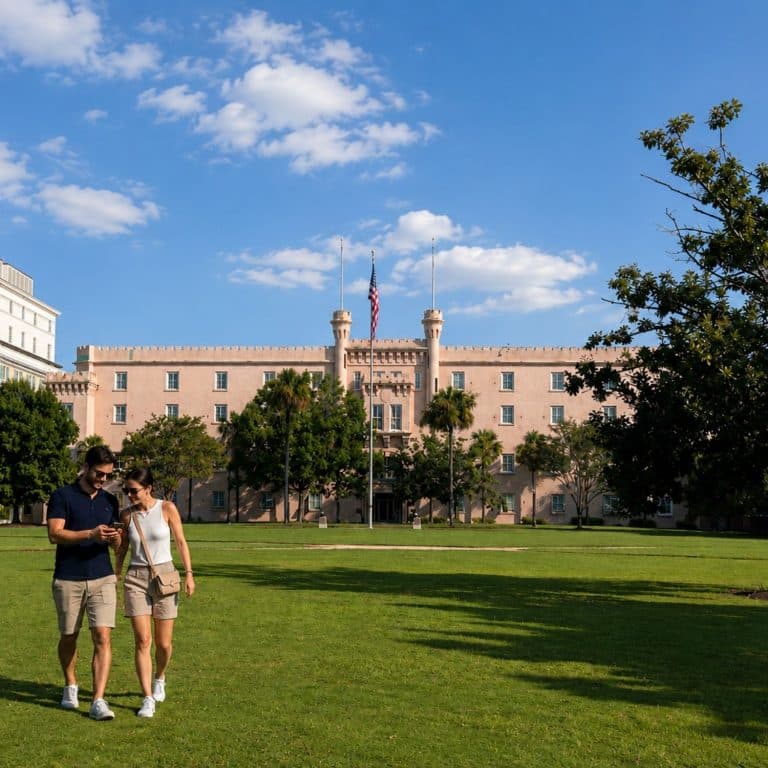
This large green on Meeting Street is named after Francis Marion, the Revolutionary War general known as the Swamp Fox. It began as the parade ground of the state arsenal on its north side, which The Citadel military college occupied from 1843 to 1922. Look for the Holocaust memorial and the obelisk dedicated to Wade Hampton.
3Charleston City Market
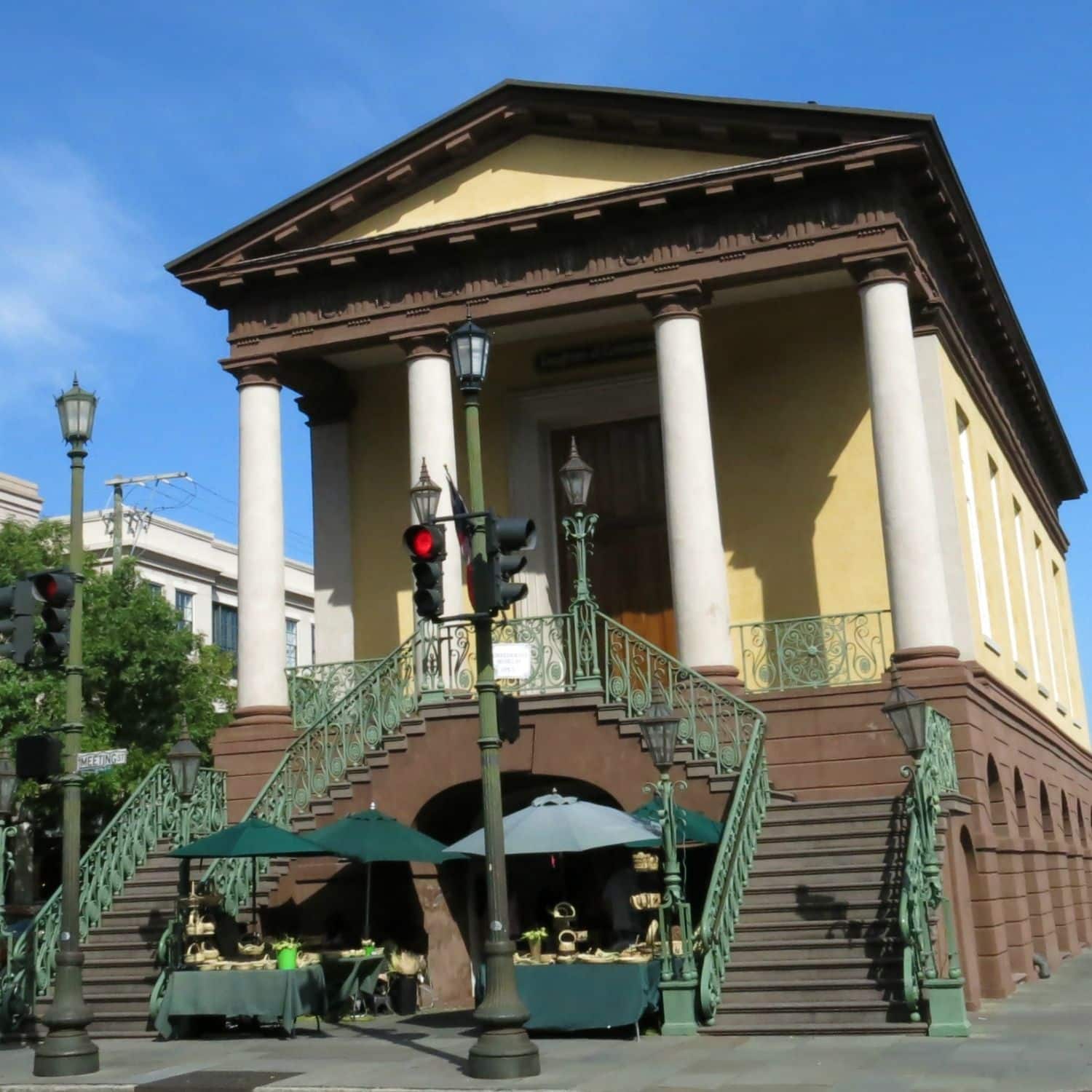
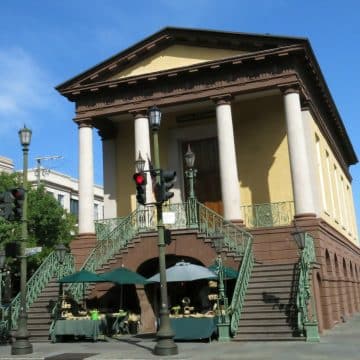
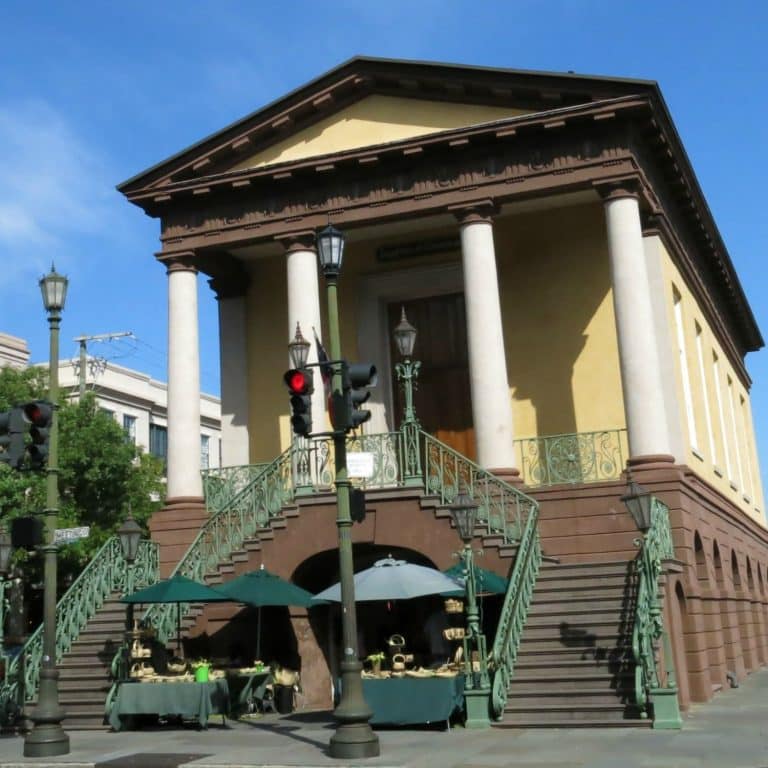
In 1788 Charles Cotesworth Pinckney and other landowners gave a strip of land for a public market, and the first sheds went up around 1790. The open sheds run about 380 metres from Market Hall, a temple-fronted building completed in 1841, to East Bay Street. Gullah artisans sell their sweetgrass baskets here.
4Gibbes Museum of Art
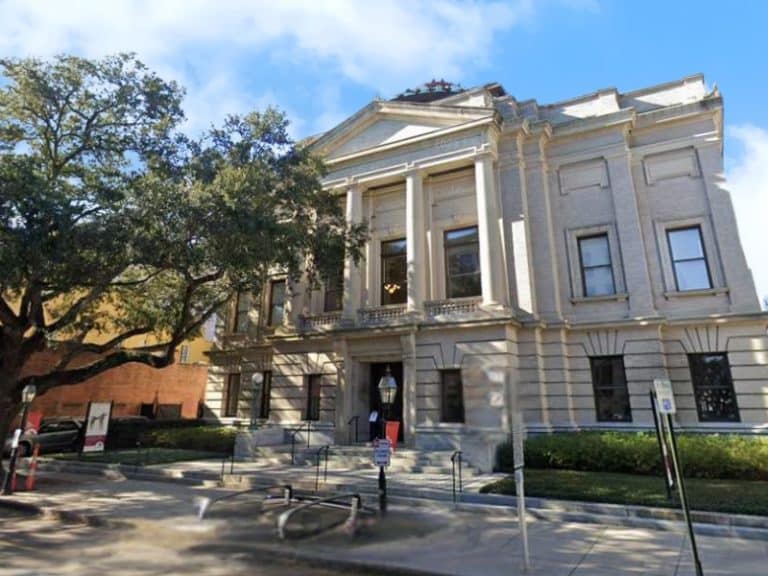
The Gibbes opened in 1905 in a Beaux-Arts building by Frank Pierce Milburn, paid for by a bequest from James Shoolbred Gibbes. It belongs to the Carolina Art Association, founded in 1858, and its collection focuses on American art connected to Charleston and the South. Notice the Doric columns of the facade.
5Washington Square
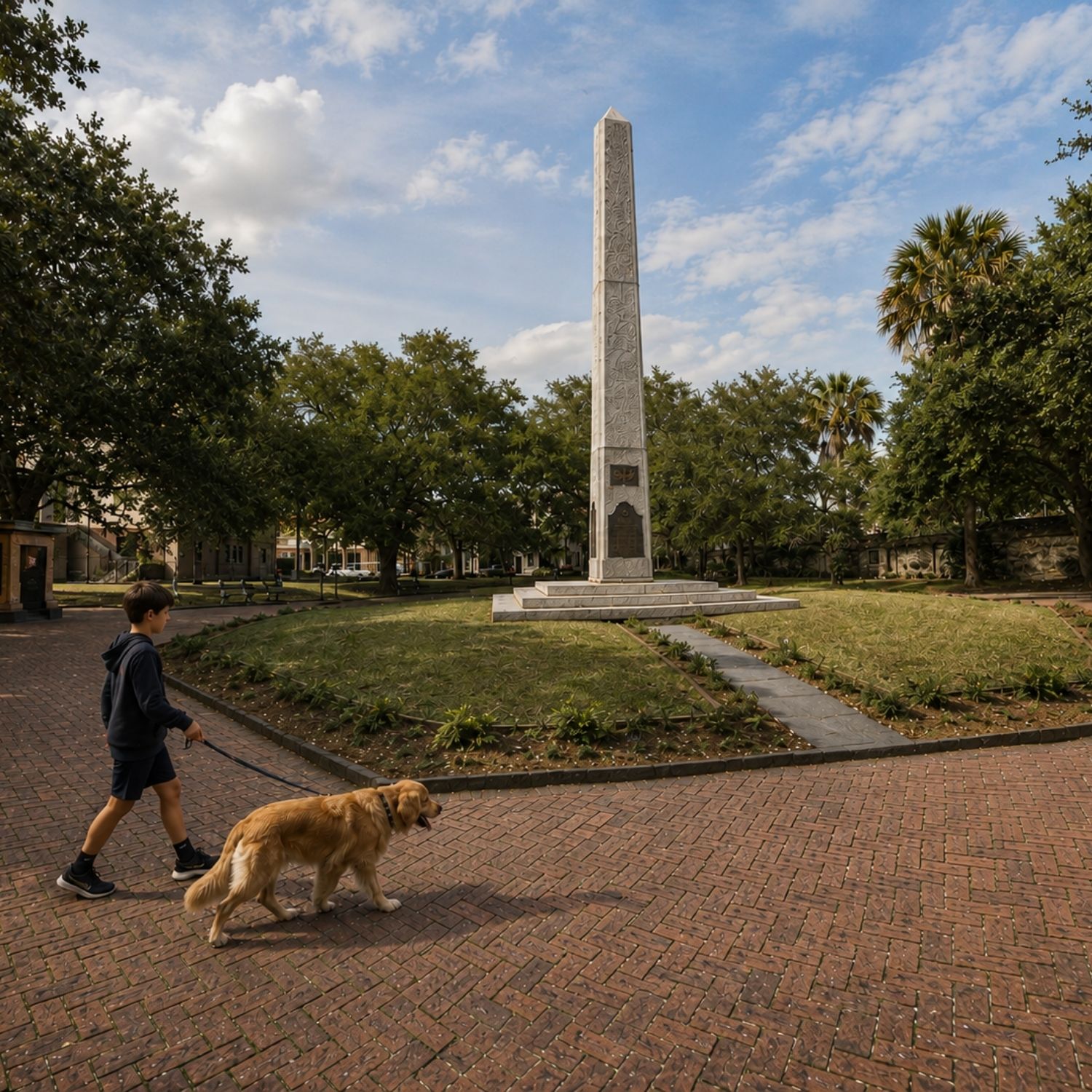
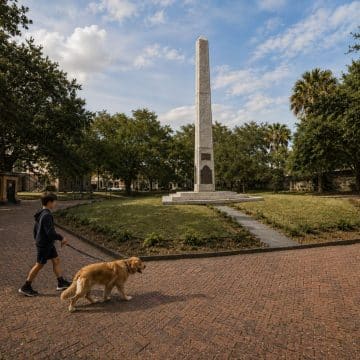
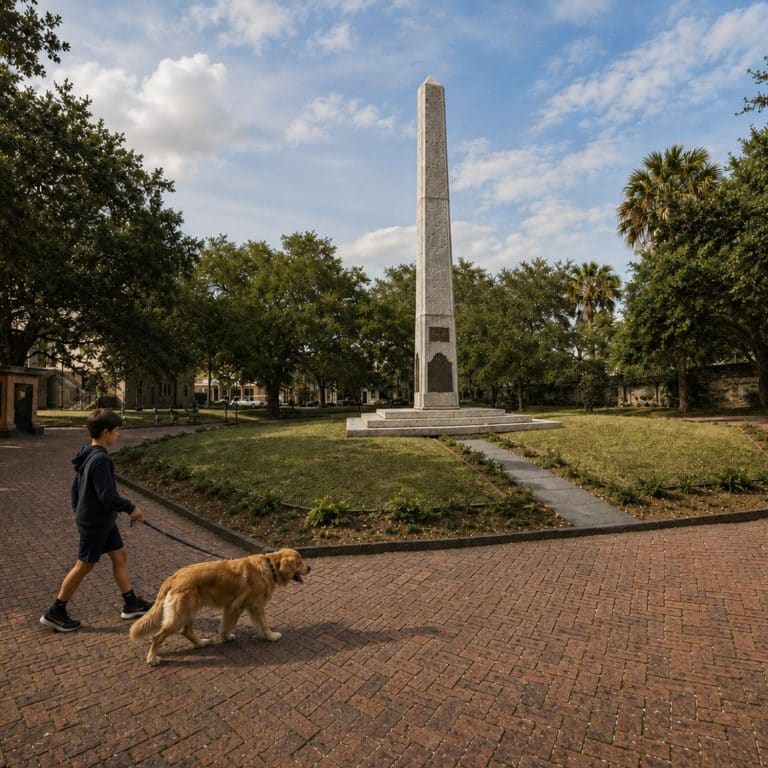
This small park beside City Hall opened in 1818 and was renamed for George Washington in 1881, a century after the victory at Yorktown. At its centre stands the Washington Light Infantry memorial, a granite obelisk modelled on the Washington Monument, and a bronze statue of Washington was added in 1999. Look also for the bust of the poet Henry Timrod.
6Old Slave Mart Museum
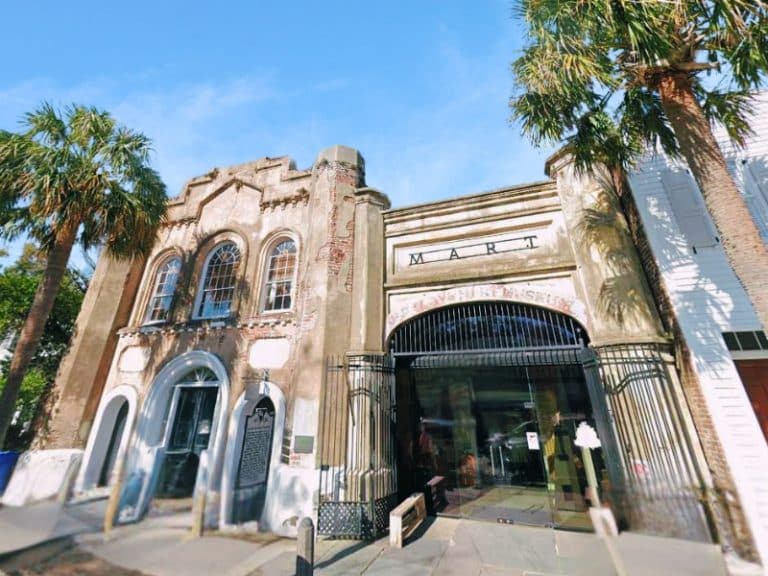
This building on Chalmers Street was built in 1859 as part of Ryan's Mart, where enslaved people were sold after Charleston banned public slave auctions. Sales continued until about 1863. It is believed to be the last surviving slave auction building in South Carolina, and today it is a museum about the city's role in the slave trade.
7Heyward-Washington House
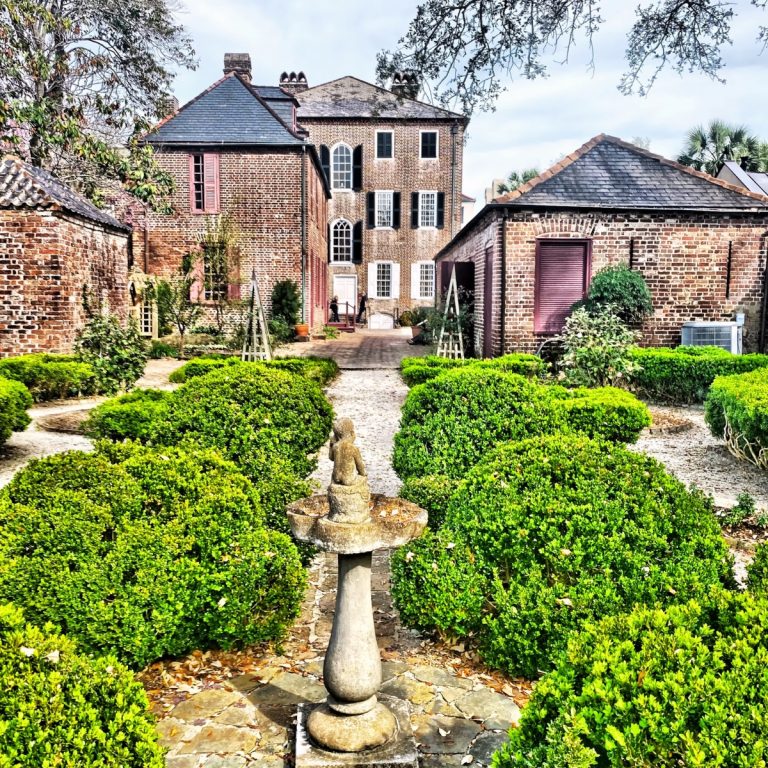
This double house on Church Street was built in 1772 for Thomas Heyward Jr., one of South Carolina's four signers of the Declaration of Independence. The city rented it for George Washington's week-long visit in May 1791, which gave the house its name. Today the Charleston Museum shows it with American colonial furniture such as the Holmes Bookcase.
8Rainbow Row
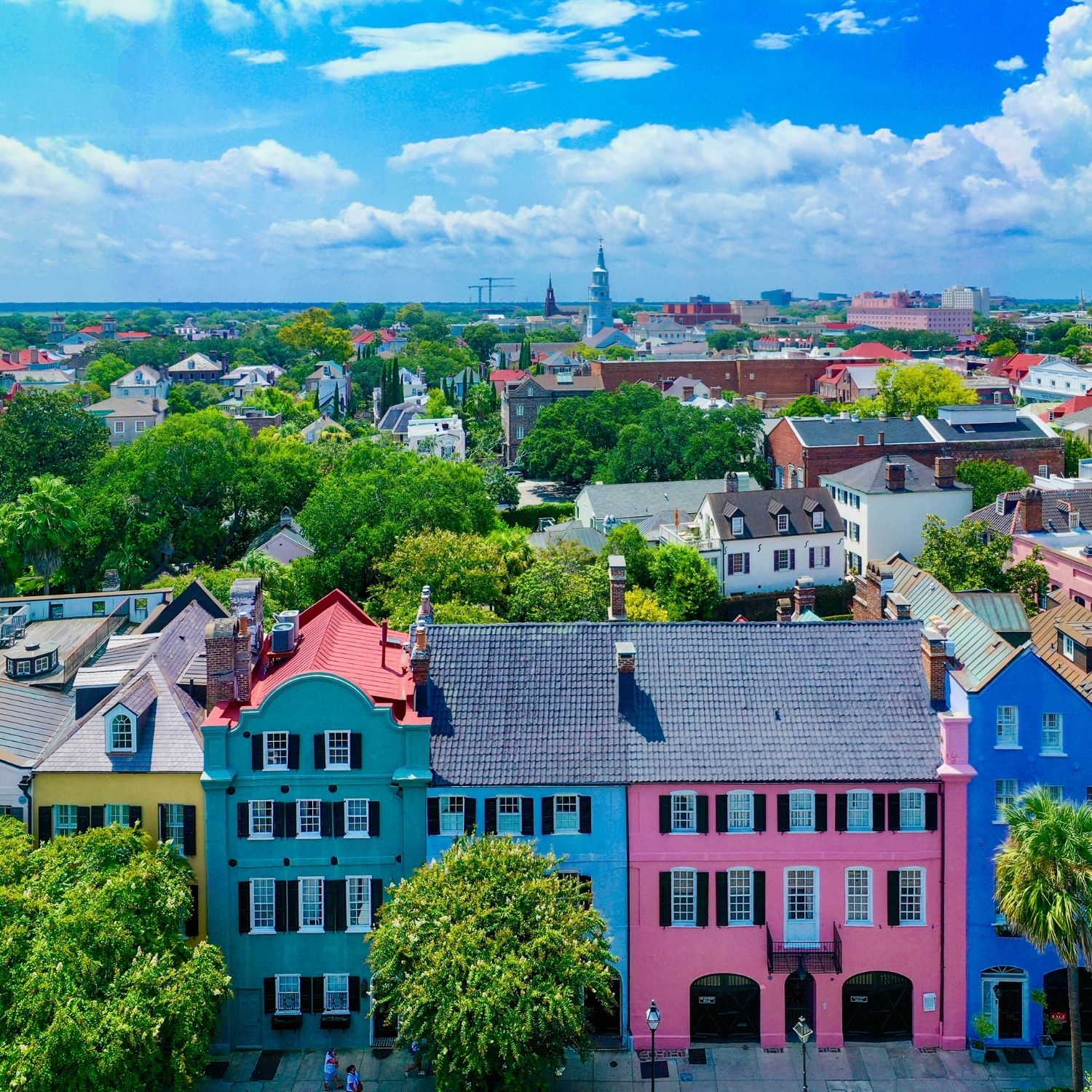
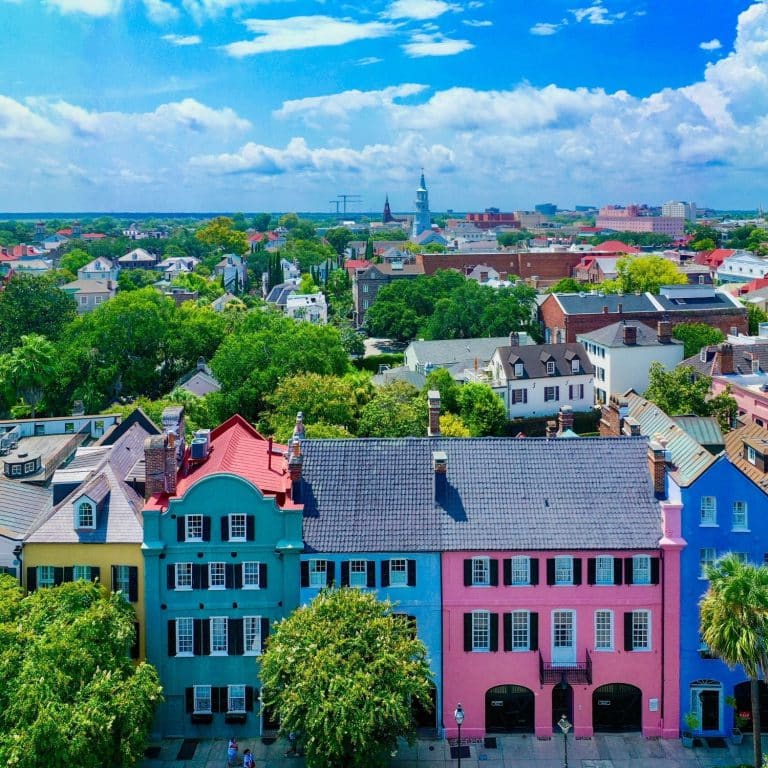
Rainbow Row is a run of thirteen historic houses on East Bay Street, most of them built in the 18th century by merchants who kept shops downstairs and lived above. The pastel colours date from restorations in the 1930s and 1940s, starting with a house painted pink in 1931. Legend says the colours helped sailors find their lodgings, but there is no evidence for it.
9Old Exchange and Provost Dungeon
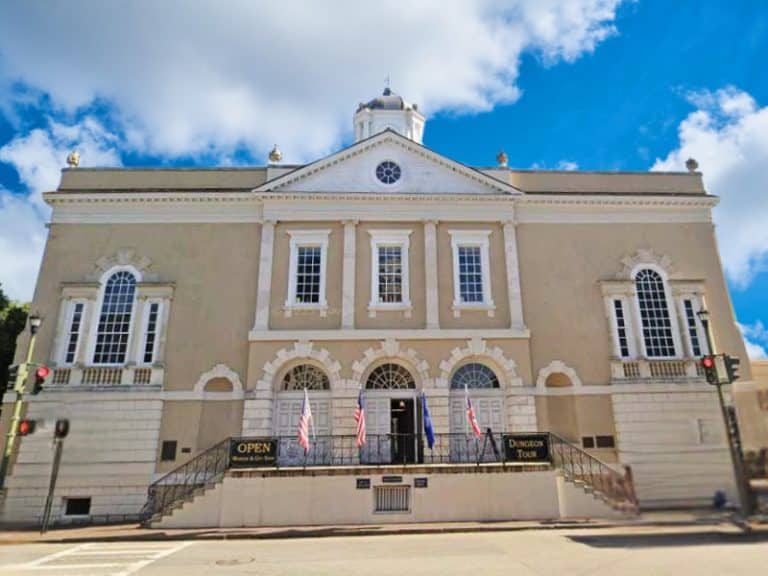
Built between 1767 and 1771 at the foot of Broad Street, the Exchange was the colonial customs house and meeting hall. In 1788 South Carolina's convention ratified the United States Constitution here, and after the British captured the city in 1780 its basement served as a military prison. George Washington greeted the crowds from its balcony in 1791.
10Waterfront ParkFinish
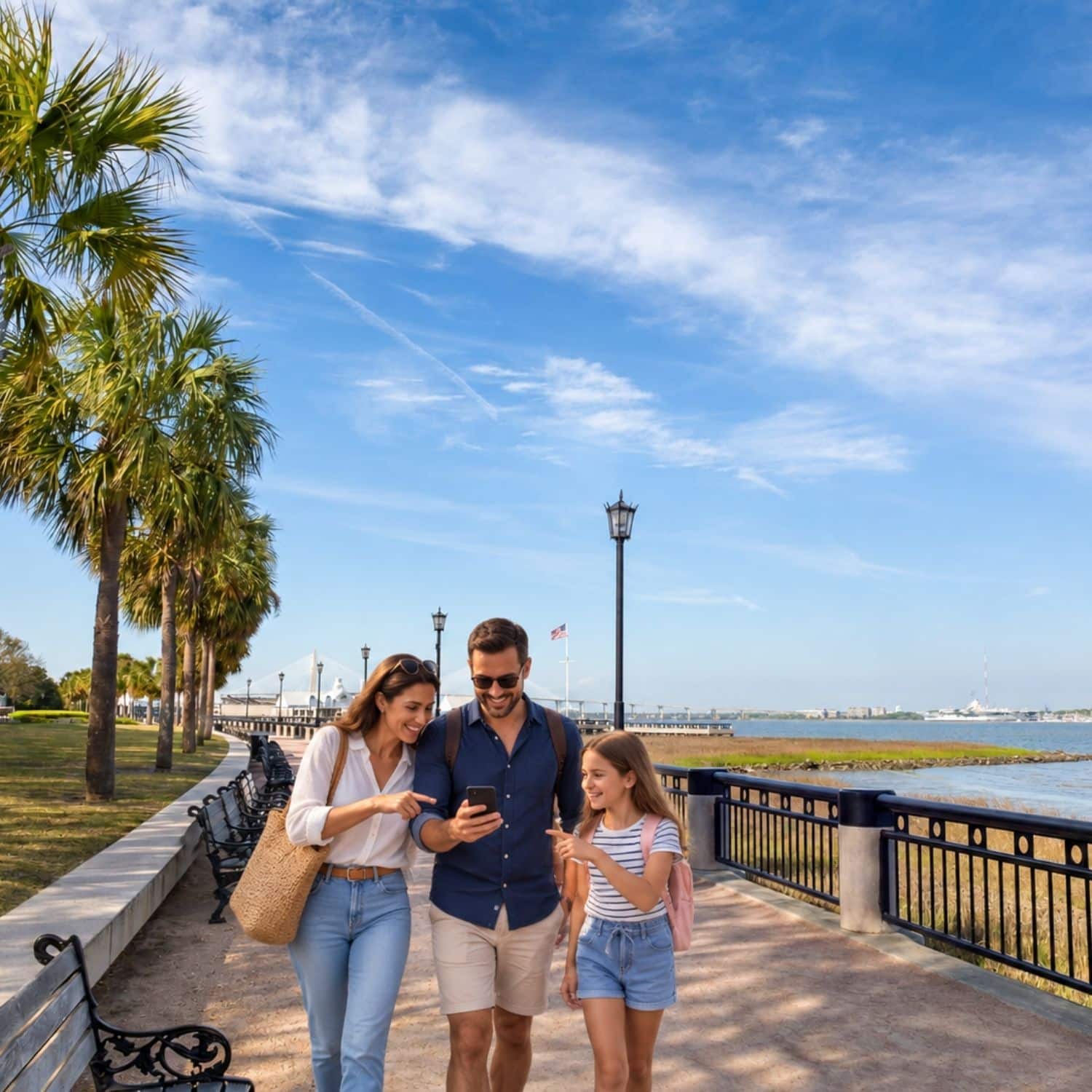
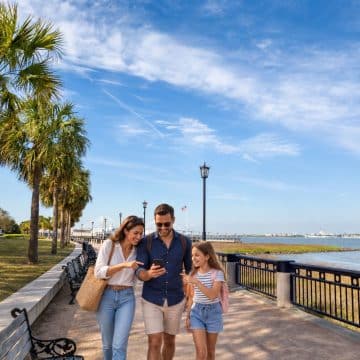
Waterfront Park opened in 1990 along the Cooper River, a project begun by Mayor Joseph Riley and designed by Sasaki Associates. Its centrepiece is the Pineapple Fountain, the pineapple being a traditional symbol of hospitality. The wooden Vendue Wharf pier reaches into the river and has shaded swings with views across the harbour.
Only logged in customers who have purchased this product may leave a review.





Shannon Edwards (verified owner) –
Fun and engaging way of exploring the city!
Anonymous (verified owner) –
So beautiful city, nice puzzles and information