What is the Dublin outdoor escape game?
The Dublin outdoor escape game is an escape room with the roof taken off: puzzles sit at 10 landmarks on both sides of the Liffey, and you open them one by one on your phone. Budget around 2 hours, 60 minutes of it walking along 4.7 km, and begin whenever the day suits you.
The Spire on O'Connell Street, the two medieval cathedrals, Fusiliers' Arch at St Stephen's Green and the Molly Malone statue beside St Andrew's Church each pose their own puzzle, with nothing linking them into a single story. Three levels of hints wait in the app for the stubborn ones. Dublin's centre is flat and tightly packed, so the walking between puzzles never turns into a hike.
- Durationabout 2 hours
- Walkingabout 60 min · 4.7 km
- Stops10
- LanguagesEnglish, German, French, Italian, Spanish, Dutch, Polish, Chinese
What you do on the escape game
Work it out
Every landmark comes with a puzzle you answer from your surroundings, by thinking it through rather than by knowing the facts.
Read the detail
Carvings, inscriptions and the shape of a building carry what you need, so it pays to circle a monument before answering.
Walk both banks
Google Maps keeps you on course between stops: 60 minutes of walking over 4.7 km.
Keep your own pace
No timer is running. Use a hint, stop for food and come back to the next puzzle later or on another day.
See the route and attractions →
How it works
- Book online Choose the number of players. Your booking reference arrives by email straight away.
- Get the app Download the World City Trail app from the App Store or Google Play and enter your booking reference.
- Play when you like Start whenever you are ready, walk at your own pace and pause any time. No guide, no fixed schedule.
Who it suits
Friends
Every puzzle hands the group an argument to settle on the way to the next landmark, and no one needs to know Dublin.
Couples
Something to solve together between landmarks, with no clock deciding how long you stand and look.
Team building
Teams of up to 5 play on their own phones, which makes it simple to send colleagues out at the same time.
Good to know
- Bring a charged smartphone with mobile data; a power bank helps.
- Best started in daylight, so you can see the details the puzzles ask about.
- No entry tickets needed: everything happens outside the buildings. Going inside is optional and paid separately.
- Family friendly; children must be accompanied by an adult.
- Not suitable for wheelchair users and difficult with strollers.
- Teams of up to 5 work best; bigger groups split into several teams, one ticket per player.
- Every purchase helps support stray cats and dogs in Greece.
Puzzle route: from the Parnell Monument to Grafton Street
10 stops · about 60 min walking · start: Parnell Monument · finish: Irish Whiskey Museum
O'Connell Street carries the first two puzzles, at the Parnell Monument and the Spire, before the route crosses the Liffey on O'Connell Bridge. South of the river come Dublin City Hall, Christ Church Cathedral and St Patrick's Cathedral, then Fusiliers' Arch at St Stephen's Green. The National Museum on Kildare Street and St Andrew's Church follow, and the final puzzle is at the Irish Whiskey Museum on Grafton Street. Play by day, reorder the stops in the app if you prefer, and leave entry tickets out of it.
Open the route map ↗
1Parnell MonumentStart
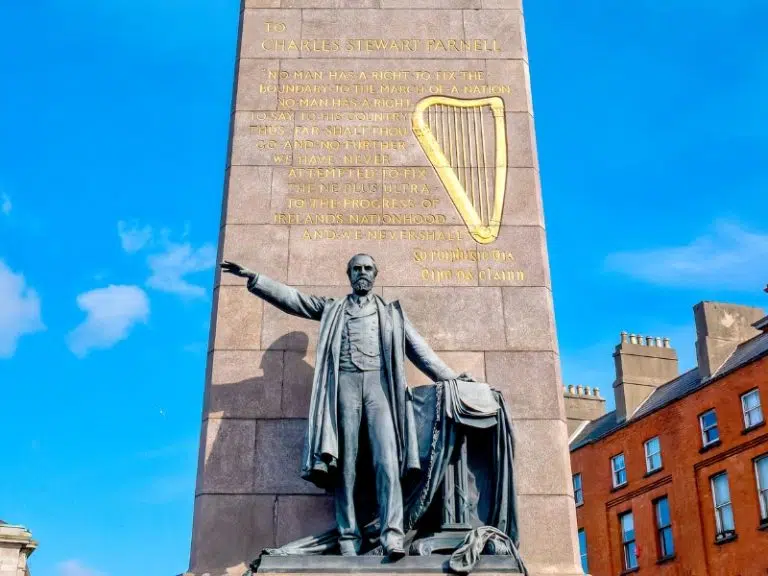
This monument at the north end of O'Connell Street honours Charles Stewart Parnell, the 19th-century leader who campaigned for Irish Home Rule. Augustus Saint-Gaudens made the bronze statue, set against a granite obelisk, and it was unveiled in 1911. Look for the gilded harp and Parnell's words about the march of a nation.
Read the full story →
2The Spire
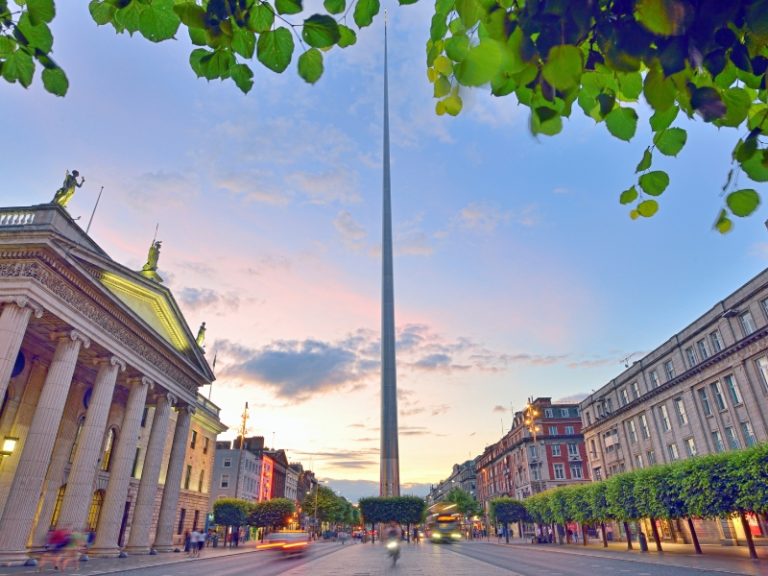
The stainless steel Spire, also called the Monument of Light, rises 120 metres above O'Connell Street. Designed by Ian Ritchie Architects and completed in 2003, it stands where Nelson's Pillar stood until it was blown up in 1966. At night its tip is lit from inside.
Read the full story →
3O'Connell Bridge
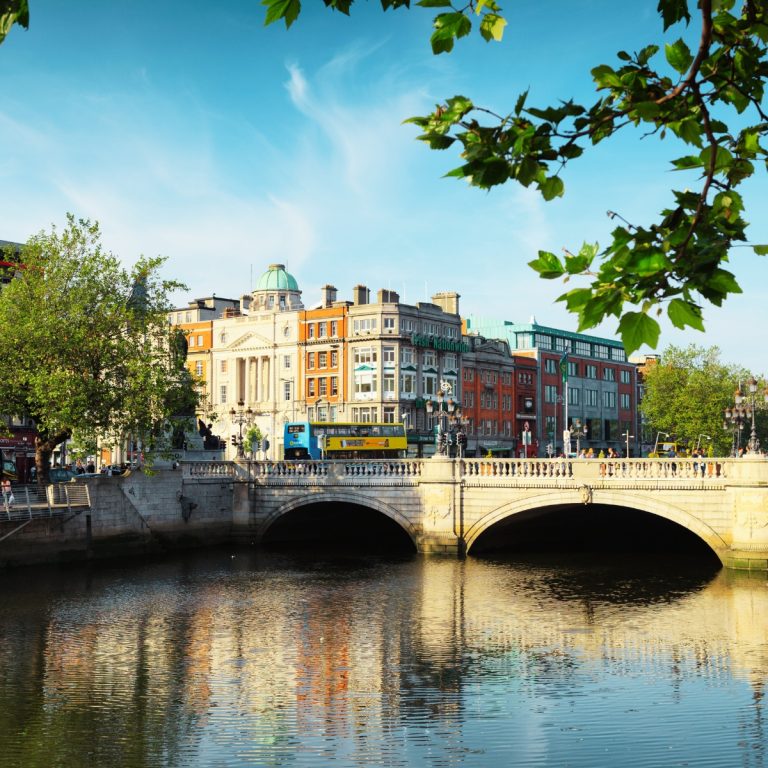
James Gandon's Carlisle Bridge crossed the River Liffey here from the 1790s. It was rebuilt and widened around 1880 and renamed after Daniel O'Connell, the campaigner for Catholic emancipation, and it is almost as wide as it is long. His bronze monument by John Henry Foley stands at the end of O'Connell Street.
4Dublin City Hall
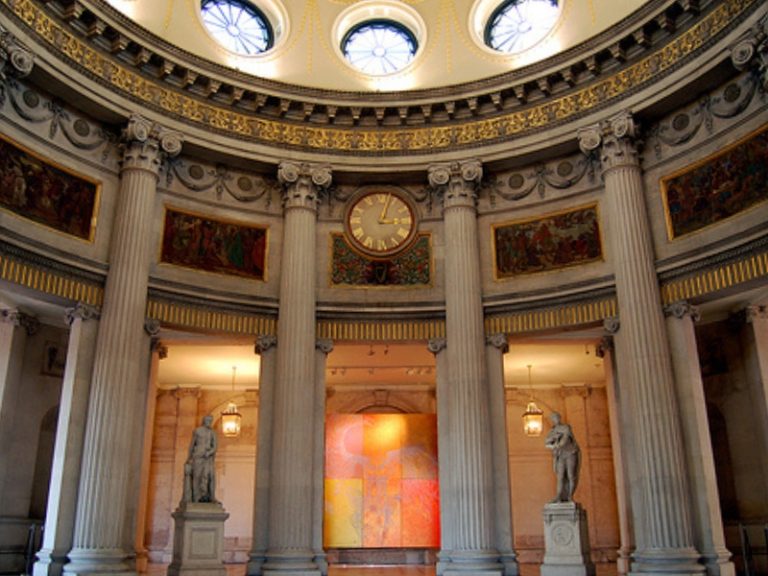
Thomas Cooley designed this domed neoclassical building, built between 1769 and 1779 as the Royal Exchange for Dublin's merchants. In 1852 it became the seat of Dublin Corporation, the city council. Its Corinthian columns face Parliament Street, and Dublin Castle stands right behind it.
5Christ Church Cathedral
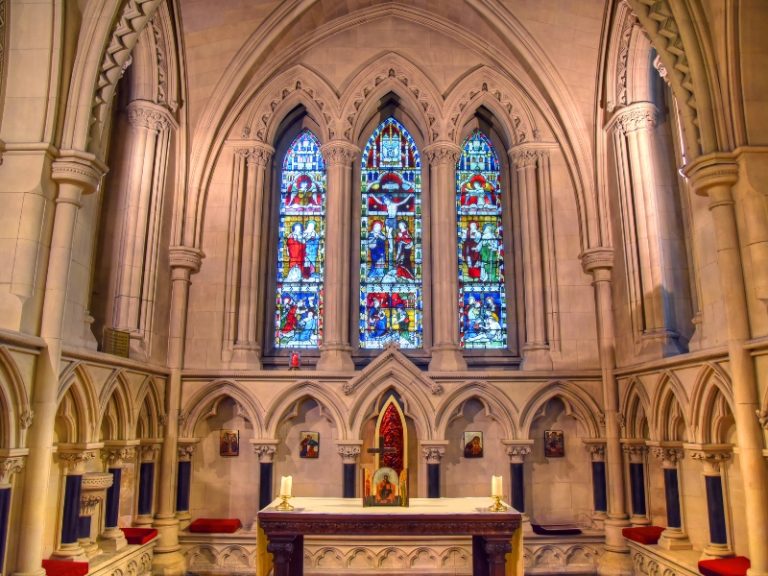
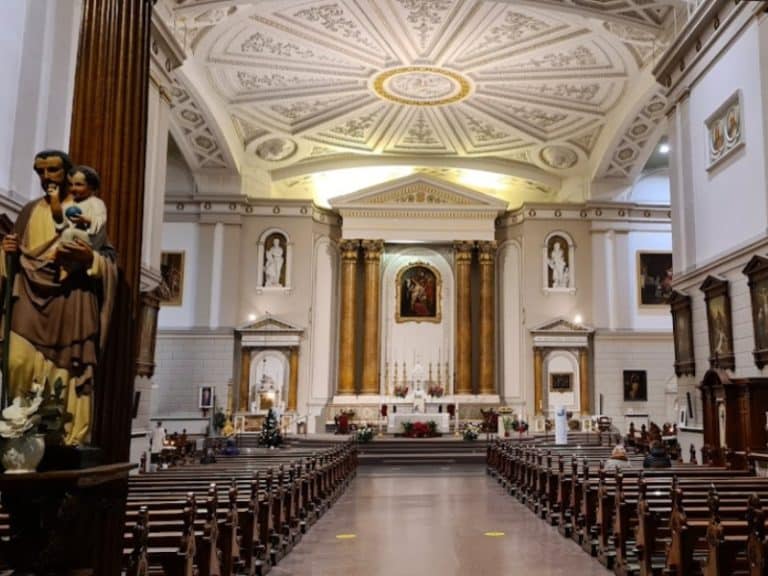
The older of Dublin's two medieval cathedrals goes back to around 1030, when the Norse king Sitric Silkbeard founded a church here. The Normans rebuilt it in stone from the late 12th century, and its present look comes largely from George Edmund Street's restoration in the 1870s. A covered bridge links it to the former Synod Hall.
6St Patrick's Cathedral
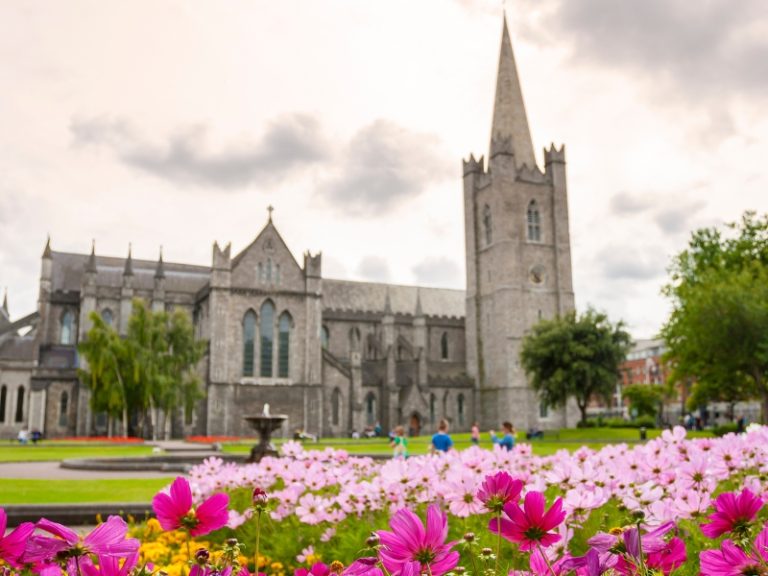
Founded in 1191 beside a well where, according to tradition, Saint Patrick baptised converts, this is the largest church in Ireland and the national cathedral of the Church of Ireland. Jonathan Swift, author of Gulliver's Travels, was its dean and is buried here. The phrase chancing your arm is said to come from an old door in the cathedral.
7Fusiliers' Arch
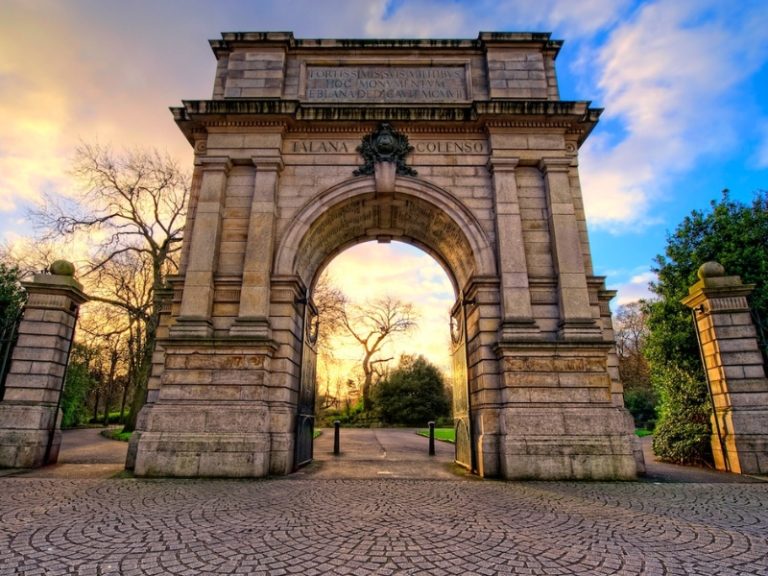
This granite arch at the Grafton Street corner of St Stephen's Green was put up in 1907 to remember the Royal Dublin Fusiliers who died in the Boer War in South Africa. The names of the fallen are carved on its underside, and some Dubliners called it Traitors' Gate. Marks on the stone are said to date from the 1916 Rising.
8National Museum of Ireland – Archaeology
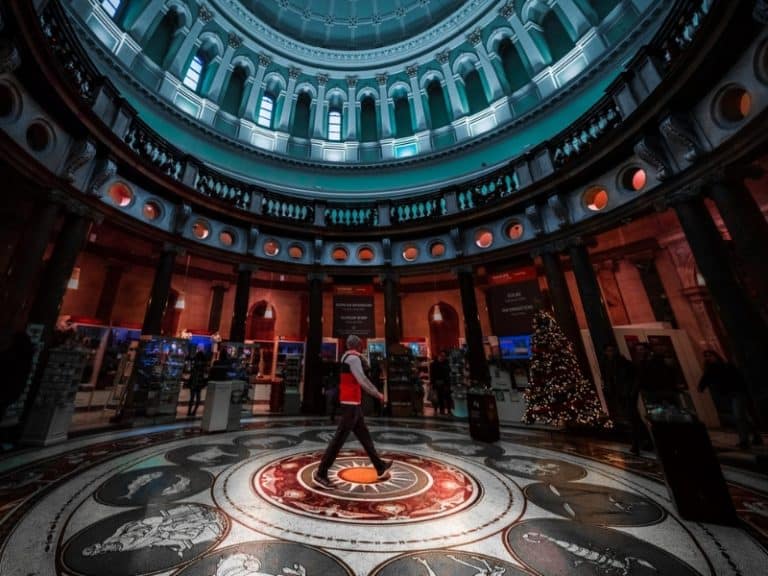
The museum on Kildare Street opened in 1890 in a building by Thomas Newenham Deane and his son, entered through a domed rotunda. It holds Ireland's archaeology collections, including the Tara Brooch, the Ardagh Chalice and Iron Age bog bodies. Next door stands Leinster House, seat of the Irish parliament.
9St Andrew's Church
This Gothic Revival church on Suffolk Street was built in the 1860s on the site of an earlier oval church that Dubliners called the Round Church. The parish gave its name to nearby St Andrew Street. Outside stands the bronze statue of Molly Malone, the fishmonger of Dublin's best-known song, first unveiled in 1988.
Read the full story →
10Irish Whiskey MuseumFinish
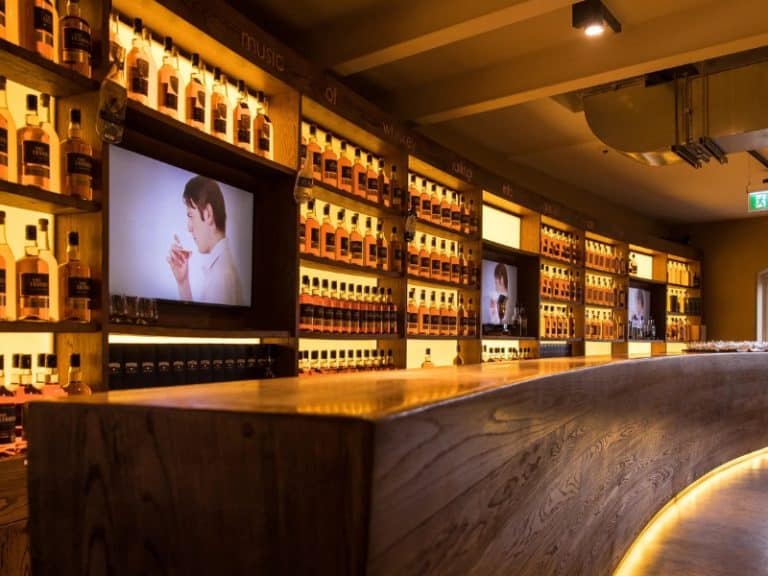
The Irish Whiskey Museum stands on Grafton Street, opposite the front gate of Trinity College. Inside, guided tours tell the story of Irish whiskey, whose name comes from the Irish words uisce beatha, meaning water of life.
Only logged in customers who have purchased this product may leave a review.






Switzerland –
Collected on GetYourGuide
Faas– Netherlands –
Collected on GetYourGuide
Enorm leuke wandeling door Dublin op een spelende wijze. Hierdoor loop je langs mooie bezienswaardigheden en kom loop je een route die je waarschijnlijk nooit zou nemen. Tussendoor hebben we diverse stops gemaakt om bijvoorbeeld door winkelstraten te lopen, een drankje en/ of een hapje te doen. Hierdoor ben je in de gelegenheid om het spel op eigen tempo te spelen. Wij hebben er enorm van genoten.
Detlef– Germany –
Collected on GetYourGuide
Sehr gut, wie hatten Spa?.
Germany –
Collected on GetYourGuide
Sch?ne Tour mit wundersch?nen Sehensw?rdigkeiten, gerne wieder. Wir hatten es auf 2 Tage verteilt.
Belgium –
Collected on GetYourGuide
Trop tir? par les cheveux!
Netherlands –
Collected on GetYourGuide
geweldig