What is the Istanbul outdoor escape game?
The Istanbul outdoor escape game is an escape room turned inside out: the puzzles sit in the city's own landmarks, and you work through them on your phone with nothing but your eyes and a little logic. Set aside roughly 3 hours, of which 76 minutes go on walking the 5.8 km between the 10 stops, and begin on whichever day suits you.
Puzzles wait at the Egyptian obelisk in the old Hippodrome, outside the Blue Mosque and Hagia Sophia, at the gate of Topkapı Palace, and later at the New Mosque in Eminönü and on the Galata Bridge. None of them depends on the others, so there is no plot to keep track of, and three levels of hints stand ready. Istanbul suits the format, because Byzantine and Ottoman landmarks follow one another within walking distance on both banks of the Golden Horn.
- Durationabout 3 hours
- Walkingabout 76 min · 5.8 km
- Stops10
- LanguagesEnglish, German, French, Italian, Spanish, Dutch
What you do on the escape game
Solve on the spot
Every attraction holds one puzzle, cracked with observation and logic alone. There is nothing you need to know in advance.
Look up and around
Answers hide in reliefs, inscriptions, domes and minarets, and in the shape of the square you are standing in.
Walk the Golden Horn
Google Maps takes you from stop to stop: 76 minutes on foot across 5.8 km, the bridge crossing included.
No clock against you
Nothing counts down. Call up a hint, stop for tea and a simit, and carry on later or on another day.
See the route and attractions →
How it works
- Book online Choose the number of players. Your booking reference arrives by email straight away.
- Get the app Download the World City Trail app from the App Store or Google Play and enter your booking reference.
- Play when you like Start whenever you are ready, walk at your own pace and pause any time. No guide, no fixed schedule.
Who it suits
Friends
Arguing over a solution on the way to the next mosque is half the point, and nobody needs to have been here before.
Couples
One shared puzzle gives the walk a thread, and you set your own pace between the Hippodrome and Galata.
Team building
Teams of up to 5 play on their own phones, so colleagues can split up and compare notes at the finish.
Good to know
- Bring a charged smartphone with mobile data; a power bank helps.
- Best started in daylight, so you can see the details the puzzles ask about.
- No entry tickets needed: everything happens outside the buildings. Going inside is optional and paid separately.
- Family friendly; children must be accompanied by an adult.
- Not suitable for wheelchair users and difficult with strollers.
- Teams of up to 5 work best; bigger groups split into several teams, one ticket per player.
- Every purchase helps support stray cats and dogs in Greece.
Puzzle route: from the Hippodrome to the Galata Tower
10 stops · about 76 min walking · start: Obelisk of Theodosius · finish: Galata Tower
The opening puzzle stands beside the Obelisk of Theodosius in the old Hippodrome, the closing one below the Galata Tower. In between come the Blue Mosque, Hagia Sophia, the gate of Topkapı Palace and the Basilica Cistern, then the old commercial streets with the Vilayet Mosque and the tomb of Sultan Abdülhamid I, the New Mosque at Eminönü and the crossing of the Galata Bridge. Daylight makes the better start, since everything is worked out in the open and wind or rain slows the walk. The order can be rearranged in the app, and the puzzles use the outside of the buildings, so entry tickets never come into it.
Open the route map ↗
1Obelisk of TheodosiusStart
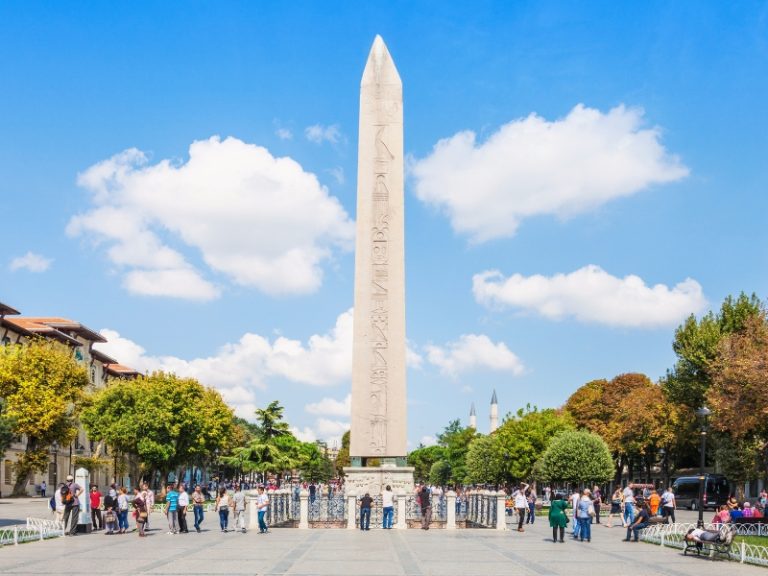
This granite obelisk was made for Pharaoh Thutmose III at Karnak in Egypt about 3,500 years ago. Emperor Theodosius I had it set up in the Hippodrome of Constantinople in 390. The marble base shows the emperor and his court watching the chariot races.
Read the full story →
2Blue Mosque
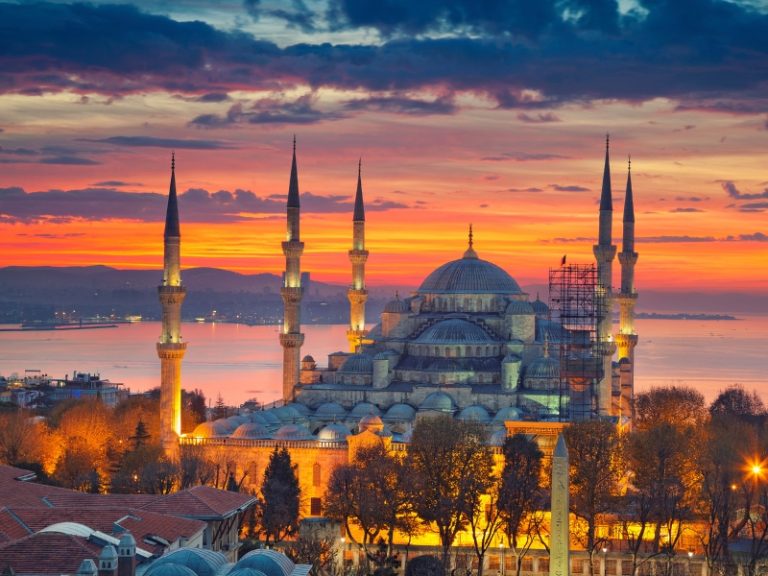
Sultan Ahmed I had this mosque built between 1609 and 1616 by the architect Sedefkâr Mehmed Ağa. Its nickname comes from the blue İznik tiles inside, and it is known for its six minarets. It is still an active mosque, facing Hagia Sophia across the square.
3Hagia Sophia
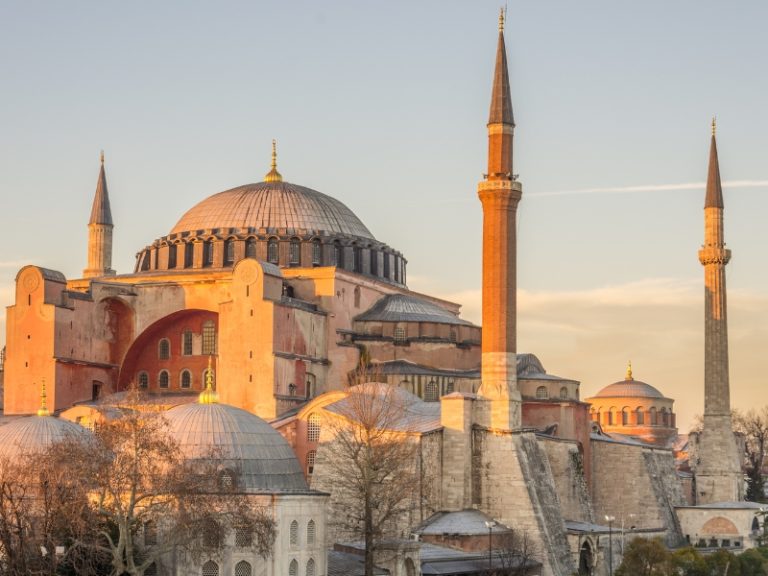
Emperor Justinian I had Hagia Sophia built between 532 and 537 to designs by Anthemius of Tralles and Isidore of Miletus. After the Ottoman conquest in 1453 it became a mosque and minarets were added. It served as a museum from 1934 and has been a mosque again since 2020.
4Topkapı Palace
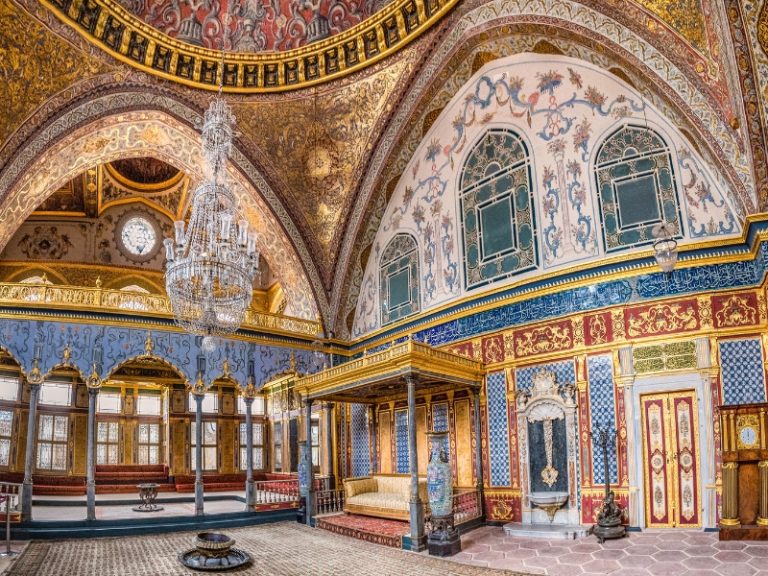
Mehmed II began this palace after the Ottoman conquest of Constantinople in 1453, and it was the main residence of the sultans for about four centuries. It became a museum in 1924. Outside its Imperial Gate stands the richly decorated Fountain of Ahmed III from the 18th century.
5Basilica Cistern
This vast underground reservoir was built in the 6th century under Emperor Justinian I and supplied water to the Great Palace of Constantinople. Its roof rests on 336 marble columns, two of which stand on carved Medusa heads. The Ottomans called it Yerebatan Sarayı, the Sunken Palace.
6Vilayet Mosque
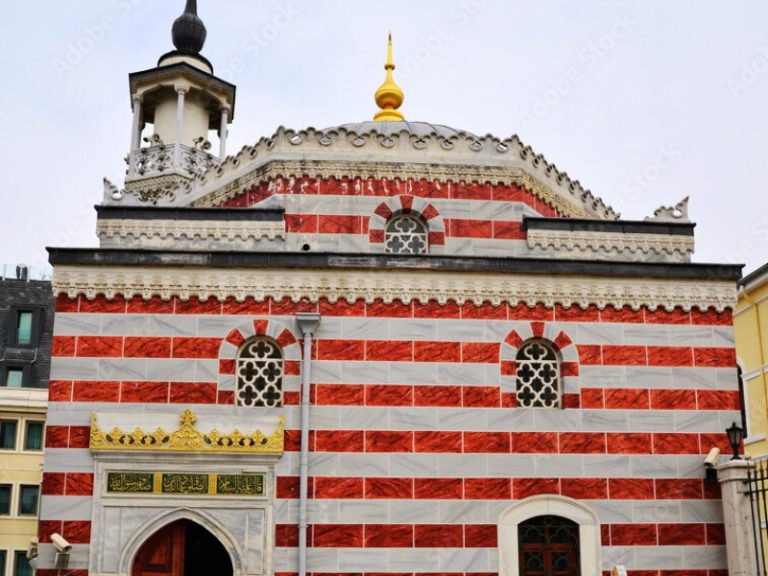
This small mosque takes its name from the vilayet, the Ottoman word for a province, whose governor's seat at the Sublime Porte lies close by. After the imperial mosques on the route, it shows the modest scale of an everyday neighbourhood mosque in the old commercial district.
7Tomb of Abdülhamid I
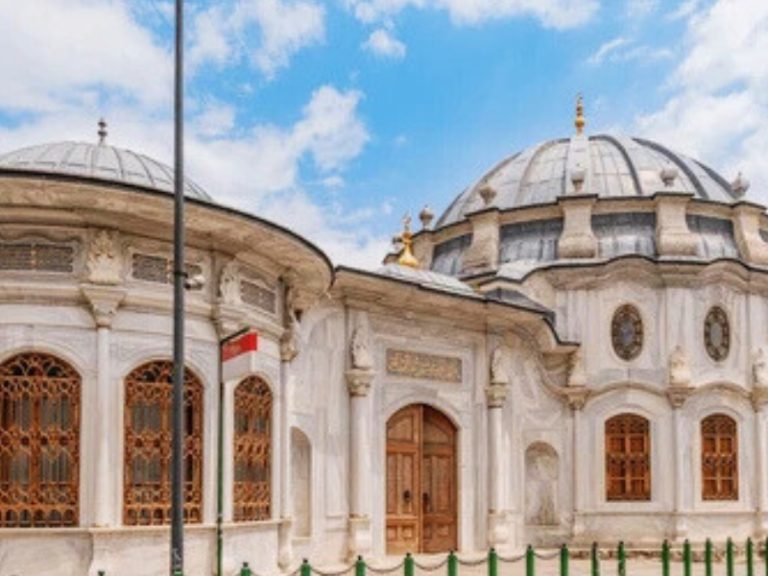
Sultan Abdülhamid I, who reigned from 1774 to 1789, is buried in this domed tomb in Bahçekapı. It was part of a charitable complex he founded, and nearby Hamidiye Street is named after him. Look for the curving Ottoman baroque details of its façade.
Read the full story →
8New Mosque (Yeni Cami)
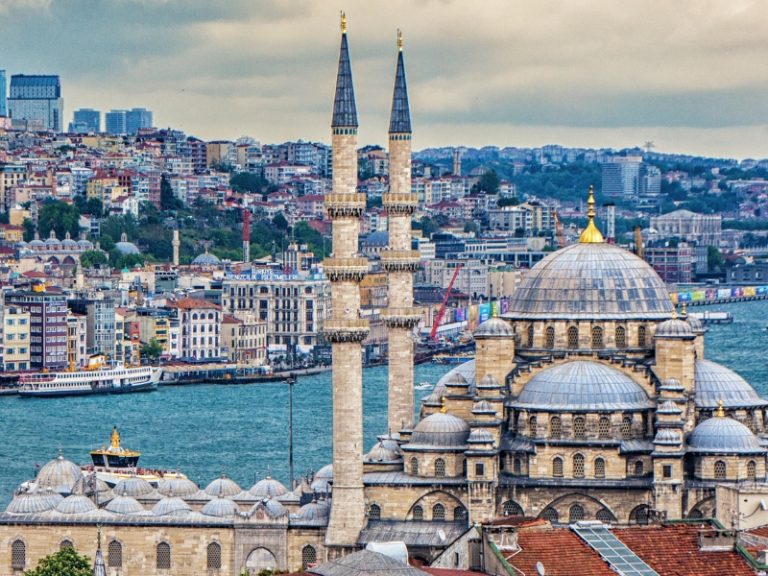
Safiye Sultan, mother of Sultan Mehmed III, began the New Mosque in 1597, but it was only completed in 1665 under Turhan Hatice Sultan. It dominates the Eminönü waterfront on the Golden Horn. The Spice Bazaar next door was built as part of the same complex.
9Galata Bridge
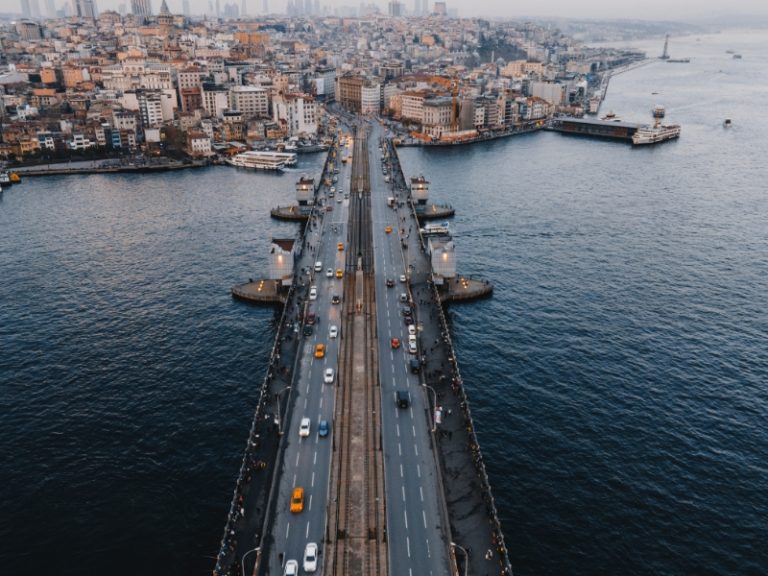
The Galata Bridge crosses the Golden Horn between Eminönü and Karaköy, and bridges have stood here since the 19th century. The current bridge opened in 1994. Anglers line its upper deck, while restaurants fill the level below.
10Galata TowerFinish
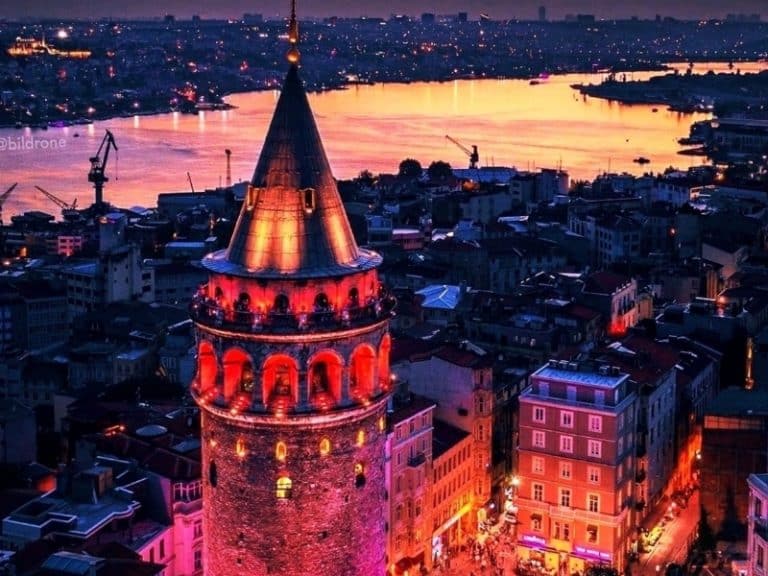
The Genoese built this stone tower in 1348 as part of the fortifications of their colony of Galata. Its conical roof is one of the best-known shapes on the Istanbul skyline. According to legend, Hezârfen Ahmed Çelebi flew from the tower across the Bosphorus to Üsküdar on artificial wings in the 17th century.
Only logged in customers who have purchased this product may leave a review.




Reviews
There are no reviews yet.