What is the Marseille self-guided walking tour?
The Marseille self-guided walking tour replaces the tour guide with audio narration on your phone, so the walk follows your timetable rather than anyone else's. Count on roughly 3 hours in all, including 51 minutes of walking across 4 km and 10 stops where the stories are told. Start on any day and at any hour that suits you.
Up at Les Réformés the narration explains that the Canebière takes its name from the Provençal word for hemp, the raw material of the rope-makers who supplied the port. On the Old Port you hear how Greek sailors from Phocaea founded the city around 600 BC, and at Fort Saint-Jean why Louis XIV had forts built at the harbour mouth after Marseille rebelled against him. The walk ends with Pierre Puget's Vieille Charité, built as a poorhouse where the city once confined its beggars.
- Durationabout 3 hours
- Walkingabout 51 min · 4 km
- Stops10
- LanguagesEnglish, German, French, Italian, Spanish, Dutch
What you do on the walking tour
Hear the stories
The audio tells each stop's history, a legend or two and a few fun facts, and the full text is on screen for anyone who prefers to read.
Follow the map
Google Maps points the way from stop to stop: 51 minutes on foot over 4 km altogether.
Pause when you like
Coffee, lunch or a museum fit in whenever you want, and the walk picks up where you left it, today or another day.
Find food and shops
The app suggests places to eat and local shops close to the route, and lets you begin at any stop and change the order.
See the route and attractions →
How it works
- Book online Choose the number of people. Your booking reference arrives by email straight away.
- Get the app Download the World City Trail app from the App Store or Google Play and enter your booking reference.
- Walk when you like Start whenever you are ready, walk at your own pace and pause any time. No guide, no fixed schedule.
Who the walking tour is for
First time here
One walk links the 19th-century avenues, the harbour and the oldest quarter, and tells you what you are looking at.
Independent travellers
Nobody sets the pace but you: linger at the stops you like and move quickly past the others.
Arriving by train
Les Réformés is a short walk from Saint-Charles station, and the 3 hours still leave time for lunch by the water.
Good to know
- Bring a charged smartphone with mobile data; a power bank helps.
- No entry tickets needed: everything happens outside the buildings. Going inside is optional and paid separately.
- Family friendly; children must be accompanied by an adult.
- Not suitable for wheelchair users and difficult with strollers.
- Groups of up to 5 work best; larger groups split up, one ticket per person.
- Every purchase helps support stray cats and dogs in Greece.
The walk stop by stop: Les Réformés, La Canebière, the Old Port, the Mucem, Le Panier
10 stops · about 51 min walking · start: Les Réformés (Saint-Vincent-de-Paul Church) · finish: La Vieille Charité
The first stop is the church of Saint-Vincent-de-Paul, known to everyone as Les Réformés, whose two spires close off the upper end of the Canebière. You then walk down the avenue to the Opéra and, by way of the Pavillon Daviel, reach the quay of the Old Port before heading out along the water to Fort Saint-Jean and the Mucem. From there the route climbs to La Major cathedral, winds into the lanes of Le Panier and ends at La Vieille Charité. Some streets in Le Panier are steep. The app lets you choose another first stop or order, and none needs a ticket.
Open the route map ↗
1Les Réformés (Saint-Vincent-de-Paul Church)Start
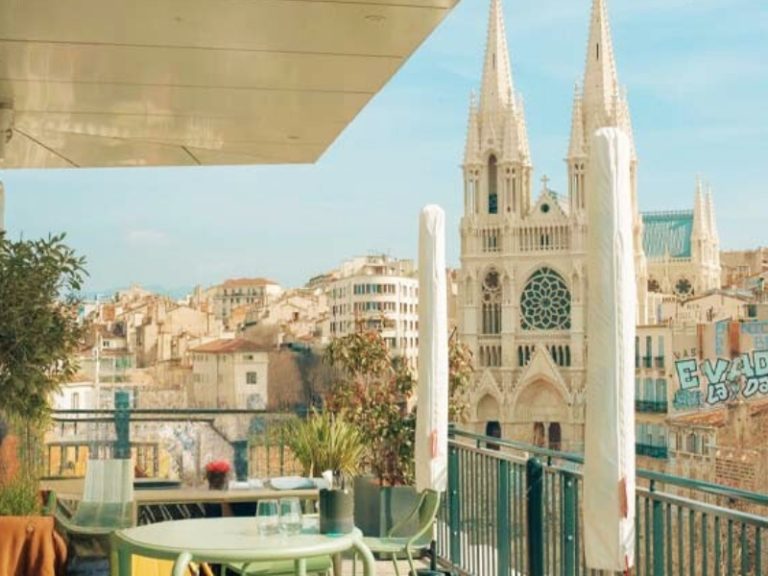
At the top of the Canebière rises the neo-Gothic church of Saint-Vincent-de-Paul, built in the second half of the 19th century. Locals call it Les Réformés, after the convent of reformed Augustinian friars that stood here before it. Its twin spires close the view up the city's main avenue.
2La Canebière
The Canebière runs for about a kilometre from the Old Port up to Les Réformés and is Marseille's best-known avenue. Its name comes from the Provençal word for hemp, recalling the rope-makers who once supplied the ships in the port. Look up at the grand 19th-century façades of former hotels, banks and shipping offices.
3Opéra de Marseille
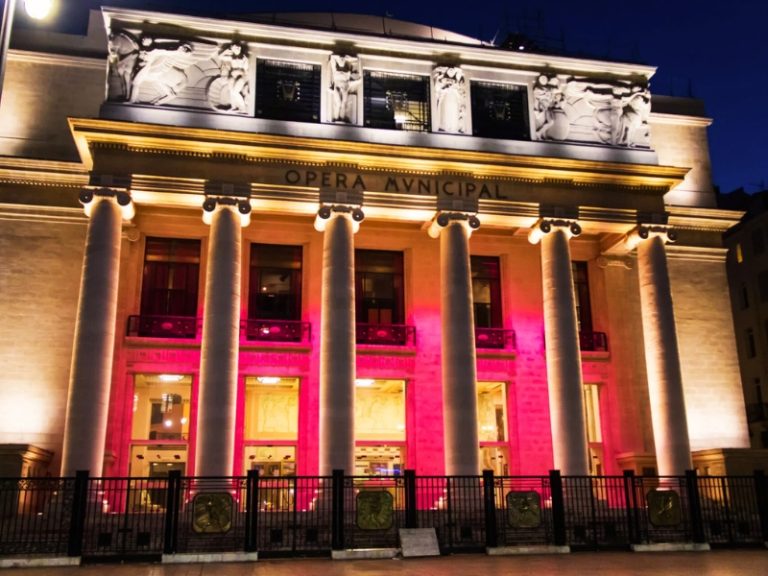
Marseille's opera house stands on the site of the Grand-Théâtre, which opened in 1787. After a fire in 1919 the interior was rebuilt in Art Deco style and the house reopened in 1924, behind the colonnade of the older façade. Look for the stylised reliefs and lettering of the 1920s above the entrance.
4Pavillon Daviel
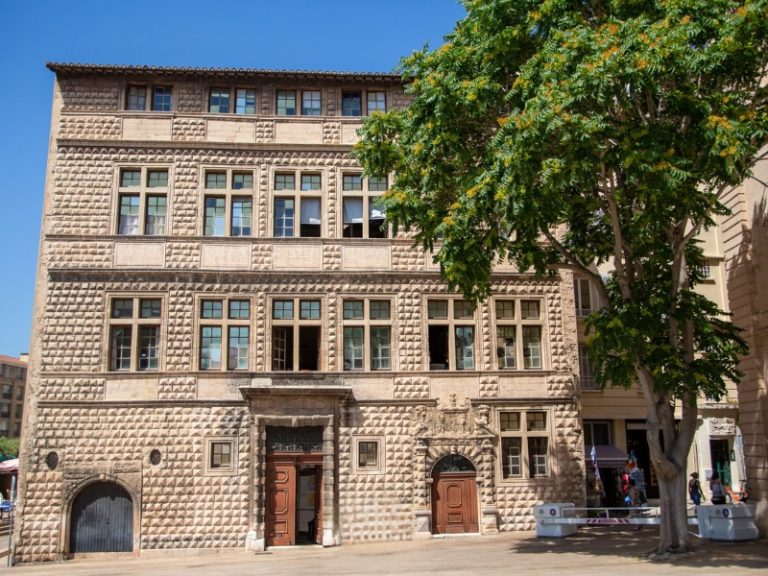
On the edge of Le Panier, the Pavillon Daviel is an 18th-century building that long served as the city's courthouse. It is known for its elegant wrought-iron balcony, and the square in front is named after Jacques Daviel, a surgeon who pioneered cataract operations while working in Marseille.
5Vieux-Port (Old Port)
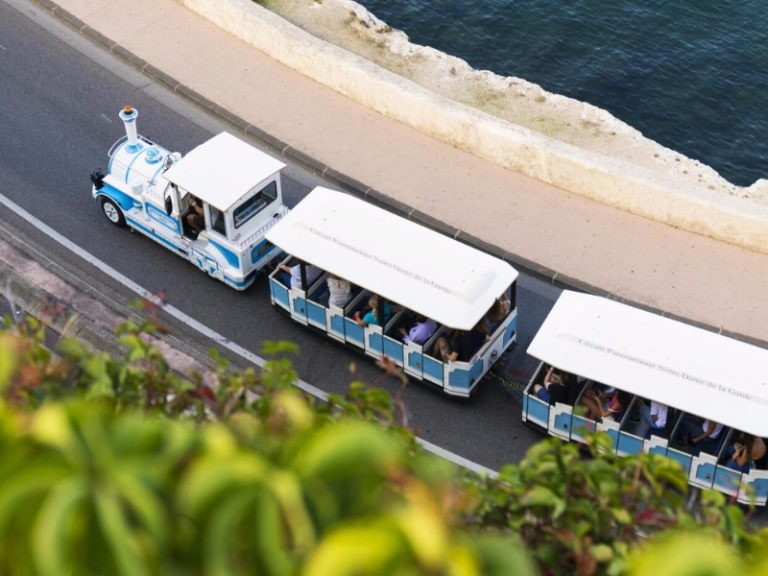
On this quay of the Old Port the little tourist trains of Marseille set off. The harbour is where Greek sailors from Phocaea founded the city around 600 BC, which makes Marseille one of the oldest cities in France. Nearby stands the 17th-century town hall, one of the few buildings on the quay to survive the destruction of the old quarter in 1943.
Read the full story →
6Fort Saint-Jean
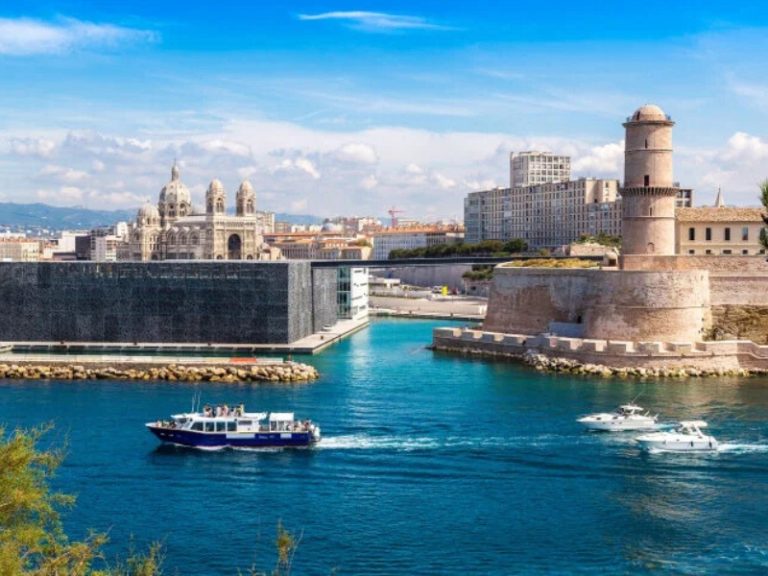
Louis XIV had Fort Saint-Jean and Fort Saint-Nicolas built at the harbour entrance from the 1660s, after Marseille had rebelled against royal authority. The fort absorbed older buildings, including the 15th-century square tower of King René and a commandery of the Knights of Saint John. A footbridge now links it to the Mucem.
Read the full story →
7Mucem
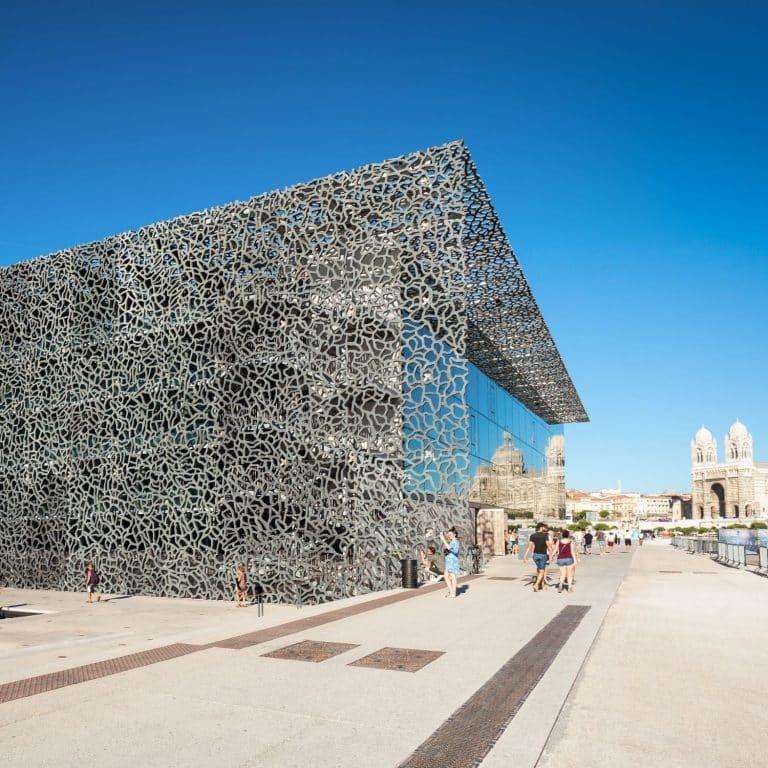
The Museum of Civilisations of Europe and the Mediterranean opened in 2013, when Marseille was European Capital of Culture. Architect Rudy Ricciotti wrapped its cube-shaped building in a lace-like screen of dark fibre-reinforced concrete. Footbridges connect its roof terrace to Fort Saint-Jean and the Panier district.
8Cathédrale La Major
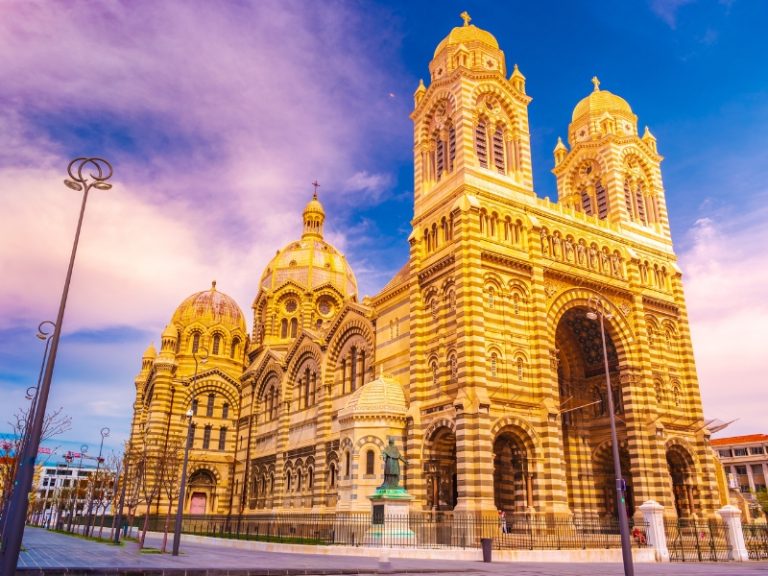
Marseille's cathedral, Sainte-Marie-Majeure or La Major, was built between 1852 and 1893 in a Romano-Byzantine style designed by Léon Vaudoyer. Its striped walls of green and white stone and its domes make it one of the largest churches built in France in the 19th century. The much smaller medieval Old Major still stands at its foot.
Read the full story →
9Le Panier
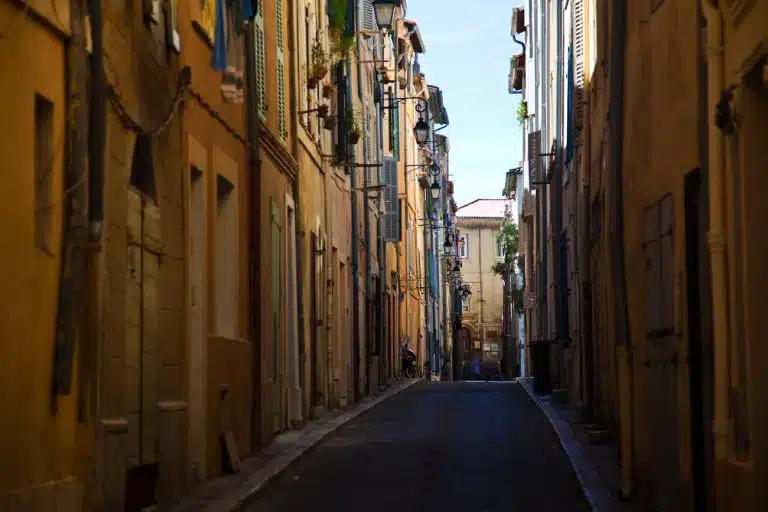
This stop lies in Le Panier, Marseille's oldest quarter, on the hill where the Greek colony of Massalia grew up. Its steep lanes, staircases and small squares are known for colourful façades, street art and small craft and design shops. In 1943 the German occupiers blew up much of the lower part of the old town near the port.
10La Vieille CharitéFinish
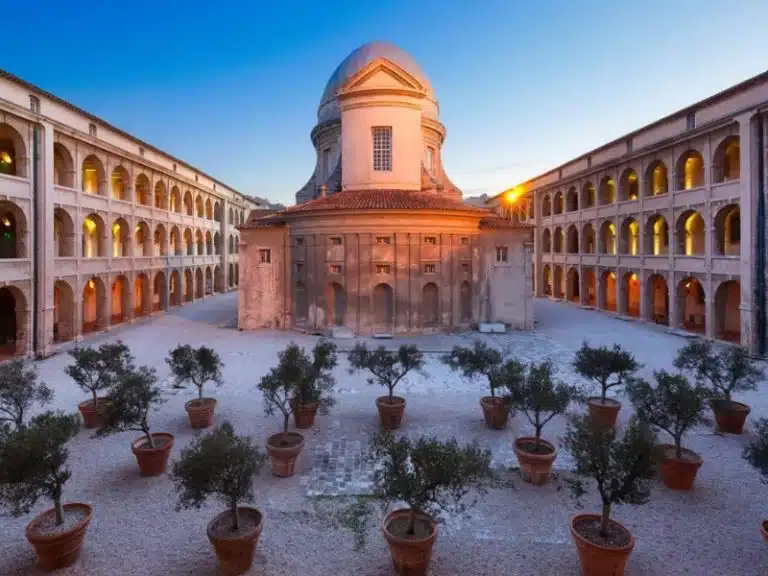
La Vieille Charité was built between 1671 and 1749 to designs by the Marseille architect Pierre Puget, as a poorhouse where the city's beggars were confined. Three storeys of arcaded galleries surround a courtyard with a chapel crowned by an oval dome. Today it houses museums of Mediterranean archaeology and of African, Oceanic and Amerindian arts.
Only logged in customers who have purchased this product may leave a review.






Reviews
There are no reviews yet.