What is the Padua self-guided walking tour?
The Padua self-guided walking tour is a walk on which your phone does the guiding: the World City Trail app maps the route and narrates the history, legends and curious facts of every stop, with no group and no fixed start. The whole thing takes around 3 hours, 42 minutes of them walking, over 3.4 km and 10 stops. Padua's arcades keep the walking pleasant, and the time goes on a city shaped by its university, its markets and its saint.
Near Piazza Cavour the narration tells why the Caffè Pedrocchi was called the café without doors, and on Piazza dei Signori it points you to the astronomical clock whose zodiac is said to be missing Libra. The Palazzo della Ragione, roofed like an upturned ship's hull in 1306, comes with the tale of the stone where insolvent debtors were publicly shamed. At the university you hear about Galileo's years of teaching and about Elena Lucrezia Cornaro Piscopia, who in 1678 became the first woman to earn a degree, and in front of Il Santo you meet Donatello's bronze Gattamelata.
- Durationabout 3 hours
- Walkingabout 42 min · 3.4 km
- Stops10
- LanguagesEnglish, German, French, Italian, Spanish, Dutch
What the walk looks like
Arrive and listen
When you reach a stop, the narration begins: who built it, what happened there, the legend attached to it and a detail worth looking for. If you prefer, read the same chapter as text instead.
Walk on
The way to each next stop appears in Google Maps. Over the full 3.4 km you walk for about 42 minutes, at whatever speed feels right.
Break it up
A long lunch, a museum or simply a bench in the sun: close the app and pick up where you left off, the same day or another one.
Use the local tips
Suggestions for places to eat and local shops near the route come with the walk. Prefer a different first stop, or another sequence? The app handles that too.
See the route and attractions →
How it works
- Book online Choose the number of people. Your booking reference arrives by email straight away.
- Get the app Download the World City Trail app from the App Store or Google Play and enter your booking reference.
- Walk when you like Start whenever you are ready, walk at your own pace and pause any time. No guide, no fixed schedule.
Is this walk for you?
People who ask why
If you want to know who built a gate, or how a street got its name, the narration has the answer.
Families and couples
Legends for the children, history for the adults, and everyone moves at the same relaxed speed.
Back for another visit
Familiar streets look different once you know the stories behind them.
Good to know
- Bring a charged smartphone with mobile data; a power bank helps.
- No entry tickets needed: everything happens outside the buildings. Going inside is optional and paid separately.
- Family friendly; children must be accompanied by an adult.
- Not suitable for wheelchair users and difficult with strollers.
- Groups of up to 5 work best; larger groups split up, one ticket per person.
- Every purchase helps support stray cats and dogs in Greece.
From Porta Altinate to Prato della Valle, stop by stop
10 stops · about 42 min walking · start: Piazza Garibaldi · finish: Prato della Valle
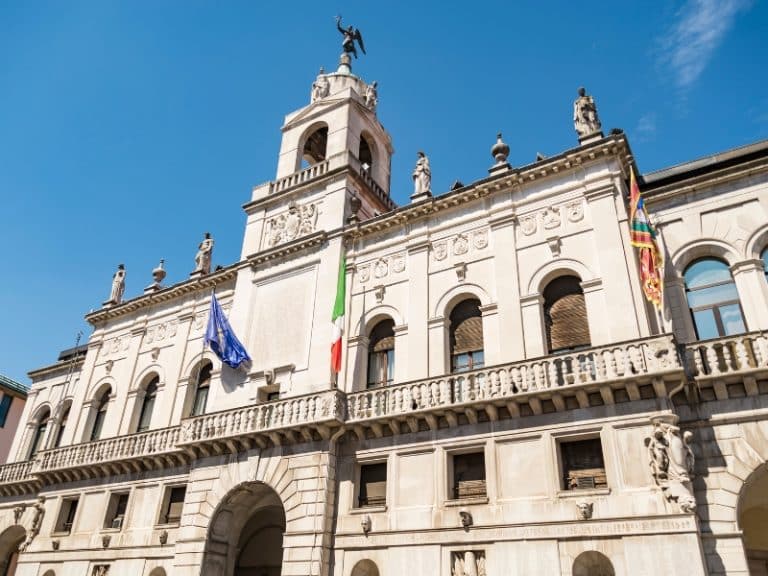
Piazza Garibaldi, watched over by the medieval Porta Altinate, is the starting point, and Piazza Cavour beside the Caffè Pedrocchi comes next. Piazza dei Signori and the cathedral with its baptistery lead to the Palazzo della Ragione and the market stalls of Piazza della Frutta. After Palazzo Bo, the historic seat of the University of Padua, you pass the MUSME medical museum in a 15th-century hospital, reach the Basilica of Saint Anthony and end on Prato della Valle. The app lets you reorder the stops, and none of them needs a ticket.
Open the route map ↗
1Piazza GaribaldiStart
This busy square on the edge of the old centre is overlooked by the Porta Altinate, one of the gates of Padua's medieval walls. The brick gate once led to the road towards the Roman town of Altinum, which gave it its name.
Read the full story →
2Piazza Cavour
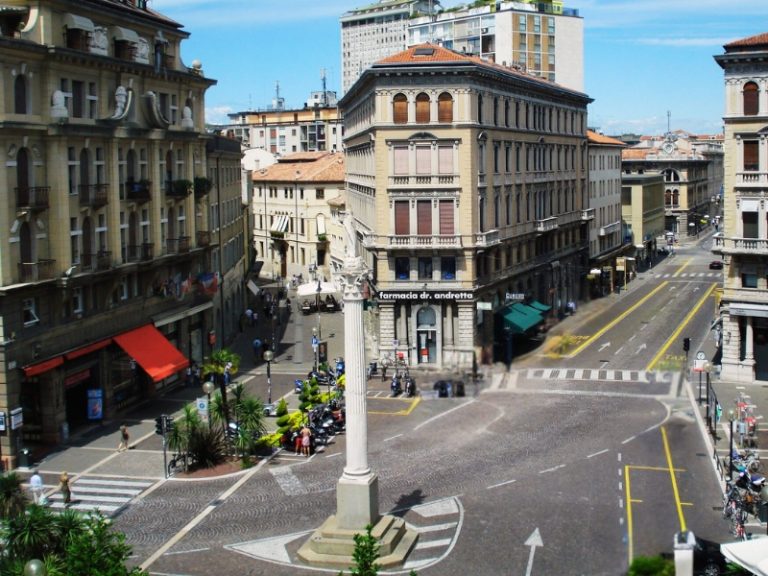
This square sits at a crossroads of the city centre, a few steps from the Caffè Pedrocchi, a neoclassical building designed by Giuseppe Jappelli and opened in 1831. It was long known as the café without doors, because it stayed open day and night, and students and patriots met there in the 19th century.
3Piazza dei Signori
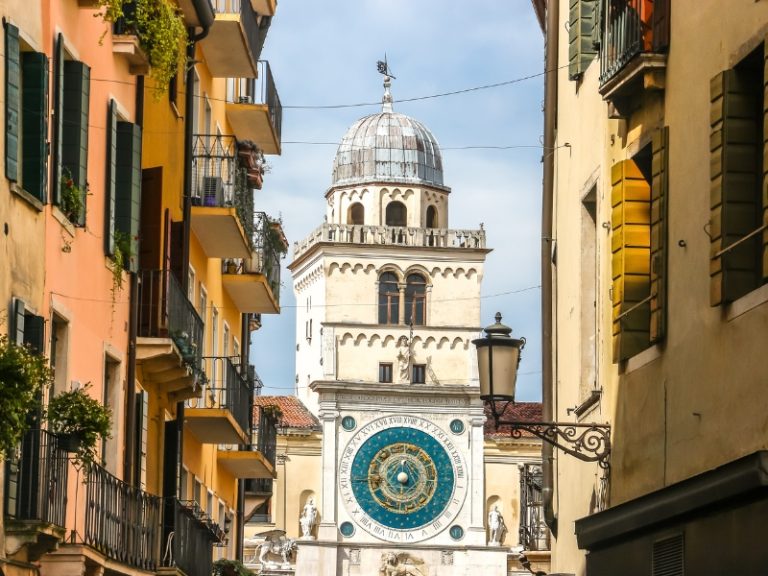
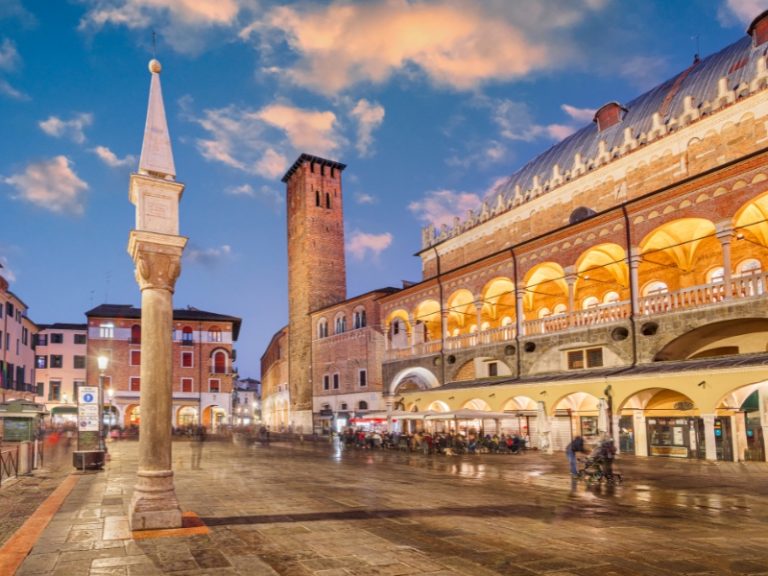
The square of the lords takes its name from the Carrara family, who ruled Padua in the 14th century from the palace here. Its clock tower carries an astronomical clock based on a 14th-century original by Jacopo Dondi, and its zodiac is said to lack the sign of Libra. A column with the Lion of Saint Mark recalls Venetian rule.
Read the full story →
4Padua Cathedral
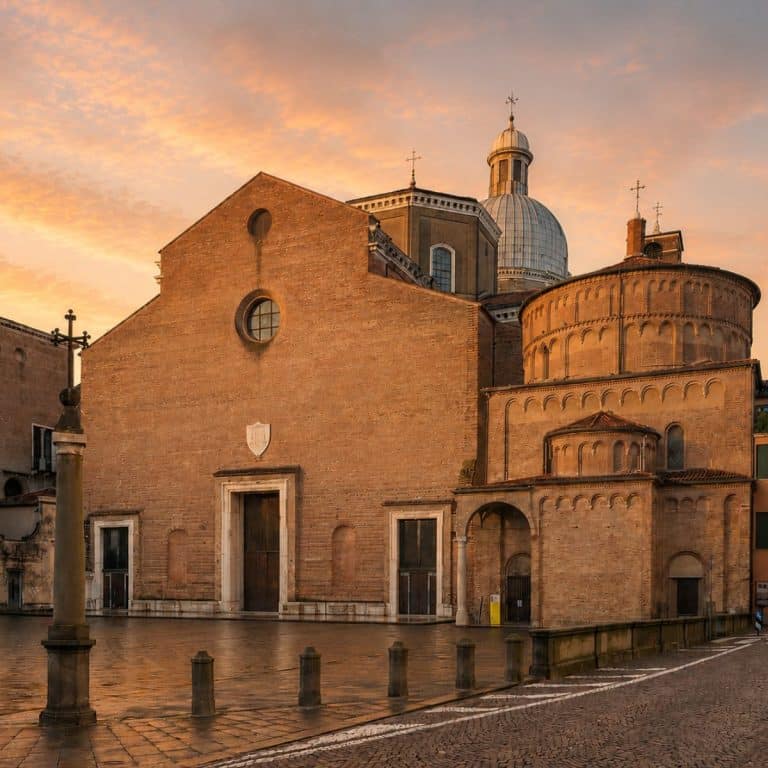
The cathedral of Santa Maria Assunta was rebuilt from 1551, partly following a design attributed to Michelangelo, and its brick façade was never finished. Beside it stands the Romanesque baptistery, decorated inside with 14th-century frescoes by Giusto de' Menabuoi.
5Palazzo della Ragione
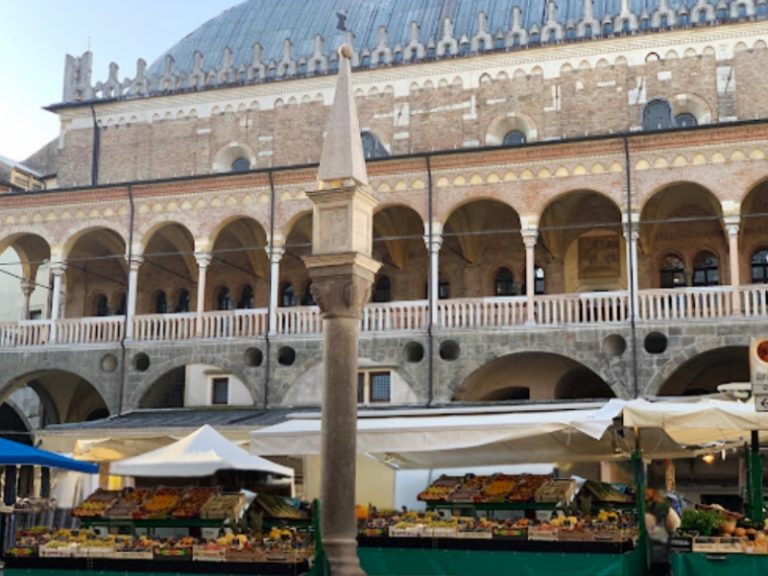
Padua's medieval law court was begun in 1218, and in 1306 it received a roof shaped like an upturned ship's hull. Its upper hall is one of the largest of its kind in Europe, painted with an astrological cycle, and it holds a huge wooden horse and the stone where insolvent debtors were shamed.
6Piazza della Frutta
The fruit square runs along the north side of the Palazzo della Ragione and has been a market place since the Middle Ages. Stalls still fill it most mornings, and under the arches of the palace, the area known as Sotto il Salone, food shops have traded for centuries.
Read the full story →
7University of Padua
Founded in 1222, the University of Padua is one of the oldest in the world, and its historic seat is Palazzo Bo. Galileo Galilei taught here from 1592 to 1610, the anatomical theatre of 1595 is the oldest permanent one in the world, and in 1678 Elena Lucrezia Cornaro Piscopia became the first woman to earn a university degree.
8MUSME
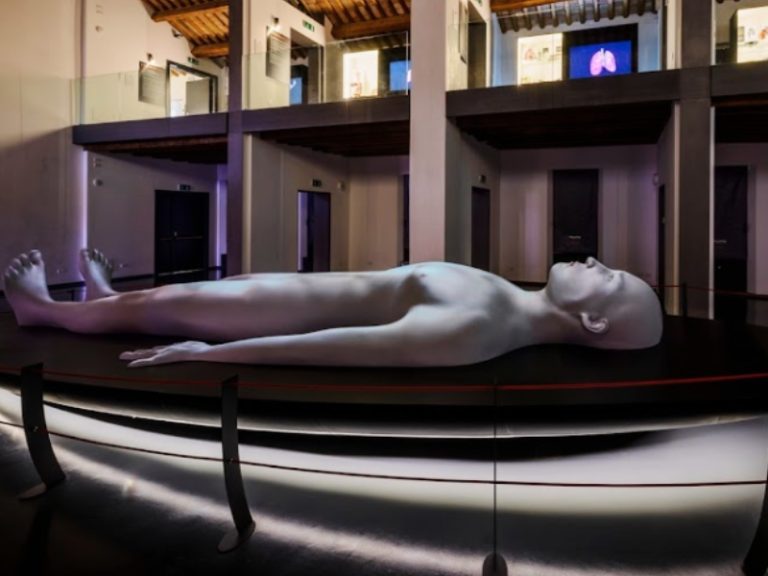
MUSME is Padua's museum of the history of medicine, housed in the former hospital of San Francesco Grande, founded in the early 15th century. It uses interactive displays to tell how doctors in Padua, a centre of medical teaching, studied and treated the human body.
9Basilica of Saint Anthony
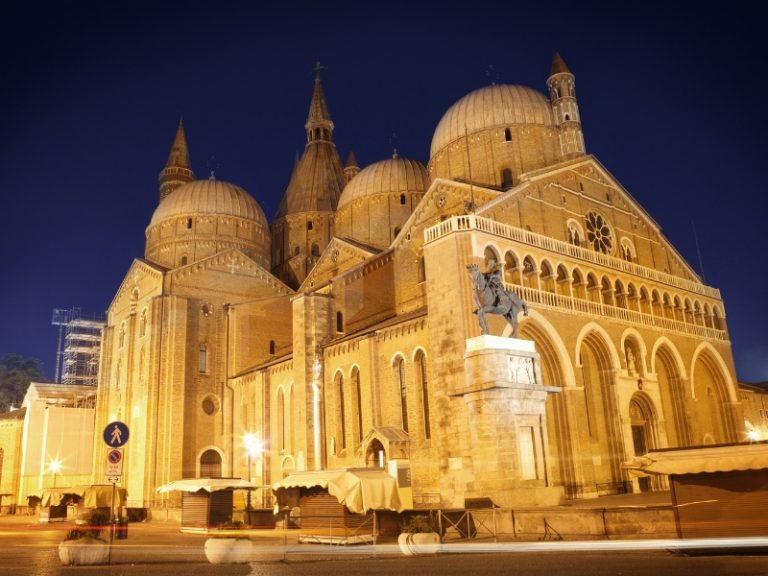
Il Santo was begun in 1232, a year after the death of Saint Anthony, and mixes Romanesque, Gothic and Byzantine features with its cluster of domes and slender towers. It is one of the most visited pilgrimage churches in the world, and in front of it stands Donatello's bronze Gattamelata, one of the first large equestrian statues since antiquity.
Read the full story →
10Prato della ValleFinish
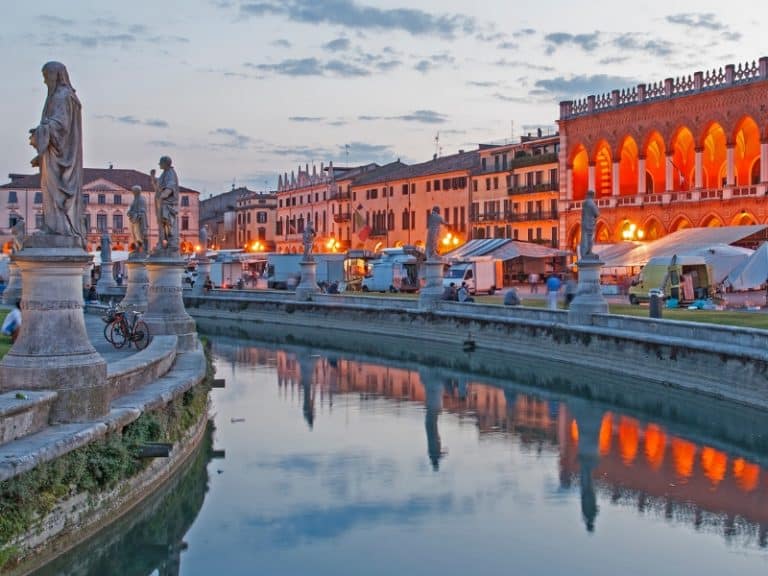
Prato della Valle is one of the largest squares in Europe, at about 90,000 square metres. It was laid out from 1775 by Andrea Memmo on what had been marshland, with a green island ringed by a canal and 78 statues of famous people linked to Padua and its university.
Read the full story →
Only logged in customers who have purchased this product may leave a review.




laetitia– France –
Collected on GetYourGuide
Parcours très intéressant, facile avec des explications instructives. Très bon concept
Italy –
Collected on GetYourGuide
Interessanti spunti per capire un po’ di più la storia del luogo. Il percorrere il circuito con le proprie tempistiche poi non ha prezzo!
Splendida– Italy –
Collected on GetYourGuide
bellissimo tour, in 4 ore io ed il mio compagno abbiamo visto tutti i punti salienti della città. le spiegazioni sono esaustive e complete.