What is the Seville outdoor escape game?
The Seville outdoor escape game is an escape room taken out into the open air: you hold your phone, and at each of 10 stops a puzzle is hidden in the surroundings, waiting to be cracked with sharp eyes and clear reasoning. Allow about 2 hours, including 49 minutes of walking over 4 km, and pick any day that suits your plans.
Each puzzle belongs to a landmark such as the Torre del Oro, Seville Cathedral or the Plaza de España, and stands on its own, so no storyline ties the stops together. If you get stuck, three levels of hints are at hand. The old centre suits this kind of game because the monuments sit within walking distance, and the route follows the river before it reaches the park.
- Durationabout 2 hours
- Walkingabout 49 min · 4 km
- Stops10
- LanguagesEnglish, German, French, Italian, Spanish, Dutch, Portuguese
What you do on the escape game
Solve
Work out each puzzle on the spot by observation and logic. You do not need to know the city beforehand.
Scan the scene
The clues are tucked into the details around each landmark: the stonework, the tiles and the layout of the square.
Walk on
Google Maps leads you from stop to stop, covering about 49 minutes on foot over 4 km.
Set your own pace
Nothing counts down. Ask for a hint when you need one, take a break and carry on later in the day or another day.
See the route and attractions →
How it works
- Book online Choose the number of players. Your booking reference arrives by email straight away.
- Get the app Download the World City Trail app from the App Store or Google Play and enter your booking reference.
- Play when you like Start whenever you are ready, walk at your own pace and pause any time. No guide, no fixed schedule.
Who it suits
Friends
Puzzles that each person tackles in a different way keep the group talking between stops, and nobody has to know Seville first.
Couples
A shared task that gives you something to talk about as you stroll from one landmark to the next, with no clock to watch.
Team building
Colleagues solve the same puzzles on their own phones, which makes the day a relaxed way to bring a team closer.
Good to know
- Bring a charged smartphone with mobile data; a power bank helps.
- Best started in daylight, so you can see the details the puzzles ask about.
- No entry tickets needed: everything happens outside the buildings. Going inside is optional and paid separately.
- Family friendly; children must be accompanied by an adult.
- Not suitable for wheelchair users and difficult with strollers.
- Teams of up to 5 work best; bigger groups split into several teams, one ticket per player.
- Every purchase helps support stray cats and dogs in Greece.
Puzzle route: from Híspalis Fountain to Lotus Pond
10 stops · about 49 min walking · start: Híspalis Fountain · finish: Lotus Pond
The first puzzle sits at Híspalis Fountain on Puerta de Jerez and the last one at Lotus Pond in María Luisa Park. Between them lie eight more stops, among them the Torre del Oro, Seville Cathedral, the Puerta del León of the Real Alcázar and Plaza de España. The route stays flat, follows the river first and then turns into the park. Daylight is best for starting, since rain or wind make outdoor play harder. Google Maps handles the navigation, you can change the order of stops in the app, and the puzzles need no entry tickets.
Open the route map ↗
1Híspalis FountainStart
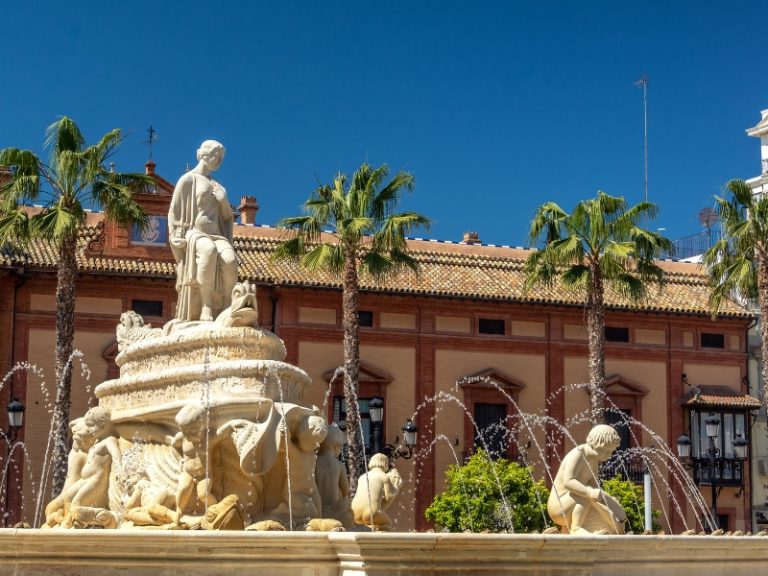
This monumental fountain in the middle of Puerta de Jerez was built for the Ibero-American Exposition of 1929, close to where one of the gates of the old city wall once stood. Its central figure is a woman representing Hispalis, the Roman name of Seville.
2Torre del Oro
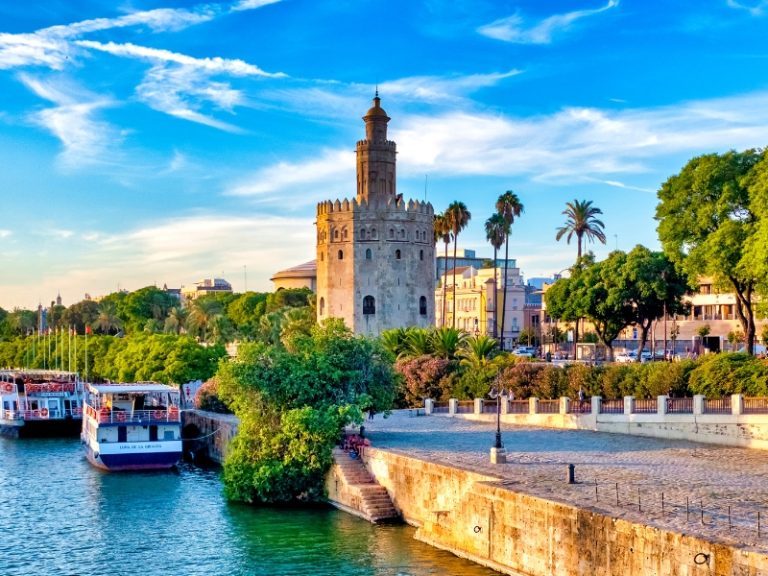
The Almohads built this twelve-sided watchtower on the Guadalquivir in the early 13th century to guard the river port. Its name, Tower of Gold, is said to come from the golden reflection of its walls on the water, and its small top section was added in the 18th century.
3Real Maestranza Bullring
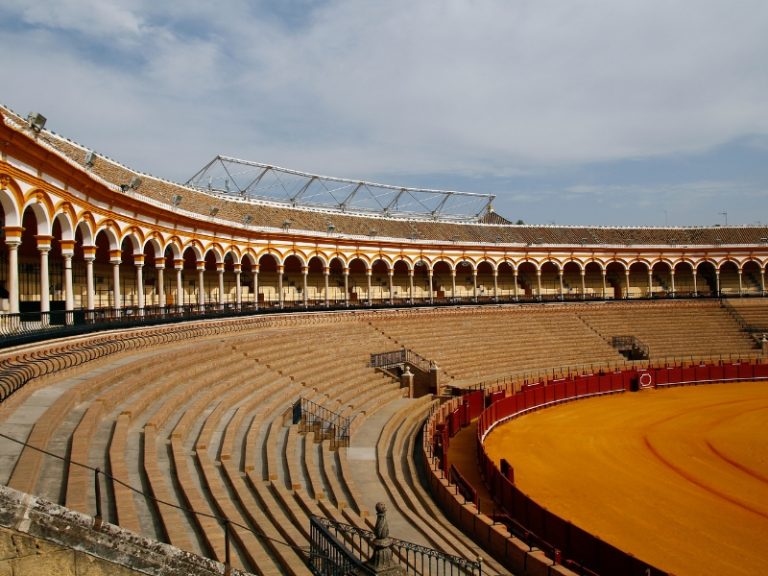
Seville's bullring belongs to the Real Maestranza de Caballería, a noble riding society, and was built in stages between 1749 and 1881. Its white and ochre baroque façade faces the river, and the final act of Bizet's opera Carmen is set right outside.
4Plaza del Cabildo
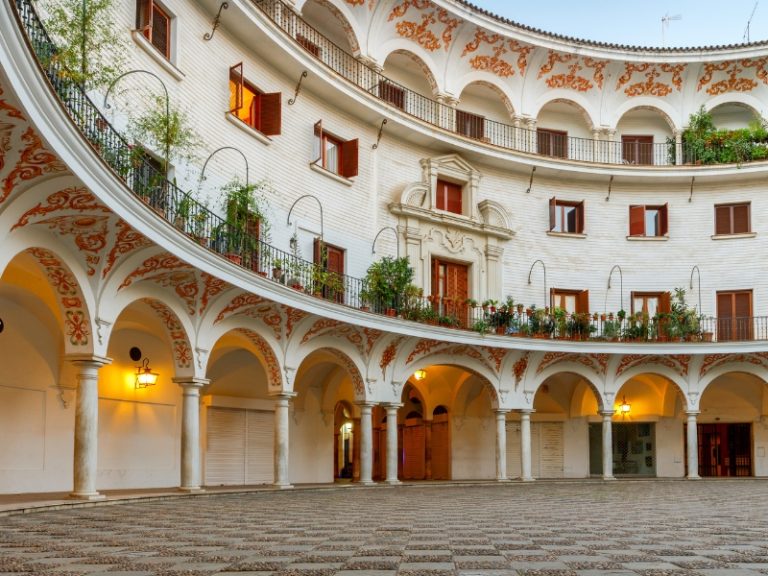
This semicircular square opposite the cathedral, reached through a passage from Avenida de la Constitución, is enclosed by an arcaded building with painted façades. On Sunday mornings collectors meet under its arches to trade stamps and coins.
Read the full story →
5Seville Cathedral
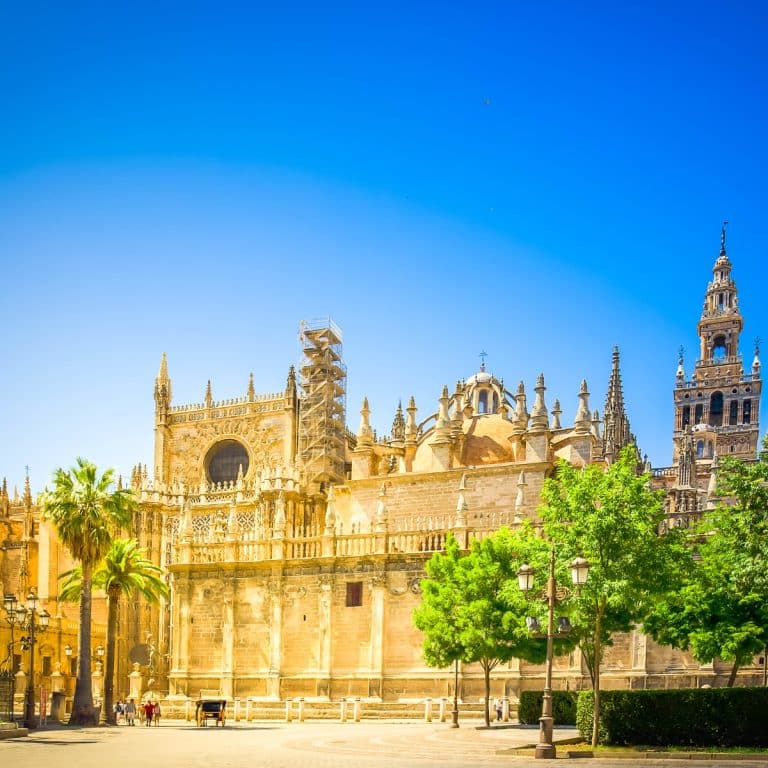
Seville Cathedral was begun in 1401 on the site of the city's Almohad great mosque and is the largest Gothic cathedral in the world. Its bell tower, the Giralda, started life as the mosque's minaret and is crowned by the Giraldillo weathervane. Inside, four figures carry the tomb of Christopher Columbus.
6Puerta del León
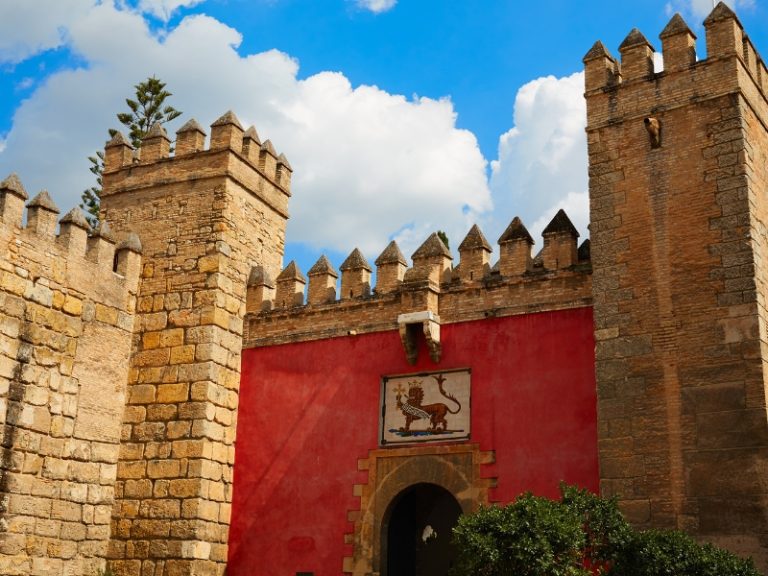
The Lion's Gate is the main entrance to the Real Alcázar, the royal palace that grew out of Almohad fortifications and was rebuilt for King Peter I in the 14th century. Above the arch in the old red walls, a tiled panel shows a crowned lion holding a cross.
Read the full story →
7Royal Tobacco Factory
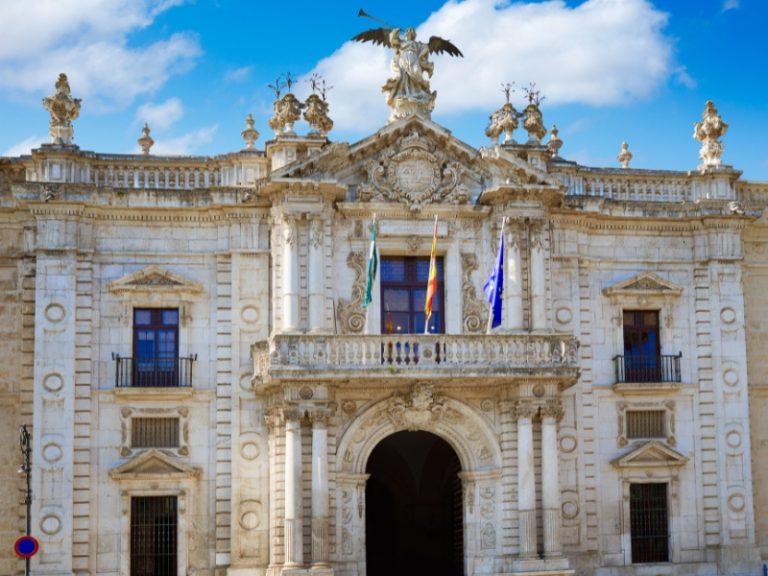
This huge 18th-century building was Spain's royal tobacco factory, where thousands of women, the cigarreras, rolled cigars by hand. Bizet's Carmen works here as a cigarette maker, and today the building houses the University of Seville.
Read the full story →
8San Diego Fountain
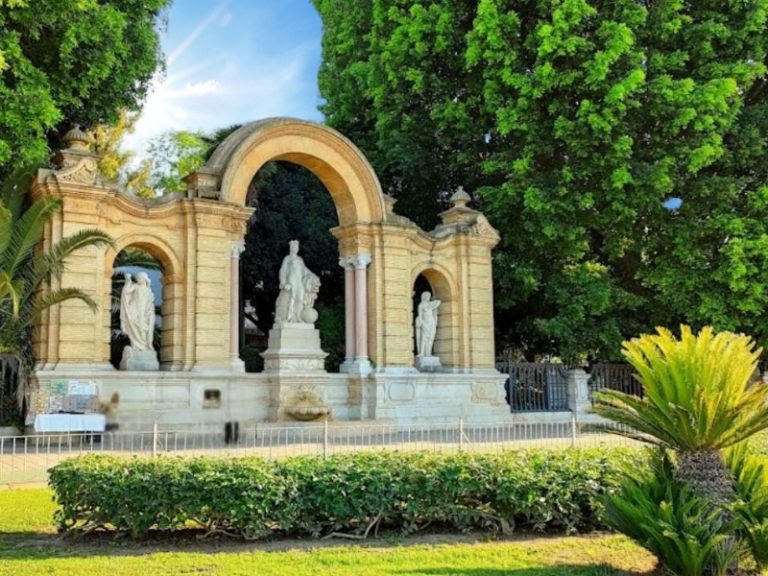
This fountain stands on the Glorieta de San Diego, a roundabout at the edge of María Luisa Park on the way from the old Tobacco Factory to Plaza de España. Its basin and jets of water make a cool pause before the park and the grand buildings of the 1929 exposition.
9Plaza de España
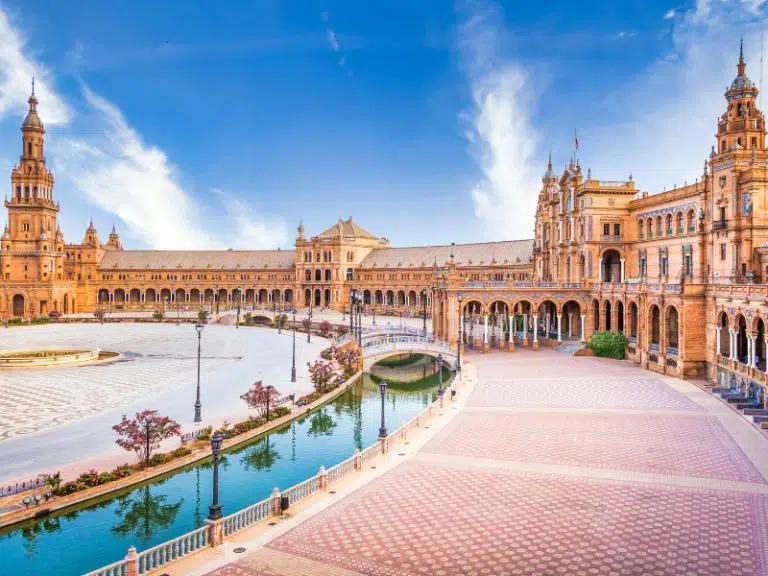
Architect Aníbal González designed this vast semicircular square for the Ibero-American Exposition of 1929. A canal crossed by small bridges runs along the curved building, and tiled alcoves along its base represent the provinces of Spain with maps and historical scenes.
10Lotus PondFinish
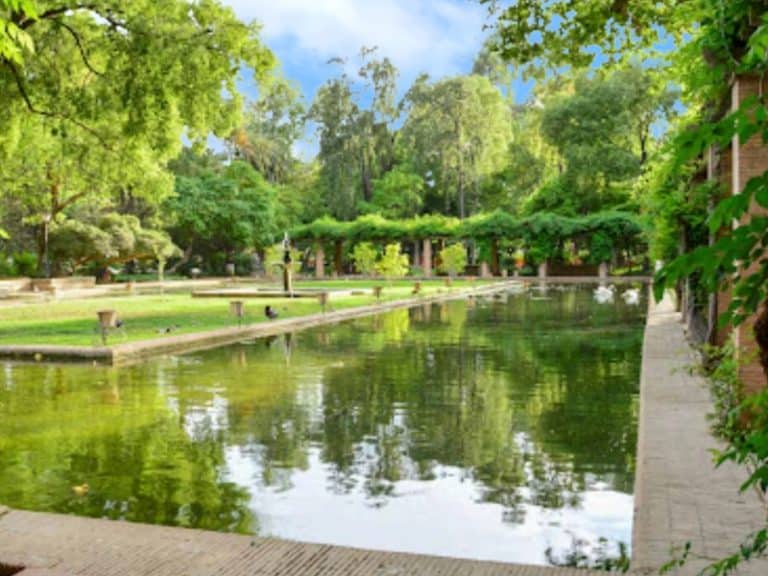
The Estanque de los Lotos is a quiet pond in María Luisa Park, named after the lotus plants that grow in it. The park was once part of the gardens of the San Telmo Palace, given to the city in 1893 by Princess María Luisa Fernanda and redesigned by Jean-Claude Nicolas Forestier for the 1929 exposition.
Only logged in customers who have purchased this product may leave a review.





Anonymous (verified owner) –
Fun concept, but I found the tour less informative than expected. There was too much “imagine what it was like back then” and not enough history or interesting facts. For larger monuments like the Cathedral, the Google Maps “Take me there” feature should take you to the exact spot needed to solve the riddle, rather than the general location. Otherwise, you can end up walking around several times looking for it, which wasn’t particularly enjoyable in the Seville heat.