
Table of Contents
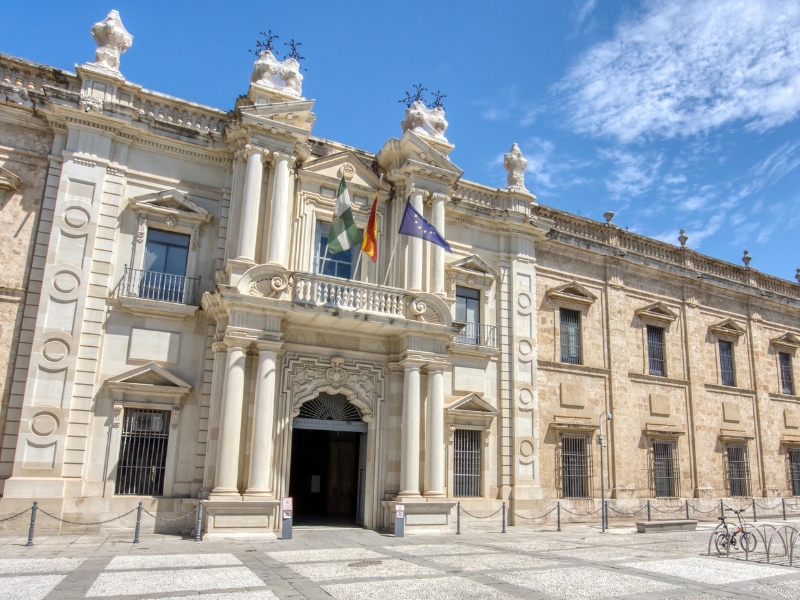
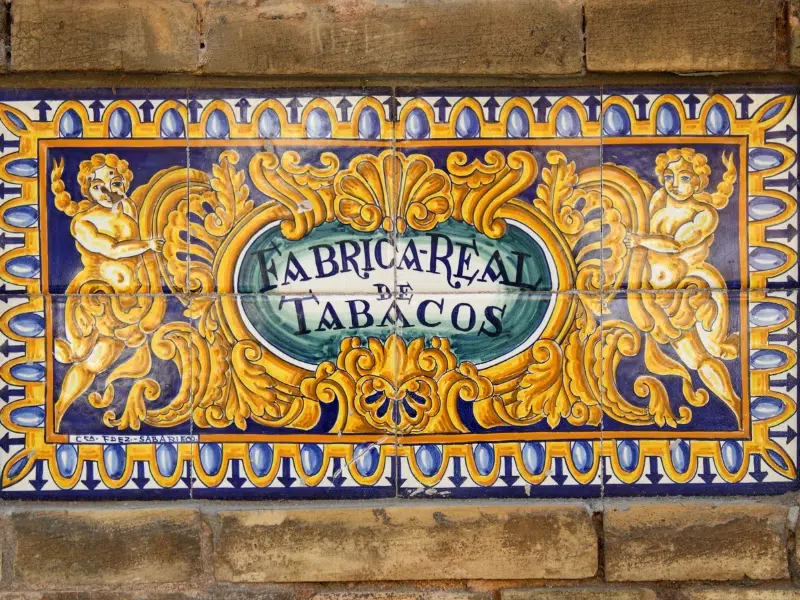
Seville, a city rich in history, culture, and architectural beauty, is home to many renowned landmarks, each contributing to the city’s vibrant narrative. One of the most iconic and historically significant sites in Seville is the Royal Tobacco Factory (La Fábrica de Tabacos), a monumental structure that played a pivotal role in the city’s past. Located in the heart of Seville, the Royal Tobacco Factory is not only a striking example of industrial architecture but also a testament to Seville’s important role in Spain’s economic and cultural development.
The Origins of the Royal Tobacco Factory
The Royal Tobacco Factory in Seville was built in the late 18th century, a time when the Spanish Empire was at the height of its power and influence. The factory’s creation was part of the Spanish Crown’s efforts to centralize and control the production of tobacco, a commodity that was highly profitable at the time. The establishment of the Royal Tobacco Factory was also aimed at promoting economic growth by regulating the tobacco industry and creating jobs.
The construction of the Royal Tobacco Factory began in 1728, under the reign of King Philip V of Spain, who decided to set up a state-run monopoly over tobacco production. This decision was part of a broader effort to modernize the Spanish economy and generate revenue for the crown. The factory was strategically located along the Guadalquivir River, allowing for easy access to raw tobacco imports from the colonies.
The Factory’s Role in Seville’s Economy
During its peak, the Royal Tobacco Factory was a major employer and a significant contributor to the economy of Seville. The factory employed thousands of workers, many of whom were women, who rolled cigars by hand. These women became known as the “torcedoras”, and their work was essential to the success of the tobacco industry in Seville.
The factory’s operation had a profound impact on the surrounding community. Workers, many of whom came from rural areas, moved to Seville to work at the factory, leading to a growth in population and the development of neighborhoods surrounding the site. The factory also played a crucial role in the development of local infrastructure, with the construction of roads, bridges, and other amenities to support its operations.
The tobacco industry in Seville grew exponentially during the 18th and 19th centuries. The Royal Tobacco Factory produced a range of tobacco products that were sold both domestically and internationally, and Seville became known for its high-quality cigars. The factory’s prominence contributed to the city’s reputation as a hub of commerce and industry during this time.
The Decline and Transformation
Despite its success, the Royal Tobacco Factory began to decline in the late 19th century. By this time, the Spanish Empire had started to lose its grip on its overseas colonies, and the tobacco trade suffered as a result. The introduction of new manufacturing techniques and the rise of cheaper, mass-produced tobacco products also contributed to the factory’s decline.
However, in the 20th century, the Royal Tobacco Factory underwent a dramatic transformation. The building was repurposed again, this time as a cultural and educational center. Today, the Royal Tobacco Factory houses the University of Seville’s Faculty of Philology, serving as a hub for academic research and learning. It has also become a popular tourist destination, attracting visitors interested in learning about its rich history and exploring its stunning architecture.
An Architectural Beauty
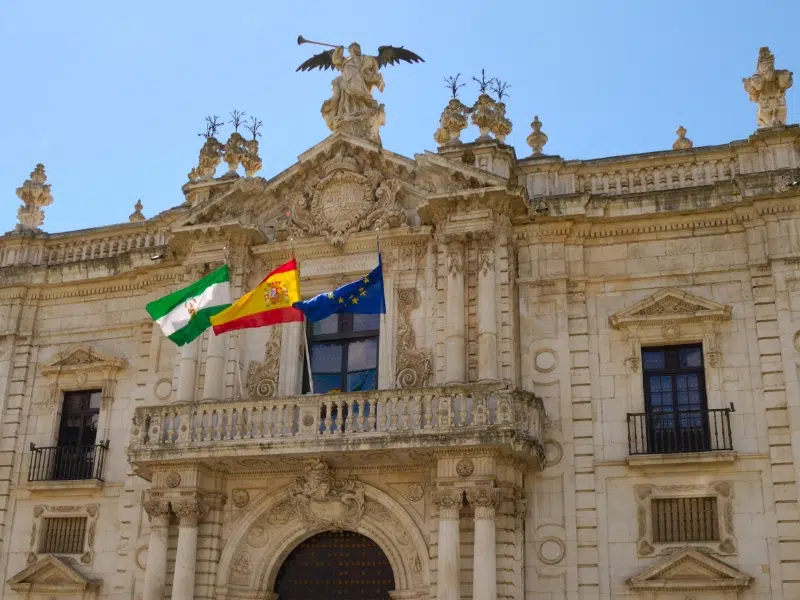
Designed by Sebastián Van der Borcht, the factory’s neoclassical design is characterized by symmetry, grand columns, and a striking façade that exudes elegance and power. The building’s central courtyard is surrounded by colonnades, and the entire structure is built with the kind of meticulous attention to detail that was common during the 18th century.
The building’s façade is adorned with decorative motifs, and the interior features spacious rooms and corridors that are perfect for exploring. Despite the changes it has undergone over the years, the building retains much of its original charm and grandeur.
The most notable feature of the factory’s design is the central courtyard, which serves as the heart of the building. The courtyard is a serene space, filled with lush greenery and providing a quiet retreat from the bustling city outside. It is here that many of the factory workers would have spent their days, rolling tobacco and engaging in lively conversations.
Royal Tobacco Factory is part of Seville scavenger hunt and walking tour!
Embark on an unforgettable journey through the enchanting city of Seville with World City Trail. Our interactive walking tour combines the thrill of exploration with the rich history and culture of this beautiful city.
Key Features:
Interactive gameplay: Solve engaging puzzles and challenges as you explore the city.
Hidden gems: Uncover lesser-known spots.
Cultural insights: Learn about the city’s fascinating history.
Flexibility: Explore at your own pace and create your own itinerary.
Family friendly activity and a great way to explore the city!
Further reading on Wikipedia: Seville