
Table of Contents
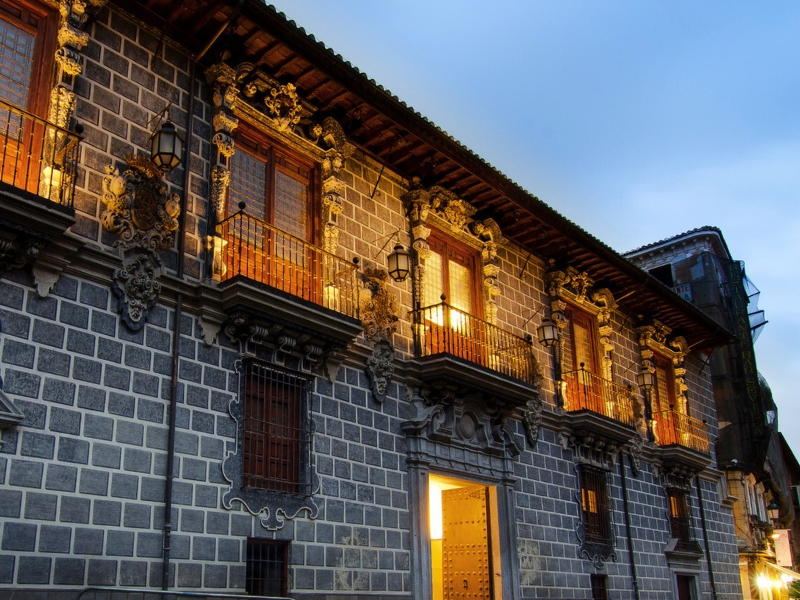
The Palacio de la Madraza, also known as the Madrasa of Granada, stands as a testament to the city’s rich Islamic heritage. This historic building, founded in 1349 by the Nasrid Sultan Yusuf I, was one of the most important centers of Islamic learning in medieval Spain.
A Legacy of Islamic Scholarship
The Madraza, derived from the Arabic word “madrasah,” meaning “place of study,” was conceived as a distinguished institution of higher learning during the Nasrid dynasty. It offered instruction in a wide array of disciplines, including Islamic law, theology, philosophy, and astronomy, reflecting the era’s holistic approach to knowledge. The Madraza was instrumental in preserving and advancing Islamic scholarship, serving as a beacon of intellectual and cultural achievement in Granada’s golden age.
A Changing Role Post-Conquest
The Christian conquest of Granada in 1492 brought significant changes to the Madraza. The building ceased to function as a center of Islamic learning and was repurposed for various secular uses, including as a hospital and military barracks. These transformations inevitably led to modifications and loss of its original features.
Despite these changes, the Madraza remains a remarkable testament to Granada’s rich history, showcasing the enduring legacy of Nasrid architecture and the cultural contributions of Islamic scholarship.
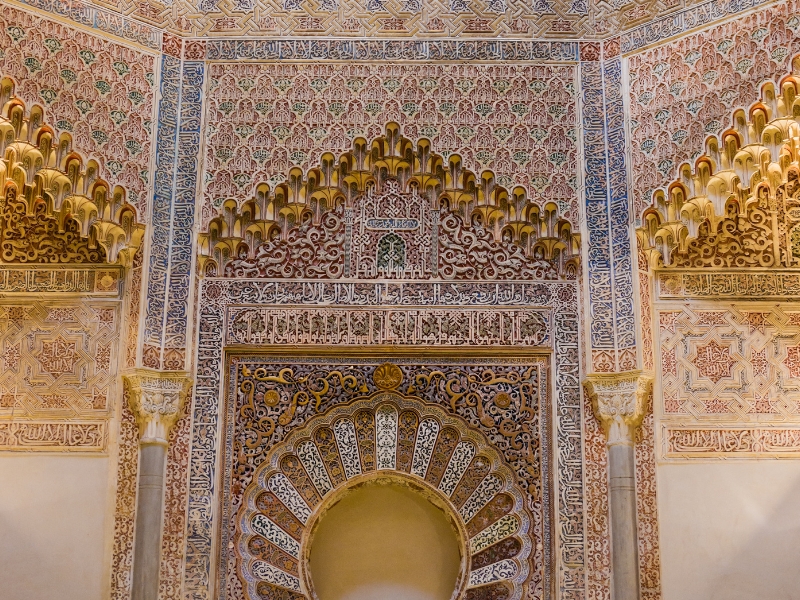
Architectural Splendor of the Madraza
The Palacio de la Madraza exemplifies the artistry and technical sophistication of Nasrid architecture, renowned for its intricate detailing and harmonious integration of space, light, and water. While much of its original form has been altered, historical records and surviving features suggest the following key architectural elements:
- Courtyards with Water Features: Central courtyards, a hallmark of Islamic architecture, likely featured fountains or reflecting pools. These elements not only symbolized purity and life but also served to create a tranquil environment ideal for scholarly pursuits.
- Mudejar Arches: The use of Mudejar arches, with their characteristic horseshoe or pointed shapes, reflected a blend of Islamic and local Iberian styles, emphasizing symmetry and grace.
- Intricate Tilework and Plasterwork: The walls and ceilings were adorned with zellij (geometric tilework) and muqarnas (stalactite-like plaster decorations), showcasing the craftsmanship and mathematical precision of Nasrid artisans.
- Epigraphic Decoration: Arabic inscriptions, including Quranic verses and poetic praises, likely embellished the structure, underscoring its religious and intellectual significance.
Legacy and Modern Recognition
The Palacio de la Madraza is far more than a historical structure—it is a living symbol of Granada’s rich and multicultural heritage. Its layered history, transitioning from a flourishing Islamic educational institution under the Nasrid dynasty to its adaptation during Christian rule, reflects the dynamic interplay of cultures that have left their imprint on the city.
Today, the Palacio de la Madraza stands as a cherished heritage site, celebrated for its historical, intellectual, and artistic significance. It offers visitors a unique opportunity to explore the remnants of its original design and immerse themselves in the scholarly and artistic traditions that defined Granada’s golden age.
As one of Granada’s most captivating landmarks, the Palacio de la Madraza provides an invaluable connection to the city’s Islamic heritage. Visiting this historic site allows you to appreciate its architectural splendor, delve into its cultural and educational legacy, and gain a profound understanding of Granada’s diverse and fascinating past.
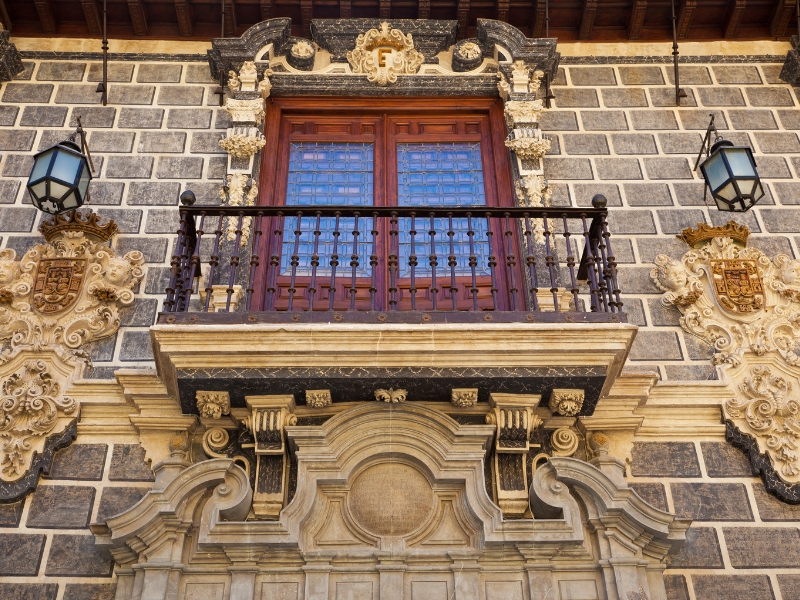
Palacio de la Madraza is part of Granada’s scavenger hunt and walking tour!
Embark on an unforgettable journey through the enchanting city of Granada with World City Trail. Our interactive walking tour combines the thrill of exploration with the rich history and culture of this beautiful city.
Key Features:
Interactive gameplay: Solve engaging puzzles and challenges as you explore the city.
Hidden gems: Uncover lesser-known spots.
Cultural insights: Learn about the city’s fascinating history.
Flexibility: Explore at your own pace and create your own itinerary.
Family friendly activity and a great way to explore the city!
Further reading on Wikipedia: Granada