
Table of Contents
Hagia Sophia Church in Thessaloniki stands as a profound and historically significant monument, offering a captivating journey through the city’s Byzantine and Ottoman past. More than just a religious edifice, it embodies the transformations of Thessaloniki from its early Christian roots to its medieval and Ottoman legacies. This iconic church is a place where historical narratives, artistic expressions, and religious adaptations converge, providing visitors with a profound experience of the city’s layered history.
A Byzantine Masterpiece
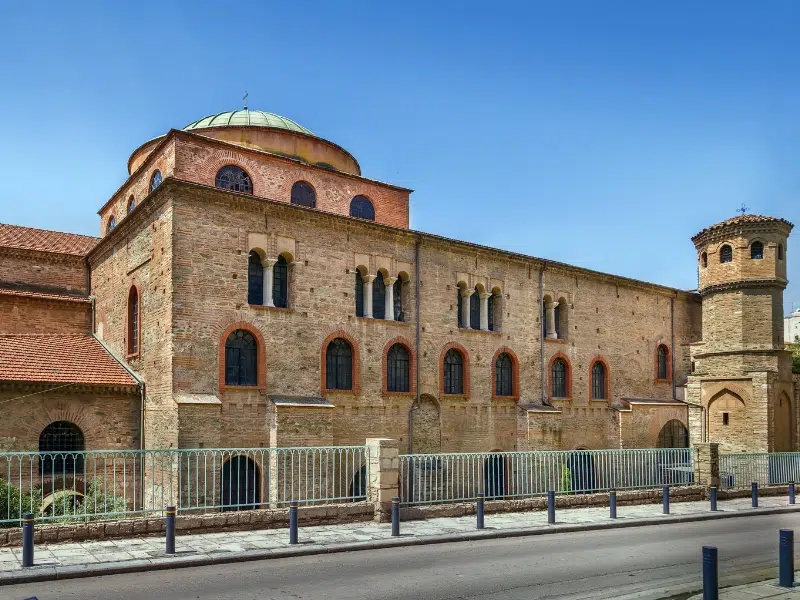
The origins of Hagia Sophia Church in Thessaloniki trace back to the 8th century AD, when it was constructed during the Byzantine era on the site of an earlier church destroyed by an earthquake. Its design and architecture reflect the Byzantine architectural traditions, drawing inspiration from the famous Hagia Sophia in Constantinople (modern-day Istanbul). The church’s strategic location in the heart of Byzantine Thessaloniki underscores its importance as both a religious and cultural center.
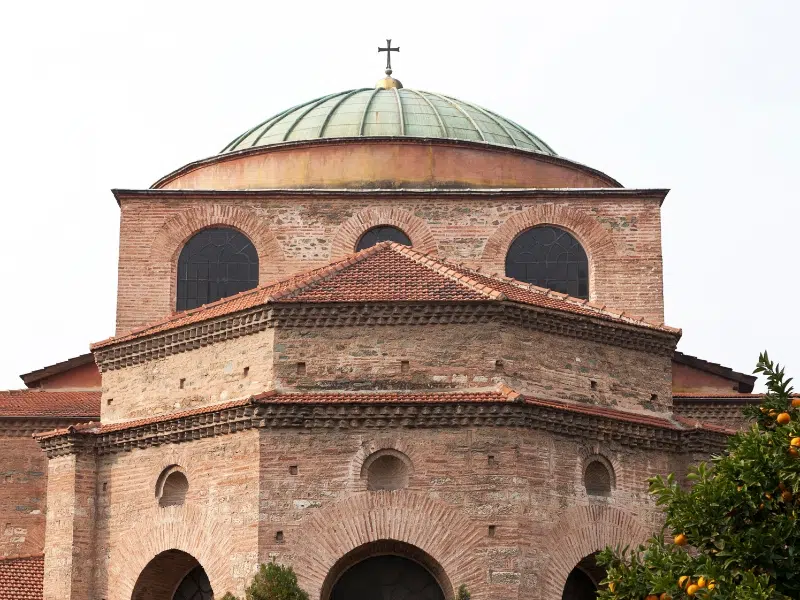
The church is a domed basilica, a testament to Byzantine engineering and artistic achievement. Its robust brick walls and intricate mosaics and frescoes on the interior reflect the artistic conventions of the Middle Byzantine period. The central dome and the surrounding galleries showcase the architectural innovations of Byzantine religious buildings, combining spiritual symbolism with engineering prowess.
A Church of Shifting Identities
The historical significance of Hagia Sophia Church extends far beyond its architectural beauty. Over the centuries, the church has undergone several transformations that reflect the changing fortunes of Thessaloniki. During the Byzantine era, it served as the city’s main cathedral, hosting religious ceremonies and receiving imperial visits. This period was marked by the church’s grandeur as it became a spiritual focal point in the Byzantine world.
When the Ottomans took control of Thessaloniki in the 15th century, the church was converted into a mosque, known as Ayasofya Mosque. A minaret was added, and the interior was altered, with some of the Byzantine mosaics and frescoes being concealed or replaced. The Ottoman influence can still be seen in the architectural changes, offering a glimpse into the city’s diverse religious heritage.
After Thessaloniki’s integration into modern Greece in 1912, Hagia Sophia Church was returned to its Christian function, again serving as a church and a historical monument. This return marked a new chapter in its long and rich history, reaffirming its connection to both the city’s Christian roots and its Ottoman past.
A Living Symbol
Today, Hagia Sophia Church remains a vibrant and cherished monument, attracting visitors who wish to experience Thessaloniki’s Byzantine and Ottoman history. Its central location and accessible design make it a natural gathering point for both residents and tourists alike. The church stands as a symbol of Thessaloniki’s layered history and architectural adaptation, reinforcing its importance as a cultural destination.
The interior of Hagia Sophia Church provides a rich visual and historical experience. The surviving mosaics and frescoes are a vivid reflection of Byzantine religious art, while the architectural features, such as the dome and galleries, showcase the ingenuity of Byzantine builders. The church’s ability to maintain its religious significance and artistic beauty through centuries of change highlights its historical importance.
The urban environment surrounding Hagia Sophia Church blends ancient ruins with modern buildings, offering valuable insights into Thessaloniki’s long history. Its proximity to other major attractions further enhances its appeal as a tourist destination, where the past and present coexist harmoniously.
Preserving Byzantine and Ottoman Heritage
Hagia Sophia Church plays a crucial role in preserving and promoting Thessaloniki’s Byzantine and Ottoman heritage. As a tangible link to the city’s diverse past, it offers visitors insights into Middle Byzantine architecture, the evolution of Byzantine religious art, and Ottoman cultural adaptations. The church encourages engagement with the historical narratives of the city and promotes a deeper cultural awareness of its multifaceted identity.
The enduring presence of Hagia Sophia Church in Thessaloniki is a testament to its historical significance and its ongoing role as a vital part of the city’s cultural and spiritual life. It is a place where the past and present converge, where Byzantine spirituality and Ottoman heritage intertwine, and where the spirit of Thessaloniki’s enduring history is encapsulated.

Hagia Sophia Church is part of Thessaloniki scavenger hunt and walking tour!
Embark on an unforgettable journey through the enchanting city of Thessaloniki with World City Trail. Our interactive walking tour combines the thrill of exploration with the rich history and culture of this beautiful city.
Key Features:
Interactive gameplay: Solve engaging puzzles and challenges as you explore the city.
Hidden gems: Uncover lesser-known spots.
Cultural insights: Learn about the city’s fascinating history.
Flexibility: Explore at your own pace and create your own itinerary.
Family friendly activity and a great way to explore the city!
Further reading on Wikipedia: Thessaloniki