What is the Thessaloniki self-guided walking tour?
The Thessaloniki self-guided walking tour is a walk across the centre at a speed you choose, with audio narration on your phone instead of a guide talking at the front. Allow about 3 hours: 53 minutes of that is walking, the route measures 4.3 km, and there are 10 stops where you stand and listen. No departure time, and nothing counting the minutes.
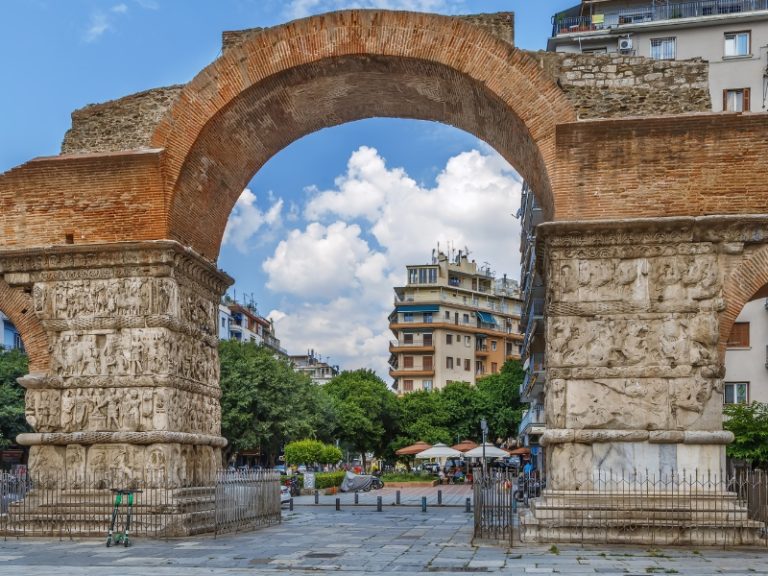
Under the Arch of Galerius the narration reads the marble reliefs of an emperor's Persian campaign, carved around AD 300 beside what is now Egnatia Street. On Aristotelous Square it explains how the Great Fire of 1917 handed the centre to the French architect Ernest Hébrard, and why people reach for the toe of the Aristotle statue for luck. In the dome of Hagia Sophia you hear about the 9th-century mosaic of the Ascension, and at the White Tower the story that a prisoner whitewashed it in exchange for his freedom.
- Durationabout 3 hours
- Walkingabout 53 min · 4.3 km
- Stops10
- LanguagesEnglish, German, French, Italian, Greek
What you do on the walking tour
Listen
Every stop brings the history of the place, its legends and the detail you would otherwise walk straight past. The same text is on the screen if you would rather read.
Cross the centre
From stop to stop Google Maps does the navigating, at a pace you set: 53 minutes on foot and 4.3 km in all.
Break off
Sit down for a coffee, give an hour to a museum, then take the walk up again later or on another day.
Eat and browse
Tips for food and shops near the route arrive with the stops. The opening point and the order are yours to rearrange in the app.
See the route and attractions →
How it works
- Book online Choose the number of people. Your booking reference arrives by email straight away.
- Get the app Download the World City Trail app from the App Store or Google Play and enter your booking reference.
- Walk when you like Start whenever you are ready, walk at your own pace and pause any time. No guide, no fixed schedule.
Who the walking tour is for
A first visit
One walk lines up the Roman, Byzantine, Ottoman and modern Greek city and explains what you are standing in front of.
Anyone who avoids groups
Nobody to follow and no head count: you stay as long as something holds you and move on when you decide to.
Half a day on foot
3 hours covers the centre, so the evening is free for the promenade or for Ladadika.
Good to know
- Bring a charged smartphone with mobile data; a power bank helps.
- No entry tickets needed: everything happens outside the buildings. Going inside is optional and paid separately.
- Family friendly; children must be accompanied by an adult.
- Not suitable for wheelchair users and difficult with strollers.
- Groups of up to 5 work best; larger groups split up, one ticket per person.
- Every purchase helps support stray cats and dogs in Greece.
The walk stop by stop: Kamara, the Roman Forum, Aristotelous Square, the waterfront
10 stops · about 53 min walking · start: Arch of Galerius · finish: National Resistance Monument
The opening stop is the Arch of Galerius on Egnatia Street, with the Rotunda just behind it. Westwards the route takes in the Roman Forum and the statue of Eleftherios Venizelos, comes down the slope of Aristotelous Square, then turns back uphill for the Church of Hagia Sophia and the Thessaloniki History Centre. The White Tower marks where the city runs out into the water; from there the last two stops line up along the shore, the equestrian statue of Alexander the Great and then the National Resistance Monument. Another opening stop, or another order, is a setting in the app, and no stop asks for an entry ticket.
Open the route map ↗
1Arch of GaleriusStart
The Arch of Galerius, known locally as Kamara, was built around AD 300 to celebrate Emperor Galerius' victory over the Persians. Only part of the original structure survives, but its marble reliefs still show battle scenes, the emperor and his soldiers, right beside busy Egnatia Street.
Read the full story →
2Rotunda
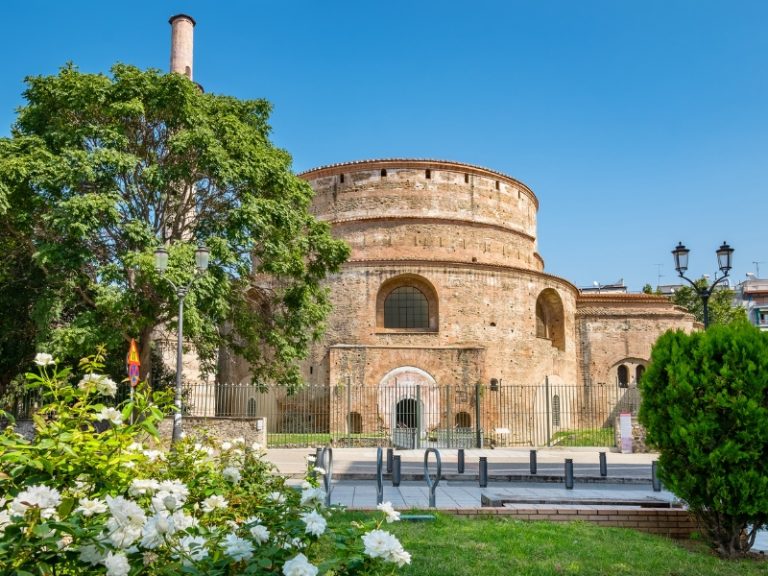
The massive round Rotunda was built by Emperor Galerius in the early 4th century, possibly as a temple or as his mausoleum. It later became a church decorated with fine mosaics and then a mosque under Ottoman rule, and its minaret still stands beside it.
Read the full story →
3Roman Forum
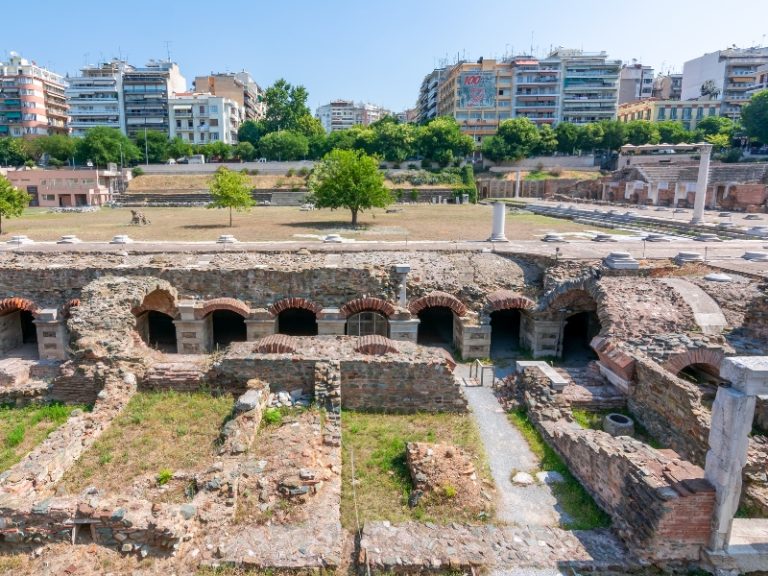
The Roman Forum was the public centre of the city in the 2nd and 3rd centuries AD. Its remains were uncovered in the 1960s, when work began on a new courthouse here, and today you can see the paved square, colonnades and a small odeon used for performances.
Read the full story →
4Statue of Eleftherios Venizelos
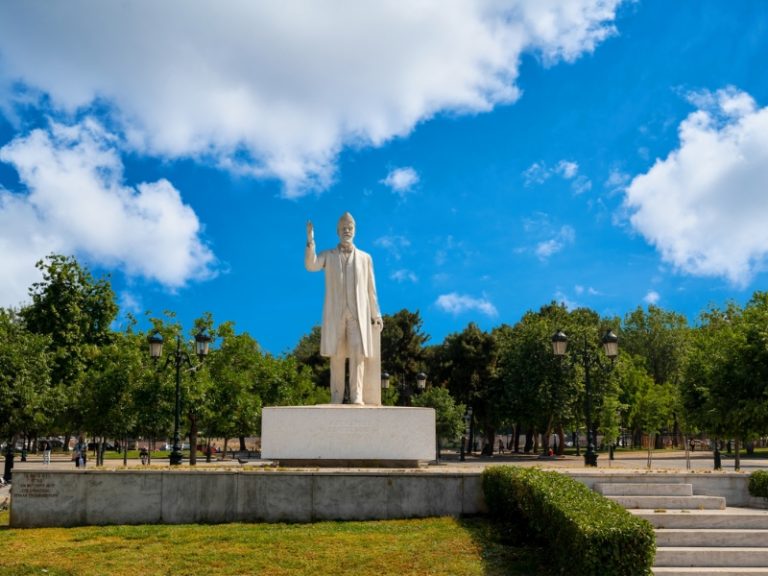
This statue honours Eleftherios Venizelos (1864–1936), the Cretan-born statesman who was Prime Minister when Thessaloniki became part of Greece in 1912. In 1916 he set up a rival provisional government in the city, which brought Greece into the First World War on the side of the Allies.
Read the full story →
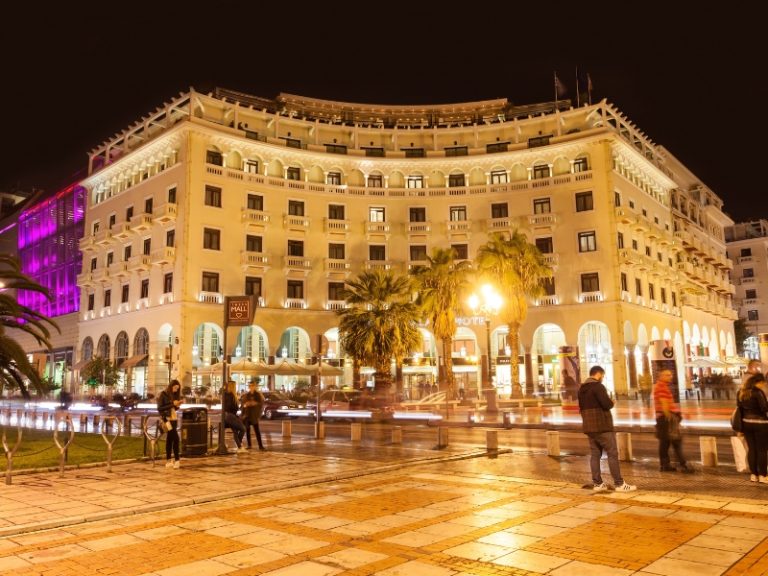
5Aristotelous Square
After the Great Fire of 1917 the French architect Ernest Hébrard redesigned the city centre, and Aristotelous Square became its grand axis, opening onto the sea. Its arcaded buildings mix Byzantine and European styles, and touching the toe of the statue of Aristotle at its upper end is said to bring luck.
Read the full story →
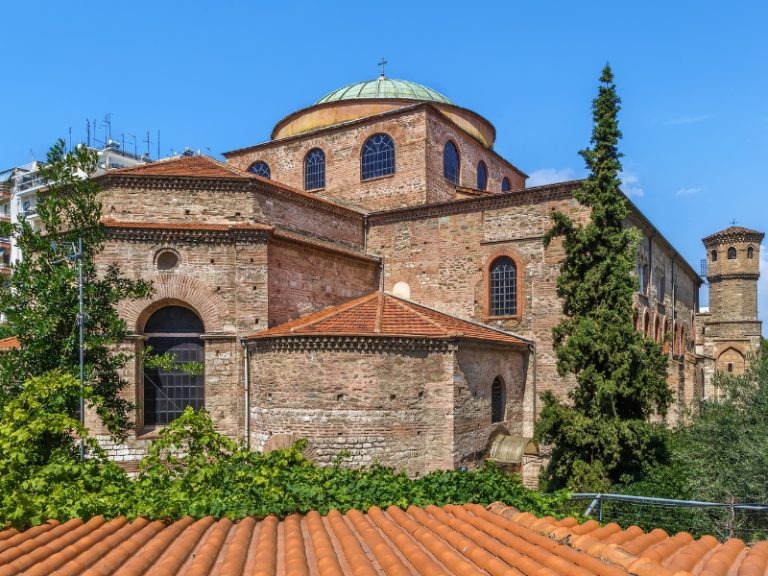
6Church of Hagia Sophia
Built in the 8th century, the Church of Hagia Sophia takes its name and domed design from the great church in Constantinople. Inside, a 9th-century mosaic of the Ascension of Christ fills the dome, and the church is part of the UNESCO World Heritage Site of the Early Christian and Byzantine monuments of Thessaloniki.
Read the full story →
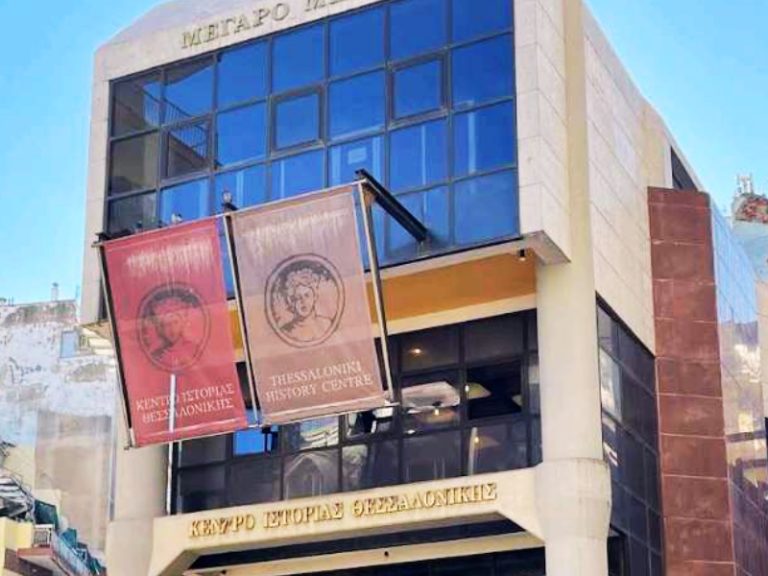
7Thessaloniki History Centre
The Thessaloniki History Centre is run by the municipality and collects documents, photographs and maps about the city's past, which it presents in exhibitions. It is a good reminder of how many layers, Roman, Byzantine, Ottoman and modern, lie on top of each other in the streets you walk through.
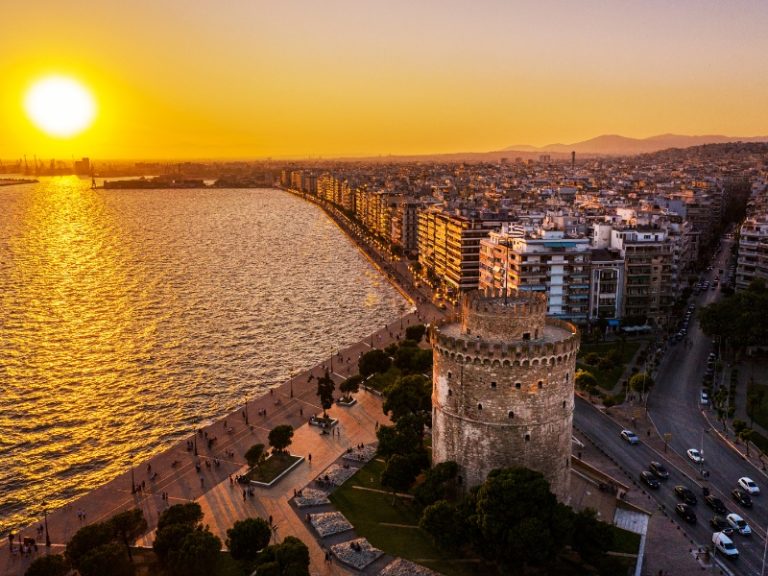
8White Tower
The White Tower was built by the Ottomans as part of the sea walls after they took the city in 1430. Once a prison known as the Tower of Blood, it was whitewashed in the late 19th century, according to legend by a prisoner in exchange for his freedom. Today it is the symbol of Thessaloniki and houses a museum about the city.
Read the full story →
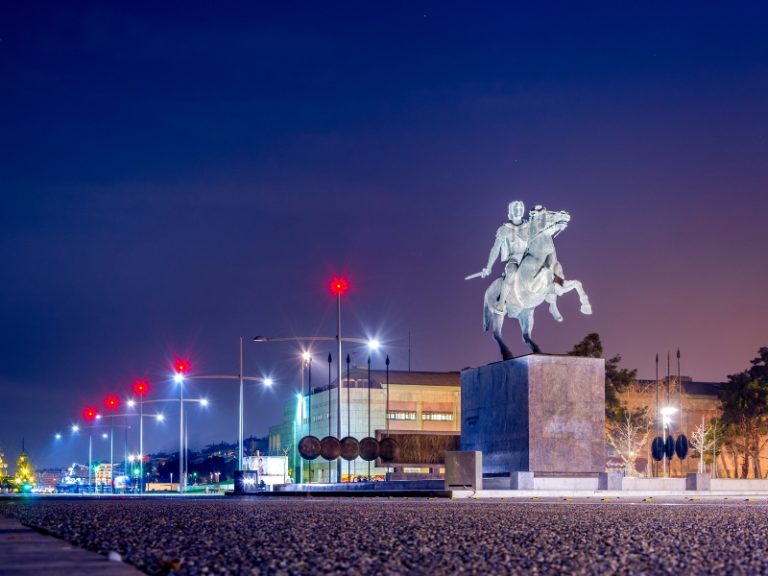
9Alexander the Great Statue
This large bronze statue on the seafront shows Alexander the Great on his horse Bucephalus, looking out over the Thermaic Gulf. It is the work of the sculptor Evangelos Moustakas and was unveiled in the 1970s, and it is one of the most photographed places in the city.
Read the full story →
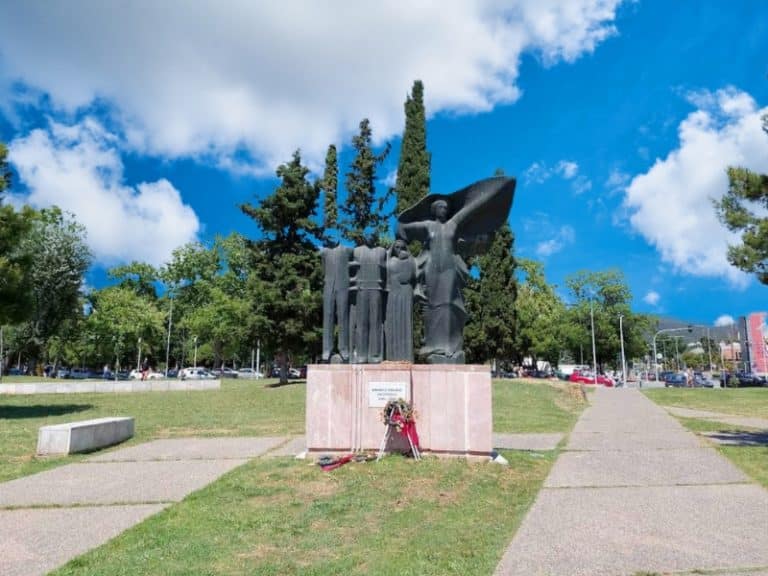
10National Resistance MonumentFinish
This monument honours the Greeks who resisted the occupation of the Second World War. Thessaloniki was held by German forces from April 1941 to October 1944, and in 1943 most of the city's large Jewish community was deported and murdered.
Only logged in customers who have purchased this product may leave a review.





Reviews
There are no reviews yet.