
Table of Contents
The Roman Forum of Thessaloniki, also known as the Ancient Agora, is one of the city’s most important archaeological sites, offering a fascinating glimpse into its Roman and Byzantine past. More than just a collection of ruins, the forum was the heart of Roman Thessaloniki, serving as a political, commercial, and social hub. Its enduring presence reflects the city’s historical depth and its role as a major administrative and cultural center of the Eastern Mediterranean.
A Center of Roman Power
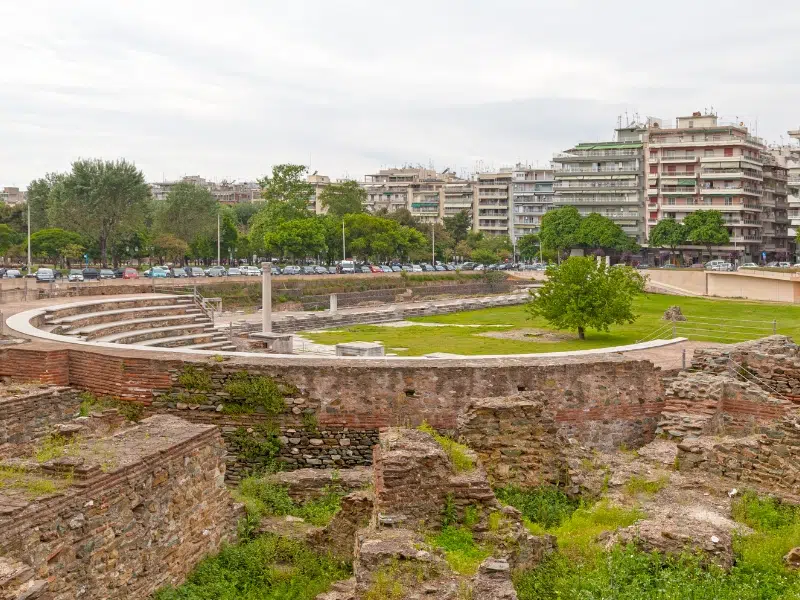
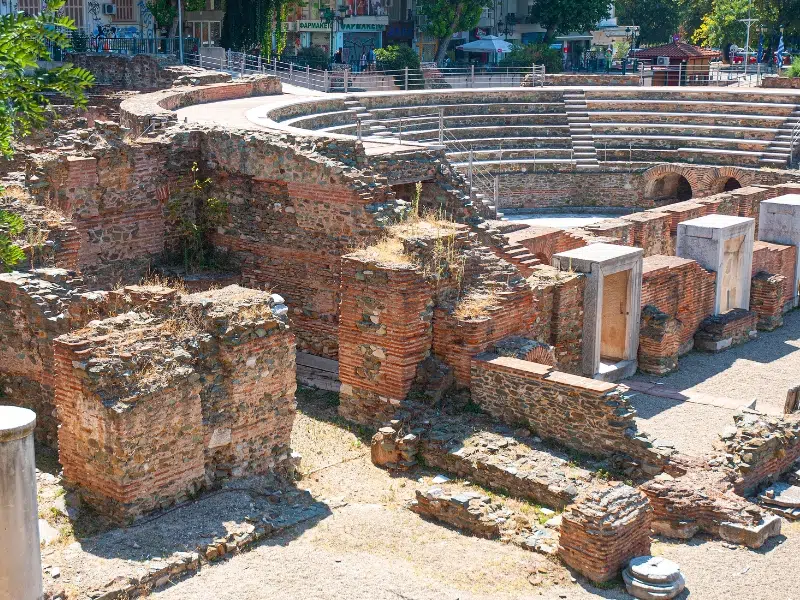
Dating back to the 2nd century AD, the Roman Forum of Thessaloniki was built when Thessaloniki was flourishing under Roman rule. The city’s strategic location along the Via Egnatia, the empire’s great east-west trade route, made it an essential urban center. The forum was designed as a grand public space, featuring a paved square, administrative buildings, a basilica, and a small theater (odeon). These structures housed official proceedings, commercial transactions, and social gatherings, making the forum the city’s focal point of daily life.
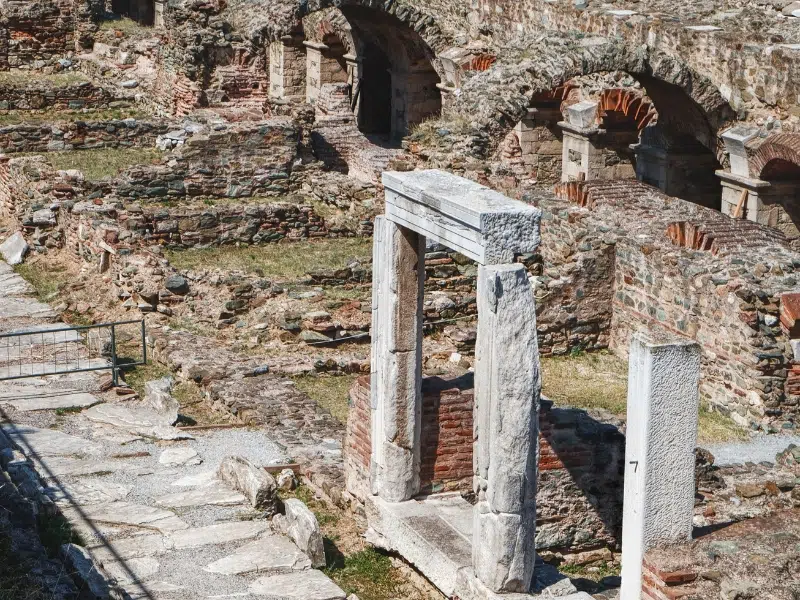
The forum’s architectural design reflects Roman urban planning principles, emphasizing open spaces, symmetry, and grandeur. The use of brick, marble, and stone showcases the craftsmanship of Roman engineers. The two-story cryptoporticus (underground arcade), which still survives today, highlights the Romans’ mastery in engineering, serving as storage and commercial space beneath the bustling city above.
Byzantine and Ottoman Transformations
As Thessaloniki transitioned from Roman to Byzantine rule, the Roman Forum of Thessaloniki remained a central space, gradually integrating into the city’s evolving urban fabric. During the Byzantine era, parts of the forum continued to function as a marketplace and administrative center, adapting to the needs of medieval Thessaloniki.
However, by the time of the Ottoman occupation in the 15th century, the forum’s significance declined. Many of its structures were repurposed or covered over as the city expanded. It wasn’t until excavations in the 1960s that the forum was rediscovered, revealing its historical grandeur to the modern world.
A Vibrant Archaeological Landmark
Today, the Roman Forum of Thessaloniki stands as an open-air museum, offering visitors an immersive experience into the city’s ancient past. Its central location, near Aristotelous Square, makes it easily accessible, inviting tourists and locals alike to explore its ruins. The surviving elements—the grand square, the odeon, and the underground cryptoporticus—continue to tell the story of Thessaloniki’s dynamic history.
In addition to its archaeological importance, the Roman Forum of Thessaloniki serves as a cultural space, hosting educational programs and historical exhibitions that promote awareness of Thessaloniki’s Roman and Byzantine heritage.
A Testament to Thessaloniki’s Rich History
The Roman Forum of Thessaloniki is more than just an ancient ruin; it is a living symbol of the city’s past, where the legacy of Roman engineering, Byzantine transformation, and modern urban preservation intertwine. It represents Thessaloniki’s resilience and continuity as a cultural and historical crossroads of civilizations.
Whether as a site of historical exploration, architectural admiration, or cultural reflection, the forum remains an essential part of Thessaloniki’s identity, bridging the gap between its ancient roots and its vibrant present.
Roman Forum of Thessaloniki is part of Thessaloniki scavenger hunt and walking tour!
Embark on an unforgettable journey through the enchanting city of Thessaloniki with World City Trail. Our interactive walking tour combines the thrill of exploration with the rich history and culture of this beautiful city.
Key Features:
Interactive gameplay: Solve engaging puzzles and challenges as you explore the city.
Hidden gems: Uncover lesser-known spots.
Cultural insights: Learn about the city’s fascinating history.
Flexibility: Explore at your own pace and create your own itinerary.
Family friendly activity and a great way to explore the city!
Further reading on Wikipedia: Thessaloniki