
Table of Contents
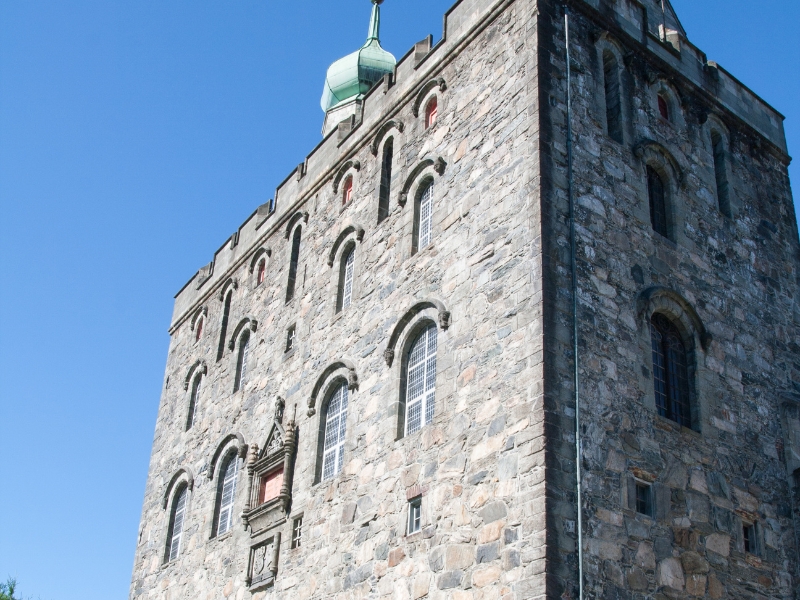
Rising proudly from the edge of Bergen’s harbor, the Rosenkrantz Tower stands as a striking reminder of the city’s medieval past and political importance. Its thick stone walls, arched doorways, and narrow staircases tell a story of defense, ambition, and royal authority.
Originally built in the 13th century and later expanded in the 1500s, this historic tower has played many roles. It served as a royal residence, a military stronghold, and a symbol of both Danish and Norwegian rule. Today, it remains one of Bergen’s most significant and visited historic landmarks.
A Fortress with Royal Foundations
The tower’s history began during the reign of King Magnus Lagabøte, who first ordered its construction as part of the royal castle complex at Bergenhus. It was built to secure the city and control access to the harbor, a vital point for trade and defense.
Later, in the 16th century, Erik Rosenkrantz, the Danish governor of Bergenhus, redesigned and fortified the tower, giving it the name it still holds today. His additions gave the structure its Renaissance flair, blending older medieval elements with more refined touches that reflected the growing influence of European architecture at the time.
A Walk Through Time and Power
Inside the Rosenkrantz Tower, the experience is immersive. Visitors climb narrow spiral staircases that lead through a series of dimly lit rooms, each once used for different purposes—military planning, royal feasts, or the daily operations of governance.
The tower also contains dungeons and hidden passageways, all part of its complex defensive design. From the top, there are sweeping views of the Bergen waterfront and city beyond—a perspective that once offered strategic advantage and now provides a breathtaking backdrop for photos.
Blending Architecture with Authority
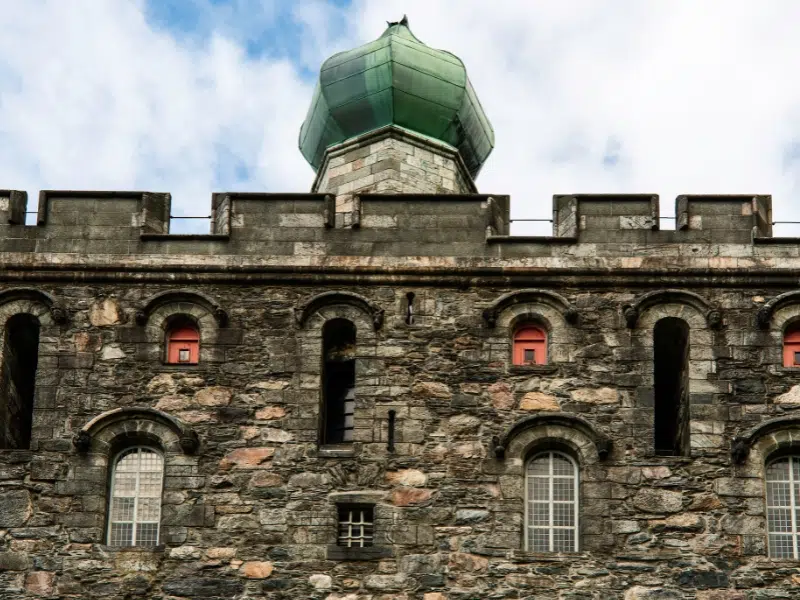
What makes the Rosenkrantz Tower so captivating is its dual nature. It was built for protection, yet also served as a statement of control and elegance. Heavy stone construction gave it strength, while decorative flourishes and living quarters revealed its role as a place of influence.
In many ways, it was a political message in stone. Bergen, as Norway’s capital in earlier times, needed symbols of centralized power. The tower delivered just that, reminding citizens and foreign visitors alike of the strength and stability of the monarchy and the kingdom it governed.
Preserving History at Bergenhus
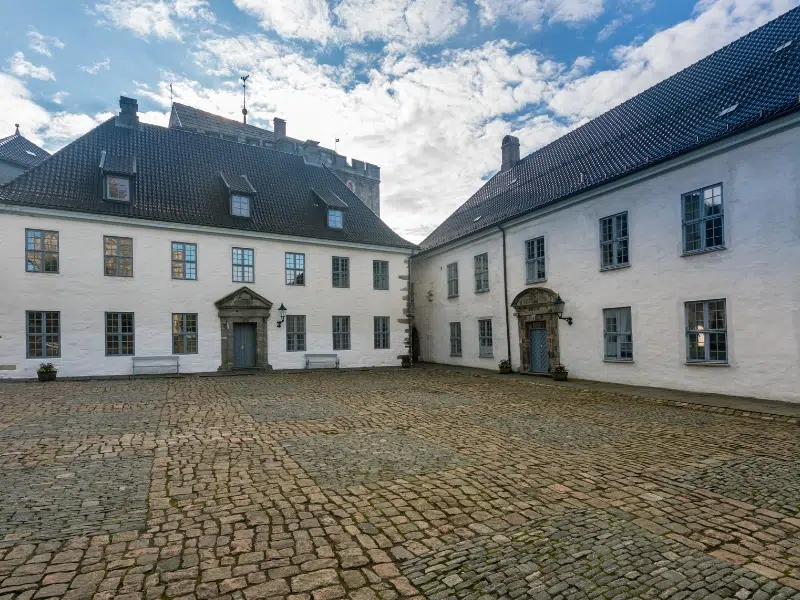
Today, the Rosenkrantz Tower is part of the Bergenhus Fortress complex and is maintained as a museum open to the public. Its rooms are preserved with care, offering insight into both the strategic and domestic sides of medieval life. Historical exhibits help visitors understand the broader context of Bergen’s role in Norwegian and Scandinavian history.
Seasonal tours and events sometimes bring the tower’s story to life through reenactments and guided walks, offering deeper perspectives on how the structure functioned in times of war and peace.
For anyone interested in the historical roots of Bergen, a visit to the Rosenkrantz Tower is essential. It’s not just a building—it’s a symbol of centuries of political ambition, military might, and royal presence. It stands next to the calm harbor waters, echoing the voices of kings, soldiers, and citizens who once moved through its rooms.
Rosenkrantz Tower is part of Bergen scavenger hunt and walking tour!
Embark on an unforgettable journey through the enchanting city of Bergen with World City Trail. Our interactive walking tour combines the thrill of exploration with the rich history and culture of this beautiful city.
Key Features:
Interactive gameplay: Solve engaging puzzles and challenges as you explore the city.
Hidden gems: Uncover lesser-known spots.
Cultural insights: Learn about the city’s fascinating history.
Flexibility: Explore at your own pace and create your own itinerary.
Family friendly activity and a great way to explore the city!
Further reading on Wikipedia: Bergen