
Nestled in the heart of city’s historic center, the Saint Remigius Church in Bonn stands as a significant testament to the city’s rich medieval past and its enduring spiritual heritage. This impressive Gothic basilica, with its soaring arches and intricate details, has witnessed centuries of local history, endured periods of destruction and rebuilding, and holds a special place in the annals of classical music as the site of Ludwig van Beethoven’s baptism.
From Franciscan Monastery to Parish Church
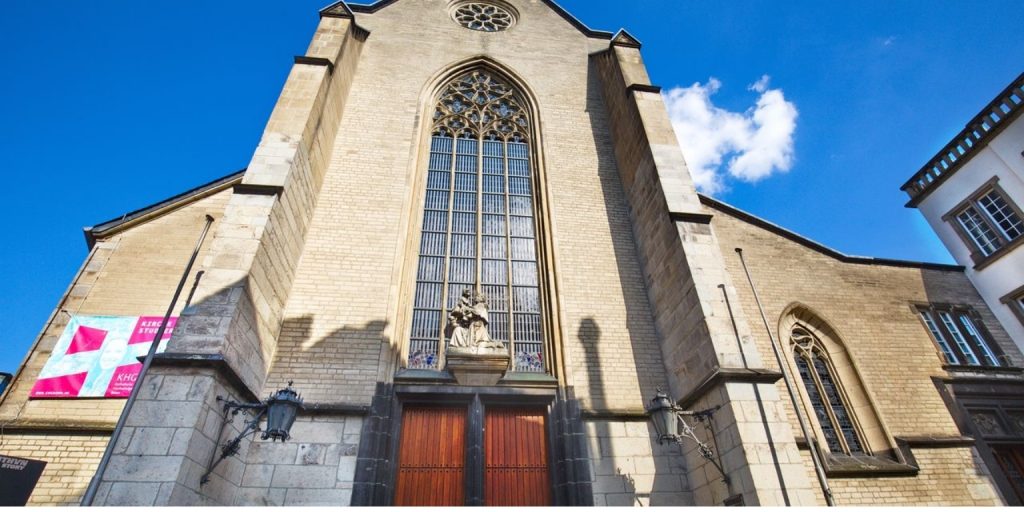
The origins of the Saint Remigius Church trace back to the 13th century, when it was originally conceived as a monastery church for the Franciscan Order. The Franciscans, who arrived in Bonn in the early 1270s, began the construction of their monastery complex and church around 1272 (or 1274/1275). The church building was largely completed and consecrated in 1307, dedicated to Louis of Toulouse. As a monastic church, it initially served the spiritual needs of the friars and their immediate community.
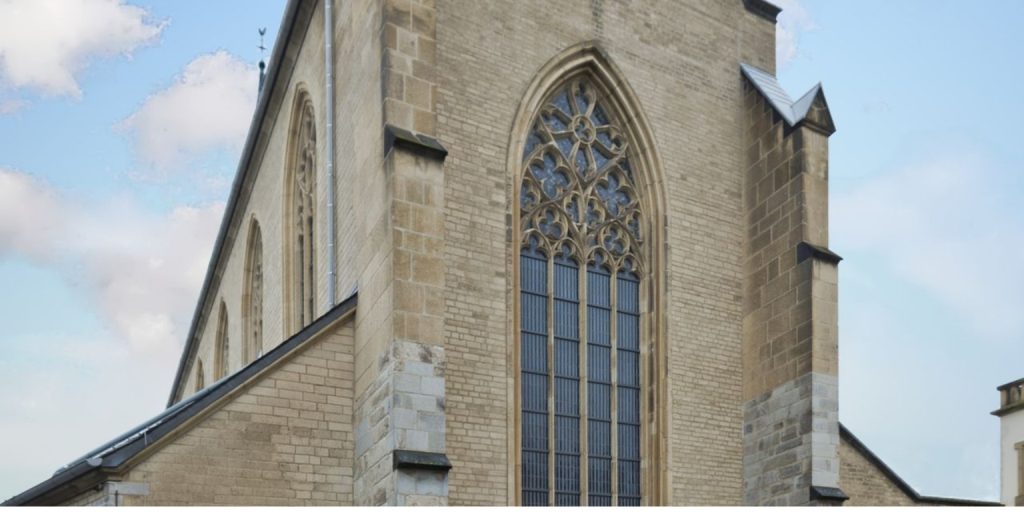
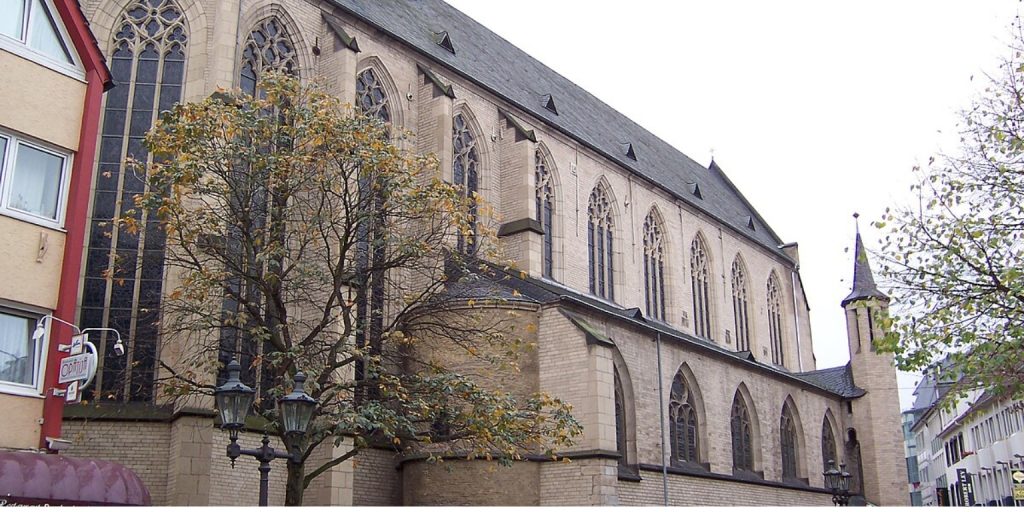
The church’s architecture is a fine example of Gothic style, characterized by its three naves, pointed arches, ribbed vaults, and large windows designed to fill the interior with light. This style, prevalent across Europe in the high Middle Ages, aimed to inspire awe and devotion through its verticality and intricate detailing.
Throughout its long history, the church endured periods of hardship. In 1689, during the Nine Years’ War, Bonn suffered severe bombardment by Brandenburg troops, and the church was significantly damaged, with its roof and ridge turret succumbing to fire. However, the resilient Franciscan order undertook extensive repairs, restoring the roof and interior between 1738 and 1748, bringing it back to its former glory.
A pivotal shift in the church’s destiny occurred in 1803 when the monastery was secularized and abolished as part of the Napoleonic reforms. In 1806, following the destruction by lightning of the original parish church of St. Remigius in 1800, the former Franciscan monastery church was taken over by the parish and officially became the Saint Remigius Parish Church, inheriting its name and congregation.
Beethoven’s Spiritual Roots
One of the most profound historical connections of Saint Remigius Church lies with arguably its most famous parishioner: Ludwig van Beethoven. The great composer was baptized in this very church on December 17, 1770. While his exact birth date is not definitively known, it is widely accepted that he was born on December 16th, as baptisms typically occurred a day after birth during that era. His baptismal entry can still be found in the church’s registers, a precious historical document linking the musical genius to this sacred space.
Furthermore, during his formative years in Bonn, young Ludwig van Beethoven had a direct musical connection to the church. He often played the organ for morning mass in what was then known as the Minorite Church (the Franciscan church’s earlier name). The console of “Beethoven’s organ” from Saint Remigius Church in Bonn is now preserved and displayed at the Beethoven-Haus Museum, allowing visitors to glimpse the instrument that shaped his early musical development. This tangible link makes St. Remigius an essential pilgrimage site for classical music enthusiasts.
Architectural Features and Enduring Presence
Beyond its historical anecdotes, Saint Remigius Church in Bonn boasts several notable architectural and artistic features. While it has undergone various renovations and internal re-orderings over the centuries, it retains much of its Gothic character. The interior, though austere in line with Franciscan traditions, offers a sense of spiritual depth. Details like the stained-glass windows, some of which are modern additions, contribute to the atmosphere.
Today, Saint Remigius Church in Bonn, with its construction initiated in the late 13th century and its official completion in 1307, continues to be an active Catholic parish church. It serves its local community for regular services and remains a significant cultural landmark. Its serene beauty, combined with its direct connection to the early life of Ludwig van Beethoven, makes it a must-visit for anyone exploring the historical and cultural layers of Bonn. It stands as a timeless edifice, silently echoing the prayers, music, and lives of generations who have passed through its ancient doors.