
Tucked away as a serene green oasis on the edge of city’s center, the The Old Cemetery in Bonn is far more than just a burial ground; it is a historically significant park, an open-air museum of funerary art, and the final resting place for many of the luminaries who shaped Bonn’s intellectual, artistic, and political landscape. Wandering through its shaded avenues offers a poignant journey through centuries of German history, revealing stories etched in stone and surrounded by venerable trees.
From Military Burial Ground to Prestigious Necropolis
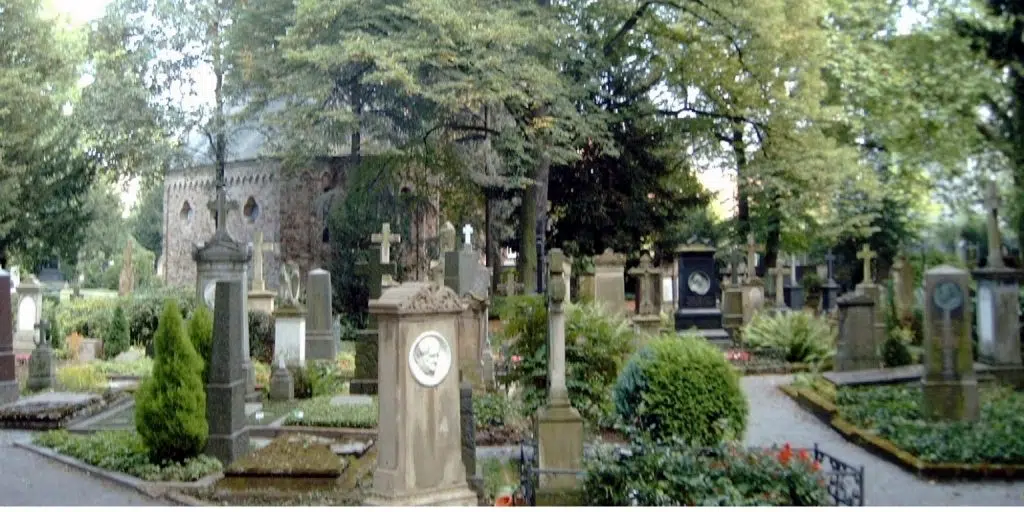
The origins of the Old Cemetery in Bonn date back to the early 18th century. It was initially laid out in 1715 by the order of the Cologne Elector and Archbishop Joseph Clemens. At this time, it served primarily as a military and foreigners’ cemetery, situated deliberately outside the city walls for hygienic reasons, intended for “common immigrants, passers-by, and soldiers.” This initial phase was a practical response to the epidemic crises of the 17th century and a replacement for overcrowded inner-city burial sites.
A significant transformation occurred in the late 18th century. In 1775, the last Elector to rule Bonn, Max Franz von Habsburg, ordered all inner-city cemeteries closed for sanitary reasons. By 1787, the former military burial ground became the city’s “general burial ground,” open to all citizens.
However, the cemetery truly began its ascent to prestige in the 19th century, particularly after the University of Bonn was founded in 1818. As Bonn emerged as an intellectual hub, the Old Cemetery became a coveted and status-appropriate resting place for professors, scholars, artists, and influential citizens. It was during this period that the cemetery was also thoughtfully transformed into a park-like area by renowned landscape architect Peter Joseph Lenné, beginning around 1819-1820, lending it the picturesque and contemplative atmosphere it possesses today. The cemetery was actively used for burials until 1884, when it was closed due to lack of space, and the North Cemetery became Bonn’s new central burial site.
A Who’s Who of German History and Art
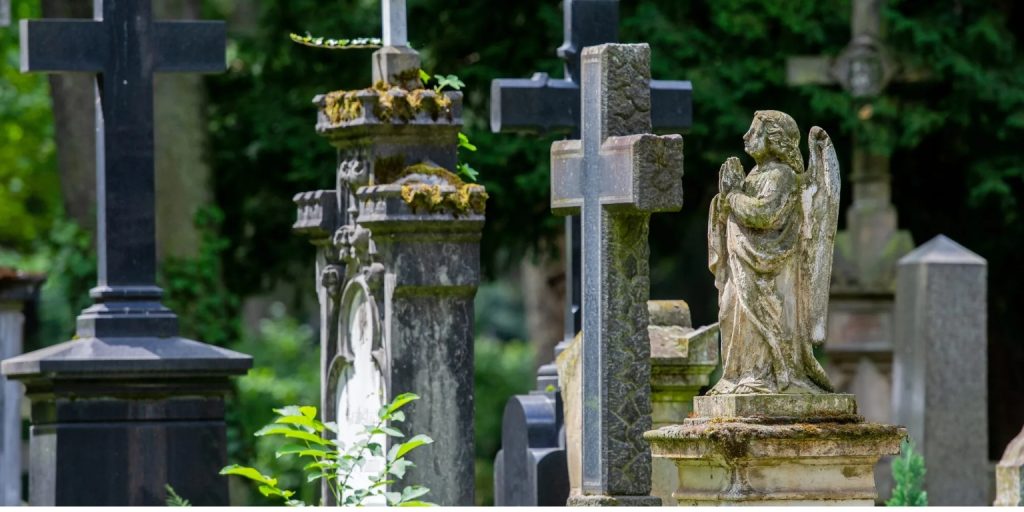
The Old Cemetery in Bonn is famed for the impressive number of prominent figures interred within its grounds, making it a unique historical archive. Among the most celebrated residents are:
- Robert Schumann (1810–1856) and Clara Schumann (1819–1896): The revered Romantic composer and his equally famous pianist and composer wife are buried here under a magnificent monument by Adolf Donndorf (unveiled in 1880). Their grave is a pilgrimage site for music lovers worldwide.
- Ludwig van Beethoven’s Mother (Maria Magdalena Keverich van Beethoven): While Beethoven himself is buried in Vienna, his mother, who died in 1787, found her final rest here. Her grave was given a special “grave of honour” in 1932.
- Ernst Moritz Arndt (1769–1860): A prominent German nationalist author, poet, and politician, known for his patriotic writings during the Napoleonic Wars. His grave is marked by an oak tree he planted himself.
- August Wilhelm Schlegel (1767–1845): A hugely influential literary critic, translator (notably of Shakespeare), and one of the founders of German Romanticism.
- Friedrich Wilhelm Argelander (1799–1875): A pioneering astronomer who cataloged thousands of stars and played a crucial role in the development of astrometry.
- Bartholomäus Fischenich (1768–1831): A close friend of young Beethoven, whose correspondence offers valuable insights into the composer’s early life.
- Adele Schopenhauer (1797–1849): Sister of the philosopher Arthur Schopenhauer, herself an accomplished writer and artist.
A Place of Reflection and Beauty
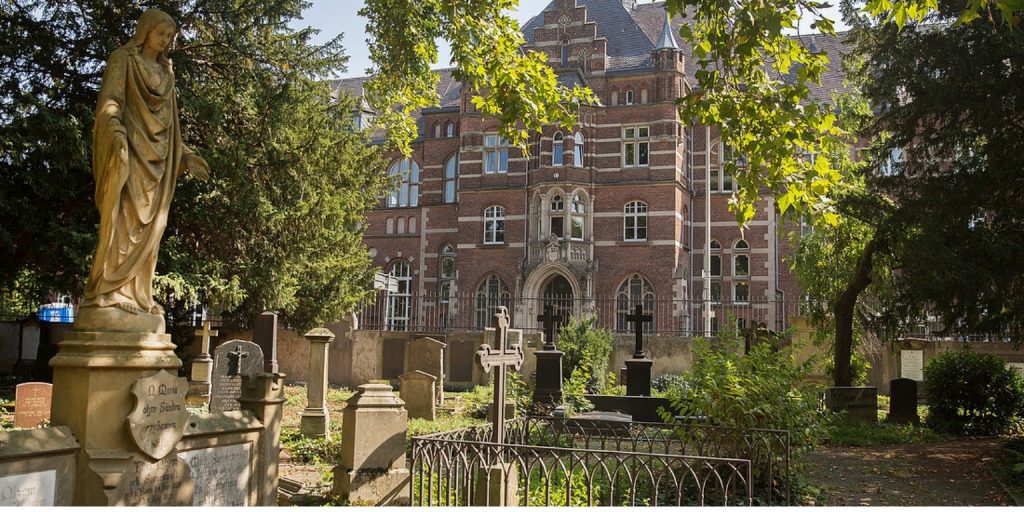
Today, the Old Cemetery in Bonn, established in 1715 and transformed into a park-like space in the early 19th century, is a cherished landmark. It serves as a peaceful retreat for reflection, a popular spot for historical tours, and a testament to the city’s deep connection to German intellectual and artistic heritage. The mature tree population, including the venerable Arndt oak, contributes to its serene beauty. Maintained by the city and a dedicated society of friends and sponsors, the Old Cemetery remains a beautifully preserved and evocative space, inviting visitors to ponder the lives and legacies of those who shaped not only Bonn but often the broader world.