
Perched majestically on the western side of Bergamo Alta (Upper City), commanding breathtaking views over the Lower City and the distant plains, Palazzo Terzi is a magnificent aristocratic residence that encapsulates the grandeur and artistic sophistication of the 17th and 18th centuries. This privately owned palace, still belonging to the venerable Terzi family, offers a rare and intimate glimpse into the opulent lifestyle of Bergamo’s historic nobility, making it a true hidden gem for those exploring the city’s rich heritage.
A Family Legacy Forged Over Centuries
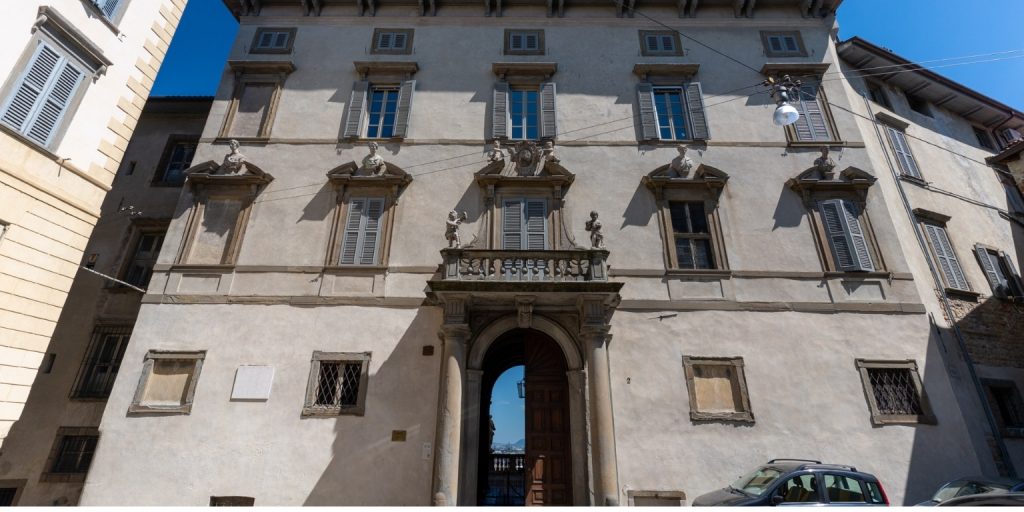
The history of Palazzo Terzi is deeply intertwined with the powerful Terzi family, an ancient Ghibelline lineage that established its roots in Bergamo as early as the late 10th century. Over centuries, the family amassed considerable wealth and influence, distinguishing themselves through military merits, ecclesiastical careers, and astute political maneuvering. The construction of the current palace was a testament to their established social standing and desire to create a prominent urban residence.
The main phases of the palace’s construction and significant embellishment are linked to two pivotal family marriages. The initial phase began around 1631, on the occasion of the wedding between Marquis Luigi Terzi and Paola Roncalli. This period saw the formation of the palace’s elegant facade and its southern wing. A century later, around the mid-18th century, a second major expansion and re-design occurred with the marriage of Marquis Gerolamo Terzi and Giulia Alessandri. This latter phase involved the significant work of architect Filippo Alessandri, who redesigned the façade and the adjacent spaces, including the charming Piazzetta Terzi, created in 1747 by demolishing part of a neighboring palace to enhance the approach to the Terzi residence.
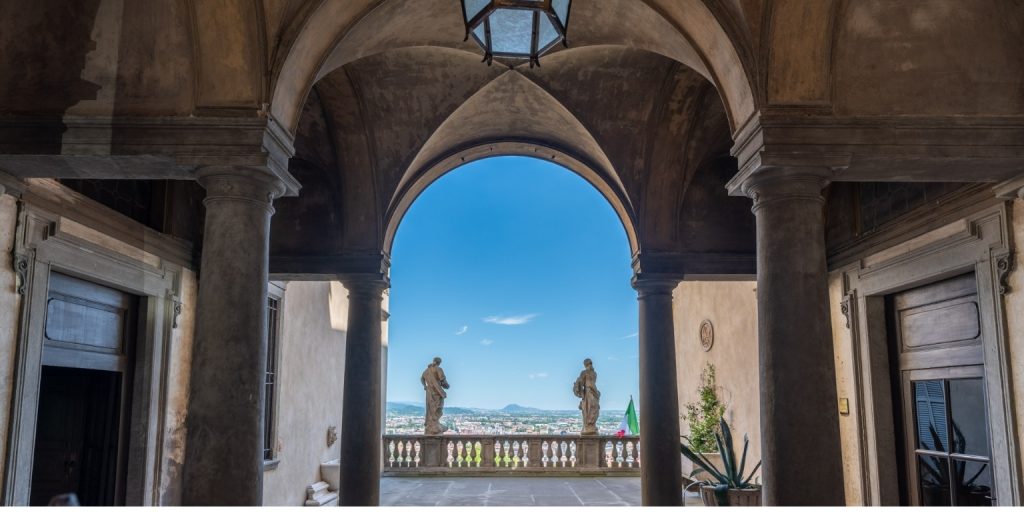
The palace’s strategic location, at the edge of the fortified upper town, allowed for a unique architectural solution that integrated the building into the sloping terrain, offering a spectacular panoramic terrace.
Baroque Splendor and Artistic Masterpieces
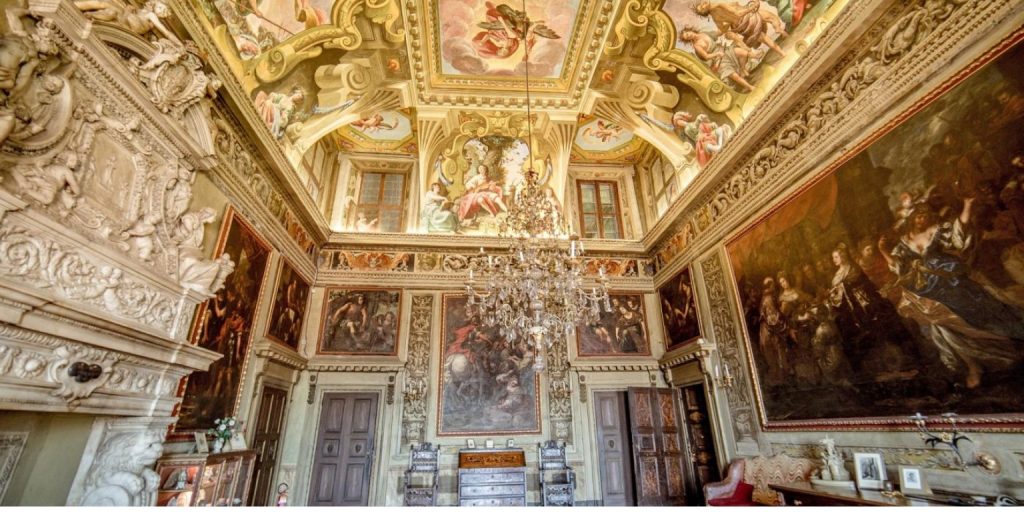
Palazzo Terzi is widely regarded as the finest example of Baroque architecture in Bergamo. Its exterior, while grand, exudes a refined elegance. The interior, however, is where the palace truly unfolds its artistic treasures. Visitors are welcomed into a succession of meticulously preserved rooms, each adorned with an astounding array of frescoes, stucco work, precious furnishings, and exquisite artworks from the 17th and 18th centuries.
Key highlights of the palace’s interiors include:
- The Reception Hall: Dominated by a monumental fireplace and adorned with striking 17th-century frescoes by Gian Giacomo Barbelli, complemented by decorative pieces by Cristoforo Storer.
- The Hall of Mirrors (Salottino degli Specchi): A dazzling room where large mirrors with gilded plaster frames create an illusion of expanded space, reflecting the intricate frescoes on the ceiling, also by Storer. The elaborate wooden floors, inlaid with baskets of fruit and flowers, further enhance its charm.
- The Red Room (Sala Rossa): Named for its vibrant crimson damask tapestry, featuring more exquisite frescoes by Storer and precious mirrors with console tables by the renowned Fantoni workshop.
- The Tiepolo Room (Sala del Tiepolo): This room takes its name from a significant ceiling canvas attributed to the celebrated Venetian master Giambattista Tiepolo (or his workshop, possibly with Giambettino Cignaroli), alongside works by Capella.
- The Dining Room: Features impressive 18th-century furnishings and additional frescoes by Barbelli.
- The Panoramic Terrace: Overlooking the vast Po Valley, this terrace provides an awe-inspiring view, described by Nobel laureate Hermann Hesse in 1913 as “one of the most beautiful corners of Italy.”
The palace’s extensive art collection also includes works by other notable artists such as Carpoforo Tencalla and Giuseppe Orelli, whose “Allegory of Arts and Sciences” fresco is a masterpiece of allegorical painting.
A Living Museum: Preserving the Past for the Future
Unlike many historic palaces that have been converted into public museums or offices, Palazzo Terzi uniquely retains its status as a private residence, still inhabited by a branch of the Terzi family. This ensures that the palace maintains an authentic, lived-in atmosphere, where every detail feels genuinely preserved rather than recreated.
In recent years, significant restoration efforts have been undertaken to safeguard the palace’s architectural and artistic integrity, ensuring that its beauty remains undimmed for future generations. Today, Palazzo Terzi in Bergamo, with its core construction dating from 1631 and significant Baroque additions in the mid-18th century, is open to the public primarily through guided tours by reservation. This intimate access allows visitors to truly appreciate its historical and artistic value, offering a rare opportunity to step back in time and experience the magnificence of a bygone era in the heart of Bergamo Alta.
Further reading on Wikipedia: Giuseppe Antonio Orelli