
Gdańsk, a city forever etched into the annals of World War II history as the site of its first shots at Westerplatte, is home to one of the most significant and ambitious museums dedicated to the global conflict: the WW2 Museum (Muzeum II Wojny Światowej). This institution transcends a purely national narrative, offering a comprehensive and deeply human exploration of the war’s origins, devastating course, and far-reaching consequences for humanity. Visiting the WW2 Museum in Gdańsk is an immersive and often moving experience, essential for understanding the complexities and universal impact of this pivotal 20th-century event.
A Modern Icon with Deep Roots
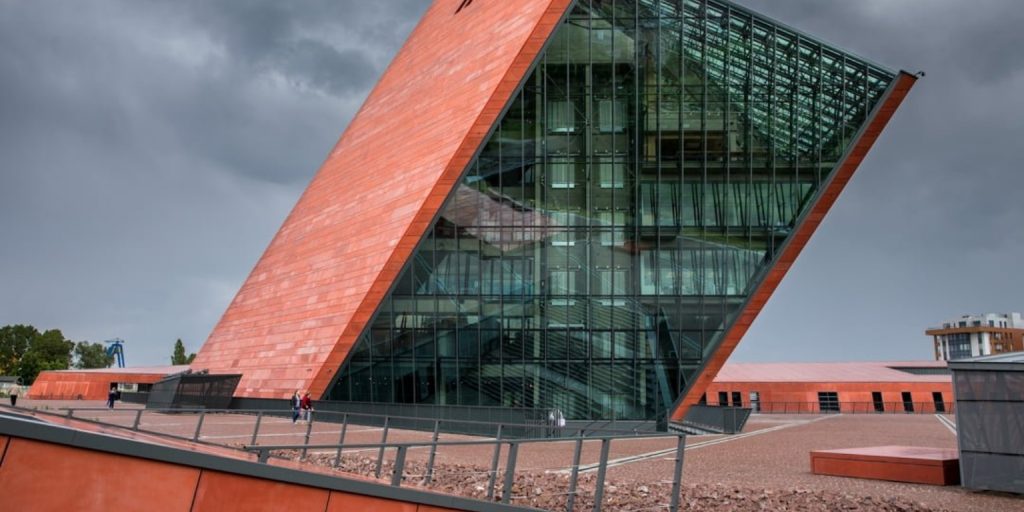
The concept for the WW2 Museum in Gdańsk was established in 2008, with its striking and highly symbolic building officially opening its doors to the public on March 23, 2017. Designed by the Kwadrat Architectural Studio from Gdynia, the museum’s architecture is itself a powerful statement. The building comprises three distinct parts: a vast underground section housing the main exhibition (symbolizing the past and the hidden horrors of war), the public square around it (representing the present), and a dramatically tilted, 40.5-meter-high glass tower (reaching towards the future and hope). This modernist design, with its sharp angles and commanding presence near the Motława River, has become a new architectural icon for Gdańsk, designed to provoke reflection and remembrance.
The museum’s location is strategically chosen, not far from the historic Polish Post Office building, which was heroically defended in September 1939, and easily accessible from the city’s Old Town.
A Comprehensive and Human-Centric Narrative
The heart of the WW2 Museum in Gdańsk is its main exhibition, sprawling over 5,000 square meters and situated 14 meters underground. This makes it one of the largest historical exhibitions of its kind in the world. Rather than solely focusing on military operations, the museum places a strong emphasis on the human experience of the war, exploring its impact on civilians, ordinary people, and various nationalities, not just the Polish perspective.
The permanent exhibition is divided into three comprehensive narrative blocks:
- “The Road to War”: This section delves into the complex genesis of the conflict, exploring the political, social, and economic conditions of the interwar period. It meticulously examines the rise of totalitarian ideologies—Nazism, Fascism, Communism, and Japanese Imperialism—and the failures of international diplomacy that paved the way for global catastrophe. Artifacts include propaganda materials, political cartoons, and documents from the era.
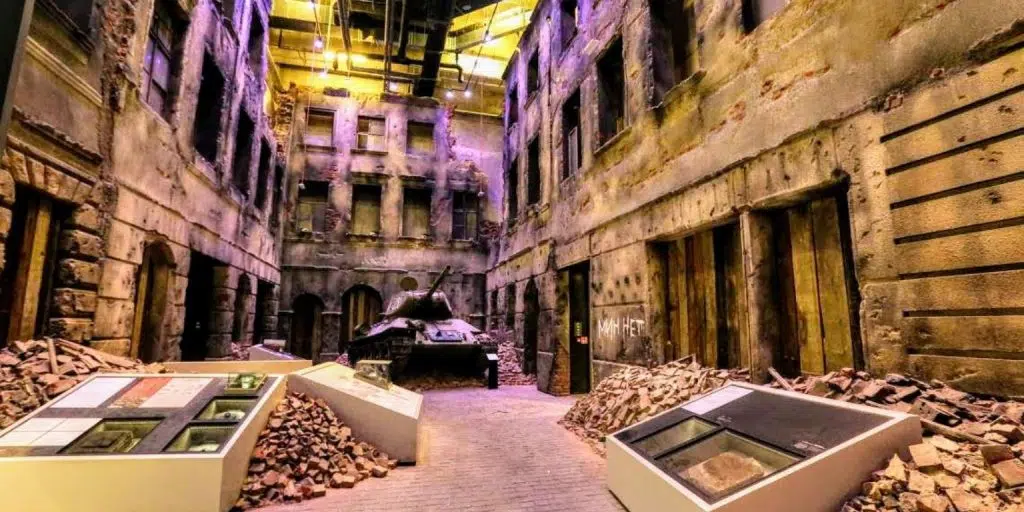
- “The Horror of War”: This extensive segment immerses visitors in the brutal reality of the war from 1939 to 1945. It covers major battles, but crucially, it focuses on the devastating effects on civilian populations, the terror of occupation, mass executions, ethnic cleansing, and the Holocaust. Personal testimonies, everyday objects, and recreated environments help convey the unimaginable scale of suffering and resilience. This section aims to personalize the war, showing how it irrevocably altered the lives of millions.
- “The Long Shadow of War”: The final block examines the immediate aftermath of the war, the fall of the Third Reich, the liberation of Europe (and simultaneous Soviet subjugation of Eastern Europe), and the dropping of the atomic bombs. It then delves into the long-lasting social, political, and psychological consequences of the conflict, especially for nations like Poland that endured decades of Soviet influence.
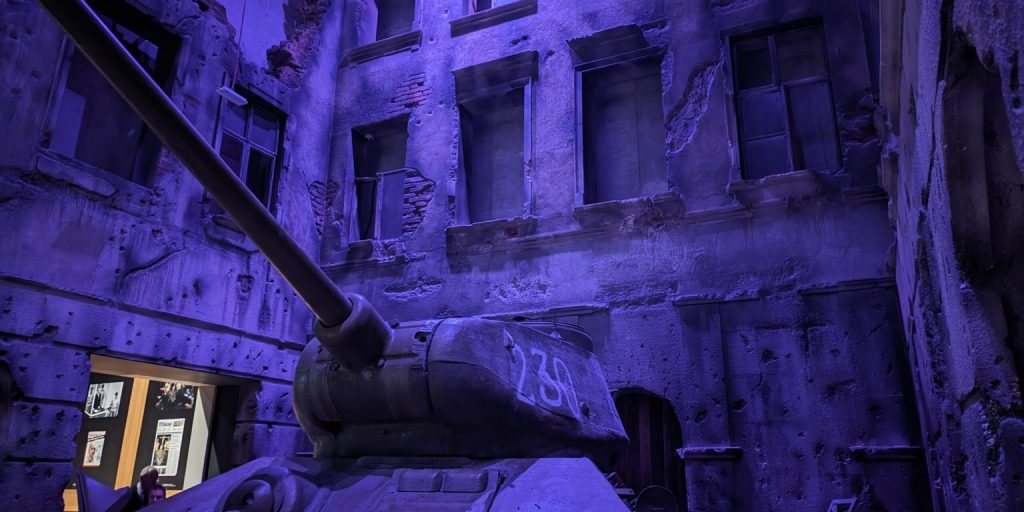
The museum’s collection comprises over 2,000 exhibits and utilizes 240 multimedia stations, including films, interactive displays, and audio recordings, to create an engaging and deeply educational experience. Notable artifacts include tanks (such as a Soviet T-34/85 and an American Sherman) and a German railway wagon, interspersed within the narrative.
A Must-Visit for Global Understanding
The WW2 Museum in Gdańsk is more than a repository of artifacts; it’s a vital educational institution that seeks to impart universal lessons about peace, human dignity, and the profound cost of conflict. Its comprehensive approach, combined with its innovative architecture and immersive presentation, has made it a significant international museum.
Located at Plac Władysława Bartoszewskiego 1, the museum is easily accessible and typically requires at least 3 to 4 hours to fully explore its main exhibition. For anyone seeking a deeper understanding of the Second World War, its causes, and its enduring impact on humanity, the WW2 Museum in Gdańsk offers an unforgettable and essential journey.
Further reading on Wikipedia: T-34