What is the Gdańsk self-guided walking tour?
The Gdańsk self-guided walking tour is a self-paced audio walk: everything you need is on your phone, and at every stop the narration explains the place in front of you. Count on about 3 hours in total, with 24 minutes of actual walking along a 2 km route that links 10 stops. The route follows the old Royal Route into the Main Town, so the stories cover merchant wealth, the destruction of 1945 and the rebuilding that followed.
At the High Gate the narration helps you read the coats of arms of Royal Prussia, Poland and Gdańsk, held by unicorns, angels and lions, and the Latin line on justice and piety. Neptune's Fountain brings the legend of the god striking the water with his trident and turning thrown coins into the gold flakes of Goldwasser liqueur. Artus Court, named after King Arthur, was where merchants and brotherhoods met, beside one of Europe's largest tiled stoves. St Mary's, one of the largest brick churches in the world, holds Hans Düringer's astronomical clock from the 1460s, and at the Crane you learn how workers walking inside huge wooden treadwheels lifted cargo and set ships' masts.
- Durationabout 3 hours
- Walkingabout 24 min · 2 km
- Stops10
- LanguagesEnglish, German, French, Italian, Spanish, Dutch, Polish
On the audio walk
Stories at every stop
Arrive at a stop and the narration begins with how the place came to be, who lived or worked there, the legends attached to it and the small details worth a second look. You can read the same text on screen instead.
Directions on the map
Between stops you follow Google Maps, 2 km and about 24 minutes of walking in all, at whatever speed suits you.
Coffee breaks on your terms
Leave the route for a coffee, a meal or a museum visit and pick the narration up again later that day or on another day.
Food, shops and your own order
Tips for local food and shops near the route come with the walk, and the app lets you choose a different first stop or rearrange the order.
See the route and attractions →
How it works
- Book online Choose the number of people. Your booking reference arrives by email straight away.
- Get the app Download the World City Trail app from the App Store or Google Play and enter your booking reference.
- Walk when you like Start whenever you are ready, walk at your own pace and pause any time. No guide, no fixed schedule.
Who will enjoy the audio walk
Visitors new to Gdańsk
You see the main landmarks in one connected walk, together with the background that explains them.
Independent travellers
No group, no departure time and nobody telling you to move on, so you linger where you like and walk on when you have seen enough.
Anyone short on time
Around 3 hours covers the whole route, which leaves the rest of the day open.
Good to know
- Bring a charged smartphone with mobile data; a power bank helps.
- No entry tickets needed: everything happens outside the buildings. Going inside is optional and paid separately.
- Family friendly; children must be accompanied by an adult.
- Not suitable for wheelchair users and difficult with strollers.
- Groups of up to 5 work best; larger groups split up, one ticket per person.
- Every purchase helps support stray cats and dogs in Greece.
Along the Royal Route, one stop after another
10 stops · about 24 min walking · start: High Gate · finish: The Crane (Żuraw)
The walk enters the city at the High Gate, the western entrance where the Royal Route began, and passes through the Golden Gate into Długa Street. Artus Court and Neptune's Fountain stand on Long Market, which the Green Gate closes off on the Motława side. Along the embankment, St Mary's Gate opens onto Mariacka Street, leading to St Mary's Basilica and the Royal Chapel squeezed in beside it, and the Crane on the river ends the route. In the app you can begin anywhere, and no stop needs a ticket.
Open the route map ↗
1High GateStart
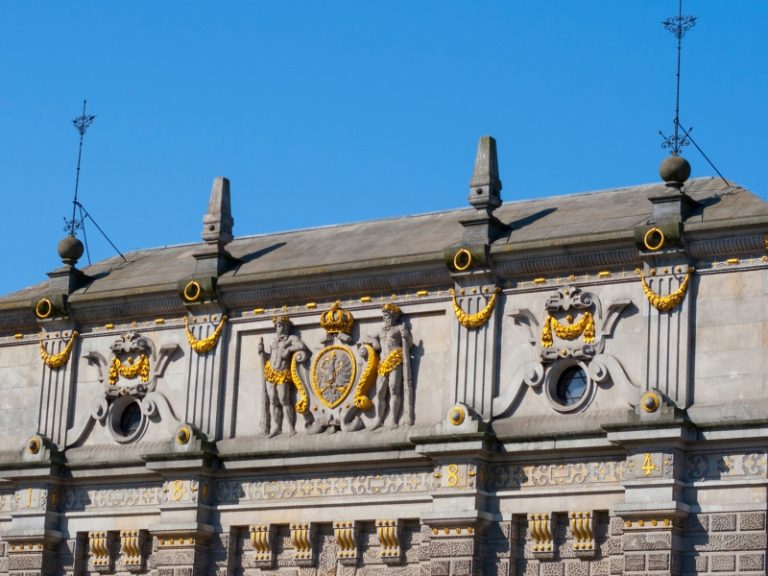
Built in the 1570s and decorated in 1588 by Willem van den Blocke, the High Gate was the main entrance to the city from the west and the start of the Royal Route. Its façade carries the coats of arms of Royal Prussia, Poland and Gdańsk, held by unicorns, angels and lions. A Latin inscription praises justice and piety as the foundations of every state.
Read the full story →
2Golden Gate
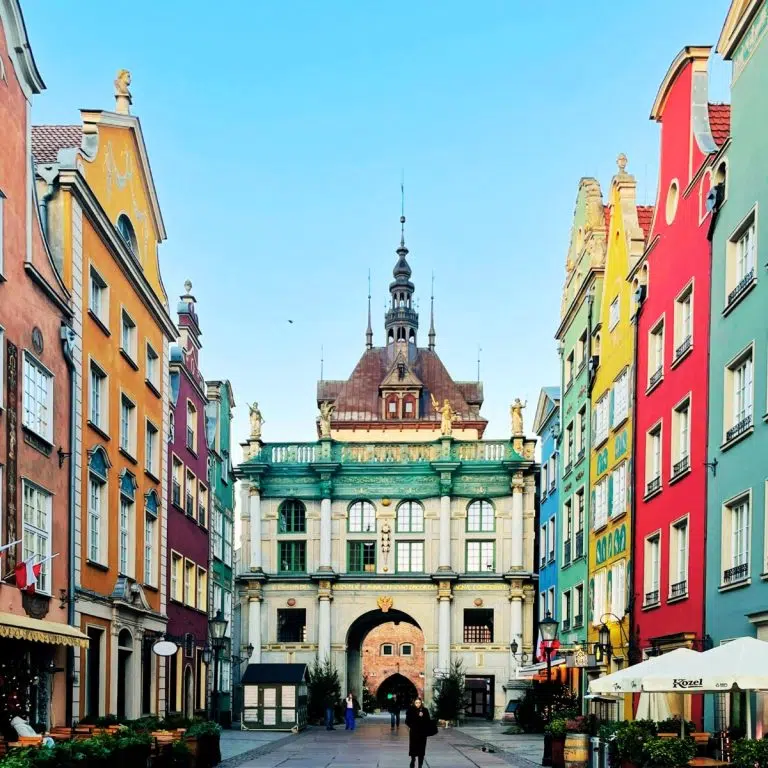
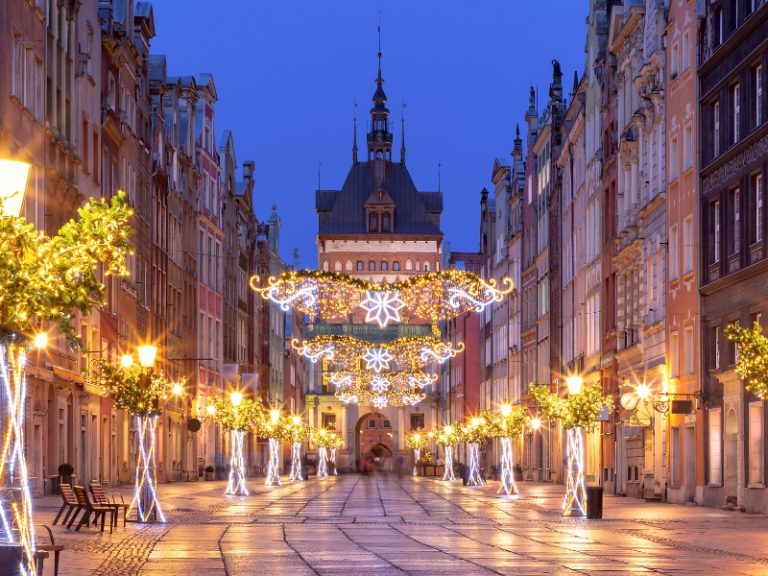
The Golden Gate was built between 1612 and 1614 to designs by Abraham van den Blocke, at the head of Długa Street. Statues on top of the gate represent civic virtues such as peace, freedom, justice and prudence. It was badly damaged in 1945 and rebuilt after the war.
Read the full story →
3Artus Court
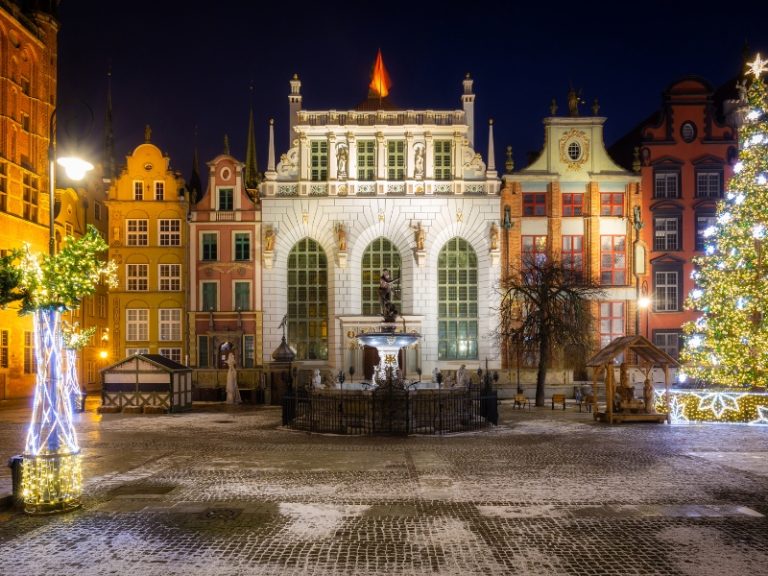
Named after the legendary King Arthur, Artus Court was the meeting place of Gdańsk's merchants and brotherhoods. Its present façade dates from the early 17th century. Inside stands a tiled stove that is one of the largest in Europe.
Read the full story →
4Neptune's Fountain
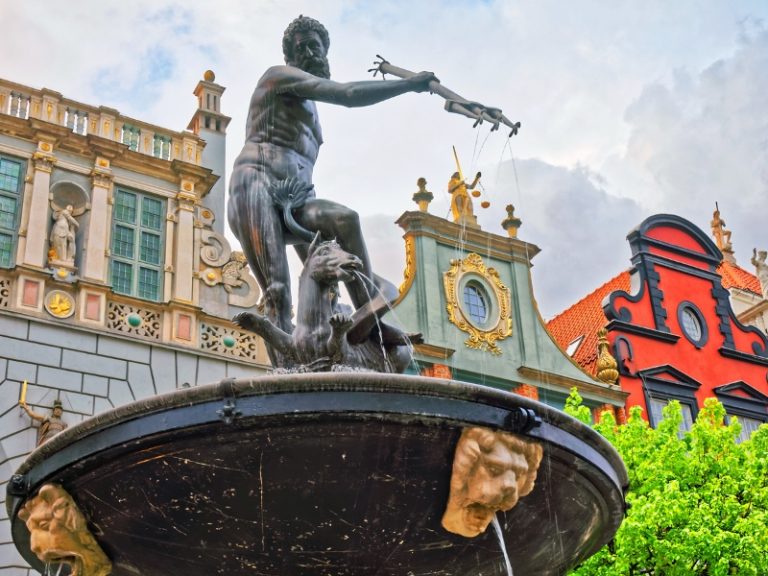
The bronze Neptune was designed by Abraham van den Blocke and cast in 1615, and the fountain has stood in front of Artus Court since 1633. It became a symbol of the city's bond with the sea. Legend says Neptune struck the water with his trident and turned the coins thrown into it into the gold flakes of Goldwasser liqueur.
Read the full story →
5Long Market
Long Market, the wide final stretch of the Royal Route, is lined with tall patrician houses, including the richly decorated Golden House. At its western end rises the Main Town Hall, whose tower is crowned by a gilded statue of King Sigismund II Augustus. Like most of the Main Town, it was rebuilt after its destruction in 1945.
Read the full story →
6Green Gate
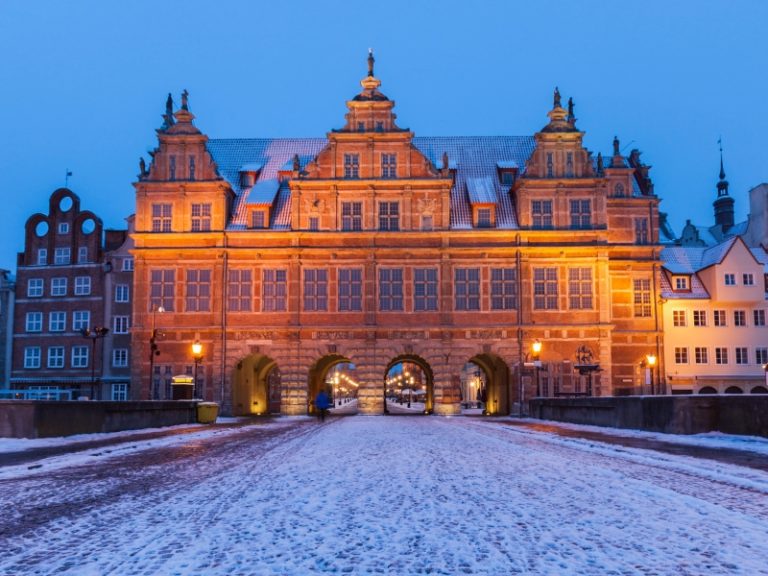
Built in the 1560s in the style of Dutch Mannerism, the Green Gate closes Long Market on the side of the Motława river. It was meant as a residence for Polish kings visiting the city, although they hardly ever stayed here. Its arches frame the view across the river to Granary Island.
Read the full story →
7St Mary's Gate
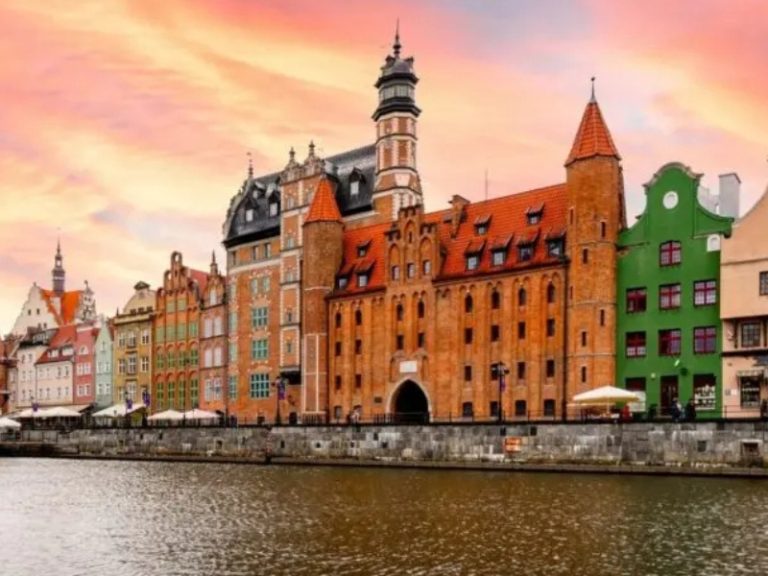
This Gothic brick gate from the 15th century leads from the Long Embankment on the Motława into Mariacka Street. The street, with its stone terraces and amber shops, runs towards St Mary's Church, one of the largest brick churches in the world. Next to the gate stands the Naturalists' House, home to the archaeological museum.
Read the full story →
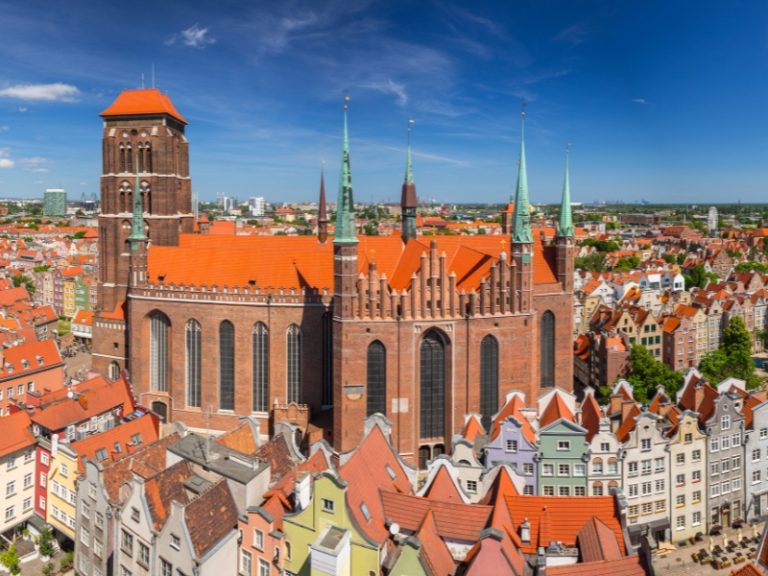
8St Mary's Basilica
St Mary's Church was built between 1343 and 1502 and is one of the largest brick churches in the world. Its massive tower rises above the rooftops of the Main Town, and inside stands an astronomical clock made by Hans Düringer in the 1460s. Like most of the old town, it was badly damaged in 1945 and rebuilt.
Read the full story →
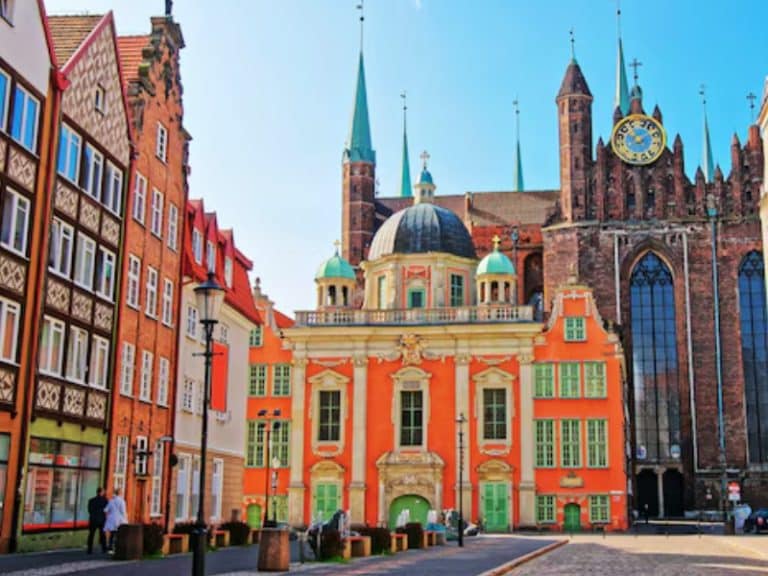
9Royal Chapel
The Royal Chapel was built between 1678 and 1681 to designs by Tylman van Gameren, with support from King John III Sobieski. It served the city's Catholics at a time when the neighbouring St Mary's was a Lutheran church. Its narrow Baroque façade stands squeezed between the houses right next to the basilica.
Read the full story →
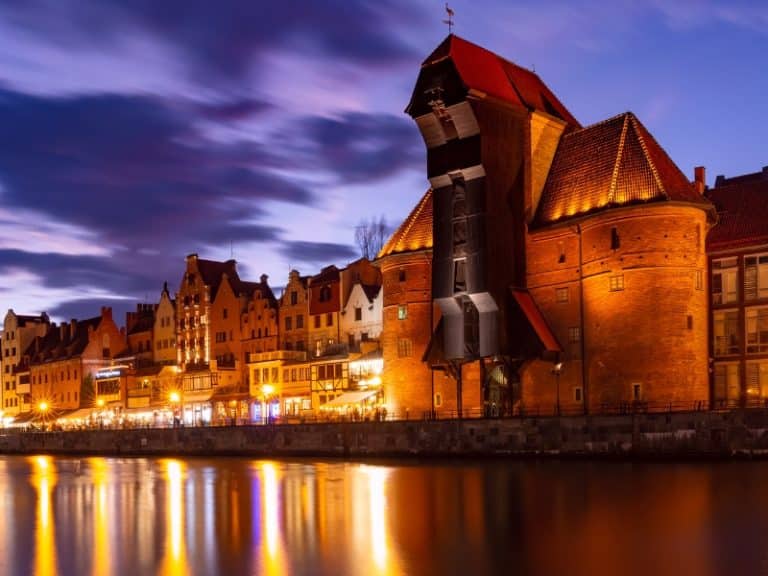
10The Crane (Żuraw)Finish
The Crane on the Motława took its present form in the mid-15th century and was one of the largest port cranes of medieval Europe. Workers walking inside its huge wooden treadwheels lifted cargo and set masts on ships. Rebuilt after 1945, it is now a branch of the National Maritime Museum.
Only logged in customers who have purchased this product may leave a review.





Reviews
There are no reviews yet.