
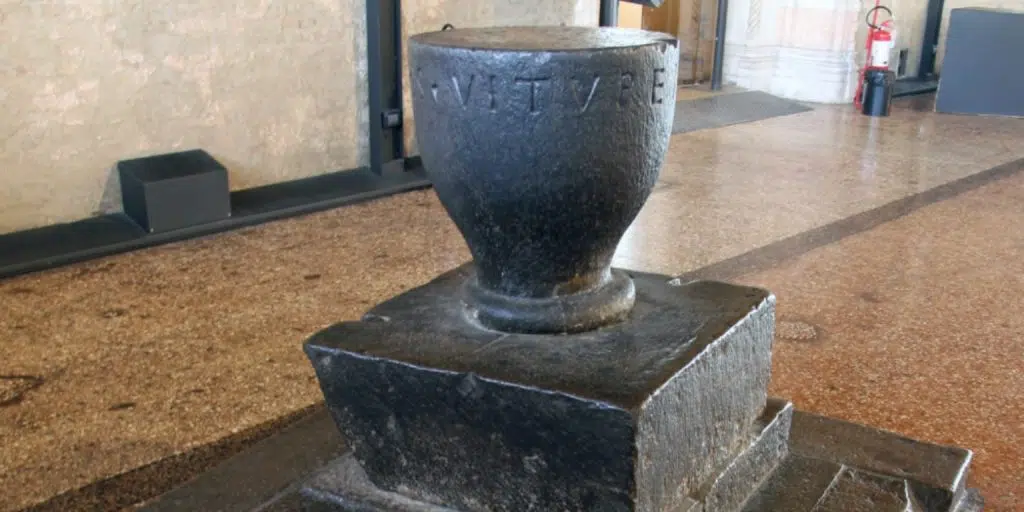
In the vibrant city of Padua, a place renowned for its academic and artistic heritage, lies an extraordinary artifact that tells a unique story of medieval justice and social order. Hidden inside the grand Palazzo della Ragione, between the bustling Piazza delle Erbe and Piazza dei Frutti, is a simple black stone known as the Pietra del Vituperio. Its name, which translates to “the Stone of Public Shame,” hints at a dark and fascinating history. This humble stone served as a tool of public humiliation for insolvent debtors, providing a rare and tangible link to a bygone era of law, punishment, and the very origins of the concept of bankruptcy.
A Medieval Ritual of Humiliation
In medieval Europe, debt was a serious offense that could lead to life imprisonment. However, in Padua, a different and more public system of justice was developed, reportedly influenced by the compassion of Saint Anthony of Padua who argued against harsh imprisonment for debtors. Instead of being locked away, a debtor who could no longer pay their creditors was subjected to a powerful ritual of public shaming on the Pietra del Vituperio.
The procedure was both simple and deeply symbolic. The debtor was brought to the stone, often located in the center of the hall, and stripped down to their underwear—an act of exposure that left them in “braghe di tela,” or “cheap-cloth drawers.” They were then forced to perform a ritualized act of surrender: they had to jump or sit on the cold, hard stone three times, while publicly declaring, “Cedo bonis,” a Latin phrase meaning, “I give up my goods.” This act, performed in front of a crowd, was a public declaration of bankruptcy and a total loss of social standing.
From Punishment to Proverb
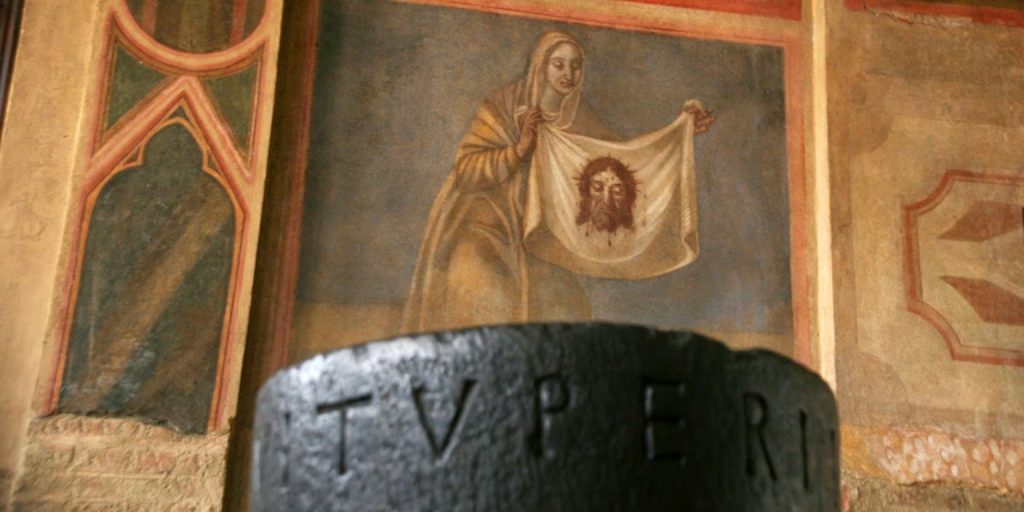
The Pietra del Vituperio in Padova and the ritual surrounding it left an indelible mark on the Italian language. The phrase “restare in braghe di tela“—literally “to be left in cheap-cloth drawers”—is still used today to mean “to be left with nothing” or “to be completely broke.” This linguistic legacy is a testament to the power of the original ritual, which was so memorable and so effective at enforcing social consequences that it has endured for centuries.
While the ritual was a form of public shaming, it also represented a more merciful alternative to long-term imprisonment. Once the act of public surrender was completed, the debtor was often banished from the city, but they were not left to rot in a dungeon. This unique system of justice prioritized public visibility and social censure, providing a swift and final resolution to financial insolvency. The stone itself is a simple, unassuming block, but it holds a powerful symbolic weight as an instrument of both punishment and legal closure.
A Historical Treasure in a Living Museum
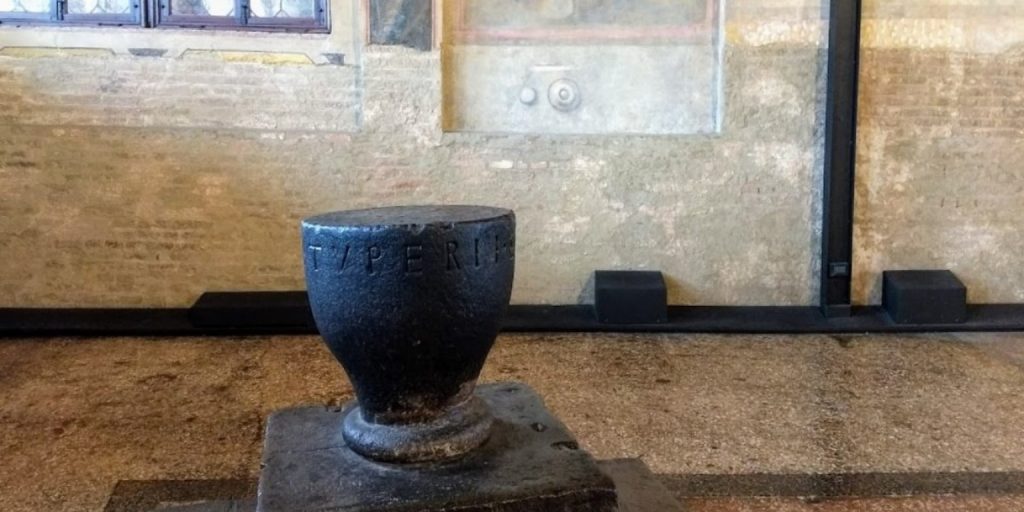
Today, the Pietra del Vituperio remains in its historic location within the Palazzo della Ragione, a magnificent medieval building that now serves as the city’s market hall. The palace is an attraction in its own right, a UNESCO World Heritage site known for its stunning astrological frescoes and its colossal wooden horse. Visitors can explore the vast upper hall and, in a small corner, find the stone that served as the focal point of medieval justice.
The Pietra del Vituperio is a powerful historical relic that offers a glimpse into a time when justice was a public and visceral spectacle. It is a monument to a specific form of legal procedure, a tangible connection to a social history that has long since passed. The stone stands as a silent witness to countless moments of human downfall and public judgment, making it a truly unique and thought-provoking stop for anyone exploring the rich history of Padua.