
In the historic halls of the University of Padua’s Palazzo del Bo, a quiet, unassuming door opens to reveal a revolutionary piece of history: the world’s first permanent anatomical theatre. This wooden, cone-shaped marvel is not just a relic of the past; it is a monument to scientific inquiry and a pivotal turning point in the history of medicine. Built in 1594, the anatomical-theatre-in-padova marks the moment when the study of the human body shifted from theory to practical observation, a bold step that would forever change medical science.
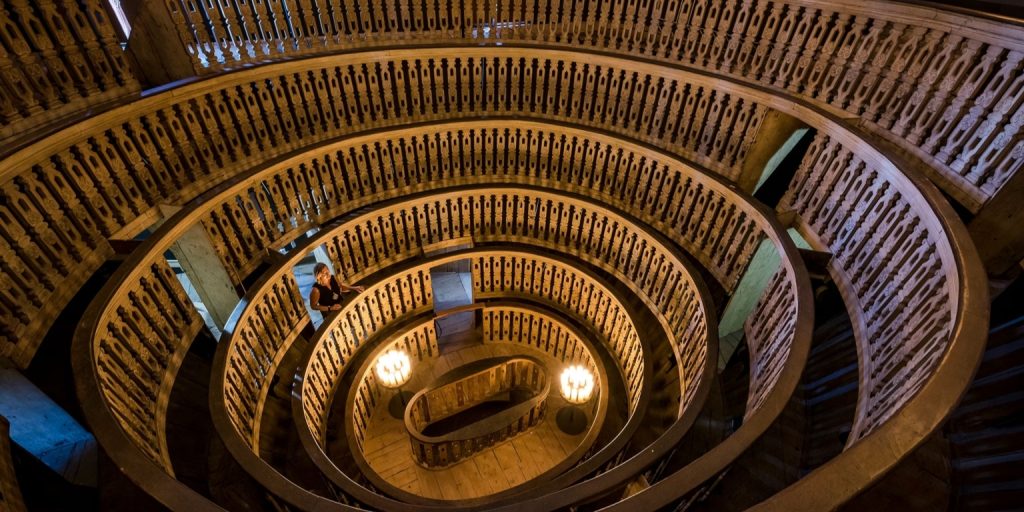
A Secret Place of Learning
Before the 16th century, human dissection was often a forbidden and highly secretive practice. Anatomical studies were largely based on ancient texts, and dissections were typically conducted in temporary, makeshift spaces. The University of Padua, a leading center of scientific thought and medical research, sought to change this. At the request of the brilliant professor of anatomy Girolamo Fabrici d’Acquapendente, a dedicated space was created. The result was a stunning and innovative design that balanced the need for observation with the need for discretion.
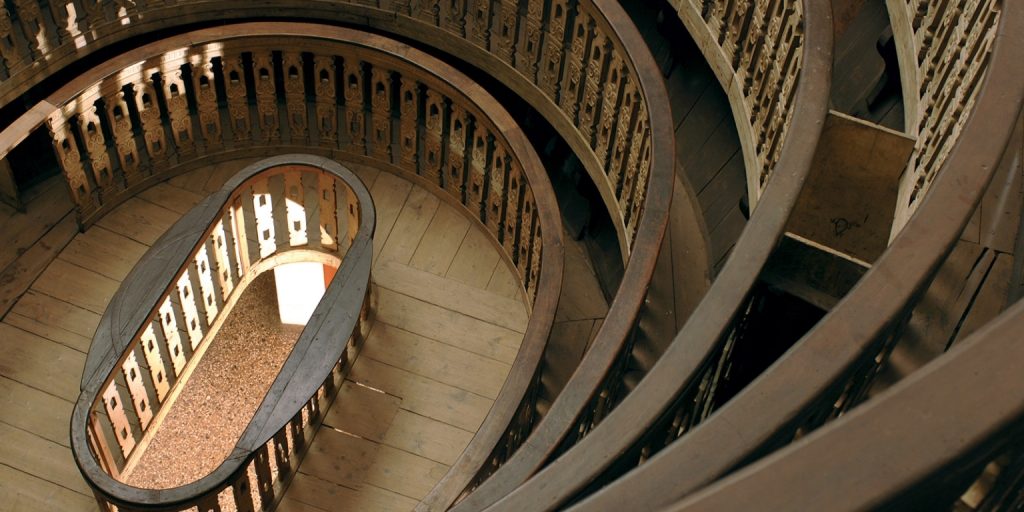
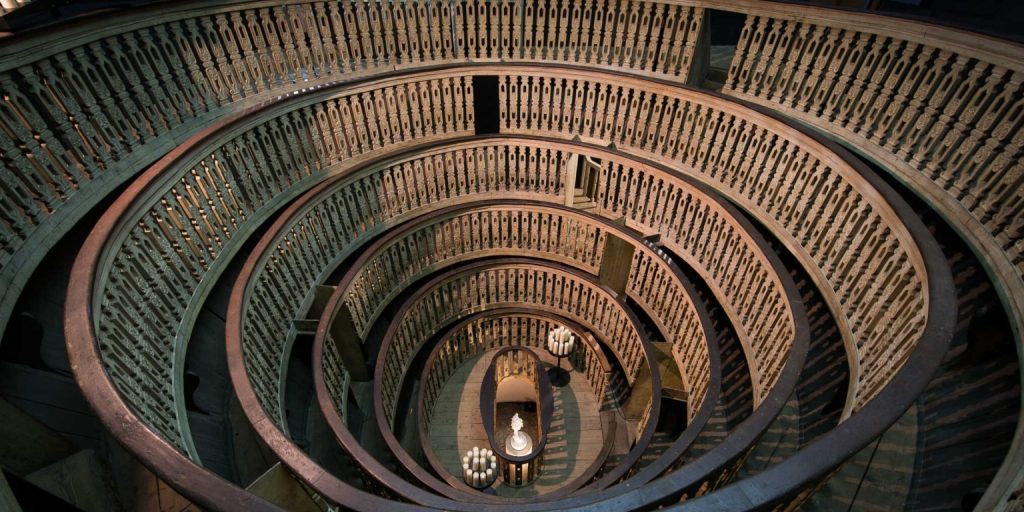
The theatre is a truly remarkable piece of architecture, a six-tiered, oval-shaped structure made entirely of dark wood. The tiers rise steeply from a small, central dissection table, allowing up to 300 students to gather in a compact space and get the best possible view of the procedure. The design is ingenious; it was built to be easily concealed, with shutters and a roof that could be closed to hide the activity from prying eyes outside. The theatre was also a space of immense privilege; only students of anatomy were permitted to attend, and they did so under strict rules.
A Revolution in Medical Science
The creation of the Anatomical Theatre in Padova marked a profound shift from a theoretical, book-based approach to a practical, empirical one. It was a physical manifestation of the Renaissance’s new emphasis on direct observation and experimentation. Students no longer had to simply read about anatomy; they could now witness the intricate workings of the human body with their own eyes. This approach had been championed by previous professors at Padua, most notably Andreas Vesalius, the “father of modern human anatomy,” whose groundbreaking work De humani corporis fabrica had been published decades earlier. The new theatre provided a perfect setting for the kind of detailed study that Vesalius had promoted.
The Anatomical Theatre in Padova existence was a clear signal to the world that Padua was a place where scientific inquiry was not just tolerated but encouraged. It became a powerful symbol of the university’s commitment to advancing knowledge through direct experience. The dissections, often performed on the bodies of executed criminals, were solemn and highly formal events, a blend of scientific lecture and public demonstration.
A Lasting Legacy and a Tourist Destination
Today, the Anatomical Theatre is a major highlight of any visit to the University of Padua. It is part of the guided tour of the Palazzo del Bo, the university’s historic seat, which also includes Galileo Galilei’s original lecture hall. Visitors are led into the small, darkened room and instructed to look up at the elegant, tiered structure, where the ghosts of countless lessons seem to still linger. The tour guides explain how the theatre worked, how the bodies were brought in, and what the atmosphere must have been like for the students.
The theatre stands not only as a testament to the University of Padua’s pioneering spirit but also as a monument to all of medical science. It reminds us of a time when the pursuit of knowledge was both dangerous and groundbreaking, and it celebrates the courageous individuals who were willing to challenge established doctrines in their quest to understand the human body. The anatomical-theatre-in-padova is more than a historical curiosity; it is a sacred space where the very foundations of modern medicine were laid.