
Fun facts about Brisbane range from a clock tower you can stand inside to a river discovered by four lost convicts, plus a city hall that was once the second most expensive building in the country after the Sydney Harbour Bridge. Add a lamington born from a kitchen accident and streets secretly named after British royals, and you've got a city with more stories per square metre than most visitors expect.
What are the best fun facts about Brisbane?
Start with the river the whole city is arranged around. It wasn’t found by an official expedition first. The first foreigners to find the Brisbane River were convicts who were struck by a storm and blown north from Sydney, going 21 days without fresh water, believing they were at Jervis Bay. They only worked out where they actually were months later. The official discovery was recorded six months later, when John Oxley, a British surveyor general, was sent from Sydney to find a new penal settlement.
Before any of that, the land had a different name and a different meaning. The area is called Meanjin by the Turrbal people, meaning ‘place shaped like a spike’, a reference to the spike of land where the Brisbane CBD now sits, shaped by a bend in the river.
Next time you’re crossing streets downtown, look at the names. Streets running diagonally from northeast to southwest are named after female royals like Adelaide, Charlotte and Elizabeth, while the perpendicular streets carry male royal names such as Albert, Edward and George.
Brisbane City Hall has a stack of numbers worth knowing. Building it was a major undertaking in the 1920s, taking 10 years and costing almost one million pounds, making it one of Australia’s most expensive buildings and the second largest construction of its time, beaten only by the Sydney Harbour Bridge. It covers two acres and comprises 573 rooms and spaces, including the Lord Mayor’s office, Council Chambers and Museum of Brisbane. And the clock tower isn’t just decoration: it has four chime bells weighing 3 tonnes each and a one-hour bell that weighs 4.3 tonnes, and it’s one of the few places in the world where visitors can stand inside a giant clock face. The guest list up there is unexpected too. Visitors to the tower have included the Beatles, Queen Elizabeth, Princess Diana, Prince Charles and the Dalai Lama.
Basically every Australian knows the lamington, but few know it was a kitchen mishap. The famous Australian lamington was created in Brisbane accidentally, allegedly in 1901 when a chef at Government House dropped the Governor’s cake into melted chocolate rather than waste it, then rolled it in coconut to hide the mess.
St Stephen’s Cathedral hides a genuinely ancient bell. Outside in the grounds is a great cast iron bell made at the Whitechapel Bell Foundry around the time Jack the Ripper was stalking victims nearby, the same foundry that also made the Liberty Bell and Big Ben. The Pugin Chapel next door is older still: Queensland’s first church, built in 1850.
Queensland’s parliament didn’t always meet somewhere grand. On 22 May 1860, the Queensland Parliament had its first meeting in the largest building in Brisbane at the time, the old convict barracks on Queen Street, converted after emancipation.
Even the sunshine is measurable. At an average of 283 sunny days a year, Brisbane is one of the sunniest cities in the world, with average temperatures sitting between 21 and 30 degrees Celsius year round.
And one for the trivia nights: the Old Windmill, built in 1824, is the oldest building still standing in Brisbane.
Is there a local legend about Brisbane?
The story locals love to tell isn’t about a hero explorer, it’s about four men who got hopelessly lost. In 1823, a small group of convicts and their companions were caught in a storm off Sydney and blown far north along the coast. Cut off from fresh water for weeks, disoriented, and convinced they had drifted only as far as Jervis Bay, they eventually stumbled onto a wide river mouth and followed it inland, believing the whole time they were somewhere near home. It took the arrival of the real surveying expedition months later to work out they had actually found the river that would give the city its name. A creek they crossed on that walk still carries a name from the tale, a quiet reminder that Brisbane’s official history and its accidental history don’t always line up.
What is the short history of Brisbane?
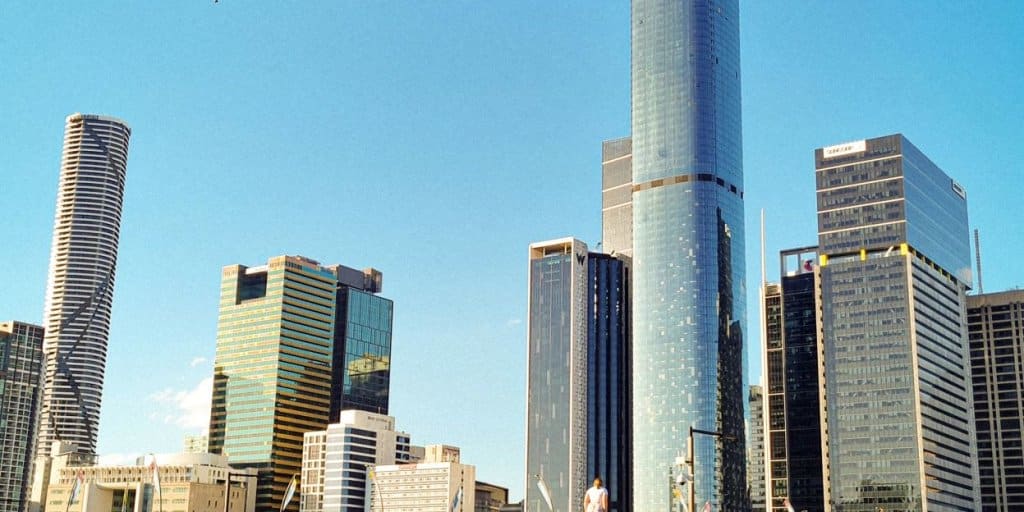
European settlement began in September 1824 with a British penal outpost at Redcliffe, relocated in May 1825 to the banks of the Brisbane River, though the river valley had been a major cultural and ceremonial landscape for the Yagara, Turrbal and Quandamooka peoples for more than 22,000 years before that. In 1859 the colony of Queensland was created, with Brisbane as its capital. The city grew slowly through the 19th century as a river port, then took on a bigger role in the 20th: during World War II, Brisbane was one of Australia’s key frontlines, and US General Douglas MacArthur based his operations here because of its strategic position on the eastern coast. Later decades brought the infrastructure that shaped the modern city, from hosting the Commonwealth Games in 1982 and the World Expo in 1988.
What food should you try in Brisbane?
Order a lamington somewhere old school like a suburban bakery or a Queensland Country Women’s Association stall, since the whole square sponge and chocolate and coconut combination was born here by accident in a Government House kitchen. For fresh Queensland seafood, look for mud crab or Moreton Bay bugs at a riverside restaurant along the South Bank or Eagle Street Pier, both classic Brisbane catches from the bay the city faces. And for something properly local rather than imported, try a barramundi fillet at one of the CBD’s modern Australian bistros, it’s the fish Queenslanders grew up eating and still order first.
What do most visitors miss in Brisbane?
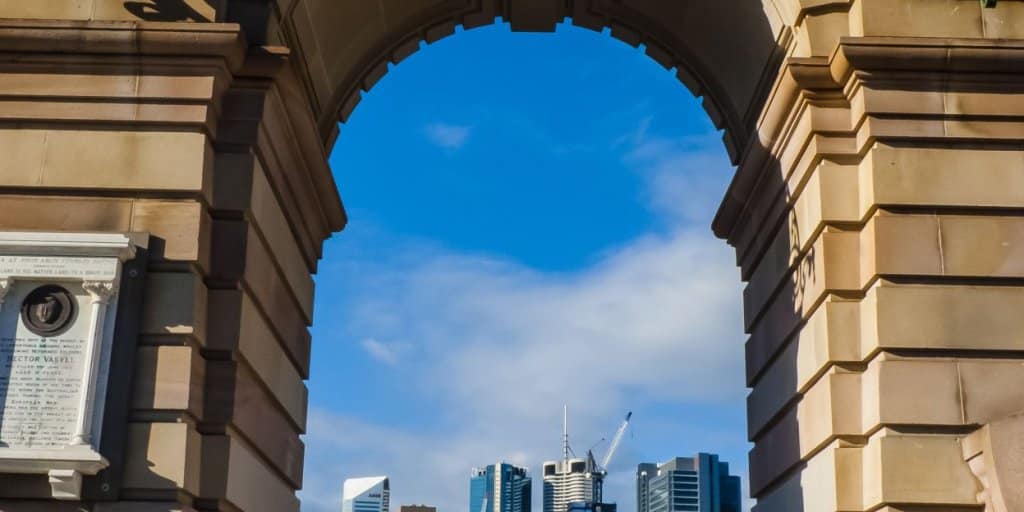
Most people photograph St Stephen’s Cathedral from outside and walk on, missing the Pugin Chapel tucked beside it, a small sandstone building that predates the cathedral itself and holds a carved camphor laurel tribute to Saint Mary MacKillop. Few tourists bother to book the free City Hall tour either, which is the only way to actually stand inside the giant clock face in the tower rather than just look up at it from King George Square. And almost nobody detours to the Brisbane City Botanic Gardens on the river bend near Parliament House late in the afternoon, when the joggers thin out and the fig trees along the riverside path get the low light that makes the whole place worth the short walk from the CBD.
| Where | Brisbane, capital of Queensland, Australia |
| Best season | Autumn or spring, April to May or September to October |
| Cost | Most historic sights and gardens are free to walk, guided tours vary |
| How long | A full day covers the main CBD landmarks comfortably |
Questions people ask about Brisbane
Why is Brisbane called Brisbane?
John Oxley named the river after Sir Thomas Brisbane, the governor of New South Wales, and the settlement that grew on its banks took the same name.
What is the oldest building in Brisbane?
The Old Windmill in Spring Hill, built in 1824, is generally credited as the oldest building still standing in the city.
How long did it take to build Brisbane City Hall?
Construction ran from 1920 to 1930, a full decade, and the building was already partly in use from 1928.
What language did the original inhabitants of Brisbane speak, and what did they call the city?
The Turrbal people called the area Meanjin, meaning place shaped like a spike, describing the bend in the river where the CBD now sits.
Is the lamington really from Brisbane?
Yes, the popular story places its accidental invention in a Government House kitchen in Brisbane around 1901.