
The best things to see in Brisbane cluster around the river and the old city grid: the Wheel of Brisbane and the Brisbane Sign at South Bank, then City Hall, Anzac Square and the cathedrals in the CBD, finishing at Parliament House and the City Botanic Gardens. Most of these sites are free to visit, and only the Wheel and City Hall's museum charge admission.
What is the Wheel of Brisbane and can you ride it?
Start at the river and look up. The Wheel of Brisbane is a 60 metre Ferris wheel standing at the northern entrance to South Bank Parklands, on the site of World Expo 88. It was erected in 2008 at the northern entrance to South Bank Parklands, the transformed World Expo 88 site by the Brisbane River, as part of the 20th anniversary of World Expo 88 and the 150th anniversary of the State of Queensland. It actually began life elsewhere: the wheel was originally built for Sea World in 2006 as the Sea World Wheel before being moved and re-erected in Brisbane. Each of the 42 air-conditioned capsules can seat up to six adults and two children, and the ride lasts about 12 minutes and includes roughly four rotations, giving 360 degree panoramic views across the city. Look out for the Queensland Government Treasury building, the Botanic Gardens and Mount Coot-tha from the top of your loop, since your sky-high gondola affords panoramic views of the city’s celebrated historic and natural landmarks, such as the Queensland Government Treasury building, Botanical Gardens, Mount Coot-tha, the Goodwill Bridge and the Queensland Performing Arts Centre. Tickets are sold at the base or online, and there is no need to book ahead, since there is no need to book, you can simply arrive and purchase tickets at the ticket booth.
Why does the Brisbane Sign exist?
A few steps along the riverbank stands the giant BRISBANE lettering that everyone photographs. The original sign was designed and installed for the G20 Leaders’ Summit in 2014, which saw world leaders such as then-US President Barack Obama and German Chancellor Angela Merkel visit the city, and it was only intended to sit by the river for one month. Locals loved it too much to let it go: the original sign was only meant to be on the banks of the river for four weeks but remained for four months, and after being pulled down for safety reasons it was rebuilt in sturdier material. The $300,000 project was jointly funded by the State Government and the Brisbane City Council, and today it sits permanently on the grass outside QPAC, a free photo stop day or night.
What is the Victoria Bridge Abutment?
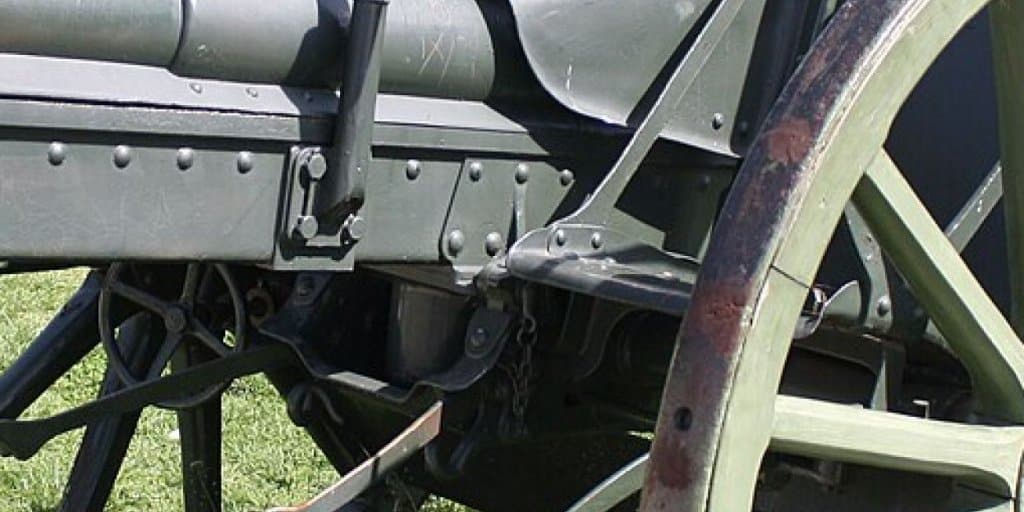
Walk north across the river and you pass the stone abutment on the southern bank, a solid, squared block of masonry that looks older than everything around it, because it is. It is what survives of one of the earlier Victoria Bridge crossings, the ones that came before the current 1969 bridge and were repeatedly damaged by flood and, in one case, by fire. It is a quiet reminder that this crossing point has mattered to Brisbane for well over a century, long before the current concrete span was ever built.
What is the history of Brisbane City Hall?
City Hall dominates King George Square with its sandstone facade and clock tower. Brisbane City Hall was completed in 1930, and for years its tower was the tallest structure in the city: for many years, the clock tower was the highest structure in Brisbane, and there is an observation level above the clocks. Every quarter hour Westminster Chimes ring out from the tower, and above the main entrance look for an interesting scene carved into the stone contrasting Aboriginal people and kangaroos with Europeans and sheep. Inside, the auditorium was modelled on Rome’s Pantheon and houses the free Museum of Brisbane, since City Hall has a large auditorium modeled after the Pantheon in Rome which includes a huge pipe organ and a nice little Museum of Brisbane.
What happened at Anzac Square and the Memorial Gallery?
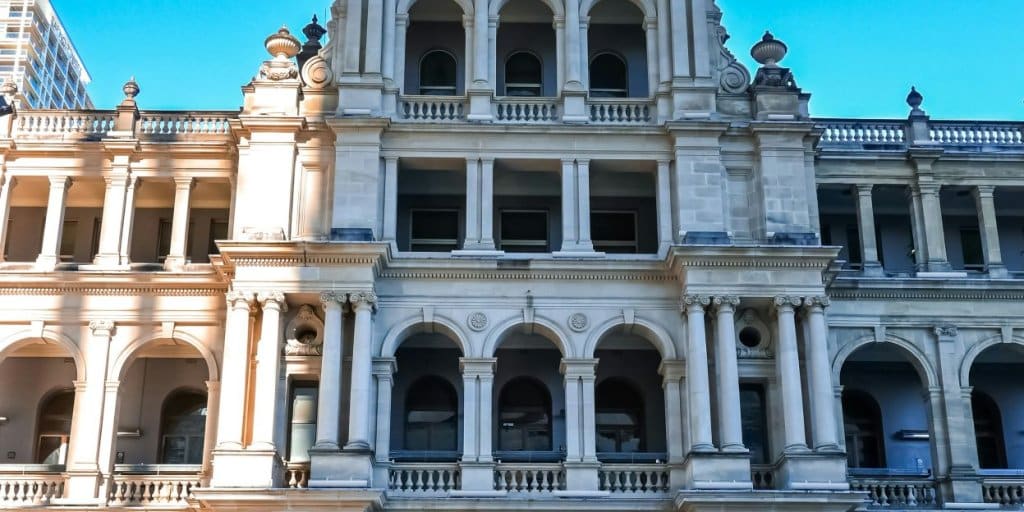
Anzac Square is the sunken park between Ann Street and Central Station, built to honour Queenslanders who died in the First World War. After two years of construction, the Anzac Square memorial was unveiled in 1930 and reflects 14 years of lobbying and work by the Anzac Memorial Committee and everyday Queenslanders to memorialise the Australian dead. Below the square, the Shrine of Remembrance and Memorial Gallery hold an eternal flame and rolls of honour, free to enter, worth a quiet ten minutes before you carry on up Ann Street.
What things to see in Brisbane are hiding on Ann Street's cathedrals?
Two cathedrals sit close together and could not be more different in style or timeline. St John’s, the Anglican cathedral, took over a century to finish: the Archbishop of Brisbane, Phillip Aspinall, officially reconsecrated the completed cathedral on 29 October 2009, attended by about 1,500 people, 108 years after the laying of the foundation stone. It is the second-oldest Anglican church in Brisbane, predated only by the extant All Saints church on Wickham Terrace (1862). A 2014 hailstorm caused serious damage, since on 27 November 2014 a hailstorm struck Brisbane causing widespread damage totaling $1.1 billion, and St John’s Cathedral suffered extensive damage to its roof tiles and leadlights, as well as damage to the copper sheeting on the front spires and bell tower, with repairs not finished until 2018. Look for the Millennium window and the biological carvings above the front doors.
St Stephen’s, the Catholic cathedral nearby, has been at the centre of the archdiocese for over a century and a half: for more than 160 years, the Cathedral of Saint Stephen has served as the heart of the Archdiocese of Brisbane, as well as a place of worship and sanctuary for the community. Next to the main cathedral stands its small, older neighbour: St Stephen’s Chapel, also known as the Pugin Chapel, was designed by architect Augustus Pugin and built from 1848 to 1850, making it one of the oldest surviving church buildings in the city. Free volunteer tours run on weekdays.
What are Queens Gardens, and why so small?
Squeezed between George Street and William Street, Queens Gardens is one of Brisbane’s oldest patches of public green space, laid out in the nineteenth century as ornamental grounds near the old Government House precinct. It is easy to walk through without noticing it, which is rather the point: a shaded, benched pocket park where office workers eat lunch, a few minutes from the noise of the CBD.
What is Queensland's Parliament House like inside?
Just past the gardens rises Parliament House, seat of the Queensland Legislative Assembly since the 1860s, its French Renaissance sandstone facade and mansard roof looking out over the Botanic Gardens. Free public tours run on non-sitting days and take visitors into the chamber itself, a rare chance to stand where the state’s laws are debated. Check the Parliament’s own website for current tour times before you go, since these change with the sitting calendar.
What makes the City Botanic Gardens one of the best things to see in Brisbane?
The walk ends where Brisbane itself effectively began. The Gardens were established in 1825 as a farm for the Moreton Bay penal settlement, making them the oldest continuously cultivated piece of ground in the state. The Queensland Heritage Register describes the Gardens as the most significant non-Aboriginal cultural landscape in Queensland, with a continuous horticultural history since 1828. Wander the Bamboo Grove and Weeping Fig Avenue, since you can explore the Bamboo Grove, Weeping Fig Avenue, Riverstage, ornamental ponds and more. Look for the cairn commemorating Walter Hill’s work, since a cairn now stands in the gardens to commemorate the first production of granulated sugar in Queensland in 1862, a direct result of Hill’s pioneering work. Entry is free and the gates are open from early morning to dusk daily.
These ten spots are the stops of Brisbane’s self-guided game. If you want more of the city’s odd corners and stories, have a look at our other Brisbane articles: Fun Facts about Brisbane, Family Activity in Brisbane, and Team Building Activity in Brisbane.
| Where | Brisbane CBD and South Bank, Queensland, Australia |
| Best season | April to October, when Brisbane's weather is mild and dry |
| Cost | Free for most stops; Wheel of Brisbane and Museum of Brisbane tours have separate admission |
| How long | Around 2 to 3 hours to walk the whole route at an easy pace |
Questions people ask about Brisbane
What are the best things to see in Brisbane in one afternoon?
Start at South Bank with the Wheel of Brisbane and the Brisbane Sign, cross the river, then walk through City Hall, Anzac Square, the two cathedrals, Queens Gardens, Parliament House and the City Botanic Gardens, all within easy walking distance of each other.
Is the Wheel of Brisbane worth the ticket price?
Most visitors find the 12 minute ride worthwhile for the 360 degree views over the river, South Bank and the CBD skyline, especially near sunset.
Can you go inside St John’s Cathedral and St Stephen’s Cathedral for free?
Yes, both cathedrals are free to enter during opening hours, and volunteer guided tours are available on weekdays at St Stephen’s.
Is Brisbane City Hall free to visit?
Yes, entry to City Hall and the Museum of Brisbane inside it is free, though the observation deck and some tours may have separate arrangements.
How old is the City Botanic Gardens?
The gardens date back to 1825, when the site was first used as a farm for the Moreton Bay penal settlement, making it one of Brisbane’s oldest green spaces.