
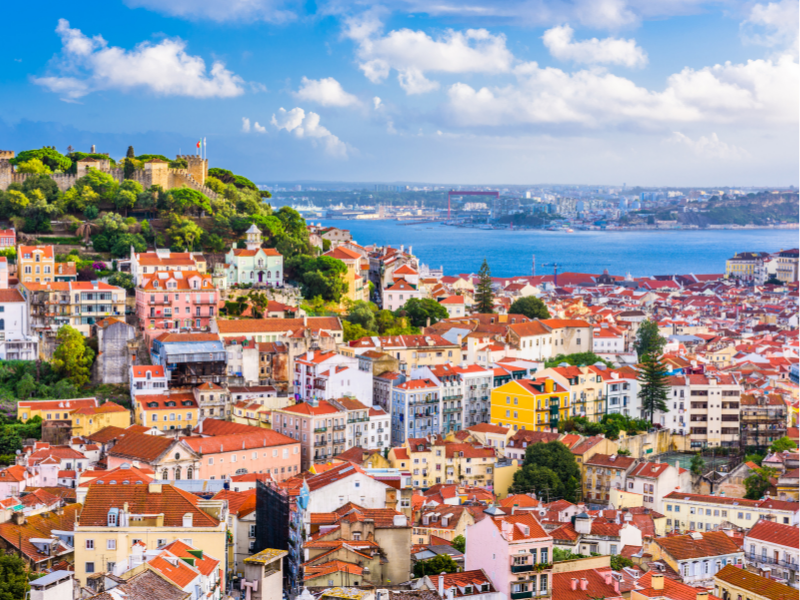
Η Λισαβόνα είναι πόλη με λόφους, φως πάνω στο ποτάμι και παλιά τραμ, απλωμένη στις πλαγιές πάνω από τις φαρδιές εκβολές του Τάγου. Μεγάλο μέρος του κέντρου ξαναχτίστηκε μετά τον μεγάλο σεισμό του 1755, γι’ αυτό η Μπάισα είναι μία από τις πρώτες σχεδιασμένες συνοικίες πόλης στην Ευρώπη. Αυτά είναι τα στοιχεία και οι ιστορίες που κάνουν την πόλη ξεχωριστή.
10 ενδιαφέροντα στοιχεία για τη Λισαβόνα
- Ανελκυστήρας αντί για σκάλα: ο Ανελκυστήρας της Σάντα Ζούστα, σχεδιασμένος από τον γεννημένο στο Πόρτο μηχανικό Ραούλ Μεσνιέ ντι Ποντσάρ, ανεβάζει επιβάτες από την Μπάισα προς το Λάργκο ντο Κάρμο από το 1902.
- Μια γέφυρα με δύο ονόματα: η μακριά κόκκινη κρεμαστή γέφυρα πάνω από τον Τάγο άνοιξε το 1966 ως Γέφυρα Σαλαζάρ. Μετά την Επανάσταση των Γαρυφάλλων, στις 25 Απριλίου 1974, μετονομάστηκε σε Ponte 25 de Abril.
- A king on a column: Rossio's official name is Praça D. Pedro IV, after the king whose statue has stood on the central column since 1870. An urban legend claims the statue was made for Emperor Maximilian of Mexico, but historians have shown the details, from the buttons to the charter in his hand, are Pedro's.
- Pavements as art: Lisbon's calçada portuguesa is laid by hand from small black and white stones. Rossio's dizzying wave pattern is the best known, and it is said to have inspired the famous promenade of Copacabana in Rio de Janeiro.
- Μια συνταγή από τους μοναχούς: τα ταρτάκια κρέμας του Μπελέμ πουλιούνται από το ζαχαροπλαστείο Pastéis de Belém από το 1837, με συνταγή που προήλθε από τους μοναχούς της κοντινής Μονής των Ιερωνυμιτών.
- Two World Heritage monuments: the Jerónimos Monastery and the Belém Tower have been on UNESCO's World Heritage List together since 1983.
- A song of longing: fado, the melancholy music of Lisbon's old neighbourhoods, has been on UNESCO's list of intangible cultural heritage since 2011.
- A saint who was born here: Saint Anthony is known as 'of Padua', but he was born in Lisbon. On the night of 12 to 13 June the city celebrates him with street parties, grilled sardines and small pots of basil.
- Παλιά τραμ σε απότομους δρόμους: η Λισαβόνα κυκλοφορεί ακόμη μικρά κίτρινα τραμ φτιαγμένα με σχέδιο της δεκαετίας του 1930, επειδή χωρούν στους στενούς, φιδωτούς δρόμους της. Η πιο γνωστή γραμμή είναι η 28, που σκαρφαλώνει στη Γκράσα, την Αλφάμα και την Εστρέλα.
- A theatre on the Inquisition's site: the National Theatre D. Maria II on the north side of Rossio stands where the Estaus Palace once housed the Portuguese Inquisition.
Ο σεισμός του 1755
On the morning of 1 November 1755, All Saints' Day, when many people were at Mass, a massive earthquake struck Lisbon. Within the hour a tsunami swept up the Tagus, and fires burned through the city for days. Tens of thousands of people died, and the royal palace on the riverfront, with its library and archives, was lost. The king's chief minister, later the Marquis of Pombal, took charge of the rebuilding. The Baixa was laid out again on a strict grid of wide, straight streets, with buildings framed by a flexible timber cage, the gaiola pombalina, designed to sway rather than collapse. Where the palace had stood, he created the vast Praça do Comércio.
Ροσίου και Ρεσταουραδόρες με λίγα λόγια
Rossio has been Lisbon's main square for centuries, a place of markets, celebrations and protests. Just to the north lies Praça dos Restauradores, with its obelisk recalling the restoration of Portuguese independence from Spain in 1640. On its west side stands the Foz Palace, begun in the 18th century and later named after the Marquis of Foz, who owned it in the late 19th century and gave it lavish interiors. Today it houses Lisbon's tourism offices.
Τι να φάτε στη Λισαβόνα
- Pastel de nata: το ταρτάκι κρέμας με την τραγανή ζύμη, καλύτερο ζεστό με κανέλα και έναν καφέ.
- Bacalhau: ο αποξηραμένος παστός μπακαλιάρος, βασικό πορτογαλικό φαγητό. Δοκιμάστε bacalhau à Brás, ξεφτισμένο με αυγό, κρεμμύδι και πατάτες κορδόνι.
- Sardinhas assadas: ψητές σαρδέλες, στα καλύτερά τους τον Ιούνιο, στις γιορτές του Αγίου Αντωνίου.
- Bifana: λεπτή χοιρινή μπριζόλα μαριναρισμένη σε σκόρδο και κρασί, σε μαλακό ψωμάκι, συχνά με μουστάρδα.
- Ginjinha: λικέρ από βύσσινο σε μικρά ποτηράκια. Το A Ginjinha, στο Largo de São Domingos δίπλα στο Ροσίου, το σερβίρει από το 1840.
Χρήσιμα πριν πάτε
- Wear shoes with good grip: the polished stone pavements on Lisbon's hills are slippery, especially after rain.
- Πολλά μουσεία και μνημεία, ανάμεσά τους η Μονή των Ιερωνυμιτών, κλείνουν τις Δευτέρες, οπότε αφήστε το Μπελέμ για άλλη μέρα.
- Trains to Sintra, with its palaces and gardens on UNESCO's World Heritage List, leave from Rossio station.
- Για θέα ανεβείτε στα miradouros: το Senhora do Monte, η Γκράσα και το São Pedro de Alcântara είναι από τα καλύτερα, ιδίως στο ηλιοβασίλεμα.
Ανακαλύψτε τη Λισαβόνα με το World City Trail
Το κυνήγι θησαυρού μας στη Λισαβόνα κάνει αυτά τα αξιοθέατα παιχνίδι στο κινητό σας. Η διαδρομή συνδέει 10 στάσεις και διαρκεί περίπου δύο ώρες, με περίπου 49 λεπτά περπάτημα, περνώντας από σημεία όπως η πλατεία Ροσίου και το Παλάτι Φοζ.
Σε κάθε στάση λύνετε έναν γρίφο και ακούτε μια σύντομη ιστορία, με τον δικό σας ρυθμό. Μπορείτε να ξεκινήσετε όποτε θέλετε και να παίξετε στα αγγλικά, γερμανικά, γαλλικά, ιταλικά, ισπανικά, ολλανδικά ή πορτογαλικά.
Παίξτε το κυνήγι θησαυρού της Λισαβόνας →
Τα στοιχεία ελέγχθηκαν τον Οκτώβριο του 2026.