
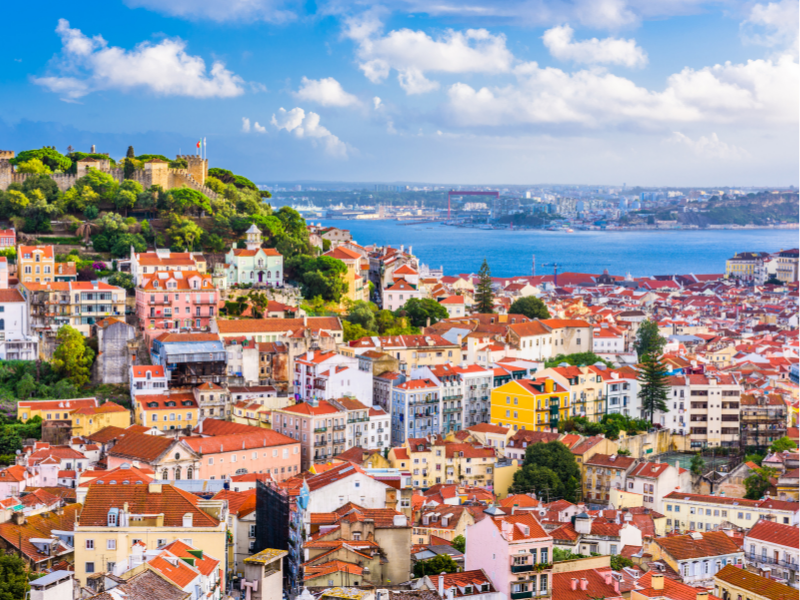
Lisbona è una città di colline, di luce sul fiume e di vecchi tram, distesa sui pendii sopra l’ampio estuario del Tago. Gran parte del centro fu ricostruita dopo il grande terremoto del 1755, e per questo la Baixa è uno dei primi quartieri urbani pianificati d’Europa. Ecco i fatti e le storie che rendono speciale la città.
10 curiosità su Lisbona
- Un ascensore al posto delle scale: l’Elevador de Santa Justa, progettato dall’ingegnere Raoul Mesnier du Ponsard, nato a Porto, porta passeggeri dalla Baixa verso Largo do Carmo dal 1902.
- Un ponte con due nomi: il lungo ponte sospeso rosso sul Tago fu inaugurato nel 1966 come Ponte Salazar. Dopo la Rivoluzione dei Garofani del 25 aprile 1974 fu ribattezzato Ponte 25 de Abril.
- A king on a column: Rossio's official name is Praça D. Pedro IV, after the king whose statue has stood on the central column since 1870. An urban legend claims the statue was made for Emperor Maximilian of Mexico, but historians have shown the details, from the buttons to the charter in his hand, are Pedro's.
- Pavements as art: Lisbon's calçada portuguesa is laid by hand from small black and white stones. Rossio's dizzying wave pattern is the best known, and it is said to have inspired the famous promenade of Copacabana in Rio de Janeiro.
- Una ricetta dei monaci: i pasticcini alla crema di Belém sono venduti dalla pasticceria Pastéis de Belém dal 1837, con una ricetta arrivata dai monaci del vicino Monastero dos Jerónimos.
- Two World Heritage monuments: the Jerónimos Monastery and the Belém Tower have been on UNESCO's World Heritage List together since 1983.
- A song of longing: fado, the melancholy music of Lisbon's old neighbourhoods, has been on UNESCO's list of intangible cultural heritage since 2011.
- A saint who was born here: Saint Anthony is known as 'of Padua', but he was born in Lisbon. On the night of 12 to 13 June the city celebrates him with street parties, grilled sardines and small pots of basil.
- Vecchi tram su strade ripide: Lisbona usa ancora piccoli tram gialli costruiti su un modello degli anni Trenta, perché passano nelle sue strade strette e tortuose. Il 28 è la linea più famosa e si arrampica tra Graça, Alfama ed Estrela.
- A theatre on the Inquisition's site: the National Theatre D. Maria II on the north side of Rossio stands where the Estaus Palace once housed the Portuguese Inquisition.
Il terremoto del 1755
On the morning of 1 November 1755, All Saints' Day, when many people were at Mass, a massive earthquake struck Lisbon. Within the hour a tsunami swept up the Tagus, and fires burned through the city for days. Tens of thousands of people died, and the royal palace on the riverfront, with its library and archives, was lost. The king's chief minister, later the Marquis of Pombal, took charge of the rebuilding. The Baixa was laid out again on a strict grid of wide, straight streets, with buildings framed by a flexible timber cage, the gaiola pombalina, designed to sway rather than collapse. Where the palace had stood, he created the vast Praça do Comércio.
Rossio e Restauradores, in breve
Rossio has been Lisbon's main square for centuries, a place of markets, celebrations and protests. Just to the north lies Praça dos Restauradores, with its obelisk recalling the restoration of Portuguese independence from Spain in 1640. On its west side stands the Foz Palace, begun in the 18th century and later named after the Marquis of Foz, who owned it in the late 19th century and gave it lavish interiors. Today it houses Lisbon's tourism offices.
Cosa mangiare a Lisbona
- Pastel de nata: il pasticcino alla crema dal guscio croccante, da mangiare tiepido con cannella e un caffè.
- Bacalhau: baccalà essiccato e salato, base della cucina portoghese. Prova il bacalhau à Brás, sfilacciato con uova, cipolla e patate a fiammifero.
- Sardinhas assadas: sardine alla griglia, al meglio a giugno durante le feste di sant’Antonio.
- Bifana: una sottile fetta di maiale marinata in aglio e vino, servita in un panino morbido, spesso con senape.
- Ginjinha: un liquore di amarene servito in bicchierini. A Ginjinha, in Largo de São Domingos accanto al Rossio, lo versa dal 1840.
Da sapere prima di partire
- Wear shoes with good grip: the polished stone pavements on Lisbon's hills are slippery, especially after rain.
- Molti musei e monumenti, tra cui il Monastero dos Jerónimos, chiudono il lunedì, quindi tieni Belém per un altro giorno.
- Trains to Sintra, with its palaces and gardens on UNESCO's World Heritage List, leave from Rossio station.
- Per i panorami sali ai miradouros: Senhora do Monte, Graça e São Pedro de Alcântara sono tra i migliori, soprattutto al tramonto.
Scopri Lisbona con World City Trail
La nostra caccia al tesoro a Lisbona trasforma questi luoghi in un gioco sul tuo telefono. Il percorso collega 10 tappe e dura circa due ore, con circa 49 minuti a piedi, passando tra l’altro per il Rossio e il Palácio Foz.
A ogni tappa risolvi un enigma e ascolti una breve storia, al tuo ritmo. Puoi iniziare quando vuoi e giocare in italiano, inglese, tedesco, francese, spagnolo, olandese o portoghese.
Gioca alla caccia al tesoro di Lisbona →
Fatti verificati a ottobre 2026.