
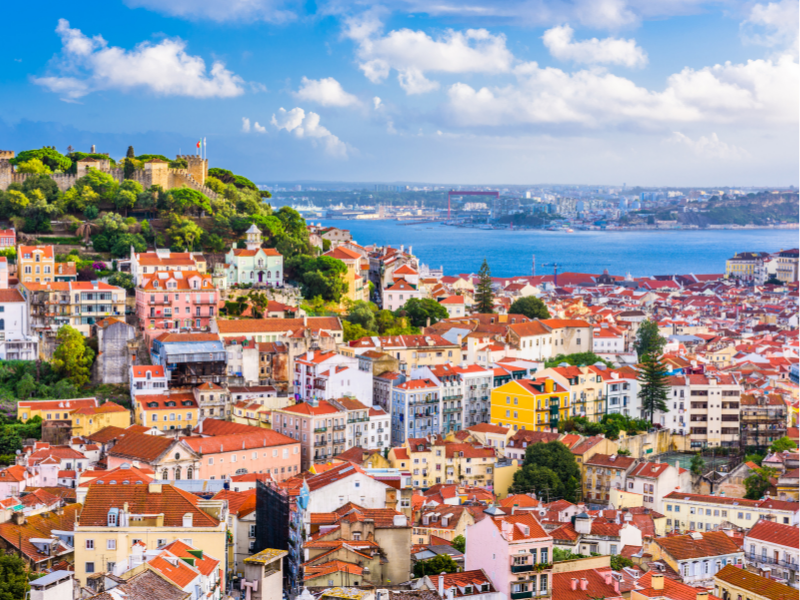
Lisboa es una ciudad de colinas, de luz sobre el río y de tranvías antiguos, repartida por las laderas sobre el ancho estuario del Tajo. Gran parte de su centro se reconstruyó tras el gran terremoto de 1755, lo que convierte a la Baixa en uno de los primeros barrios urbanos planificados de Europa. Estos son los datos y las historias que hacen especial a la ciudad.
10 curiosidades sobre Lisboa
- Un ascensor en lugar de una escalera: el Elevador de Santa Justa, diseñado por el ingeniero Raoul Mesnier du Ponsard, nacido en Oporto, sube pasajeros desde la Baixa hacia el Largo do Carmo desde 1902.
- Un puente con dos nombres: el largo puente colgante rojo sobre el Tajo se inauguró en 1966 como Puente Salazar. Tras la Revolución de los Claveles del 25 de abril de 1974 pasó a llamarse Ponte 25 de Abril.
- A king on a column: Rossio's official name is Praça D. Pedro IV, after the king whose statue has stood on the central column since 1870. An urban legend claims the statue was made for Emperor Maximilian of Mexico, but historians have shown the details, from the buttons to the charter in his hand, are Pedro's.
- Pavements as art: Lisbon's calçada portuguesa is laid by hand from small black and white stones. Rossio's dizzying wave pattern is the best known, and it is said to have inspired the famous promenade of Copacabana in Rio de Janeiro.
- Una receta de los monjes: la pastelería Pastéis de Belém vende sus pasteles de crema desde 1837, con una receta que procede de los monjes del cercano Monasterio de los Jerónimos.
- Two World Heritage monuments: the Jerónimos Monastery and the Belém Tower have been on UNESCO's World Heritage List together since 1983.
- A song of longing: fado, the melancholy music of Lisbon's old neighbourhoods, has been on UNESCO's list of intangible cultural heritage since 2011.
- A saint who was born here: Saint Anthony is known as 'of Padua', but he was born in Lisbon. On the night of 12 to 13 June the city celebrates him with street parties, grilled sardines and small pots of basil.
- Tranvías antiguos en calles empinadas: Lisboa aún usa pequeños tranvías amarillos construidos según un diseño de los años treinta, porque caben en sus calles estrechas y sinuosas. El 28 es la línea más conocida y trepa por Graça, Alfama y Estrela.
- A theatre on the Inquisition's site: the National Theatre D. Maria II on the north side of Rossio stands where the Estaus Palace once housed the Portuguese Inquisition.
El terremoto de 1755
On the morning of 1 November 1755, All Saints' Day, when many people were at Mass, a massive earthquake struck Lisbon. Within the hour a tsunami swept up the Tagus, and fires burned through the city for days. Tens of thousands of people died, and the royal palace on the riverfront, with its library and archives, was lost. The king's chief minister, later the Marquis of Pombal, took charge of the rebuilding. The Baixa was laid out again on a strict grid of wide, straight streets, with buildings framed by a flexible timber cage, the gaiola pombalina, designed to sway rather than collapse. Where the palace had stood, he created the vast Praça do Comércio.
Rossio y Restauradores, explicados
Rossio has been Lisbon's main square for centuries, a place of markets, celebrations and protests. Just to the north lies Praça dos Restauradores, with its obelisk recalling the restoration of Portuguese independence from Spain in 1640. On its west side stands the Foz Palace, begun in the 18th century and later named after the Marquis of Foz, who owned it in the late 19th century and gave it lavish interiors. Today it houses Lisbon's tourism offices.
Qué comer en Lisboa
- Pastel de nata: el pastelito de crema con masa crujiente, mejor tibio con canela y un café.
- Bacalhau: bacalao seco y salado, básico de la cocina portuguesa. Prueba el bacalhau à Brás, desmigado con huevo, cebolla y patatas paja.
- Sardinhas assadas: sardinas asadas, en su mejor momento en junio, durante las fiestas de San Antonio.
- Bifana: un filete fino de cerdo marinado en ajo y vino, servido en un panecillo tierno, a menudo con mostaza.
- Ginjinha: un licor de guindas servido en vasitos. A Ginjinha, en el Largo de São Domingos junto al Rossio, lo sirve desde 1840.
Antes de ir
- Wear shoes with good grip: the polished stone pavements on Lisbon's hills are slippery, especially after rain.
- Muchos museos y monumentos, entre ellos el Monasterio de los Jerónimos, cierran los lunes, así que deja Belém para otro día.
- Trains to Sintra, with its palaces and gardens on UNESCO's World Heritage List, leave from Rossio station.
- Para las vistas, sube a los miradouros: Senhora do Monte, Graça y São Pedro de Alcântara están entre los mejores, sobre todo al atardecer.
Descubre Lisboa con World City Trail
Nuestra búsqueda del tesoro en Lisboa convierte estos lugares en un juego en tu móvil. La ruta une 10 paradas y dura unas dos horas, con unos 49 minutos a pie, y pasa por lugares como la plaza del Rossio y el Palacio Foz.
En cada parada resuelves un acertijo y escuchas una breve historia, a tu ritmo. Puedes empezar cuando quieras y jugar en español, inglés, alemán, francés, italiano, neerlandés o portugués.
Juega a la búsqueda del tesoro de Lisboa →
Datos comprobados en octubre de 2026.