What is the Carcassonne self-guided walking tour?
The Carcassonne self-guided walking tour is an audio walk that runs entirely on your phone: the World City Trail app leads you from stop to stop, and at each one a narrator tells you what you are looking at and why it matters. The whole thing takes about 3 hours, yet only 46 minutes of that is walking, spread over 3.1 km and 10 stops. The walk links the two towns that make up Carcassonne, the grid-planned Bastide Saint-Louis below and the medieval Cité on its hill, and the stories follow the same divide.
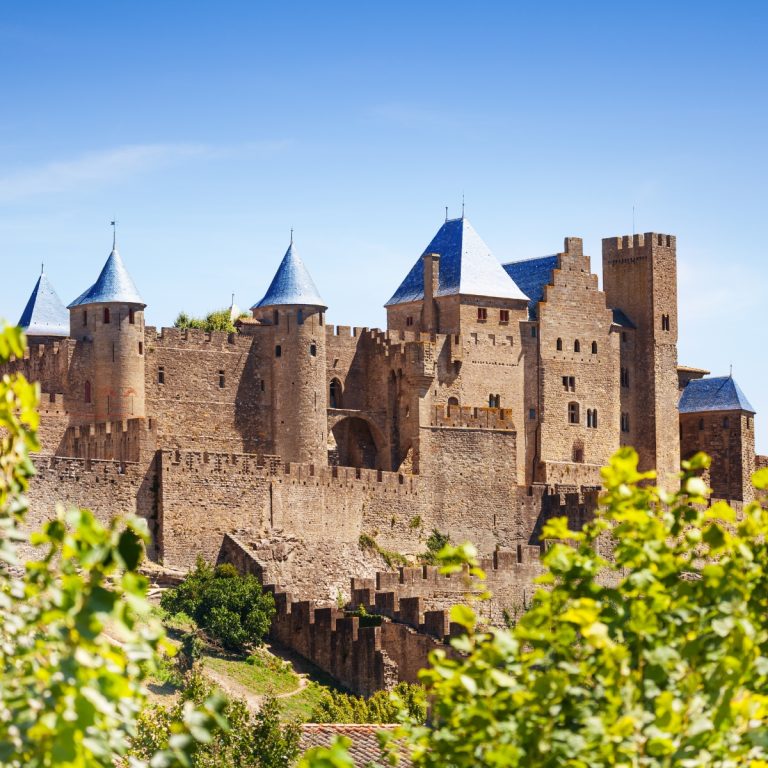
In Square André Chénier the narration starts with the poet guillotined in 1794 and the 13th-century new town laid out on a grid beside it. At Saint-Michel you hear why this Southern Gothic church with its single wide nave took over as the cathedral from Saint-Nazaire in 1803. On the Pont Vieux the story is the 14th-century crossing between the two towns, with one of the classic views of the Cité. The Château Comtal brings the Trencavel family and its fortress within a fortress, the ramparts the restoration begun in 1853 under Eugène Viollet-le-Duc, and the Porte Narbonnaise the legend of Dame Carcas, who is said to have ended Charlemagne's siege by throwing a well-fed pig over the walls.
- Durationabout 3 hours
- Walkingabout 46 min · 3.1 km
- Stops10
- LanguagesEnglish, German, French, Italian, Spanish, Dutch
What happens along the route
At each stop
The narration opens with the facts and moves on to the people, the local legends and the odd details that turn a building into a story. Every chapter can also be read as text on screen.
Between stops
Google Maps guides you along the 3.1 km of the route, about 46 minutes on foot in total, and you set the speed.
Whenever you need a break
Stop for lunch, a coffee or a museum visit, and the narration waits where you left it, for later the same day or another day.
Your route, your order
The app points you to local food and shops along the way, and if another starting point is more convenient, you can switch to it or reorder the stops.
See the route and attractions →
How it works
- Book online Choose the number of people. Your booking reference arrives by email straight away.
- Get the app Download the World City Trail app from the App Store or Google Play and enter your booking reference.
- Walk when you like Start whenever you are ready, walk at your own pace and pause any time. No guide, no fixed schedule.
Who the audio walk suits
A few days in Carcassonne
The walk ties the main sights together and gives each one its background, so even a short visit feels complete.
People who like their own pace
No group to wait for and no fixed start: you linger where something catches your eye and walk on when you feel like it.
Families and couples
Legends for the children, history for the adults and a pause button for everyone.
Good to know
- Bring a charged smartphone with mobile data; a power bank helps.
- No entry tickets needed: everything happens outside the buildings. Going inside is optional and paid separately.
- Family friendly; children must be accompanied by an adult.
- Not suitable for wheelchair users and difficult with strollers.
- Groups of up to 5 work best; larger groups split up, one ticket per person.
- Every purchase helps support stray cats and dogs in Greece.
Bastide first, then the Cité: the stops in order
10 stops · about 46 min walking · start: Square André Chénier · finish: Porte Narbonnaise
Square André Chénier opens the walk in the lower town, and the next three stops stay in the Bastide: Place Carnot with its Neptune fountain, the Cathédrale Saint-Michel and the Musée des Beaux-Arts. Then the Pont Vieux carries you over the Aude, and the steep path to the Porte de l'Aude climbs through successive walls into the Cité. Inside come the Basilique Saint-Nazaire, the Château Comtal and the double ring of ramparts, and the Porte Narbonnaise on the east side is the last stop. Expect one real climb, change the order in the app if you like, and note that no stop charges entry.
Open the route map ↗
1Square André ChénierStart
This tree-lined square in the lower town is named after André Chénier, the French poet who was guillotined in 1794 during the Revolution. It lies close to the Bastide Saint-Louis, the grid-planned new town founded in the 13th century below the medieval hilltop Cité.
2Place Carnot
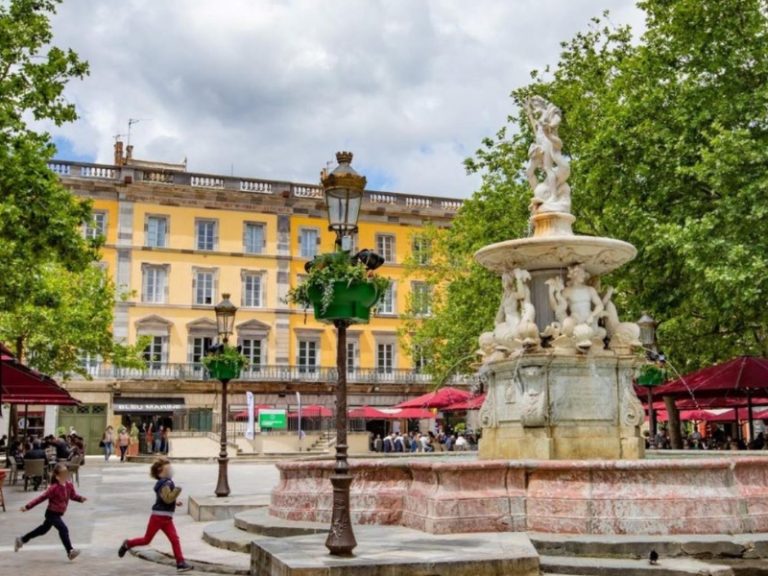
Place Carnot is the main square of the Bastide Saint-Louis, surrounded by tall townhouses and café terraces. In its centre stands the Fountain of Neptune, an 18th-century marble fountain crowned by a statue of the sea god.
Read the full story →
3Cathédrale Saint-Michel
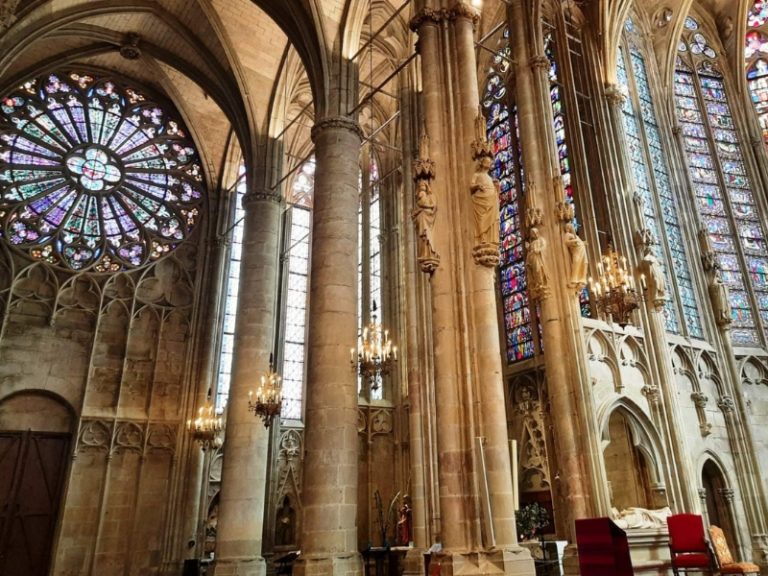
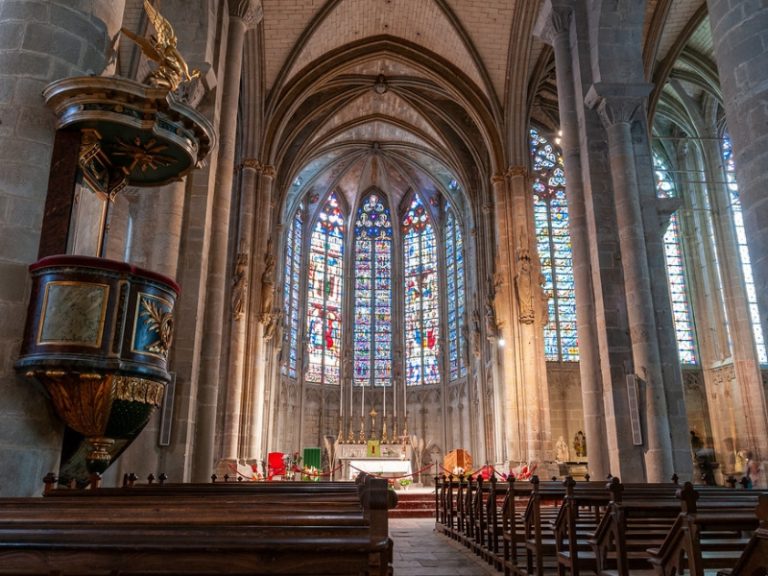
Saint-Michel was built in the 13th century in the Southern Gothic style, with a single wide nave. It became the cathedral of Carcassonne in 1803, taking over from Saint-Nazaire in the Cité, and look for its large rose window on the façade.
Read the full story →
4Musée des Beaux-Arts
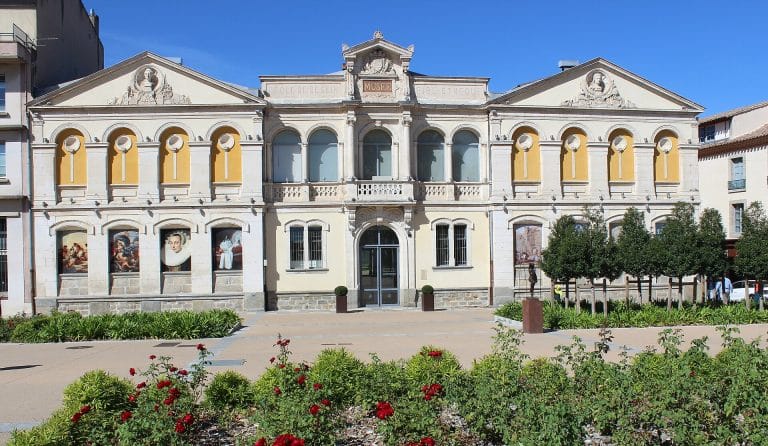
Carcassonne's fine arts museum is run by the city and stands in the Bastide Saint-Louis. Its collection focuses on European painting, especially from the 17th to the 19th century, and the building's street front is worth a close look.
5Pont Vieux
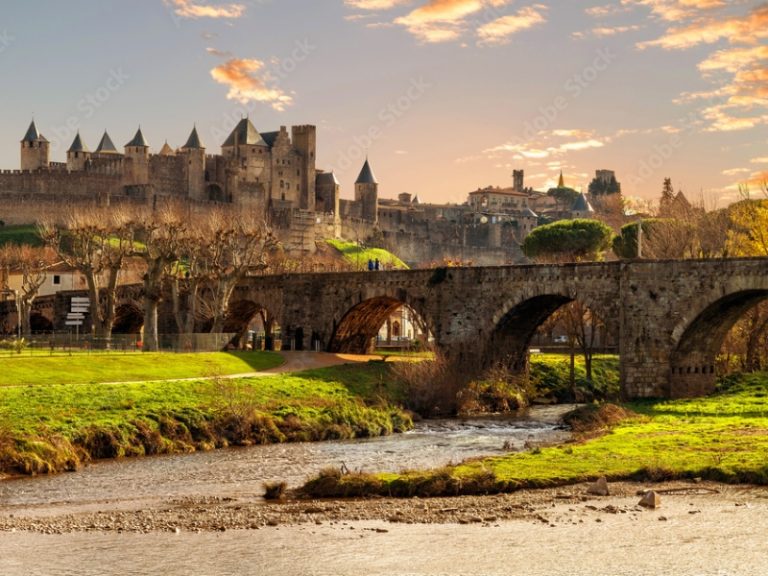
The Old Bridge was built in the 14th century to link the Bastide with the Cité across the river Aude. Its stone arches are now reserved for pedestrians, and from the middle you get one of the classic views of the walled Cité on its hill.
Read the full story →
6Porte de l'Aude
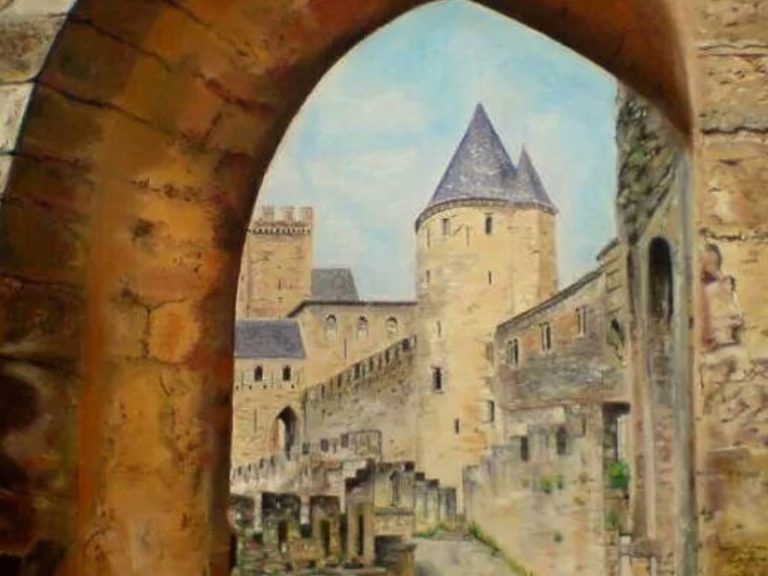
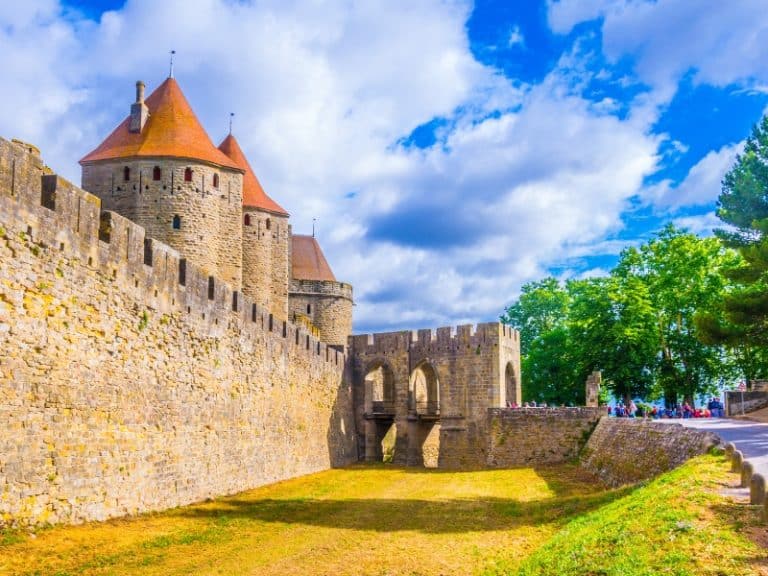
The Aude Gate is the western entrance to the Cité, reached by a steep path climbing up from the river side. It is protected by several successive walls and gateways, so attackers would have been exposed at every turn of the climb.
7Basilique Saint-Nazaire
The basilica inside the Cité combines a Romanesque nave with a Gothic choir and transept added around 1300. It was Carcassonne's cathedral until 1803 and is known for its medieval stained-glass windows, while the outside walls carry gargoyles worth a close look.
Read the full story →
8Château Comtal
The Count's Castle was built in the 12th century by the Trencavel family, viscounts of Carcassonne, and is a fortress within the fortress. It has its own moat, gate and towers, and the wooden galleries on top of its walls are a reconstruction of medieval defences.
9Ramparts of the Cité
The Cité is surrounded by two lines of walls with about 3 kilometres of ramparts and more than 50 towers. Restored from 1853 under the architect Eugène Viollet-le-Duc, the fortified city has been a UNESCO World Heritage Site since 1997.
10Porte NarbonnaiseFinish
The Narbonne Gate is the main entrance to the Cité, flanked by two massive towers on the east side. Next to it is a bust of Dame Carcas, who according to legend ended a long siege by Charlemagne by throwing a well-fed pig over the walls, after which the bells rang out and gave the city its name.
Read the full story →
Only logged in customers who have purchased this product may leave a review.





Mark Mcpartlin– United Kingdom –
Collected on GetYourGuide
Very Enjoyable App. Reading and walking to local places was both informative and interesting. It made our trip to Carcassone all the more memorable. We would thoroughly recommend this activity.