What is the Tarragona self-guided walking tour?
The Tarragona self-guided walking tour is a walk through Tarragona that you take on your own, with audio narration on your phone instead of a guide. It takes about 3 hours in all: 32 minutes of walking over 2.4 km, and 10 stops where the narration takes over. It climbs from the modern boulevard to the sea and then into Roman Tarraco and the old upper town.
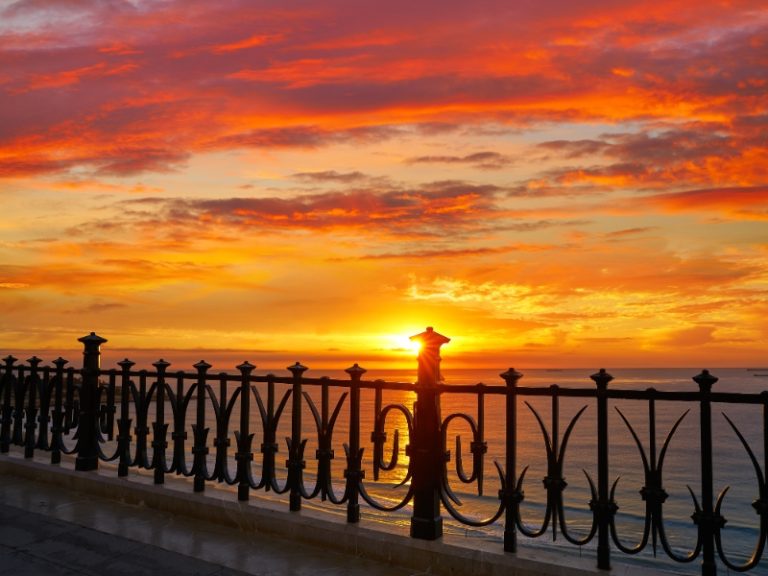
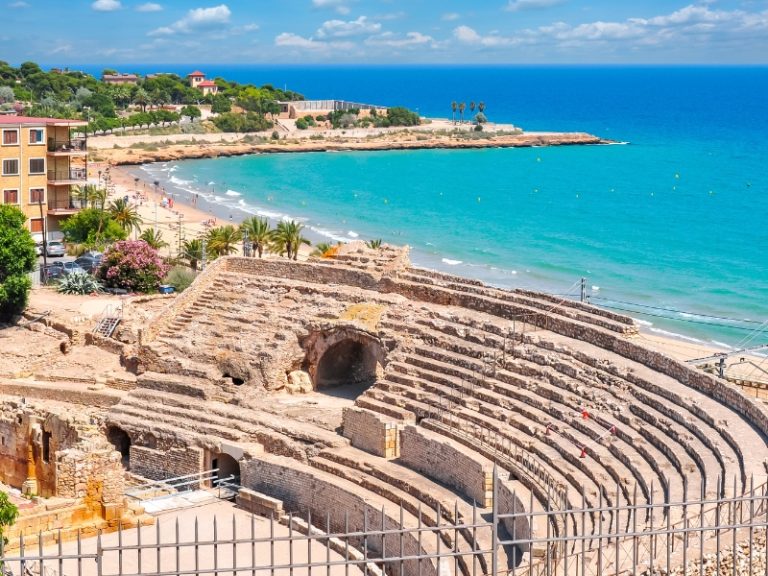
At the Castellers Monument the narration explains the human towers that UNESCO listed in 2010. On the Balcó del Mediterrani you hear why locals touch the iron railing for luck, and above the amphitheatre the story of Bishop Fructuosus, burned there in 259. The Roman circus, built under Domitian for chariot races, still shapes Plaça de la Font, and at the cathedral the walk ends where the temple precinct of Tarraco once stood.
- Durationabout 3 hours
- Walkingabout 32 min · 2.4 km
- Stops10
- LanguagesEnglish, German, French, Italian, Spanish, Dutch
What you do along the way
Hear the stories
Every stop has its own audio chapter with history, local legends and fun facts, read aloud or shown as text.
Find the way
Google Maps shows the way to the next stop: 2.4 km and about 32 minutes on foot in total.
Take a break
Nothing runs on a timetable. Close the app for a meal or a museum and open it again whenever you like, even the next day.
Local tips
Along the way you get tips for food and shops near the route. If another starting point suits you better, change it in the app.
See the route and attractions →
How it works
- Book online Choose the number of people. Your booking reference arrives by email straight away.
- Get the app Download the World City Trail app from the App Store or Google Play and enter your booking reference.
- Walk when you like Start whenever you are ready, walk at your own pace and pause any time. No guide, no fixed schedule.
Who the walking tour is for
First time in Tarragona
One walk links the main sights of the centre and explains what you are looking at.
Travellers who skip group tours
No group to keep up with and no meeting point: stay where something interests you and move on when you are ready.
A short stay
About 3 hours covers the centre, so the rest of the day stays free.
Good to know
- Bring a charged smartphone with mobile data; a power bank helps.
- No entry tickets needed: everything happens outside the buildings. Going inside is optional and paid separately.
- Family friendly; children must be accompanied by an adult.
- Not suitable for wheelchair users and difficult with strollers.
- Groups of up to 5 work best; larger groups split up, one ticket per person.
- Every purchase helps support stray cats and dogs in Greece.
The walk stop by stop: the Castellers, the Balcó del Mediterrani, the amphitheatre, the cathedral
10 stops · about 32 min walking · start: Castellers Monument · finish: Tarragona Cathedral
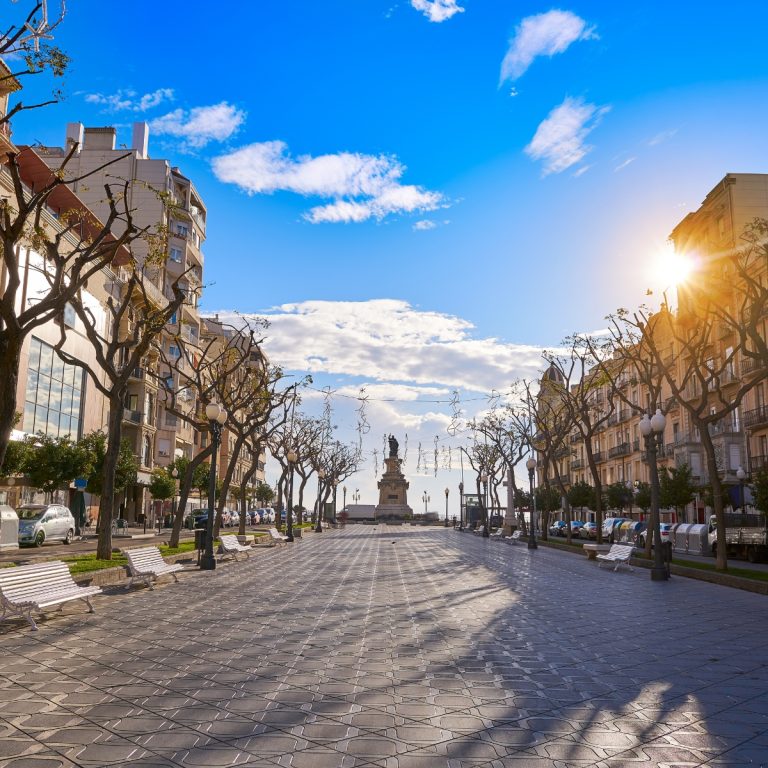
Three stops on and around the Rambla Nova come first: the Castellers Monument, the Font del Centenari and the modernista Central Market, before the boulevard itself leads to the Balcó del Mediterrani above the sea. From there the route drops to the Roman Amphitheatre and climbs back past the vaults of the Roman Circus to the City Hall on Plaça de la Font. Up in the Part Alta wait Plaça dels Sedassos and, at the highest point, Tarragona Cathedral. In the app you set another start or order, and no stop asks for a ticket.
Open the route map ↗
1Castellers MonumentStart
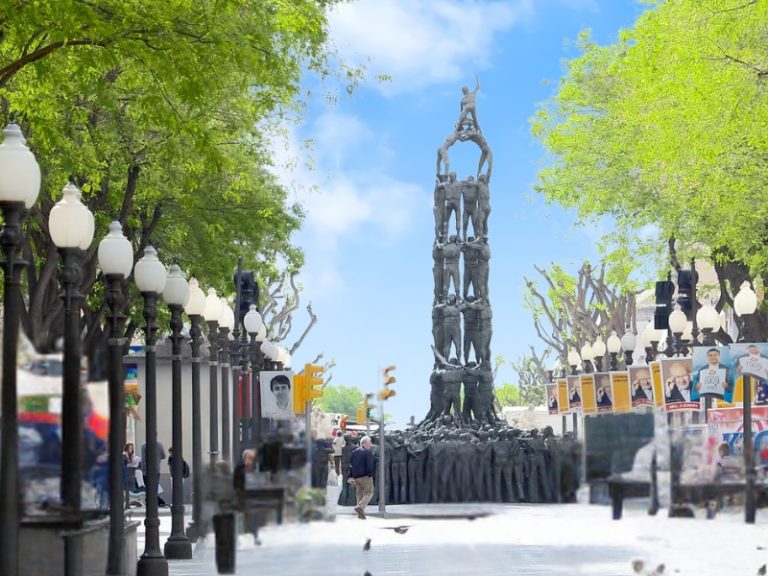
This bronze monument on the Rambla Nova, by the sculptor Francesc Anglès, shows a complete castell, a human tower of people standing on one another's shoulders. Castells were declared UNESCO Intangible Cultural Heritage in 2010, and Tarragona hosts one of the most important castells competitions in Catalonia.
Read the full story →
2Font del Centenari
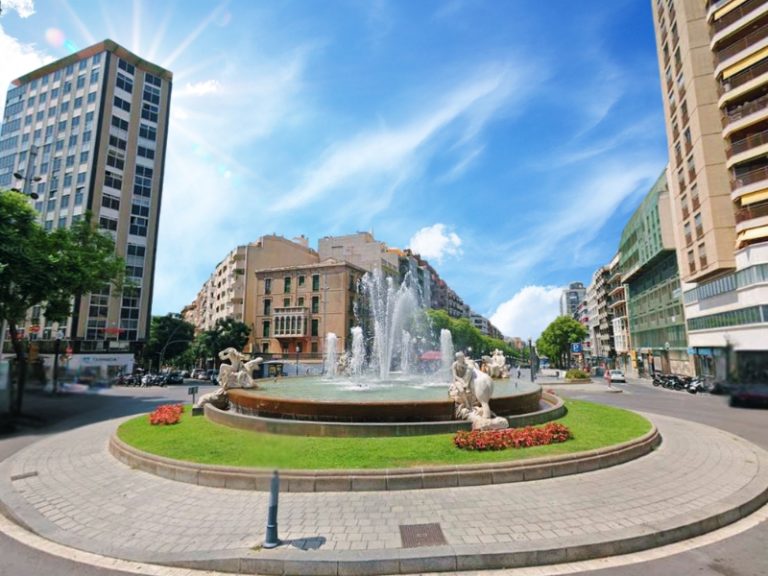
The Font del Centenari is a monumental stone fountain on the Rambla Nova, the main boulevard of modern Tarragona. Its name means Fountain of the Centenary, after the anniversary it was built to commemorate.
Read the full story →
3Central Market (Mercat Central)
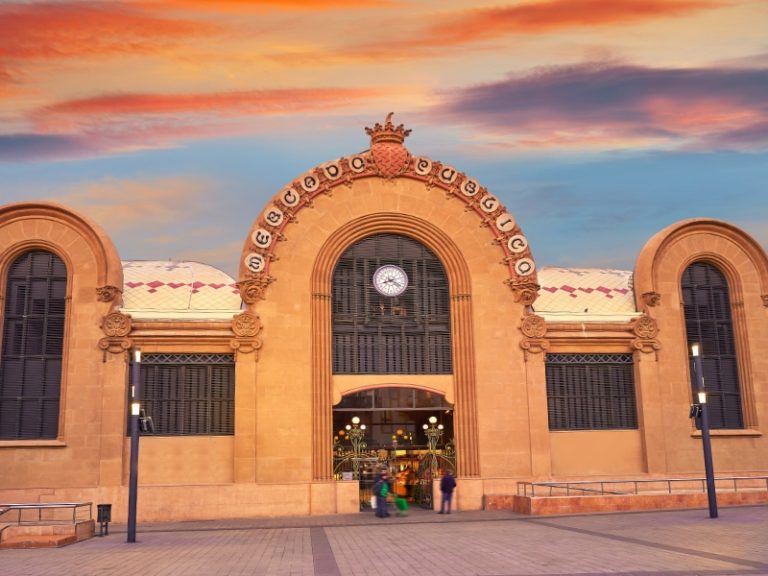
Tarragona's Central Market is a modernista market hall designed by the architect Josep Maria Pujol de Barberà and opened in 1915. It stands on Plaça de Corsini, and its stalls of fish, cured ham, cheese and local produce make it a good place to taste the region.
4Rambla Nova
The Rambla Nova is the main boulevard of the new town that grew up beyond the old city in the 19th century. Lined with trees, cafés and monuments, it runs towards the sea and ends at the Balcó del Mediterrani, beside the statue of the medieval admiral Roger de Llúria.
Read the full story →
5Balcó del Mediterrani
At the sea end of the Rambla Nova, the Balcó del Mediterrani is a viewpoint high above the coast, the port and the railway line. Local custom says you should touch its iron railing for good luck, and from here you look down on the Roman amphitheatre and the Miracle beach.
6Roman Amphitheatre
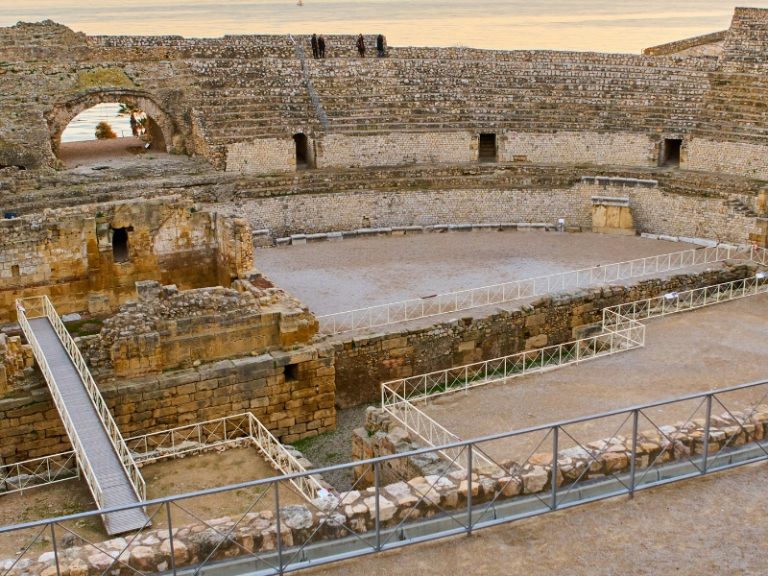
Tarraco's amphitheatre was built in the 2nd century AD right beside the sea, partly cut into the rock, for gladiator fights and public spectacles. Bishop Fructuosus and his deacons Augurius and Eulogius were burned here in 259, and the remains of a Visigothic basilica and a Romanesque church still stand in the arena.
Read the full story →
7Roman Circus
Tarraco's circus for chariot races was built in the late 1st century AD, under Emperor Domitian, and was about 325 metres long. Much of it now lies beneath the houses of the old town, but some of its great vaults can still be seen, and Plaça de la Font follows the line of its track.
Read the full story →
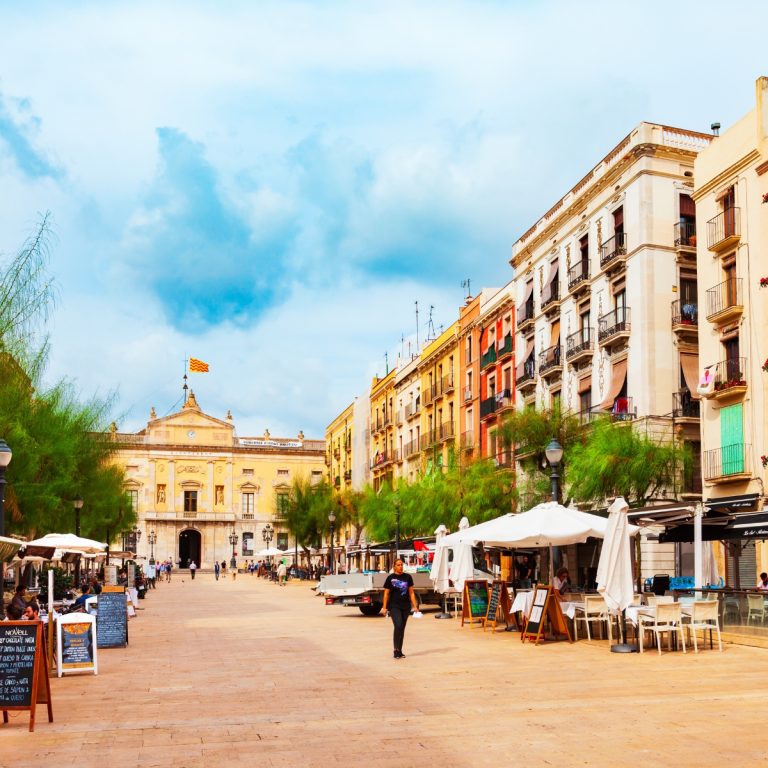
8Tarragona City Hall
Tarragona City Hall stands on Plaça de la Font, a long square whose shape follows the track of the Roman circus that lies beneath it. During the Santa Tecla festival in September, the square in front of the City Hall is one of the main stages for the castellers' human towers.
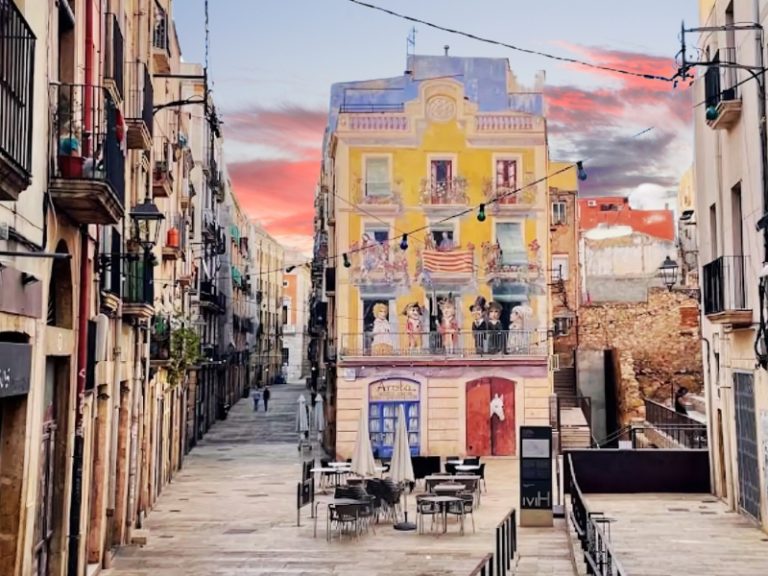
9Plaça dels Sedassos
Plaça dels Sedassos is a small square in the Part Alta, the old upper town, and its name means the sieves in Catalan. One of its walls is covered by a large painted mural in trompe-l'oeil style, which plays with perspective so that painted windows and figures seem part of the real buildings.
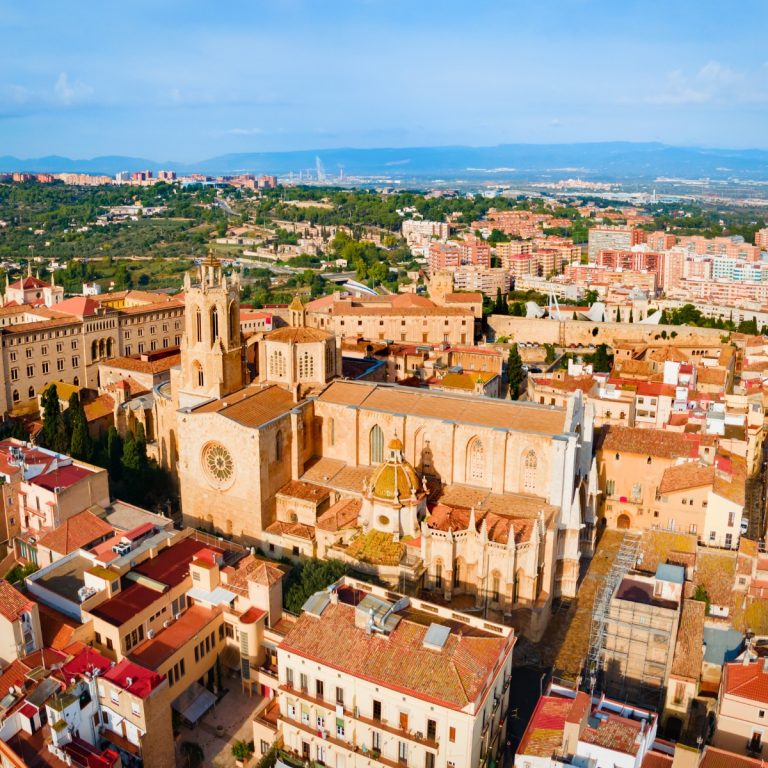
10Tarragona CathedralFinish
Tarragona Cathedral stands on the highest point of the old town, where the temple precinct of Roman Tarraco once stood, and was built mainly in the 12th and 13th centuries. Its façade combines Romanesque side doors with a Gothic central portal and a large rose window, and it is dedicated to Saint Thecla, the city's patron saint.
Only logged in customers who have purchased this product may leave a review.



Ali– Germany –
Collected on GetYourGuide
Die Führung hat mir gut gefallen. Man hatte historische Informationen zu der Stadt. Nicht optimal fand ich das man erst zu dem Start musste.
Earl Gordon– Canada –
Collected on GetYourGuide
Terrible waste of money Need European SIM card for data. Bad buy decision.