

Table of Contents
The Circ Romà, or Roman Circus, in Tarragona, Spain, stands as one of the most impressive remnants of the city’s Roman past. More than just an ancient ruin, this historic structure offers a captivating glimpse into the thrilling chariot races that once enthralled thousands of spectators. A powerful symbol of Tarragona’s importance during the Roman Empire, the Circ Romà embodies the city’s architectural brilliance, cultural significance, and central role in Roman Hispania.
The Glory of Tarraco’s Circus
Built in the 1st century AD, during the height of Tarraco’s prominence as the capital of Hispania Tarraconensis, the Circ Romà was a key venue for public entertainment. Unlike amphitheaters, which hosted gladiatorial combat, and theaters, which staged dramatic performances, the circus was exclusively dedicated to chariot racing.
These high-speed competitions, featuring skilled charioteers maneuvering at breakneck speeds, were a defining spectacle of Roman culture. The circus was a place of excitement, fierce rivalries, and passionate crowds, serving as a gathering point where citizens of all social classes came together to witness thrilling contests between racing factions.
Architectural Marvel of Roman Engineering
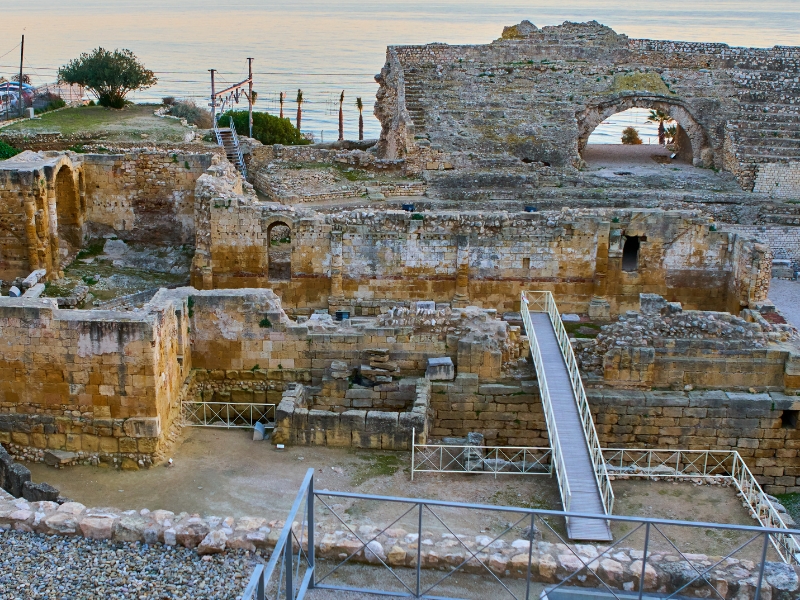
The Circ Romà was one of the largest structures in Roman Tarraco, stretching approximately 325 meters in length and 100 meters in width, capable of accommodating around 30,000 spectators. Though partially ruined today, the remaining sections of the elongated track, the tiered seating, and the starting gates still reveal the ingenuity of Roman engineering.
- The spina, the central barrier that divided the track, once displayed elaborate decorations, statues, and even obelisks, serving as both an obstacle for charioteers and a visual spectacle for the crowd.
- The carceres, or starting gates, were designed to ensure a fair and simultaneous release of chariots at the beginning of each race.
- The curved end of the circus, where charioteers had to make risky, sharp turns, often led to spectacular crashes—one of the most thrilling moments for spectators.
Despite centuries of urban development, several key elements of the circus have survived and been integrated into the modern city, offering visitors a unique blend of ancient history within a contemporary landscape.
A Witness to Tarragona’s Transformation
The Circ Romà is more than just a site of entertainment—it is a silent witness to Tarragona’s evolution. Over the centuries, the circus experienced gradual abandonment, as the decline of the Roman Empire led to a shift away from large-scale public spectacles.
During the medieval period, parts of the structure were repurposed for other functions, including defensive fortifications and residential buildings. Some sections of the circus were even built over, blending Roman ruins into the growing medieval city. Today, these layers of history coexist, allowing visitors to explore the continuity of Tarragona’s urban development.
A Living Monument in Modern Tarragona
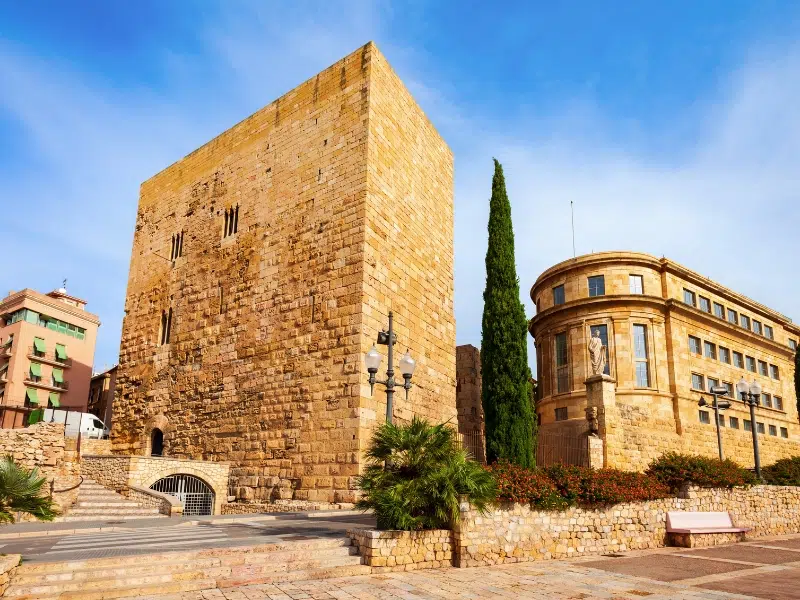
Unlike many ancient ruins that stand isolated, the Circ Romà remains deeply embedded within Tarragona’s cityscape. The Praetorian Tower, a well-preserved section of the original complex, offers visitors panoramic views of the city and the Mediterranean coastline, further enriching the experience.
The ruins of the Circ Romà have been carefully preserved and restored, allowing for public access, guided tours, and historical exhibitions. Walking through its remains, visitors can stand where thousands once gathered, imagining the roar of the crowds and the thundering hooves of racing chariots.
Circ Romà is part of Tarragona scavenger hunt and walking tour!
Embark on an unforgettable journey through the enchanting city of Tarragona with World City Trail. Our interactive walking tour combines the thrill of exploration with the rich history and culture of this beautiful city.
Key Features:
Interactive gameplay: Solve engaging puzzles and challenges as you explore the city.
Hidden gems: Uncover lesser-known spots.
Cultural insights: Learn about the city’s fascinating history.
Flexibility: Explore at your own pace and create your own itinerary.
Family friendly activity and a great way to explore the city!
Further reading on Wikipedia: Tarragona