
Table of Contents
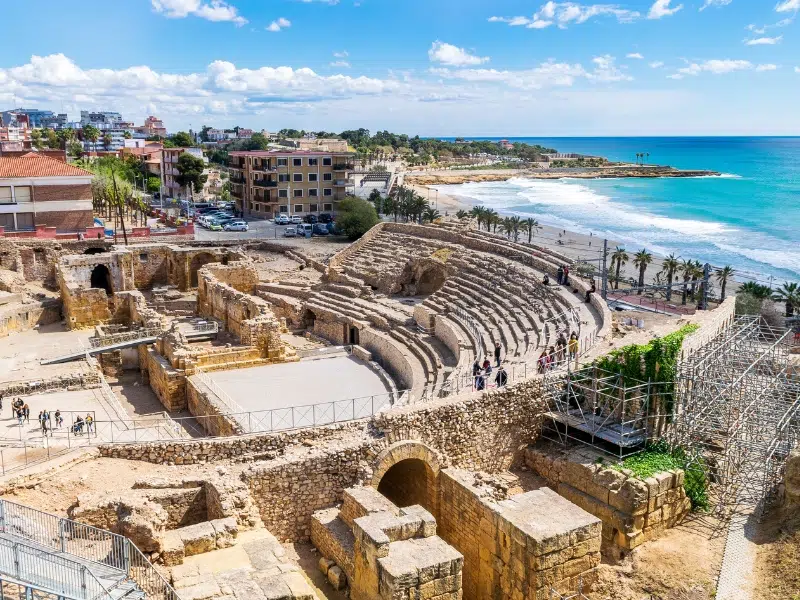
The Amfiteatre de Tarragona, an awe-inspiring Roman amphitheater dramatically positioned along the coastline of Tarragona, Spain, stands as one of the city’s most iconic landmarks. More than just a historical ruin, this remarkable structure serves as a window into the past, where the echoes of gladiatorial contests, public spectacles, and imperial power still linger. It embodies Tarragona’s deep-rooted Roman heritage, its architectural mastery, and its significance as a major center of Roman Hispania.
The Birth of a Spectacular Arena
The Amfiteatre de Tarragona was constructed in the 2nd century AD, during the reign of Emperor Hadrian or perhaps his successor Antoninus Pius, the amphitheater was a central element of Tarraco, the Roman name for Tarragona. As one of the most important cities in Hispania Tarraconensis, Tarraco flourished as an administrative, military, and cultural hub of the Roman Empire. The amphitheater, built to accommodate approximately 14,000 spectators, was a symbol of the city’s wealth, influence, and connection to the grand traditions of Rome.
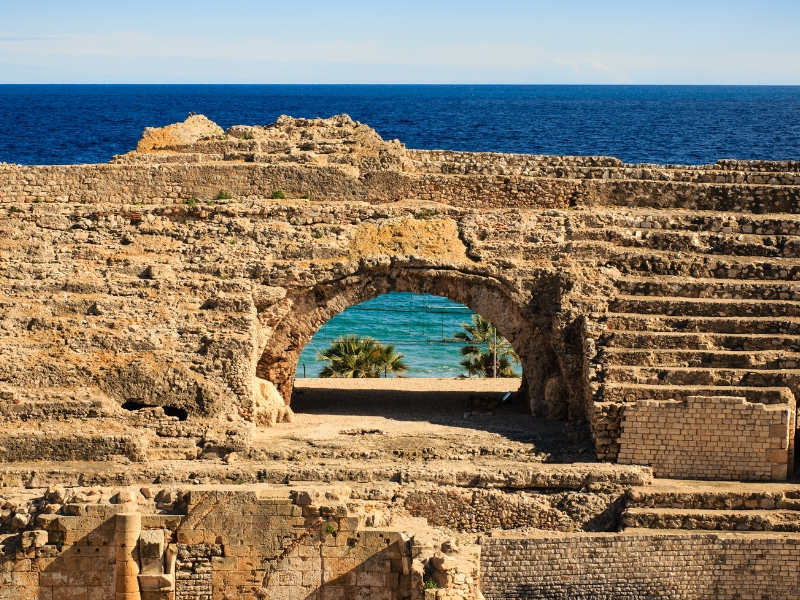
Its strategic location overlooking the Mediterranean Sea added a breathtaking backdrop to the fierce battles and performances held within its walls. The combination of natural beauty and architectural splendor made the arena not only a place of entertainment but also a powerful representation of Rome’s dominion over land and sea.
Architectural Brilliance of the Roman Engineers
The Amfiteatre de Tarragona follows the classical Roman amphitheater design, with its elliptical arena surrounded by tiered seating. The remains of the structure, though weathered by time, still showcase the engineering ingenuity of the Romans.
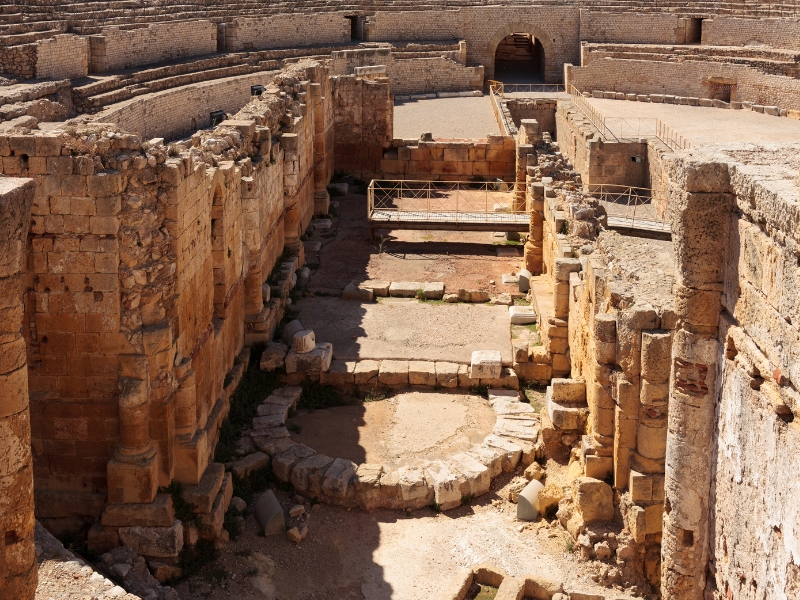
The arena floor, once covered in sand to absorb the blood of combatants, remains a focal point of the site. Beneath it, an intricate system of underground chambers and passageways housed gladiators, wild animals, and stage machinery, allowing for dramatic entrances and hidden mechanisms to enhance the performances.
The seating arrangement, though partially eroded, reveals a social hierarchy typical of Roman society. The elite occupied the best seats near the arena, while the common citizens sat higher up. The structure’s layout ensured clear visibility and optimal acoustics, allowing the roars of the crowd and the clash of weapons to resonate throughout the space.
Gladiators, Executions, and Roman Spectacles
The Amfiteatre de Tarragona was a stage for gladiatorial contests, beast hunts (venationes), and public executions, events that reflected the brutal yet captivating nature of Roman entertainment. Here, gladiators fought for glory and survival, facing wild beasts or rival warriors in combat that thrilled the masses.
One of the most historically significant events recorded at the Amfiteatre de Tarragona was the execution of Saint Fructuosus, the Bishop of Tarraco, and his deacons Augurius and Eulogius in 259 AD. Burned alive during Emperor Valerian’s persecution of Christians, their martyrdom marked a pivotal moment in the history of Christianity in the Iberian Peninsula. Today, this event remains an integral part of the amphitheater’s historical narrative.
A Changing Role Through the Centuries
As the Roman Empire declined, so did the Amfiteatre de Tarragona’s function. With the rise of Christianity and the fall of gladiatorial games, the arena underwent a dramatic transformation. During the Visigothic period, a basilica was constructed within the ruins, repurposing the site as a place of worship. Later, in the medieval era, a Romanesque church dedicated to Saint Mary of Miracle was built over the amphitheater, further embedding new layers of history into the ancient structure.
These modifications reflect the evolving cultural and religious identity of Tarragona, as the city transitioned from a Roman stronghold to a Christian center. Though these additions eventually fell into ruin, their remnants still coexist with the original Roman architecture, creating a multi-layered historical site that speaks to Tarragona’s complex past.
Amfiteatre de Tarragona is part of Tarragona scavenger hunt and walking tour!
Embark on an unforgettable journey through the enchanting city of Tarragona with World City Trail. Our interactive walking tour combines the thrill of exploration with the rich history and culture of this beautiful city.
Key Features:
Interactive gameplay: Solve engaging puzzles and challenges as you explore the city.
Hidden gems: Uncover lesser-known spots.
Cultural insights: Learn about the city’s fascinating history.
Flexibility: Explore at your own pace and create your own itinerary.
Family friendly activity and a great way to explore the city!
Further reading on Wikipedia: Tarragona