What is the outdoor escape game in The Hague?
The outdoor escape game in The Hague is an escape room taken out of doors: you play on your own phone, and at each of the 10 stops a puzzle waits that you work out by reading the surroundings and thinking it through. Expect 40 minutes of walking and 2.9 km of city, all inside a window of roughly 2 hours.
The puzzles are set at the former winter palace that now shows Escher's impossible staircases, on Het Plein below the statue of William of Orange, at the Gevangenpoort outside which the De Witt brothers were killed, in front of the Mauritshuis by the Hofvijver and at the gates of the Peace Palace. The Hague is flat, and the court quarter, the government district and the avenues towards the Peace Palace follow on from one another, so the stretches between puzzles stay short. Every puzzle stands on its own, so there is no storyline to keep track of, and up to three levels of hints are there if one of them holds you up.
- Durationabout 2 hours
- Walkingabout 40 min · 2.9 km
- Stops10
- LanguagesEnglish, German, French, Italian, Spanish, Dutch
What you do along the way
Solve
Work out the puzzle at each stop from what is in front of you. Logic and a close look are enough, and no prior knowledge is needed.
Look closer
The clues sit in details: an inscription, a figure on a facade, the layout of a square.
Walk
Google Maps points you to the next stop: 40 minutes of walking in all, spread over 2.9 km.
Take your time
Time is with you, not against you. Open a hint when you want one, stop for a coffee and continue later or another day.
See the route and attractions →
How it works
- Book online Choose the number of players. Your booking reference arrives by email straight away.
- Get the app Download the World City Trail app from the App Store or Google Play and enter your booking reference.
- Play when you like Start whenever you are ready, walk at your own pace and pause any time. No guide, no fixed schedule.
Who it works for
Friends
Everyone argues for their own answer, and nobody needs to know the city in advance.
Couples
A challenge you take on together, at your own pace, with no clock running.
Team building
Teams of up to 5 play on their own phones, so colleagues can set off in several groups.
Good to know
- Bring a charged smartphone with mobile data; a power bank helps.
- Best started in daylight, so you can see the details the puzzles ask about.
- No entry tickets needed: everything happens outside the buildings. Going inside is optional and paid separately.
- Family friendly; children must be accompanied by an adult.
- Not suitable for wheelchair users and difficult with strollers.
- Teams of up to 5 work best; bigger groups split into several teams, one ticket per player.
- Every purchase helps support stray cats and dogs in Greece.
The puzzle route in The Hague, stop by stop
10 stops · about 40 min walking · start: Escher in The Palace · finish: Peace Palace
Escher in The Palace is the first stop with a puzzle and the Peace Palace the last, with eight more in between: The Hague Historical Museum, the Mauritshuis, Het Plein, the Binnenhof, the Gevangenpoort, Noordeinde Palace, the Royal Stables and the World Peace Flame. In between, the route crosses the court quarter around the Hofvijver, passes the government buildings and then leads through quieter streets towards the Peace Palace. Daylight makes for the easier start, because the puzzles are solved outdoors and rain or wind slows the whole game down. Google Maps covers the walking, the order of the stops can be changed in the app, and no entry tickets are needed.
Open the route map ↗
1Escher in The PalaceStart
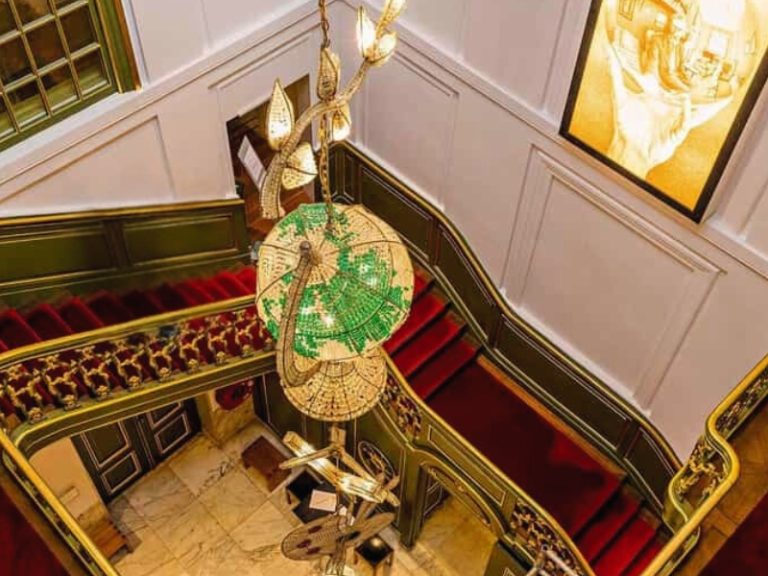
The Lange Voorhout Palace was the winter palace of Queen Emma, who lived here until her death in 1934. Today it houses a museum devoted to the Dutch graphic artist Escher, famous for impossible buildings, staircases that never end and endlessly repeating patterns.
2The Hague Historical Museum
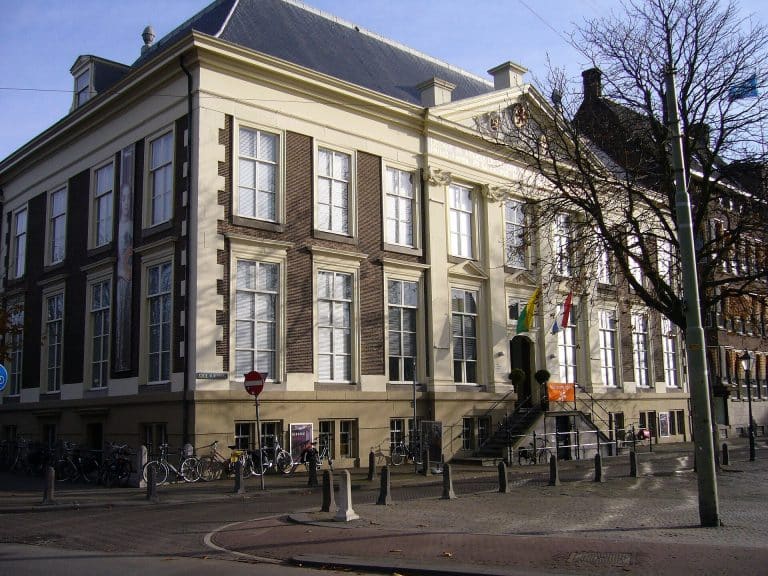
The Hague Historical Museum is housed in the Sebastiaansdoelen, the 17th-century headquarters of one of the city's civic guards, on the bank of the Hofvijver pond. Its collection shows how The Hague grew from a village around the court of the Counts of Holland into the seat of the Dutch government.
3Mauritshuis
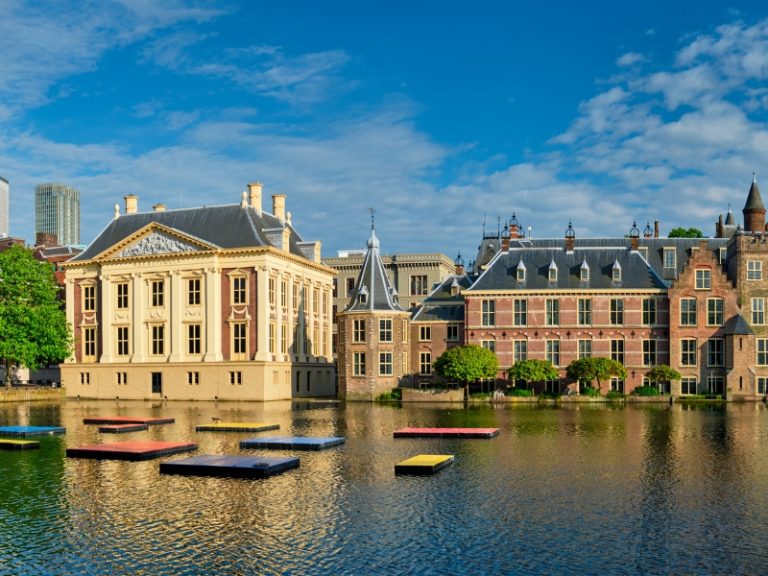
The Mauritshuis was built in the 17th century as the home of Johan Maurits of Nassau-Siegen, governor of Dutch Brazil, and is a classic example of Dutch classicist architecture. Since 1822 it has been a museum of Dutch and Flemish painting, home to Vermeer's Girl with a Pearl Earring and Rembrandt's Anatomy Lesson of Dr Nicolaes Tulp.
4Het Plein
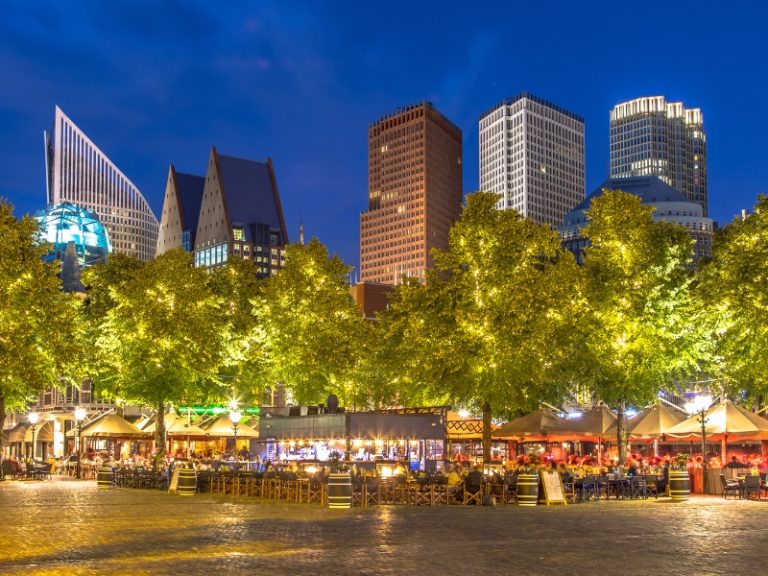
Het Plein is the square right next to the Binnenhof, lined with government buildings and café terraces. In the middle stands a 19th-century statue of William of Orange, who led the Dutch Revolt against Spanish rule and is remembered as the Father of the Fatherland.
5Binnenhof
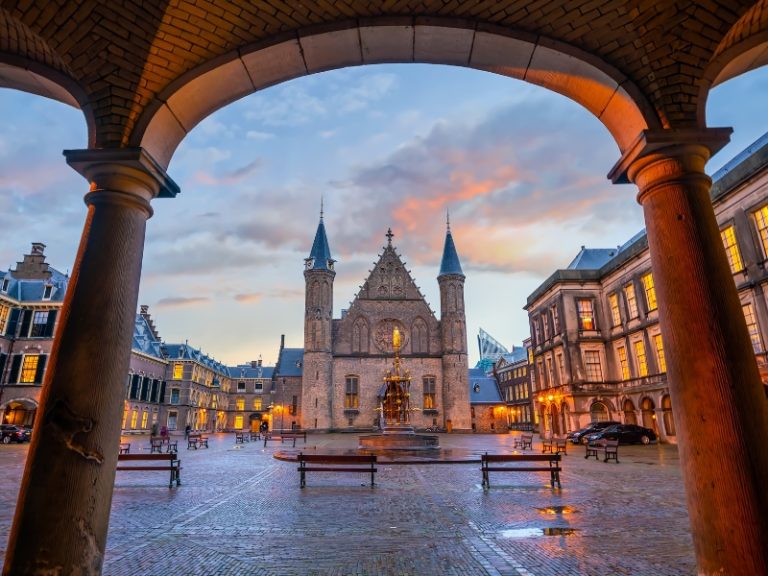
The Binnenhof grew out of the 13th-century court of the Counts of Holland and has been the centre of Dutch politics for centuries. At its heart stands the Gothic Ridderzaal (Hall of Knights), where the monarch traditionally reads the speech from the throne on Prinsjesdag, the third Tuesday in September.
Read the full story →
6Gevangenpoort (Prison Gate)
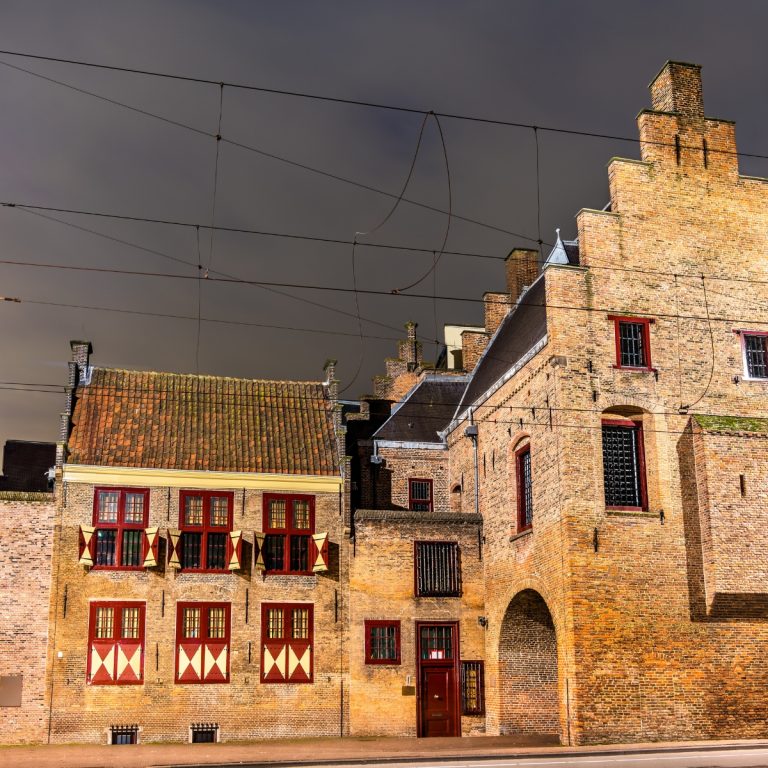
The Gevangenpoort was once a gatehouse of the counts' court and served as a prison for centuries. In 1672 Cornelis de Witt was held here, and he and his brother Johan, the leading statesman of the Dutch Republic, were murdered by an angry mob just outside.
7Noordeinde Palace
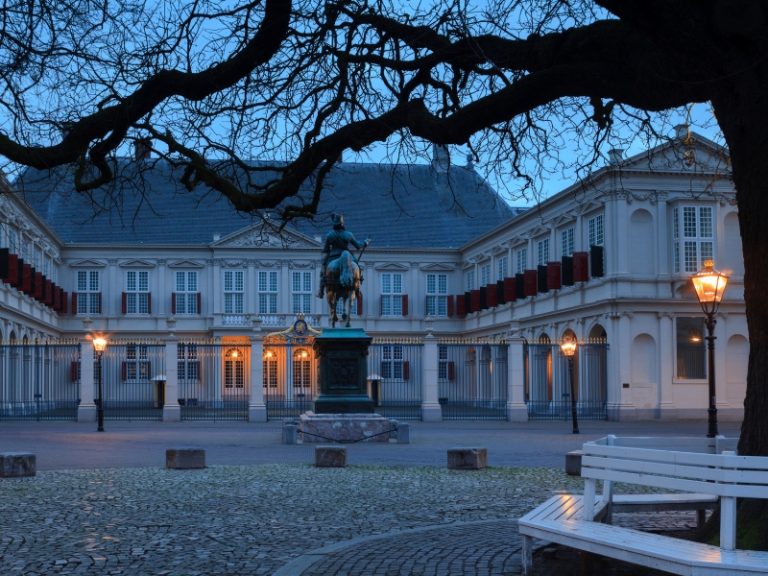
Noordeinde Palace is the working palace of the Dutch king, where he has his office. At the end of the 16th century it was given to Louise de Coligny, widow of William of Orange, and an equestrian statue of William stands in front of it.
8Royal Stables
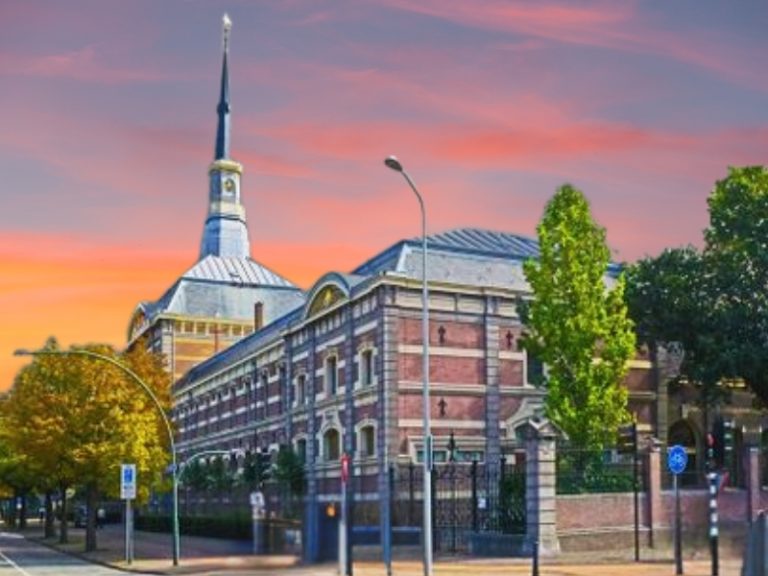
Behind Noordeinde Palace lie the Royal Stables, built in the late 19th century under King William III. They house the horses and carriages of the royal household, which you see on state occasions such as Prinsjesdag.
9World Peace Flame
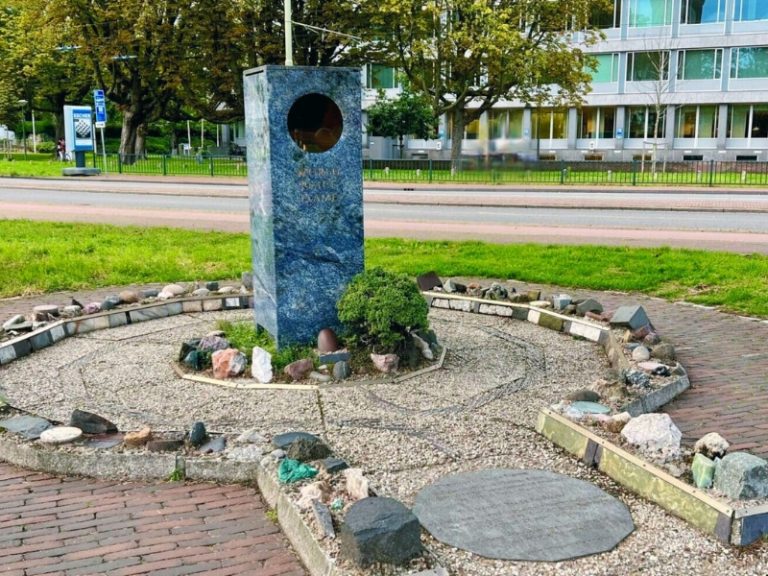
The World Peace Flame burns in front of the gates of the Peace Palace and was lit in 2004 from flames brought together from five continents. Around it runs a path set with stones sent by countries from all over the world.
Read the full story →
10Peace PalaceFinish
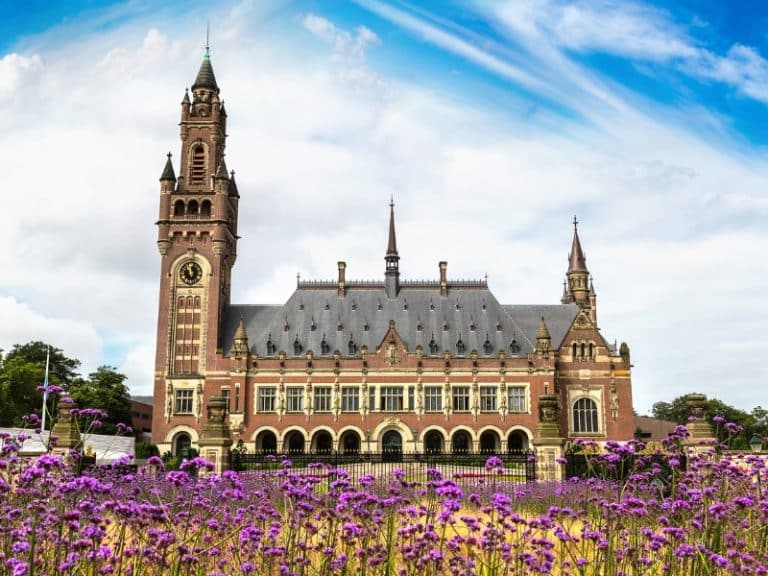
The Peace Palace opened in 1913, paid for by the Scottish-American steel magnate Andrew Carnegie and designed by the French architect Louis Cordonnier. It houses the International Court of Justice, the main court of the United Nations, as well as the Permanent Court of Arbitration and a large library of international law.
Only logged in customers who have purchased this product may leave a review.






Denmark –
Collected on GetYourGuide
Germany –
Collected on GetYourGuide
Für den Preis echt gut. Hat sehr viel spaß gemacht und die Rätsel sind auch cool.
United Kingdom –
Collected on GetYourGuide
I liked that it took us from a touristic attraction to other in an organised way . Saved a lot of time .
Germany –
Collected on GetYourGuide
Eine sehr gute Zusammenstellung der Sehenswürdigkeiten mit informativer Beschreibung und guter Wegführung. In anderen Städten jederzeit wieder.